The short answer
Keep a Shih Tzu cool and lean and walk it on a harness. Treat any squinting, cloudy or bulging eye as urgent. Brush the teeth daily. See a vet for straining or blood in the urine, and for a young dog that drinks and urinates a lot or fails to grow. Tell your vet before any anaesthesia that the dog is flat-faced. Price pet insurance in your first week.
A short nose: heat, breathing and anaesthesia
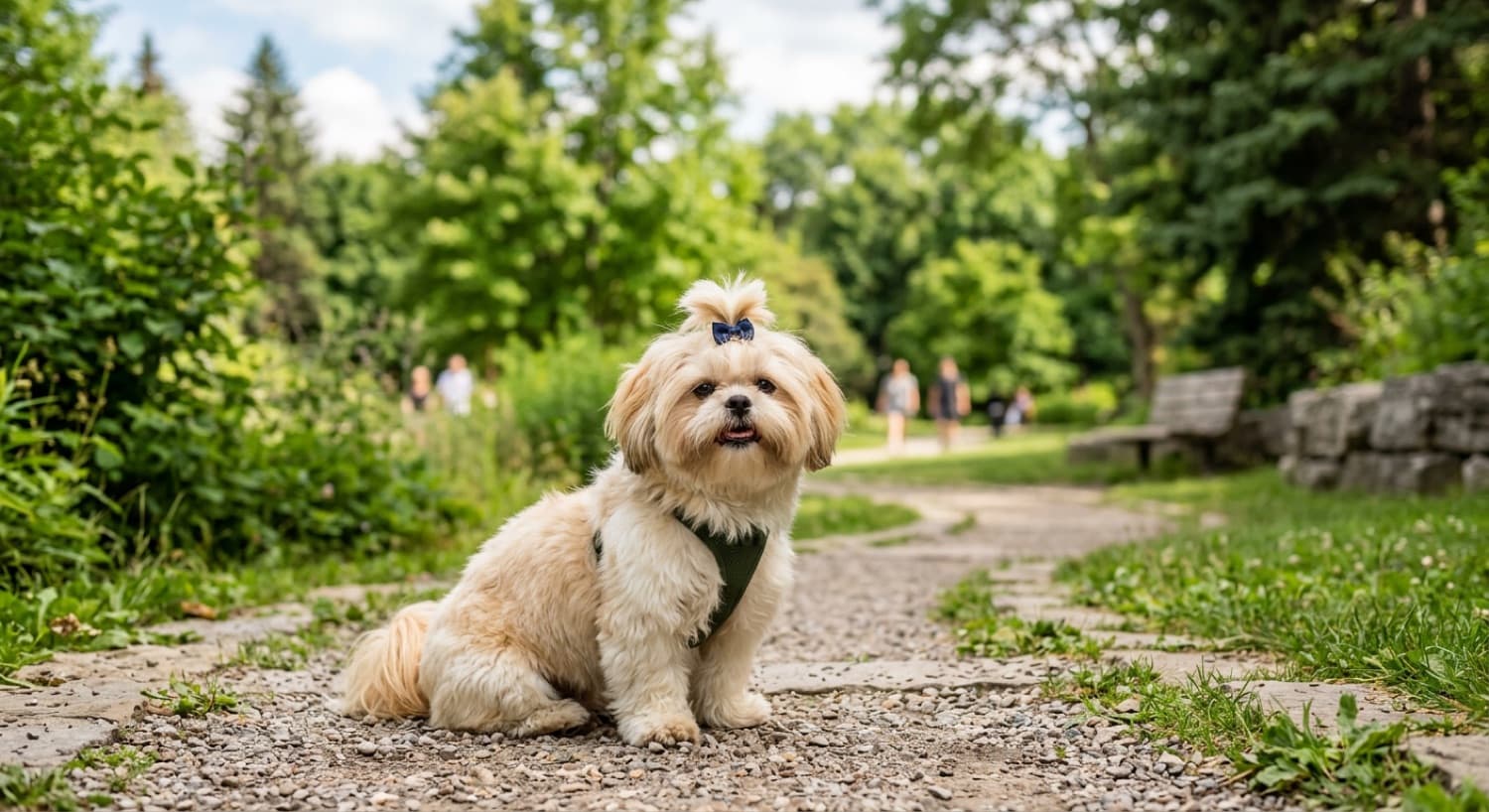
The Shih Tzu is on VCA Animal Hospitals’ list of flat-faced breeds that can have brachycephalic airway problems: narrow nostrils, a long soft palate and a smaller windpipe. Snoring, noisy breathing and tiring quickly in warm weather are common signs.
Keep the dog lean, avoid exercise in heat, use a harness instead of a collar, and watch for heavy panting or a blue tinge to the gums, which is an emergency. Some dogs benefit from surgery to open the airway, and results are better when it is done earlier. Always remind your vet before sedation or anaesthesia that your dog is flat-faced.
Eyes
A Shih Tzu’s large, prominent eyes are easy to scratch and slow to protect themselves. Squinting, tearing, rubbing at the face or a cloudy spot on the eye can mean a corneal ulcer and needs a vet the same day. Keep the hair around the eyes trimmed so it does not rub the surface.
The breed is also on VCA’s list of breeds associated with glaucoma. A red, painful, cloudy or bulging eye is an emergency, because vision can be lost within hours.
Browse adoptable Shih Tzus
Foster notes often mention breathing, eyes or teeth, which is exactly what to raise at your first vet visit.
See Available Shih Tzus →Teeth and windpipe
Small and flat-faced breeds are more prone to dental disease, according to VCA, and a Shih Tzu’s short jaw crowds the teeth. Daily brushing is the best prevention, and professional cleanings will be part of the dog’s life.
The breed is also named by VCA for tracheal collapse, a weakening windpipe that causes a dry “goose honk” cough. A harness, a lean weight and a vet check for a frequent cough all help.
Bladder stones and young-dog kidney disease
VCA names the Shih Tzu among the breeds most often diagnosed with bladder stones. Straining, frequent small amounts and blood in the urine are the signs. A male that strains and passes nothing may be blocked, which is an emergency.
Renal dysplasia is an inherited condition in which the kidneys do not develop normally. The American Kennel Club notes an especially high incidence in Shih Tzus. Increased thirst and urination are the first signs, sometimes with poor growth, and for most affected dogs kidney trouble is evident in the first year. Severity varies widely, so bloodwork and urine tests in a young Shih Tzu with these signs are worthwhile.
The first vet visit after adoption
Ask for a breathing and airway check, an eye exam, a dental exam, a body condition score and baseline bloodwork with a urinalysis, which also screens the kidneys. Note in the file that the dog is flat-faced. Bring the rescue’s records.
Price pet insurance the same week. Every Canadian provider excludes conditions documented before enrolment, and eye, airway and dental care are common costs for the breed.
Frequently asked questions
What are the most common Shih Tzu health issues?
Short-nose breathing problems, eye injuries and glaucoma, dental disease, collapsing trachea, bladder stones and, in some young dogs, inherited kidney disease (renal dysplasia).
Why does my Shih Tzu snore and breathe noisily?
Its flat face often means narrow nostrils and a long soft palate. Keep it lean and cool, use a harness, and ask your vet whether the airway needs attention.
My Shih Tzu is squinting. Is it urgent?
Yes, see a vet the same day. Prominent eyes are easily scratched, and an untreated ulcer can worsen quickly. A red, painful, bulging eye can also mean glaucoma, which is an emergency.
Why does my young Shih Tzu drink so much water?
It can be normal, but increased thirst and urination in a young Shih Tzu can be the first sign of renal dysplasia. Ask your vet for bloodwork and a urine test.
Is anaesthesia risky for a Shih Tzu?
Flat-faced dogs need extra airway care around sedation and anaesthesia. Remind your vet before any procedure; it is routine for clinics to adapt their approach.
Should I get pet insurance for a rescue Shih Tzu?
It is worth pricing in your first week. Canadian pet insurance excludes conditions documented before enrolment, and eye, airway, dental and kidney care are common costs.
Sources
- VCA Animal Hospitals: Brachycephalic Airway Syndrome: Shih Tzu named; weight, heat, harness; earlier surgery better
- VCA Animal Hospitals: Glaucoma in Dogs: Shih Tzu named; acute glaucoma is an emergency
- VCA Animal Hospitals: Dental Disease in Dogs: small and brachycephalic breeds more prone
- VCA Animal Hospitals: Tracheal Collapse: Shih Tzu named; honking cough; harness
- VCA Animal Hospitals: Calcium Oxalate Bladder Stones: Shih Tzu named
- American Kennel Club: Renal Dysplasia in Dogs: especially high incidence in Shih Tzus; early signs; first-year onset
General information, not veterinary advice. Diagnosis and treatment decisions belong with your veterinarian.
Related guides
New dog? Start with these care guides
Everything a new adopter needs to set up a safe, happy home.