The short answer
Brush a Yorkie’s teeth daily, walk it on a harness, keep a glucose source handy for a young puppy, and watch for limping or a skipping back leg. A young Yorkie that grows poorly or acts strangely after meals should be checked for a liver shunt. Have the heart listened to as the dog ages, and price pet insurance in your first week.
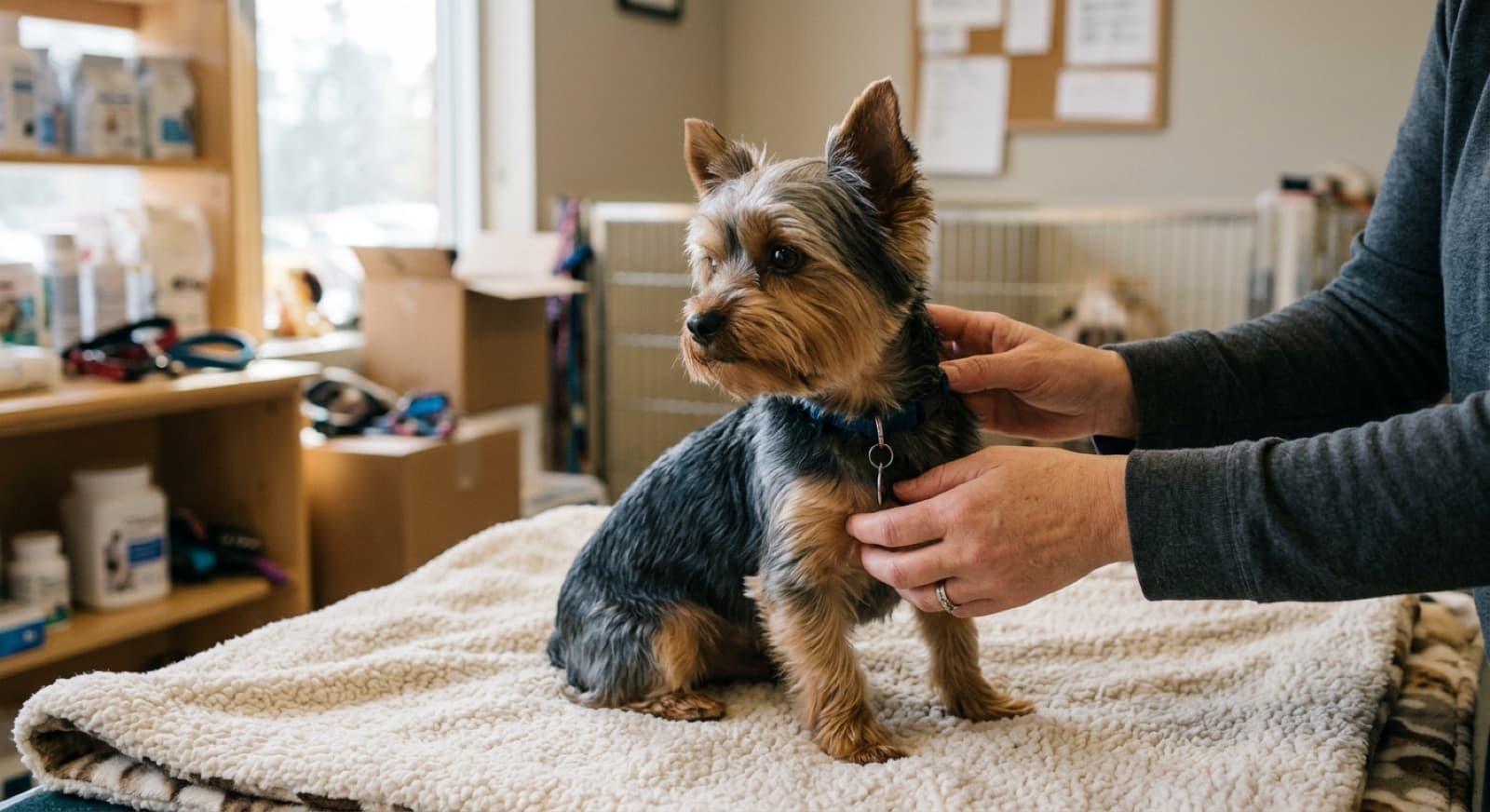
Teeth
Small breeds are more prone to periodontal disease because their teeth are crowded into a small jaw, according to VCA Animal Hospitals. Many Yorkies have tartar, gum disease and loose teeth by middle age. Daily brushing with a dog toothpaste and regular professional cleanings protect the mouth, and ask your vet what pre-anaesthetic checks they suggest for a senior.
Collapsing trachea: always a harness
VCA names the Yorkshire Terrier among breeds affected by tracheal collapse, a weakening of the windpipe that causes a dry “goose honk” cough, often worse with excitement or pulling. Use a harness rather than a collar, keep the dog lean, and see your vet if the cough is frequent or breathing looks laboured.
Browse adoptable Yorkies
Foster notes often mention teeth, a cough or a limp, which is exactly what to raise at your first vet visit.
See Available Yorkies →Liver shunt
A portosystemic shunt is an abnormal blood vessel that lets blood bypass the liver, so toxins are not filtered. VCA lists the Yorkshire Terrier among breeds where it is seen. Signs usually appear in young dogs: stunted growth, poor muscle and unusual behaviour, sometimes only after high-protein meals, such as disorientation, staring or seizures.
Bloodwork, including a bile acids test, points to it and imaging confirms it. Diet and medication stabilise many dogs, and surgery offers the best outcome for shunts outside the liver.
Puppy low blood sugar
Toy-breed puppies, especially under three months, can have their blood sugar drop dangerously, according to Purina Pro Club’s veterinary guidance. Weakness, trembling, wobbliness and extreme sleepiness are signs. Rub a glucose source such as corn syrup on the gums and get to a vet immediately, and feed a young Yorkie small, frequent meals.
Knees, hips and heart
The national breed club recommends kneecap and eye evaluations, as listed by the American Kennel Club. A slipping kneecap shows as a skip on a back leg. Legg-Calvé-Perthes disease, a breakdown of the head of the thigh bone in young small dogs, is a condition VCA lists for terriers and other small breeds; it causes a slowly worsening hind-leg limp, and surgery usually has dogs running again within months.
Mitral valve disease is common in small breeds, and VCA names the Yorkie. A murmur is the first clue, so the heart should be checked at every visit as the dog ages.
The first vet visit after adoption
Ask for a dental exam, a knee and hip check, a heart listen, an eye check, a body condition score and baseline bloodwork, which also screens liver function. Bring the rescue’s records.
Price pet insurance the same week. Every Canadian provider excludes conditions documented before enrolment, and dental work, knee surgery and liver shunt care are common costs over a long Yorkie life.
Frequently asked questions
What are the most common Yorkie health issues?
Dental disease, collapsing trachea, slipping kneecaps, Legg-Calvé-Perthes disease, low blood sugar in puppies, liver shunt and heart valve disease in older dogs.
Why does my Yorkie honk when it coughs?
A dry “goose honk” cough is the classic sign of tracheal collapse. Switch to a harness, keep the dog lean and have your vet examine it.
What are the signs of a liver shunt in a Yorkie?
Poor growth, poor muscle and unusual behaviour such as disorientation, staring or seizures, sometimes after meals. A bile acids blood test and imaging confirm it.
My Yorkie puppy is weak and trembling. What do I do?
Treat it as possible low blood sugar: rub corn syrup or another glucose source on the gums and go to a vet right away.
Why is my young Yorkie limping on a back leg?
A slipping kneecap or Legg-Calvé-Perthes disease are common causes in small breeds. Have your vet examine and X-ray the leg.
Should I get pet insurance for a rescue Yorkie?
It is worth pricing in your first week. Canadian pet insurance excludes conditions documented before enrolment, and dental, knee and liver care are common costs.
Sources
- VCA Animal Hospitals: Dental Disease in Dogs: small breeds more prone; daily brushing
- VCA Animal Hospitals: Tracheal Collapse: Yorkshire Terrier named; harness
- VCA Animal Hospitals: Portosystemic Shunt: Yorkshire Terrier named; signs; diet, medication and surgery
- Purina Pro Club: Hypoglycemia in Toy Breeds: toy puppies; signs; glucose response
- American Kennel Club: Toy Group Health Testing Requirements: Yorkshire Terrier: patella and ophthalmologist evaluations
- VCA Animal Hospitals: Legg-Calvé-Perthes Disease: small breeds and terriers; young dogs; surgery outcome
- VCA Animal Hospitals: Mitral Valve Disease: Yorkshire Terrier named
General information, not veterinary advice. Diagnosis and treatment decisions belong with your veterinarian.
Related guides
New dog? Start with these care guides
Everything a new adopter needs to set up a safe, happy home.