The short answer
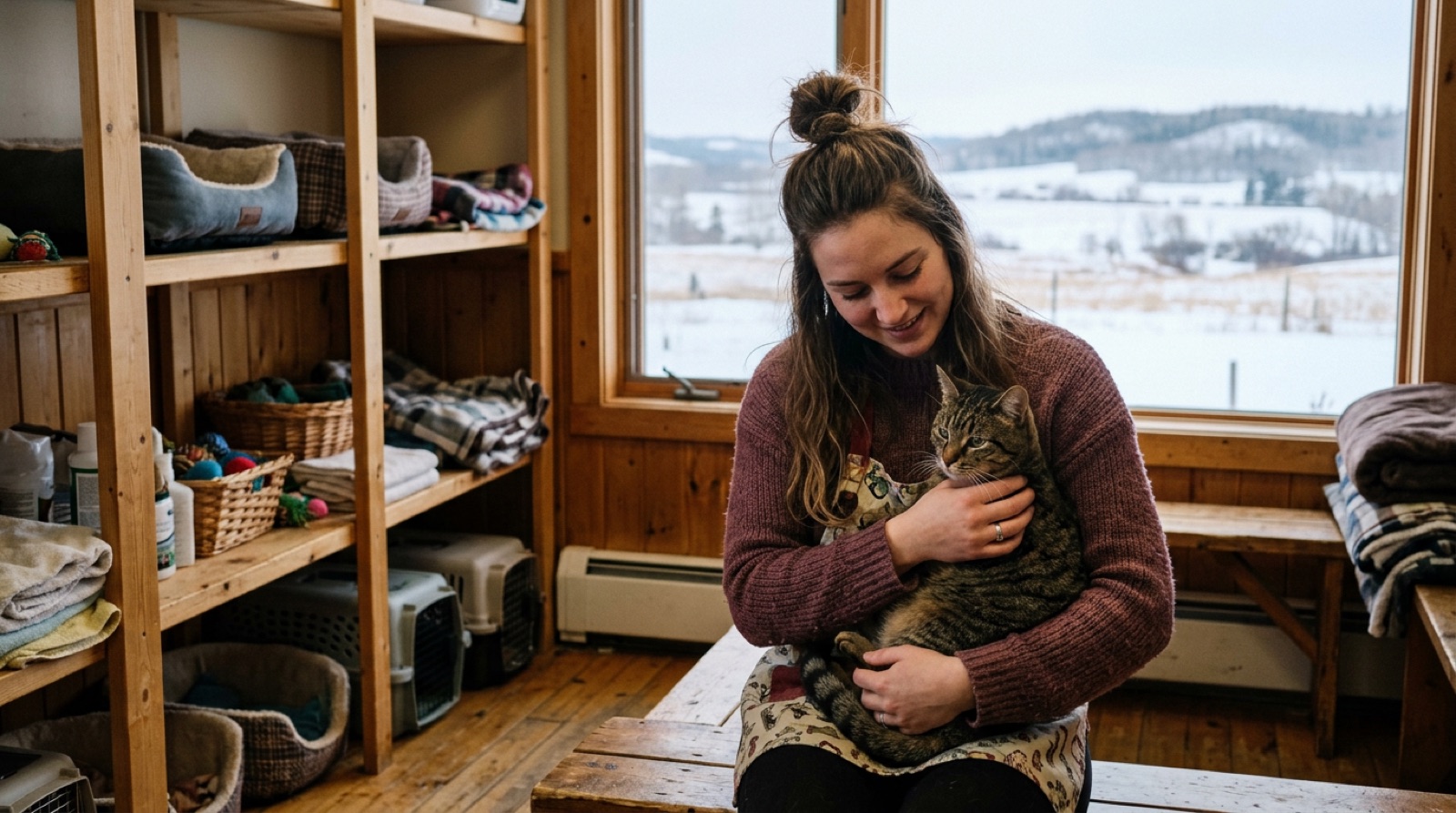
Adopt through the Swan Valley Animal Protection League (SVAPL), the volunteer-run shelter serving Swan River and the surrounding valley. It houses dozens of cats at a time, and every one comes home spayed or neutered, vaccinated and dewormed. SVAPL does not publish a fixed fee online, so confirm it on the listing or by phone. The shelter runs cat-heavy most of the year, so adult cats in particular are plentiful, healthy and easy to place.
Swan River is a town of roughly 4,000 people in the Swan Valley of western Manitoba, tucked between the Porcupine Hills and Duck Mountain Provincial Park. Highway 10 runs through it, farming and ranching surround it, and the valley stretches well beyond the town limits into small communities and acreages.
That geography explains a lot about cat adoption here. A town this size would normally have almost no shelter capacity at all. Instead SVAPL absorbs cats from a service area covering a sixty to seventy mile radius, far larger than the town itself, which is why the shelter carries so many cats at once.
The practical effect for an adopter is genuinely good: real choice. On most days there are more cats and kittens available here than in towns several times the size, with variety in age, colour and temperament that a tiny rural shelter normally cannot offer.
The Swan Valley Animal Protection League
The Swan Valley Animal Protection League is a volunteer-based rescue that runs a physical cat shelter and uses foster homes for its dogs. It rescues strays and surrenders from within a sixty to seventy mile radius of Swan River, and it operates entirely on donations and fundraising.
Because it is the only cat shelter in the valley, nearly every homeless cat in the region passes through it. That is why the cat count stays high, and it is also why the shelter is the single best place to start rather than the scattered classified posts you would otherwise chase.
Contact is straightforward. Phone 1-888-212-6385 or email svaplshelter@gmail.com, and applications go through svapl.ca. It is run by volunteers, so a little patience on reply times is worth extending.
What a shelter cat already comes with
- ✓Spay or neuter surgery, done before the cat goes home
- ✓Age-appropriate vaccinations
- ✓Deworming and a basic parasite check
- ✓A health assessment by shelter volunteers who have lived with the cat
- ✓Honest notes on temperament, other-pet tolerance and quirks
- ✓A starting point on litter and food the cat is already used to
Price that veterinary work separately at a clinic and the spay or neuter alone costs more than most adoption fees, before you add vaccines and deworming. A shelter cat is not a cheap cat that happens to be used. It is a fully vetted cat placed below the cost of the work already done to it. SVAPL does not publish a fixed fee, so confirm the current amount on the listing or by phone, and ask exactly what is included so you are comparing like for like.
Why a small town's shelter runs so full
People assume a full shelter means something is wrong locally. Usually it means the opposite. A shelter that stays full is a shelter that is still saying yes.
Three things drive the cat count in the Swan Valley. The catchment is rural and wide, so cats arrive from well beyond the town. Free-roaming cats are culturally normal on valley farmyards, and a free-roaming unspayed female produces litters nobody planned for. And spay or neuter surgery means a drive and a bill for owners who may live an hour from the clinic.
None of that makes the cats themselves problem animals. The great majority are healthy domestic shorthairs and longhairs, friendly, adaptable and completely ordinary. The reason they are waiting has to do with arithmetic on the land, not with anything wrong with the cat in front of you.
This is also why getting cats fixed matters more here than in a city with a dense clinic network. Every unfixed cat on a valley property is a future shelter intake.
How to choose a cat that actually fits
Be honest about your household. A quiet retired couple and a house with three kids under ten need different cats. Tell the shelter the truth and let them steer you, because they have watched these animals live.
Ask about other pets specifically. Some cats are fine with dogs, some are fine with cats, and plenty are fine with neither. That information exists. Ask for it before you fall for a photo.
Meet the cat in person. A relaxed cat in a room with you is data. A cat that flattens itself in a corner may still become a wonderful pet, but it is telling you it needs a slower, quieter home.
Consider a bonded pair. Two cats that already like each other settle faster than one cat alone, and they entertain each other while you are at work. Food and litter double, but most of the gear does not.
Do not overlook the adults. They are the easiest cats to live with and the hardest to place. Kittens will find homes without your help.
Free kittens online are not free
Classified listings for free valley kittens are common, and the arithmetic never favours them. A free kitten arrives unfixed, unvaccinated, unwormed and unchecked, and you pay retail for all of it plus Manitoba tax on the supplies. That routinely exceeds a shelter kitten that already comes with the work done.
Classifieds also carry a real scam risk, including deposits taken for animals that never existed. If cost is the concern, adopt an adult instead, since adults are the cheaper and easier cats and the ones the shelter most needs to place. If you want to help, that is the choice that helps most.
Browse adoptable Swan River cats
The shelter runs cat-heavy, which means genuine choice in age and temperament. See who is available right now. Listings refreshed regularly.
See Available Swan River Cats →Where LocalPetFinder fits
We are not a rescue, and we do not place cats. We are an aggregator. We pull adoptable cats from Swan River area rescues into one place and refresh them regularly, so you are not checking several websites and a handful of Facebook pages to see what changed this week. Coverage varies by rescue, so treat this as a starting point rather than the whole picture, and check the rescues above directly too.
We also carry something the rescues do not. Some cats are listed directly by the families rehoming them, so the history comes from the person who actually lived with the animal rather than from an intake form. There is no waitlist and contacting an owner costs nothing.
Frequently Asked Questions
Where can I adopt a cat in Swan River?
The Swan Valley Animal Protection League, known locally as SVAPL, is the cat adoption source for Swan River and the surrounding valley. It runs a physical cat shelter that houses dozens of cats at a time, and it takes in strays and surrenders from a wide rural radius around the town. There is no second cat shelter in Swan River, which sounds limiting but works in your favour: the entire local supply of adoptable cats sits in one place instead of scattered across a dozen Facebook posts you would otherwise have to track. You can browse current cats on LocalPetFinder and apply through SVAPL directly at svapl.ca or by phone.
How much does it cost to adopt a cat from SVAPL?
SVAPL does not publish a fixed cat adoption fee online, so confirm the current amount on the cat's listing or by phoning the shelter. What matters more than the sticker is what the fee already covers. A shelter cat comes home spayed or neutered, vaccinated for its age and dewormed, which is a stack of veterinary work that would cost far more if you booked it yourself for a free kitten. The shelter is volunteer-run and donation-funded, so the fee goes straight back into caring for the next animal. Ask what is included when you apply, and take the answer as the real comparison against any free cat you are weighing it against.
Why does the shelter always seem full of cats?
Two things stack up. SVAPL serves a service area far larger than the town of Swan River, pulling cats from farms, acreages and small communities across a sixty to seventy mile radius. And unfixed cats reproduce fast. One unspayed female with roaming access can start a colony in a couple of seasons, and on a valley farmyard nobody is counting until the numbers are obvious. The result is a shelter that runs cat-heavy most of the year, with a genuine surplus of healthy adult cats waiting for homes. It is not a sign that something is wrong with the cats. It is arithmetic upstream on the land.
Are shelter cats healthy, or is it a gamble?
They are assessed and vetted before they are listed, which is more than you get from a classified ad. Each cat has been examined, vaccinated for its age, dewormed and fixed. Just as useful, the volunteers have watched the cat live, so they can tell you whether it hides from strangers, tolerates dogs, or wants to be the only cat in the house. A breeder or an online seller cannot tell you any of that about a kitten they are trying to move. Ask questions and take the answers seriously, because behaviour observed in the shelter predicts the next year far better than a cute photo does.
Should I adopt a kitten or an adult cat?
Adopt the adult unless you specifically want the kitten chaos. Adult cats already know what a litter box is, their personality is fully formed so what you meet is what you get, and they settle into a quiet household in days rather than months. Kittens are wonderful, and they also climb curtains, wake you at 4am and need more supervision than people expect. Adults are also the harder cats to place, so choosing one frees shelter space for the next animal coming off a valley farmyard. If you have young children or a full schedule, the adult is nearly always the better match.
Can I adopt if I live out on an acreage or farm?
Yes, and rural adopters are the norm here. SVAPL will ask about your setup, and the answer they hope to hear is that the cat will live indoors. A cat placed outside as a free-roaming barn cat faces coyotes and owls off the Duck Mountain treeline, farm equipment, Highway 10 traffic and deep valley winter cold, and those cats live dramatically shorter lives. If you want a mouser for an outbuilding, ask the shelter directly whether they have a cat suited to that life with proper heated shelter provided. Do not assume any cat will thrive outdoors just because your address is rural.
How does the adoption process work?
Find a cat you like, fill out SVAPL's adoption or foster form, and give them real detail about your household rather than the shortest possible answers. A volunteer will get back to you, usually with a conversation about your home, your other pets and your routine. You meet the cat before deciding, which matters more with cats than people expect, because a cat that relaxes with you in the room is telling you something a photo cannot. If it is a match, you complete the paperwork, pay the fee and take your cat home. The whole thing is run by volunteers, so a little patience on timing goes a long way.
What if the cat does not settle in?
Talk to the shelter before you make any decision. Most of what looks like failure in week one is a cat that has not finished decompressing, and it resolves on its own with a quiet room and a predictable routine. Hiding under a bed for several days is normal. Not eating for more than a day is not, and that needs a vet. If there is a genuine mismatch, such as a resident cat that will not tolerate a newcomer, SVAPL would far rather hear from you early than have the cat passed along through a classified ad to a stranger nobody screened. They placed the cat, and they want it to work as much as you do.
Do I need to licence a cat in Swan River?
Yes. The Town of Swan River requires cats to be licensed, not just dogs, under its Animal Control By-Law. That surprises a lot of newcomers who have lived in places where only dogs need a tag. A current rabies certificate is required before a licence is issued for any cat over six months. The town does not publish its fee schedule online, so phone the Animal Control Officer or drop into the Town office on Main Street for the current cat rate. Because every SVAPL cat comes home already fixed and vaccinated, you arrive at the licence counter with the paperwork you need already in hand.
Is there a spay and neuter subsidy in the valley?
Yes, and it is one of the better things about adopting here. SVAPL runs a subsidized spay and neuter program for lower-income valley residents, with the surgeries done at the Swan Valley Veterinary Clinic. It is aimed at existing pet owners rather than adopters, since shelter cats already come fixed, but it is the reason the region has any handle at all on cat overpopulation. If you take in a farm cat or inherit one that is not fixed, this program is worth asking about. Every cat that gets fixed is one less litter arriving at the shelter next spring.
Where is the nearest emergency vet if something goes wrong overnight?
This is the question to answer before you need it, because the valley has no 24-hour animal hospital. The Swan Valley Veterinary Clinic handles daytime care and asks clients to phone ahead in an emergency, but it is closed evenings and weekends. The nearest true 24-hour hospitals are in Winnipeg, close to five hours away by Highway 10 and beyond. Write your clinic's number on the fridge, know its hours, and understand the drive before a crisis. A male cat straining in the litter box and producing no urine is a possible urinary blockage, a life-threatening emergency measured in hours, and that is exactly the call you do not want to be researching from scratch at midnight.
Related Swan River Guides
One search, every Swan Valley cat
Adoptable cats and kittens from the Swan River area, in a single list.
Browse Available Swan River Cats →New cat? Start with these care guides
Everything a new adopter needs to set up a safe, happy home.