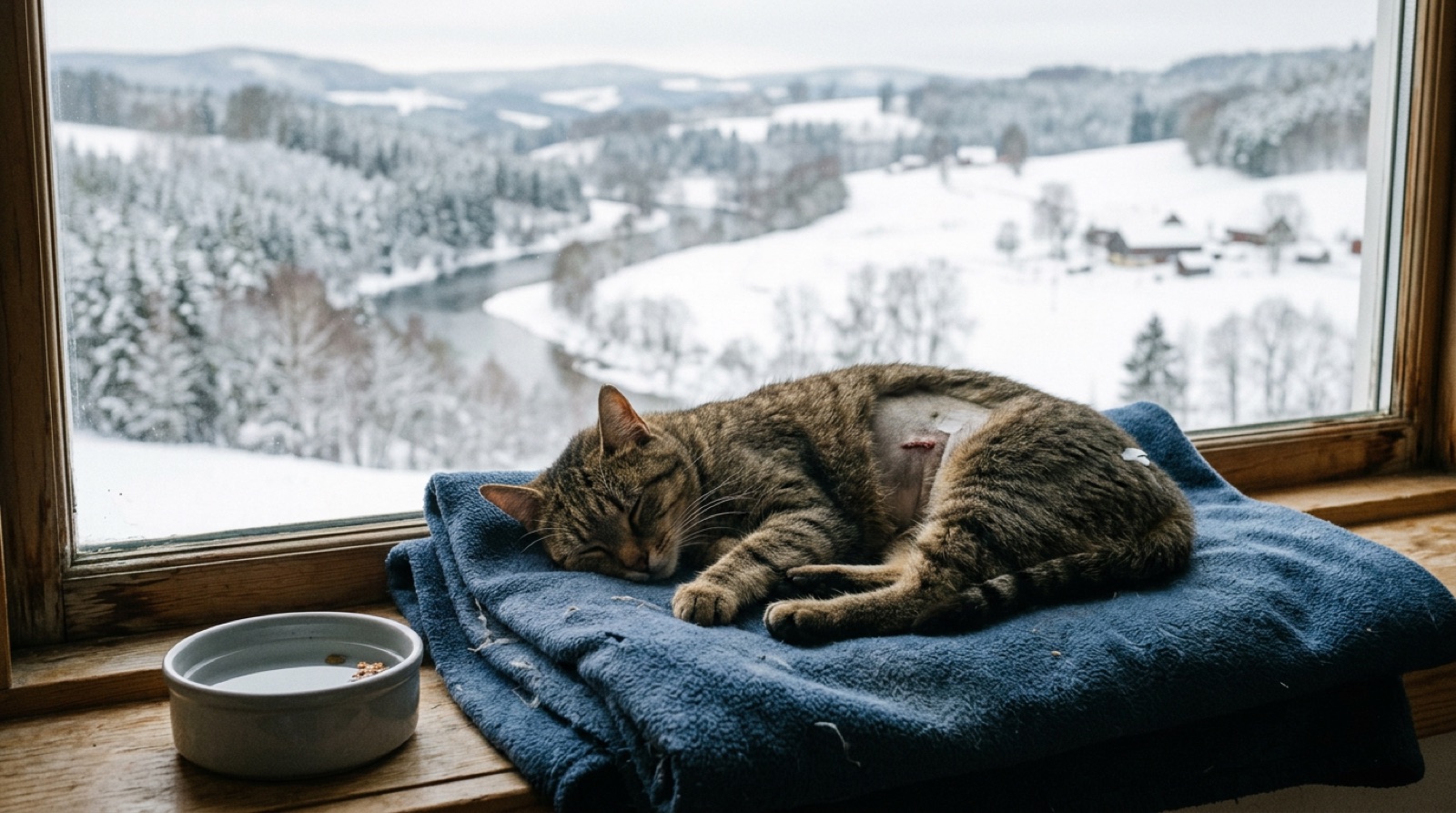
The short answer
The Swan Valley Veterinary Clinic on Highway 10 East does cat spays and neuters. It does not publish prices, so phone for a quote, and note that Manitoba does not tax veterinary services. If money is tight, the SVAPL subsidy can lower the cost for qualifying valley residents, roughly $75 for a spay and $45 for a neuter. A female spay costs more than a male neuter and needs a longer recovery. The cheapest route of all is adopting a shelter cat, which comes home already fixed.
If you have just adopted from the Swan Valley Animal Protection League, the surgery is already done and this guide is mostly background reading. If you took in a farm kitten, inherited a cat, or are looking after one that arrived on your step, this is the appointment to make first.
The reason is not abstract. In a valley this rural, unfixed cats are the single largest driver of shelter intake. A shelter that stays full of cats is downstream of surgeries that never happened.
Here is what booking one looks like in Swan River, what it costs, what help exists, and what the week afterwards actually involves.
Where to book in the valley
The Swan Valley Veterinary Clinic on Highway 10 East is the local small-animal clinic, and it lists spay and neuter among its surgical services alongside vaccination and dentistry. Regular hours are weekdays only, and it is closed on weekends.
It does not publish surgery prices, so phone for a quote. Because it is the valley's clinic serving a wide catchment, surgical slots fill, so ask early rather than assuming next week is open. In an emergency during hours, the clinic asks that you phone ahead so staff can be ready when you arrive.
The local subsidy that lowers the cost
This is one of the better things about the valley. SVAPL runs an income-based spay and neuter subsidy, with the surgeries done at the Swan Valley Veterinary Clinic. It is aimed at existing owners, not adopters, since shelter cats already come fixed.
The published SVAPL subsidy guidelines set a household income cap at or below $40,000 a year, applicants aged 18 and over, and pets between six months and three years old. The listed subsidized cat rates are about $75 for a spay and $45 for a neuter, with optional vaccines around $25, limited to one subsidized cat surgery per household per year.
You apply through svapl.ca with a Notice of Assessment and proof of address, and approval takes roughly two weeks. If a farm cat turned up on your property and cost is the reason you have not booked the surgery, this is the program to ask about.
Spay and neuter are not the same surgery
A neuter on a male cat is a short external procedure. Most males are close to normal within a day or two and the incision is small.
A spay on a female is abdominal surgery. It takes longer, needs more anaesthetic time and monitoring, and heals over a week to two weeks rather than a couple of days. That is why it costs more, and why the recovery instructions are stricter.
On timing, ask your vet rather than a rule of thumb from the internet. The American Veterinary Medical Association's position on paediatric spay and neuter and the American Association of Feline Practitioners endorsement on age of sterilization are both worth reading first so the conversation is a better one.
The Recovery Week
| When | What to expect |
|---|---|
| Day of surgery | Grogginess, wobbliness, sometimes a refusal of food. Keep the cat in a warm quiet room with a shallow litter tray and no jumping. |
| Days 1 to 2 | Appetite returns and energy climbs. Keep the cone on. Check the incision twice daily for swelling, discharge or gapping. |
| Days 3 to 7 | A spayed female is still healing internally even if she looks fine. Restrict jumping and rough play. Males are usually near normal by now. |
| Days 7 to 14 | Female incisions finish closing. Follow the clinic's instructions on any recheck. Resume normal life once the vet says so, not before. |
General guidance only. Your clinic's discharge instructions override anything here, and a winter drive home means keeping the carrier warm and the car pre-heated. Pre-anaesthetic bloodwork is usually quoted separately, about $50 to $100, and is recommended for cats over 5. Ask for an itemized estimate before booking.
Know your after-hours plan before you need it
A male cat straining in the litter box and producing nothing is a possible urinary blockage. That is a life-threatening emergency measured in hours, not days, and it needs a vet immediately. It is not something to watch overnight, and it is not something to treat at home. Never give a cat any human medication.
The valley has no 24-hour animal hospital. The Swan Valley clinic is closed evenings and weekends, and the nearest true 24-hour hospitals are in Winnipeg, close to five hours away, including the Winnipeg Animal Emergency Hospital. Put your clinic's number and the Winnipeg route on the fridge today. The night you need them is not the night to be searching.
Why this matters more in a rural valley
The Swan Valley Animal Protection League serves a service area far larger than the town of Swan River, taking cats from acreages, farms and small communities across a wide radius. That is why the shelter runs cat-heavy nearly year round.
Free-roaming cats remain culturally normal on valley farmyards, and a free-roaming unspayed female compounds fast. Nobody is counting until the number is obvious. Meanwhile the surgery that would have prevented it means a drive and a bill for an owner who might be an hour from the clinic, which is exactly the barrier the SVAPL subsidy is built to lower.
None of that reflects badly on the animals. It is a supply problem upstream, and every surgery that happens shrinks the next wave. If you would rather help by taking one home, the shelter has plenty of adult cats waiting, and they arrive already fixed.
Browse adoptable Swan River cats
Every shelter cat comes home already spayed or neutered, vaccinated and dewormed. The most expensive appointment is already handled. Listings refreshed regularly.
See Available Swan River Cats →Frequently Asked Questions
Where can I get a cat spayed or neutered in Swan River?
The Swan Valley Veterinary Clinic on Highway 10 East is the local clinic, and it lists spay and neuter among its small-animal surgical services. Phone them for a current quote, because they do not publish surgery prices online and the number varies with the cat's weight, sex and age. Booking ahead matters here, since a single valley clinic has limited surgical slots and they fill. If you adopted from the Swan Valley Animal Protection League, the surgery is already done and included, so this is background reading rather than an appointment you need to make.
Is there a subsidy to help with the cost?
Yes, and it is genuinely useful. SVAPL runs a subsidized spay and neuter program for lower-income valley residents, with the surgeries done at the Swan Valley Veterinary Clinic. The published guideline is a household income at or below $40,000 a year, applicants aged 18 and over, and pets between six months and three years old. The subsidized cat rates listed are about $75 for a spay and $45 for a neuter, with optional vaccines around $25, and it is limited to one subsidized cat surgery per household per year. You apply through svapl.ca with a Notice of Assessment and proof of address, and approval takes roughly two weeks.
How much does it cost to fix a cat in Manitoba?
The Swan Valley clinic does not publish rates, so phone for a quote rather than trusting a number you read anywhere including here. What is worth knowing specifically is that Manitoba does not charge provincial sales tax on veterinary services, unlike Saskatchewan next door, so the surgery quote does not carry the extra 7%. If you qualify for the SVAPL subsidy the cost drops substantially, to roughly $75 for a spay or $45 for a neuter. Ask whether a full-price quote includes the pre-anaesthetic assessment, pain medication to go home and a cone or recovery suit, since those are the items that turn a quote into a bigger bill.
Is a spay more expensive than a neuter?
Yes, usually noticeably so. A neuter on a male cat is a short external procedure. A spay on a female is abdominal surgery that takes longer, needs more anaesthetic time and monitoring, and has a longer recovery. Expect the female surgery to cost meaningfully more at any clinic, and the SVAPL subsidy reflects that with a higher spay rate than neuter rate. If you are choosing between two cats partly on cost, that difference is real, though it is dwarfed by the cost of a single unplanned litter and the vet care that follows it.
At what age should a cat be fixed?
Talk to your vet, because the right answer depends on the individual cat. The American Veterinary Medical Association has an endorsed position on paediatric spay and neuter for cats and dogs, and the American Association of Feline Practitioners has endorsed sterilization by five months of age. Both are worth reading before you decide. What is not in dispute is that a female cat can become pregnant far younger than most owners expect, which is exactly how one valley farmyard cat becomes twelve. If you are unsure, book the conversation rather than waiting.
Do I still need to fix a cat that never goes outside?
Yes, and the reasons go beyond preventing litters. Unneutered males spray urine that is genuinely difficult to live with, and they roam persistently, which means an indoor cat that slips out is far more likely to disappear. Unspayed females go into heat repeatedly, which is loud and stressful for the cat and everyone in the house. There are also long-term health arguments your vet can walk you through. An indoor-only cat that is not fixed is a much harder cat to live with than one that is.
What does recovery actually look like?
Quieter than people fear, but it does need managing. The day of surgery your cat will be groggy and may skip a meal, which is normal. By day two appetite and energy usually return, and the hard part becomes stopping a cat that feels fine from jumping and reopening an incision. Females need real restriction for a week to two weeks because the surgery is abdominal. Keep the cone on, check the incision twice a day, and call the clinic if you see swelling, discharge, a gapping wound or a cat that stops eating.
My cat is licking the incision. Is that a problem?
Yes, and it is the single most common reason a routine spay turns into a second vet visit. A cat can open an incision in minutes with persistent licking, and the infection risk follows. That is what the cone is for, however much your cat objects to it. A soft recovery suit is an alternative some cats tolerate better, and clinics will often supply one. If your cat is getting past whatever you are using, phone the clinic rather than waiting to see what happens.
When should I call the vet during recovery?
Call if the cat stops eating for more than a day, if the incision is swollen, hot, gapping or leaking, if there is bleeding, if the cat seems painful when touched near the site, or if it is lethargic beyond the first day. Also call for anything urinary. A male cat straining in the litter box and producing nothing is a possible urinary blockage, which is a life-threatening emergency measured in hours rather than days, and it needs a vet immediately regardless of whether he was recently neutered. Do not wait until morning on that one.
What if something goes wrong overnight in the valley?
Work this out before you need it, which matters more here than in a city. The Swan Valley Veterinary Clinic is closed evenings and weekends, and it asks clients to phone the clinic in an emergency so staff can be ready if you come in during hours. There is no 24-hour animal hospital in the valley. The nearest true 24-hour hospitals are in Winnipeg, close to five hours away. Write the clinic's number somewhere you will find it, know its hours, and understand the drive before a crisis, because a plan made calmly beats one improvised while your cat is in trouble.
Why does fixing cats matter so much around here specifically?
Because the arithmetic is unforgiving in a rural valley. Free-roaming cats are normal on farmyards, and one unspayed female with roaming access produces litters that compound quickly across a couple of seasons. Nobody counts it until the numbers are obvious, and then those cats arrive at a shelter serving a service area much larger than the town itself. Every cat that gets fixed is not just one cat. It is the reason the next intake wave is smaller, which is a far better outcome than more shelter space. The SVAPL subsidy exists precisely to make that surgery reachable for owners who otherwise would not book it.
Related Swan River Guides
One search, every Swan Valley cat
Adoptable cats and kittens from the Swan River area, in a single list.
Browse Available Swan River Cats →New cat? Start with these care guides
Everything a new adopter needs to set up a safe, happy home.
Cat & Dog Spay/Neuter Cost in Canada
Standard and subsidised pricing by province, and how to find a low-cost clinic wherever you are.