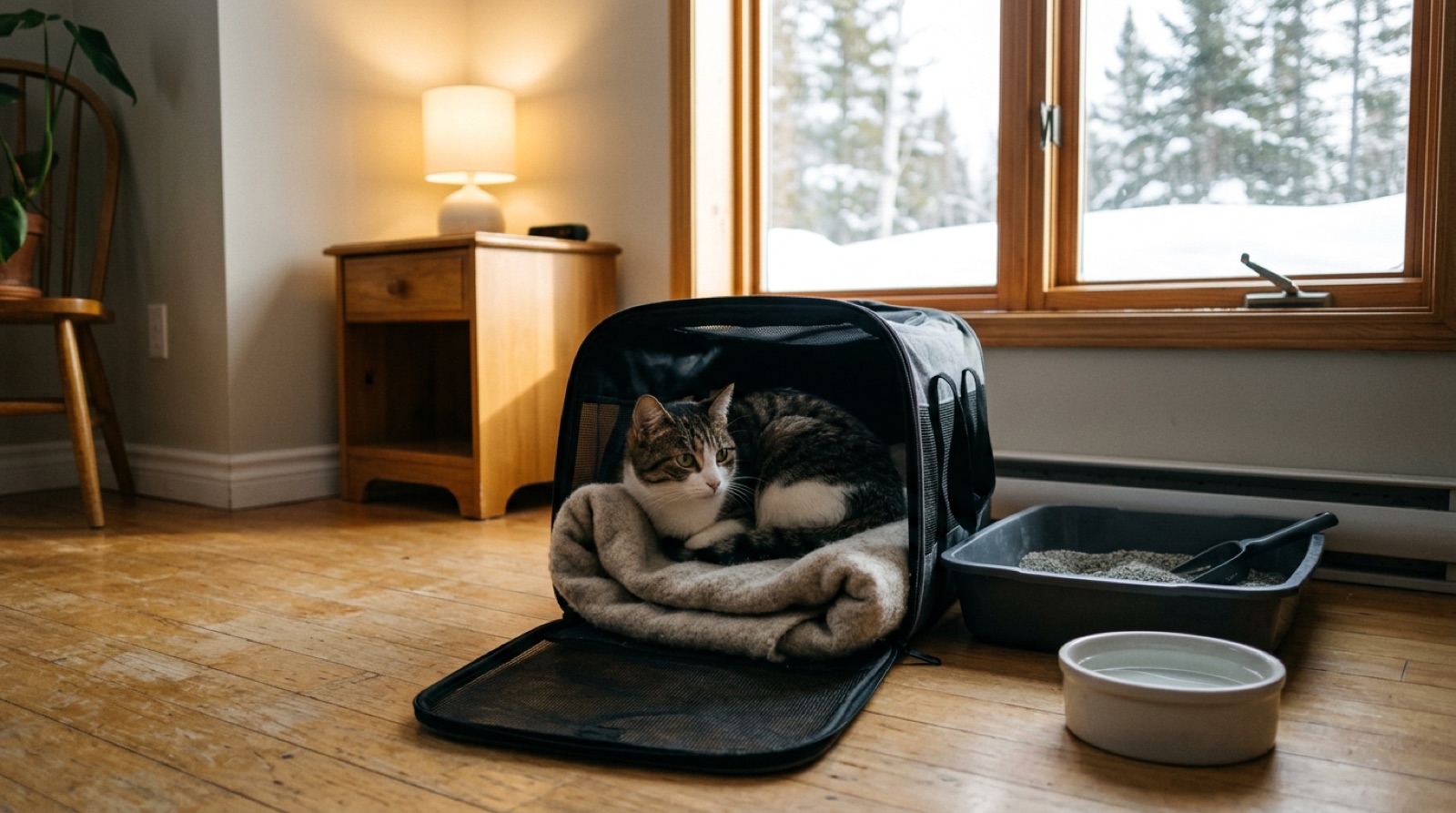
The short answer
Set up one quiet safe room with a litter box, food, water and a hiding spot, then let the cat decompress at its own pace. Hiding and light eating for the first few days is normal. Keep food and litter the same as the shelter used, book a vet visit in the first week or two, and know the emergency symptoms, especially a male cat that cannot urinate. Follow the 3-3-3 rule and give it time.
The single biggest mistake new adopters make is doing too much. A rescue cat has just lost every familiar smell, sound and person in a single afternoon, and the kindest thing you can do is make the first days small, quiet and predictable.
Get the safe room right, understand the hiding phase, and know the few things that actually need a vet. The rest is patience, and it pays off.
The 3-3-3 rule
| Timeframe | What is happening |
|---|---|
| First 3 days | Decompression. Expect hiding, little eating, and a cat that wants to be left alone. Keep it in one quiet safe room and resist the urge to pull it out for cuddles. |
| First 3 weeks | Settling in. The cat learns your routine, starts to explore, and shows more of its real personality. Litter habits and appetite normalise. |
| First 3 months | Feeling at home. The cat is fully comfortable, bonds deepen, and you finally see the animal the shelter told you about. |
A rough timeline, not a schedule every cat follows exactly. Shy or previously outdoor cats often need the full three months.
Set up the safe room first
Pick one room and close it off. A spare bedroom or a bathroom is perfect. The whole house at once overwhelms a frightened cat.
Litter box in one corner, food and water in another. Cats do not like eating next to the toilet, and neither do we.
Give it a hiding spot. An open carrier, a cardboard box on its side, or space under the bed. A cat that can hide feels safe enough to eventually come out.
Keep it quiet. Low traffic, no crowding, and children kept calm. Sit in the room and read so the cat gets used to you without any pressure.
Find a valley vet in the first week
Book a get-to-know-you visit within the first week or two, even though the shelter already vaccinated. The point is to have a vet who knows your cat before something goes wrong, not to fix anything.
The Swan Valley Veterinary Clinic on Highway 10 East is the local option, open weekdays. Bring whatever medical records SVAPL gave you. While you are there, ask what they recommend for an emergency after hours, because the valley has no overnight hospital and it is better to know the plan on a calm day than to work it out during a crisis.
Symptoms that mean go now
Most of week one is patience, but a few things are real emergencies. A male cat straining in the litter box and producing no urine is a possible urinary blockage, which is life-threatening within hours and needs a vet immediately. Also urgent: laboured breathing, repeated vomiting, refusing all food or water for more than a day, sudden collapse or weakness, or any serious bleeding.
The valley has no 24-hour animal hospital. The Swan Valley clinic is closed evenings and weekends, and the nearest true 24-hour hospitals are in Winnipeg, close to five hours away. Write your clinic's number on the fridge in week one. Never give a cat human medication, since many are toxic to cats even in tiny amounts.
Browse adoptable Swan River cats
Every cat comes with the shelter's honest notes on temperament, so you know what settling-in will look like before you bring one home. Listings refreshed regularly.
See Available Swan River Cats →Frequently Asked Questions
What do I do the first day with a rescue cat?
Set up one quiet safe room before the cat even arrives, then let the cat come to you. A spare bedroom or bathroom works. Put a litter box in one corner, food and water away from it, a hiding spot like an open carrier or a box, and something that smells like you. When you get home, open the carrier in that room and walk away. Do not throw a welcome party, do not let the kids crowd it, and do not give the cat the run of the house. A calm, boring first day is exactly what a frightened cat needs.
Why is my new cat hiding and not eating?
Because it is doing exactly what a cat is supposed to do, and it is almost always temporary. A rescue cat has just lost everything familiar in one afternoon, and hiding is how a cat feels safe while it works out whether this new place is dangerous. Most cats hide for a few days and eat little at first. Leave food down, keep the room quiet, and let the cat set the pace. Sit in the room reading quietly so the cat gets used to you without pressure. What is not normal is a cat not eating at all for more than a day, which needs a vet call.
What is the 3-3-3 rule?
It is a rough timeline for a rescue cat settling in, and it helps set expectations. The first three days are decompression, when the cat hides and barely eats. The first three weeks are settling in, when it learns your routine and starts to explore. The first three months are when it truly feels at home and shows you its full personality. The numbers are not a schedule every cat follows exactly, but the shape is real. If you expect a confident cat on day two, you will worry over nothing. If you know the hiding phase is coming, you can relax through it.
Should I change the cat's food and litter right away?
No, change both slowly or not at all in week one. A cat that has just moved is already stressed, and an abrupt food switch on top of that often causes diarrhoea, which is the last thing you want while the cat is decompressing. Ask the shelter what food and litter the cat was using and start with the same. If you want to switch, wait until the cat is settled, then mix a little of the new in with the old over a week or two, increasing the new gradually. Same approach for litter. Keep the early days boring and predictable.
When should I introduce the cat to the rest of the house?
When the cat is relaxed and moving freely around the safe room, usually after a few days to a week. Open the door and let the cat explore on its own terms rather than carrying it out. Do it when the house is quiet. Keep the safe room set up as a retreat it can return to. If you have other pets, go slower still, swapping scents and doing brief supervised meetings before any free contact. Rushing this is the most common mistake new owners make, and it can set the whole process back by weeks.
How do I introduce a rescue cat to my dog or other cat?
Slowly, through a closed door first, and never face to face on day one. Let the animals smell each other under the door and get used to the sound and scent of each other for several days. Feed them on opposite sides of the door so each associates the other with good things. Then do brief, supervised, calm meetings, keeping the dog leashed or the cats able to retreat. If there is hissing or growling, back up a step and go slower. A rushed introduction can create a rivalry that takes months to undo, while a patient one usually settles within a few weeks.
When should I take a new rescue cat to the vet?
Book a get-to-know-you visit within the first week or two even though the shelter already vaccinated, because it establishes a relationship with a valley clinic before you urgently need one. The Swan Valley Veterinary Clinic on Highway 10 East is the local option. Bring whatever medical records the shelter gave you. This first visit is not about fixing anything, it is about having a vet who knows your cat when something does go wrong. In a valley with no overnight hospital, knowing your daytime clinic and its hours in advance is genuinely valuable.
What symptoms mean I need a vet right now?
A few are true emergencies. A male cat straining in the litter box and producing no urine is a possible urinary blockage, which is life-threatening within hours and needs a vet immediately, not in the morning. Also urgent: laboured breathing, repeated vomiting, a cat that will not eat or drink for more than a day, sudden weakness or collapse, a swollen painful belly, or any significant bleeding or trauma. When in doubt, phone the clinic and describe what you are seeing. Never give a cat human medication, since many common ones are toxic to cats even in small amounts.
What is my after-hours plan if the clinic is closed?
Sort this out in week one, because the valley has no 24-hour animal hospital. The Swan Valley Veterinary Clinic is closed evenings and weekends, and it asks clients to phone the clinic in an emergency so staff can be ready during hours. The nearest true 24-hour hospitals are in Winnipeg, close to five hours away. Write your clinic's number on the fridge, know its hours, and understand the Winnipeg drive before you need it. A calm plan made in advance is worth far more than one improvised at midnight with a sick cat and a long dark highway.
How long until my rescue cat acts normal?
Give it the full three months before you judge who the cat really is. Plenty of cats settle far faster, some in days, but a shy or previously outdoor cat can take the whole three months to fully relax and show its personality. The cat that hides under the bed in week one is often a completely different, affectionate animal by month three. Patience is the single most useful thing you bring to a rescue cat. If you are ever unsure whether something is normal decompression or a real problem, phone the shelter. SVAPL knows the cat and would rather answer a question than have you worry.
Related Swan River Guides
One search, every Swan Valley cat
Adoptable cats and kittens from the Swan River area, in a single list.
Browse Available Swan River Cats →New cat? Start with these care guides
Everything a new adopter needs to set up a safe, happy home.