The short answer
Boxers are goofy, affectionate, and great with kids, but they stay adolescent until about three and need a real hour-plus of daily exercise plus mental work. The two big training jobs are the jumping (manage it, reward four-on-the-floor, teach a sit-to-greet, never reward the launch) and channelling the energy (an under-exercised Boxer gets destructive). Use positive, reward-based methods, because the breed is sensitive and punishment backfires. The Brandon-specific piece: the short coat limits winter outdoor time, so lean on indoor enrichment, puzzle feeders, and short training games to burn energy in the cold months.
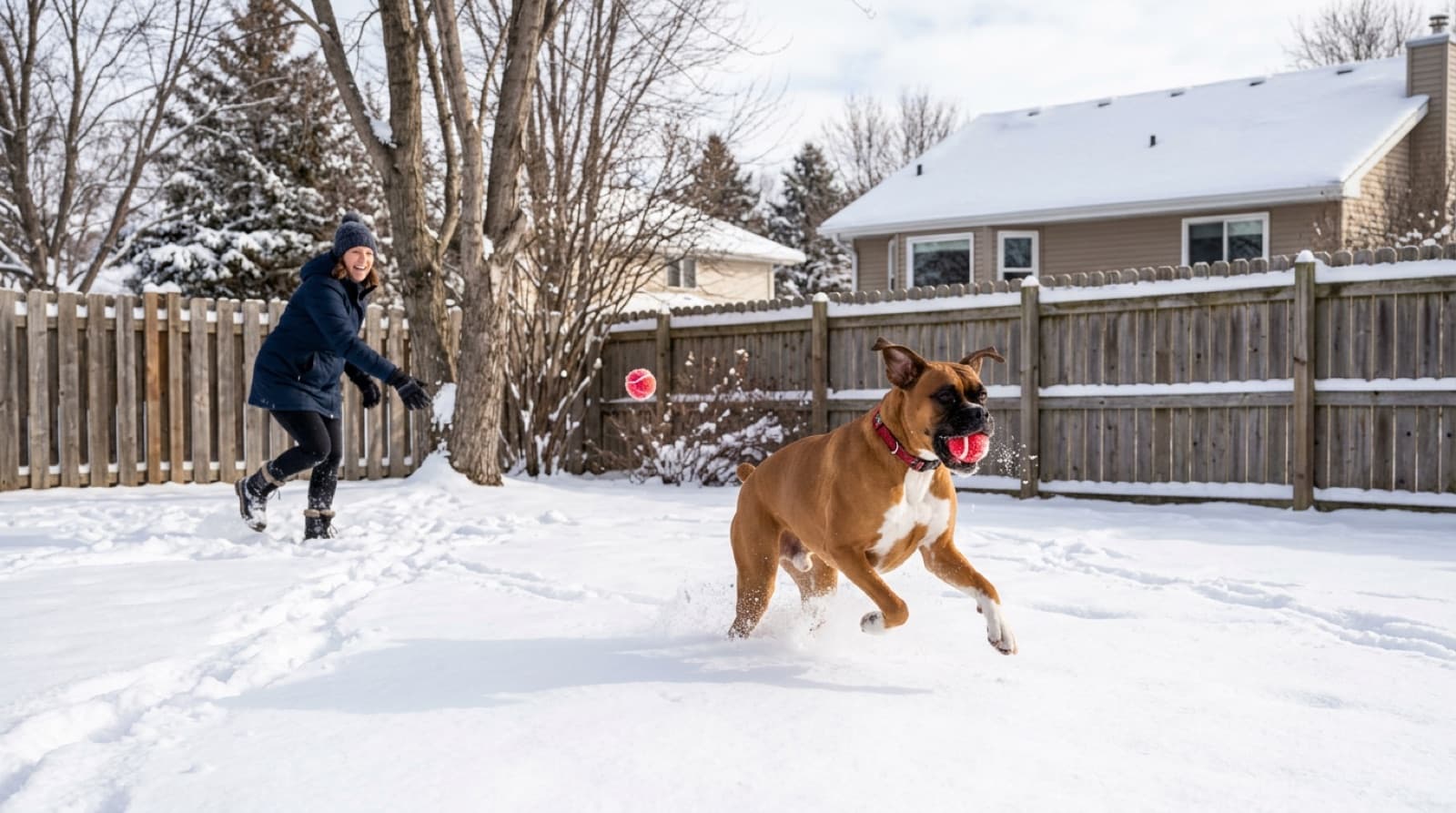
The clown who stays a puppy until three
Boxers are exuberant, playful, and deeply affectionate, with a goofy streak that lasts a lifetime. They are brave and alert enough to make decent watchdogs, but a well-raised Boxer is friendly, not aggressive. The defining trait for a new owner is the long adolescence: Boxers stay puppy-brained until roughly three years old, so the energy, mouthing, and enthusiasm last far longer than with many breeds. That is not a flaw; it is the breed. It just means the training and exercise commitment is a multi-year one, and adopting an adult Boxer that has aged out of the wildest phase is often the easier path for a first-time owner.
Training the energy and the jumping
Use positive, reward-based methods. Boxers are intelligent and eager to please but sensitive, so punishment-heavy training backfires and sours the relationship. Keep sessions short, upbeat, and frequent, and build training into daily life rather than treating it as a chore.
Fix the jumping with consistency. Never reward a jump with attention, turn away until all four paws are down, then reward calm greetings warmly, and teach a sit-to-say-hello. Have every visitor follow the same rule, because inconsistency undoes the work. A well-exercised Boxer jumps far less.
Meet the exercise need. An hour-plus of real daily exercise plus mental work, throughout adolescence especially. Running, fetch, tug, and training games all count, and the brain work matters as much as the miles. Group obedience classes are excellent for building focus around distraction.
Ask your Brandon vet or the rescue you adopt from for a current recommendation on a positive-methods trainer. The American Kennel Club breed profile has a good overview of the Boxer’s working temperament.
Keeping a Boxer worked through a Manitoba winter
This is the seasonal puzzle unique to a short-coated, high-energy breed in Westman: the Boxer needs a lot of exercise and cannot spend long outside in deep cold. Shift the workload indoors, scent games, puzzle feeders, tug, hallway fetch, and short training sessions, and get outdoor bursts in during the milder part of the day with a warm coat and booties, kept shorter and more intense. Twenty to thirty minutes of indoor brain work plus managed outdoor time keeps a Boxer far saner through January than an idle one. Plan the winter routine before the cold arrives, and see our Brandon winter dog care guide for the cold-weather details.
Ready for a Boxer of your own?
Browse adoptable Boxers from Brandon and Manitoba rescues. An adult past the wild phase shows you the real temperament up front.
See Available Boxers →Frequently Asked Questions
What is a Boxer’s temperament like?
Boxers are often called the clowns of the dog world, and it fits. They are exuberant, playful, deeply affectionate, and famously bonded to their people, with a goofy sense of humour that stays into old age. They are also brave and naturally alert, which makes them decent watchdogs, but a well-raised Boxer is friendly rather than aggressive. The flip side of all that personality is intensity: Boxers are high-energy, physically strong, and stay puppy-brained until about three years old, so they need consistent training and a real outlet for their energy. With that, they are wonderful family dogs, patient and gentle with children they know, and endlessly entertaining companions.
Are Boxers hard to train?
Not hard, exactly, but they need the right approach and a patient owner, because two things work against you: the long adolescence and a streak of independence. Boxers are intelligent and eager to please, so they learn quickly, but their energy and short attention span as youngsters mean sessions must be short, upbeat, and rewards-based. Harsh, punishment-heavy methods backfire badly with the breed, souring a sensitive, people-focused dog. Keep training positive, consistent, and fun, start early, and build it into daily life rather than treating it as a separate chore. A Boxer trained with patience and positive reinforcement becomes a delightful, responsive dog; one left untrained becomes a strong, bouncy handful.
How do I stop my Boxer from jumping on people?
Jumping is the classic Boxer problem, and it comes straight from their exuberant, people-loving nature, so the fix is management plus consistent training rather than punishment. Never reward the jump with attention, even negative attention counts, so turn away and ignore the dog until all four paws are on the floor, then reward calm greetings warmly. Teach and heavily reward an alternative behaviour like sitting to say hello, and have guests do the same, since inconsistency from visitors undoes your work. Managing the energy helps enormously: a Boxer that has had real exercise is far less likely to launch at people. Start this young if you can, because a 60-pound adult jumping is a very different problem from a puppy doing it.
How much exercise does a Boxer need?
A Boxer needs a solid hour or more of real exercise every day, and mental work on top of that, throughout the two-to-three-year adolescence especially. This is not a breed you can satisfy with a short walk around the block. They need to run, play, and problem-solve, and an under-exercised Boxer becomes destructive, mouthy, and hard to live with, which is a leading reason they end up in rescue. Vary it: brisk walks, off-leash running in a safe area, fetch, tug, and training games all count, and the mental component matters as much as the physical. In Brandon, the challenge is keeping this up through winter, when a short-coated Boxer cannot spend long outside, so indoor enrichment becomes essential.
How do I exercise a Boxer through a Brandon winter?
This is the real seasonal puzzle for Boxer owners in Westman, because the dog needs a lot of exercise and cannot spend long in deep cold with its short coat. The answer is to shift the workload indoors and lean on the Boxer’s brain. Scent games, puzzle feeders, tug, hallway fetch, stair work if you have them, and short frequent training sessions all burn real energy. Get outdoor exercise in during the milder parts of the day with a warm coat and booties, keeping it shorter and more intense. A Boxer that gets twenty to thirty minutes of indoor brain work plus managed outdoor bursts stays far saner through January than one left to vibrate in the living room. Plan the winter routine before the cold arrives.
Are Boxers good with children?
Yes, Boxers are genuinely one of the better breeds with children, which is a big part of their family-dog reputation. They are patient, playful, affectionate, and protective of the kids they live with, and many Boxers seem to have endless tolerance for children’s energy. The caution is physical, not temperamental: a Boxer is strong and bouncy, especially as an adolescent, and can accidentally knock over a small child in sheer enthusiasm. So supervise interactions with young kids, teach the dog not to jump, and teach children to respect the dog’s space. With training and supervision, the combination of a Boxer and children is usually a happy one, but the energy needs managing while the dog is young.
Do Boxers have a high prey drive?
Many Boxers have a moderate to fairly strong prey drive, a legacy of their working history, though it varies by individual. This shows up as intense interest in squirrels, rabbits, and sometimes cats, and a tendency to chase fast-moving things. It does not automatically mean a Boxer cannot live with a cat, and many do so happily, especially when raised together, but it means introductions should be careful and a rescue’s notes on cat and small-animal tolerance are worth taking seriously. On walks, a solid recall and a secure leash matter, because a Boxer locked onto a chase can be hard to call off. Ask any rescue about the specific dog’s prey drive and small-animal history before adopting into a home with cats.
Where can I train a Boxer in Brandon?
Look for a local trainer or class that uses positive, reward-based methods, which suit the breed’s sensitive, people-focused nature far better than punishment-based approaches. Group obedience classes are excellent for a young Boxer, because they build focus around the distraction of other dogs and people, which is exactly where Boxers struggle. Ask your Brandon vet or the rescue you adopt from for a current recommendation on a force-free trainer, since specific programs come and go. Beyond formal classes, the most important training happens at home in daily life: consistent rules, rewarded calm, and short frequent sessions. Start early, keep it positive, and a Boxer becomes a joy to live with.
Related Guides
New dog? Start with these care guides
Everything a new adopter needs to set up a safe, happy home.