The short answer
Keep the first week deliberately small and boring. A rescue dog is decompressing, so follow the 3-3-3 rule: roughly 3 days overwhelmed and shut down, 3 weeks starting to settle, 3 months to see the real dog. Set up a quiet home base with a crate, bed, and the food the rescue used before day one. Skip the welcome party, the dog park, and the pet store, and stick to short leashed walks and a steady routine. Handle the Brandon paperwork early: a wellness vet visit, confirming the microchip is registered to you, and the $21 city licence. Accidents and hiding in week one are normal. Patience builds the bond.
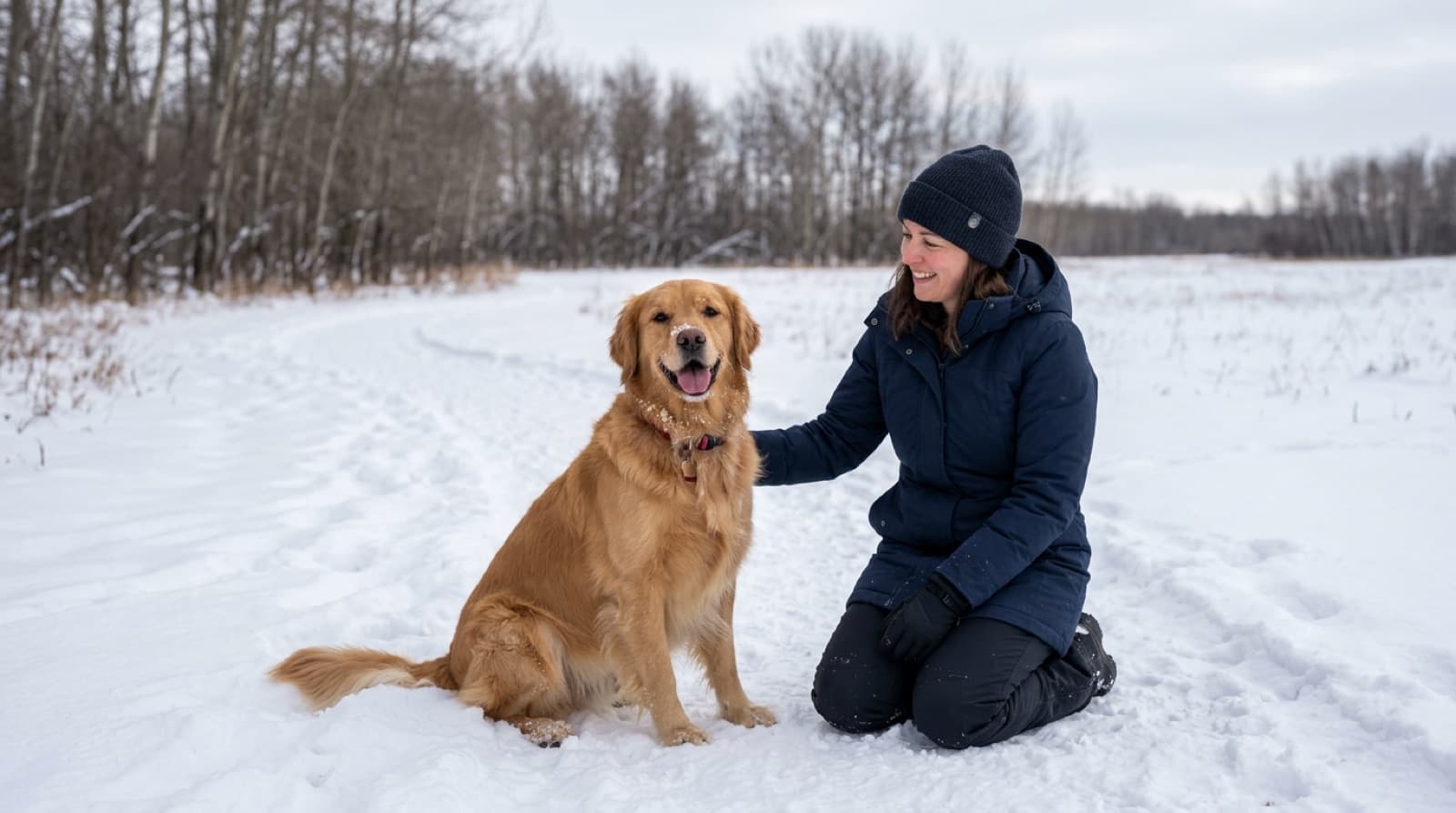
The 3-3-3 rule, in plain terms
First 3 days: overwhelmed
The dog is flooded. Expect quiet, hiding, little appetite, and a lot of sleep. Keep the world small: one room, one or two people, no visitors, short leashed toilet trips only. Do not test the dog, do not crowd it, and let it choose when to approach you.
First 3 weeks: settling in
The dog learns the routine and starts showing personality. This is when gentle structure, house-training, and simple rewards-based training take hold. Some new behaviours appear now, good and challenging, as the dog relaxes enough to be itself.
First 3 months: at home
Trust has built, the routine is second nature, and you finally see the full character. Bonding for a dog from a hard background can take longer still. Judge the dog by month three, not week one.
The Brandon setup steps most people miss
Beyond the crate and the calm, three practical steps belong in the first couple of weeks:
Book a wellness vet visit. Even with a rescue workup, get a Brandon vet a baseline and ask about parasite prevention and diet.
Update the microchip. Confirm the chip is registered to you, not the previous owner or the rescue. It is ten minutes and the step people forget, and the American Veterinary Medical Association explains why an up-to-date registration is what actually reunites a lost dog.
License the dog. The City of Brandon requires a licence, $21.00 a year for a fixed dog within the two-animal limit, through the Licensing Section at 204-729-2230.
The full fee picture, including the vet and licence lines, is in our Brandon dog adoption costs guide. Still choosing a dog? Start with the best dog rescues in Brandon guide.
A first winter week in Westman
If you are adopting in the cold months, the first week collides with a hard prairie winter, and a stressed new dog plus deep cold needs a gentle plan. A thin-coated dog needs a well-fitted coat, and salted sidewalks call for booties or a paw balm and a rinse after walks. On the coldest days, a shovelled toilet patch close to the door beats a long walk a nervous dog will not settle to use. Keep outings short and frequent, and cover the rest with indoor calm. Save the full winter routine and the Assiniboine River trails for once the dog is clearly settled.
Still looking for your dog?
Browse adoptable dogs from Brandon-area rescues and set an alert so you hear the moment the right one is listed.
Browse Brandon Dogs →Frequently Asked Questions
What is the 3-3-3 rule for a rescue dog?
The 3-3-3 rule is a simple map of how a rescue dog decompresses. In the first 3 days the dog is overwhelmed and often shut down or unusually quiet, sleeping a lot, eating little, and hiding, so keep the world small and the demands near zero. Over the first 3 weeks the dog starts to settle, learns your routine, and shows more of its real personality, which is when house-training and gentle structure take hold. By 3 months most dogs feel at home, trust has built, and you finally see the full character. The takeaway is patience: the anxious or aloof dog of week one is rarely the dog you have by month three.
How do I set up before I bring my Brandon rescue dog home?
Have the basics ready so day one is calm: a crate or a defined quiet space, a bed, bowls, food (ideally the same food the rescue used, to avoid stomach upset), a collar with an ID tag, a leash, and a couple of simple toys. Choose one low-traffic room as the dog’s home base. Because it is Brandon, add winter gear if you are adopting in the cold months, a well-fitted coat for a thin-coated dog and booties for salted sidewalks. Book a wellness vet visit for the first week or two, and plan to license the dog with the City. A quiet, prepared home helps a nervous dog exhale.
Should I take my new dog to meet people and other dogs right away?
No. The single most common first-week mistake is doing too much too soon: the welcome party, the dog park, the pet store, the long car trips. A freshly adopted dog is flooded, and piling on new people and dogs during decompression can set back trust or trigger reactions that are not the dog’s baseline. Keep the first week deliberately boring. Short leashed walks on quiet streets, calm time at home, and a predictable routine. Save the Riverbank Discovery Centre trails, visits, and any off-leash time for once the dog is clearly settled, usually a few weeks in, and introduce new things one at a time.
How do I house-train a rescue dog in a Brandon winter?
Treat every rescue dog as needing a refresher regardless of history, because a new home resets the routine. Take the dog out on a schedule, first thing, after meals, after naps, and before bed, and reward outdoors immediately with a treat and praise. Winter adds friction: a dog that will not settle to toilet in deep cold or on ice may need a jacket, booties, and a shovelled patch close to the door rather than a long walk. Go out with the dog rather than sending it out alone, so you can reward the moment it goes. Accidents in the first weeks are normal and are about stress and a new schedule, not defiance. Clean thoroughly with an enzyme cleaner and keep the routine steady.
When should I take my rescue dog to the vet in Brandon?
Book a wellness exam within the first week or two, even if the rescue did a workup, so a Brandon vet has a baseline and you can ask about parasite prevention, diet, and anything the rescue flagged. Bring whatever medical paperwork came with the dog. This first visit is also when to confirm the microchip is registered to you, not the previous owner or the rescue, which is a step people forget. If your dog has a condition likely to need specialty care, ask your vet how referrals work, because the nearest specialty and emergency hospitals are in Winnipeg, about two and a half hours east.
Do I have to license my dog in Brandon, and how?
Yes. The City of Brandon requires a dog licence, and for a spayed or neutered rescue dog within the two-animal limit the fee is $21.00 a year, the lowest bracket, which every fixed rescue dog qualifies for automatically. Register through the City’s Licensing Section at 204-729-2230. Do this in the first weeks along with the vet visit and the microchip update, so the paperwork side of ownership is settled early. Our Brandon adoption costs guide covers the full fee structure, including the higher rate for unsterilised dogs.
My rescue dog is hiding and will not eat. Is something wrong?
Usually not, and it is one of the most common first-days experiences. A dog in a brand-new home is stressed, and stress suppresses appetite and drives hiding or shutting down. Give the dog a quiet den it can retreat to, leave food down for short windows without hovering, and let it come to you rather than reaching in. Most dogs start eating within a day or two as the panic eases. Call your vet if the dog eats nothing for more than about 48 hours, shows vomiting or diarrhoea, or seems lethargic beyond normal decompression, since those can point to a medical issue rather than nerves.
How long until my rescue dog feels like my dog?
For most dogs, real settling takes the full three months the 3-3-3 rule describes, and deep bonding can take longer for a dog that came from a hard background. The mistake is judging the dog by week one, when it is often quiet, clingy, or aloof in ways that are not its true temperament. Keep the routine steady, keep expectations low early, and let the dog set the pace on affection and confidence. The owners who go slowest in the first weeks tend to end up with the most settled dogs, because they let trust build instead of forcing it.
Related Guides
New dog? Start with these care guides
Everything a new adopter needs to set up a safe, happy home.