The short answer
The Dachshund's defining health concern is the back, by a wide margin. The breed has the highest rate of intervertebral disc disease of any dog, which can cause pain and hind-end paralysis. Obesity is the linked second concern, because excess weight stresses the spine most, so keeping a Dachshund lean is the most protective thing you can do. Beyond the back: patellar luxation (slipping kneecap), eye disease, dental disease (small crowded mouths), and heart conditions with age; wirehaired lines can carry Lafora disease. Protect the back: no jumping, use ramps, harness not collar, support the whole body when lifting. Long-lived at 12 to 16 years. Sudden hind-end paralysis is an emergency. Winnipeg has 24-hour emergency care and specialty referral. Always consult your veterinarian.
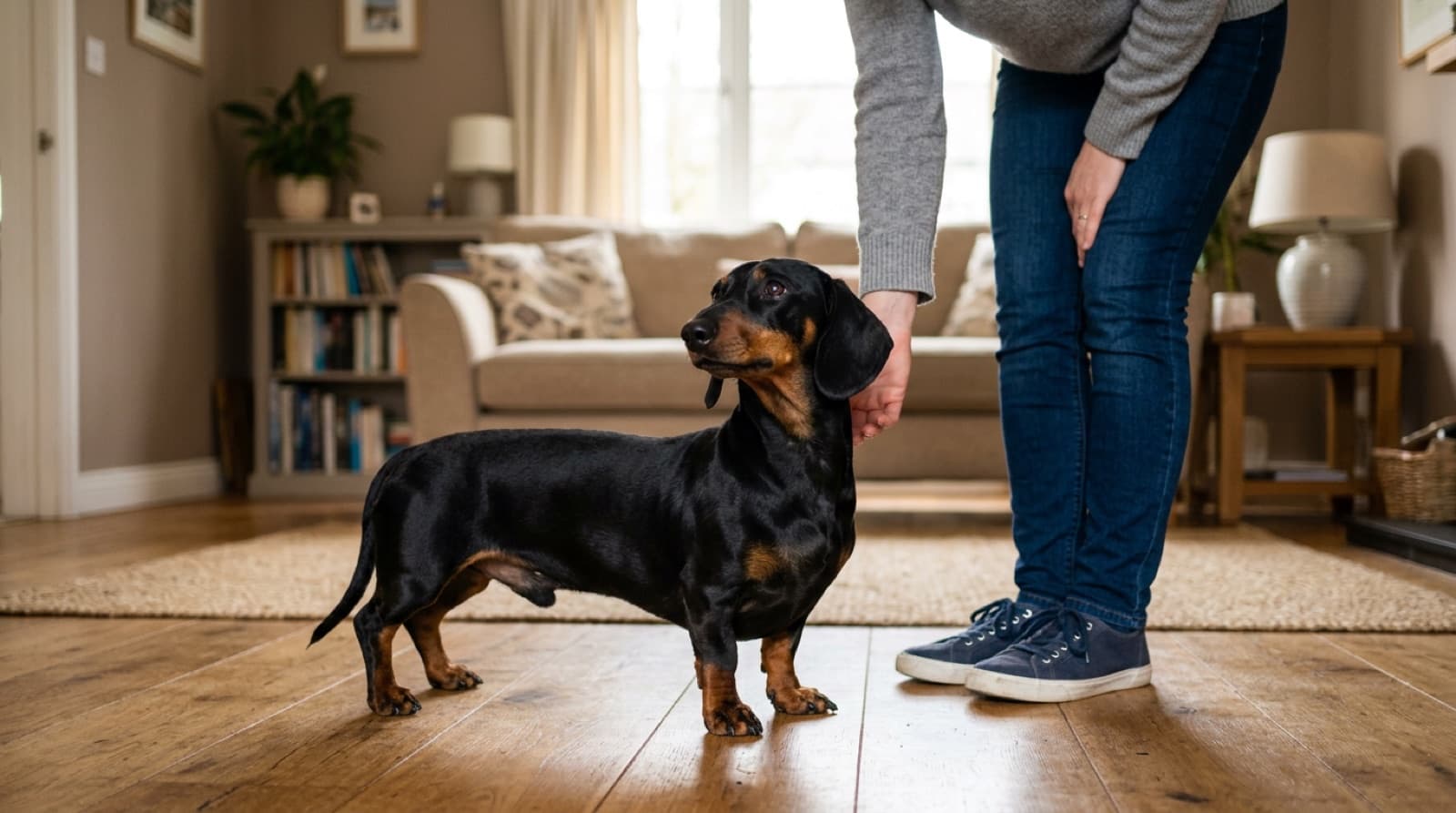
The back: disc disease is the breed-defining risk
Dachshunds have the highest rate of intervertebral disc disease (IVDD) of any breed. Their long back and short legs are a form of dwarfism that stresses the spine, so the cushioning discs are prone to bulging or rupturing, causing pain and, in serious cases, hind-end weakness or paralysis, most commonly between about age three and seven. Any sudden inability to walk, dragging of the back legs, a hunched back, crying in pain, or refusal to move is an emergency.
This one risk shapes everything about owning the breed, and prevention is largely in your hands: keep the dog lean, prevent jumping on and off furniture and stairs, use ramps, support the whole body when lifting, and use a harness rather than a collar. Fast treatment of a disc event genuinely changes whether a dog walks again, so know the emergency signs cold. Because prevention is so central, we cover it in full in our dedicated Dachshund back care and IVDD guide.
Weight: the linked concern that protects the spine
Weight is the single biggest health lever you control for a Dachshund. Excess weight dramatically increases the stress on the long, vulnerable spine and raises the risk of a disc event, plus it worsens the joints, strains the heart, and shortens life. Keeping this breed lean is genuinely a matter of protecting the back.
The management is strict but simple: measure every meal, count treats as part of the daily calories, avoid table scraps, and provide sensible low-impact exercise. You should be able to feel the ribs easily under a light layer and see a waist from above, and because a Dachshund is small, even a pound or two of excess is significant. Winnipeg winters are the trap, because exercise drops in deep cold while the appetite does not, so cut portions when the walks get short. If in doubt, your vet can assess body condition and set a target. For this breed, a lean dog is a protected dog.
Knees: patellar luxation
Patellar luxation, a slipping kneecap, is fairly common in Dachshunds, especially the smaller ones. The kneecap slips out of its groove, causing an intermittent skip or hop in the gait, a held-up back leg, or occasional lameness, ranging from mild to surgery-level.
Watch for the characteristic skipping step or a leg suddenly held up mid-stride, and mention it to your vet, who can grade the severity and recommend management, from weight control and joint support to surgical correction in serious cases. As with the back, weight control is the most important thing you manage, and sensible low-impact exercise that builds supporting muscle without high-impact jumping protects both the knees and the spine. Most Dachshunds with mild patellar luxation live comfortable, active lives with good weight management and monitoring.
Eyes, teeth, heart, and Lafora disease
Dental disease is a genuinely common Dachshund problem, because small crowded mouths trap plaque, leading to tartar, gum disease, and tooth loss if not managed. Dental care is not optional: brush regularly, provide dental-appropriate chews, and have your vet check the teeth yearly with cleanings as recommended, since dental disease is painful and affects overall health. On eyes, the breed can inherit progressive retinal atrophy and develop cataracts, so mention any cloudiness or vision change, and note that double-dapple breeding carries a high risk of serious eye defects.
With age, Dachshunds can develop heart disease such as mitral valve disease, which your vet monitors through regular checks. And wirehaired Dachshunds can carry Lafora disease, an inherited epilepsy that causes seizures and muscle twitches in middle-aged to older dogs, testable by DNA in breeding stock and manageable if it appears. None of these is as central as the back, but all reward routine attention over this breed's long life.
Browse adoptable Dachshunds in Winnipeg
A rescue Dachshund comes with a vet workup and, often, a known history, which is a real head start, and this long-lived breed is rewarding when you protect the back and keep the weight down. Refreshed regularly.
See Available Dachshunds →Specialty and emergency vet care in Winnipeg
Winnipeg has 24-hour emergency veterinary care, including the Winnipeg Animal Emergency Hospital, plus referral practices offering neurology and surgery for back and disc problems, ophthalmology for eye disease, and internal medicine, covering the range a Dachshund might need. Complex prairie cases are sometimes referred to the Western College of Veterinary Medicine teaching hospital in Saskatoon.
Because a serious back event is the Dachshund emergency to know, keep your nearest emergency clinic's address and phone handy, and treat sudden hind-end paralysis, inability to walk, dragging of the back legs, a hunched painful back, or refusal to move as an emergency requiring immediate care, since fast treatment genuinely changes whether a dog walks again. Your regular vet coordinates referrals to the neurology and surgery teams when a Dachshund needs one.
Frequently Asked Questions
What health problems are Dachshunds most prone to?
Dachshunds are a long-lived breed, but their distinctive long-backed, short-legged build creates one overwhelming health concern: the back. Dachshunds have the highest rate of intervertebral disc disease of any breed, where the discs cushioning the spine bulge or rupture, causing pain and sometimes hind-end weakness or paralysis, and it is by far the most important issue to understand and prevent. Obesity is the second big concern because it dramatically worsens the back. Beyond those, Dachshunds are prone to patellar luxation, a slipping kneecap, several eye conditions including progressive retinal atrophy and cataracts, dental disease from their small crowded mouths, and, as they age, heart disease such as mitral valve disease. Wirehaired Dachshunds can carry a specific inherited epilepsy called Lafora disease. Most Dachshunds live long, healthy lives when kept lean and their backs are protected, so the health strategy for this breed is really a back-protection strategy. None of this should scare you off, but back and weight care should shape daily life. Always consult your veterinarian for diagnosis and treatment.
Why are Dachshunds so prone to disc disease?
Because their signature shape is a form of dwarfism that puts extreme stress on the spine. Dachshunds were bred with a long back and short legs to hunt badgers in tunnels, and that same build means the intervertebral discs cushioning the vertebrae are prone to degenerating and bulging or rupturing, a condition called intervertebral disc disease, or IVDD. The breed has the highest IVDD rate of any dog, with a large share of Dachshunds affected at some point, most commonly between about age three and seven. A disc event ranges from painful to paralysing, and any sudden inability to walk, dragging of the back legs, a hunched back, crying in pain, or refusal to move is an emergency needing immediate veterinary care, because fast treatment genuinely changes outcomes. The single most protective thing an owner can do is prevention: keep the dog lean, prevent jumping on and off furniture and stairs, use ramps, support the whole body when lifting, and use a harness rather than a collar. Our dedicated back-care guide covers prevention in full. Consult your veterinarian promptly for any back-pain or weakness signs.
How does weight affect a Dachshund's health?
Weight is the single biggest health lever an owner controls for a Dachshund, because excess weight dramatically increases the stress on the long, vulnerable spine and raises the risk of a disc event, the breed's most serious and expensive problem. An overweight Dachshund also faces worse joint problems, more strain on the heart, and a shorter life, so keeping this breed lean is genuinely a matter of protecting the back and extending the years. The management is strict but simple: measure every meal rather than free-feeding, count treats as part of the daily calories, avoid table scraps, and provide sensible low-impact exercise. You should be able to feel the ribs easily under a light layer and see a waist from above, and because a Dachshund is small, even a pound or two of excess is significant. Winnipeg winters make weight control harder because exercise drops in deep cold while the appetite does not, so cut portions when the walks get short. If in doubt about your Dachshund's weight, your vet can assess body condition and set a target. For this breed, a lean dog is a protected dog. Consult your veterinarian.
Do Dachshunds have knee and joint problems?
Yes, patellar luxation is fairly common in Dachshunds, particularly the smaller ones. It is a condition where the kneecap slips out of its normal groove, causing an intermittent skip or hop in the gait, a held-up back leg, or occasional lameness, and it ranges from mild and manageable to severe enough to need surgery. Watch for the characteristic skipping step or a leg suddenly held up mid-stride, and mention it to your vet, who can grade the severity and recommend management, from weight control and joint support to surgical correction in serious cases. As with the back, weight control is the most important thing you manage, because a lean Dachshund puts far less load through the knees and spine alike. Sensible low-impact exercise that builds supporting muscle without high-impact jumping helps protect both the knees and the back. Most Dachshunds with mild patellar luxation live comfortable, active lives with good weight management and monitoring. Your vet can assess the knees and build a plan. Consult your veterinarian.
Do Dachshunds have eye and dental problems?
Both are worth watching. On eyes, Dachshunds can inherit progressive retinal atrophy, or PRA, which gradually leads to blindness, and they can develop cataracts and other conditions, so mention any cloudiness, vision change, or bumping into things to your vet, and note that the double-dapple colour pattern from irresponsible breeding carries a high risk of serious eye defects. On teeth, dental disease is a genuinely common Dachshund problem, because their small mouths crowd the teeth, trapping plaque and leading to tartar, gum disease, and tooth loss if not managed. Dental care is not optional for this breed: brush the teeth regularly, provide dental-appropriate chews, and have your vet check the teeth at least yearly, with professional cleanings as recommended, since dental disease is painful and can affect overall health. Neither eye nor dental disease is as central as the back, but both are common enough that routine attention pays off over this breed's long life. Consult your veterinarian for any eye or dental concerns.
How long do Dachshunds live?
Dachshunds are a long-lived breed, commonly reaching 12 to 16 years, among the longer-lived dogs, so a Dachshund is a genuine long-term commitment of well over a decade. The everyday habits that most extend that life are keeping the dog lean, protecting the back, keeping up dental care, staying current on parasite prevention, and maintaining regular vet checks. Weight management is the single biggest lifespan lever, because obesity worsens the back and nearly everything else. A senior Dachshund of 9 or 10 often still has years ahead, so senior Dachshunds are rewarding, lower-risk adoptions, though back care and dental care become even more important with age, and older Dachshunds can develop heart conditions like mitral valve disease that benefit from monitoring. Twice-yearly vet checks for a senior Dachshund help catch problems early. With lean weight, back-protective habits, dental care, and routine checks, most Dachshunds enjoy long, active, happy lives. Consult your veterinarian about an age-appropriate wellness schedule.
What is Lafora disease in Dachshunds?
Lafora disease is an inherited form of epilepsy seen particularly in wirehaired Miniature Dachshunds, caused by a genetic defect that leads to a build-up of abnormal material in the nerve cells. It typically appears in middle-aged to older dogs and causes seizures, muscle jerks or twitches (often triggered by light, sound, or movement), and, over time, other neurological signs. There is a DNA test for the gene, so responsible breeders of wirehaired Dachshunds test their breeding stock to avoid producing affected puppies. For a rescue Dachshund you usually will not know the genetic status, and Lafora is far less common than the breed's back issues, but if you adopt a wirehaired Dachshund and notice jerking, twitching, or seizure activity, especially triggered by flashing light or sudden noise, have it assessed by your vet. While there is no cure, the condition can often be managed to reduce the frequency and severity of episodes and maintain quality of life. It is worth being aware of, not alarmed about. Consult your veterinarian for any seizure or twitching signs.
Should I get pet insurance for a Dachshund?
For this breed, strongly yes, and enrol early, because the back risk makes insurance especially valuable. Dachshunds have the highest rate of intervertebral disc disease of any breed, and a serious disc event can mean expensive diagnostics, treatment, or surgery, sometimes running into the thousands, which is exactly the kind of unexpected cost insurance exists for. Pet insurance for a young healthy Dachshund is commonly $35 to $70 per month, and the key is to enrol before any condition appears, because pre-existing conditions, including any back problem once it has occurred, are excluded going forward, and back issues are precisely what you want covered. If you adopt an adult or senior Dachshund that already has a noted back or other condition, insurance is harder, so weigh a dedicated vet savings fund instead. Given the breed's long lifespan and the specific, costly back risk, insuring early is one of the better decisions a Dachshund owner can make. Either way, have a plan for a possible back event. This is general information, not financial advice.
Where can I find emergency and specialty vet care for a Dachshund in Winnipeg?
Winnipeg is well served for veterinary care. For after-hours emergencies, Winnipeg has 24-hour emergency veterinary care, including the Winnipeg Animal Emergency Hospital, and your regular clinic can tell you the current on-call options. For specialists, Winnipeg has referral practices offering services such as neurology and surgery for back and disc problems, ophthalmology for eye disease, and internal medicine, which covers the range a Dachshund might need, and complex prairie cases are sometimes referred to the Western College of Veterinary Medicine teaching hospital in Saskatoon. Because a serious back event is the Dachshund emergency to know, keep your nearest emergency clinic's address and phone handy, and treat sudden hind-end paralysis, inability to walk, dragging of the back legs, a hunched painful back, or refusal to move as an emergency requiring immediate care, since fast treatment of a disc problem genuinely changes whether a dog walks again. Most Dachshund health needs are routine, but knowing where neurology and emergency care are before you need them is especially worthwhile for this breed. Consult your veterinarian for guidance.
Related Guides
New dog? Start with these care guides
Everything a new adopter needs to set up a safe, happy home.