The short answer
German Shepherds are one of the more commonly surrendered large breeds in Manitoba. Best Winnipeg rescues: Winnipeg Humane Society, Manitoba Mutts, and D'Arcy's ARC. Adoption fee: $300 to $500 versus $1,500 to $3,000 from a breeder. Most surrenders trace back to under-stimulated, under-trained dogs. Skip free GSD listings, which are usually backyard breeders or scams. Most Winnipeg rescue Shepherds are 1-to-5-year adults, and adults and seniors are the easier first-Shepherd path. Shepherds are cold-hardy, so a prairie winter suits them, but they need real daily exercise year-round.
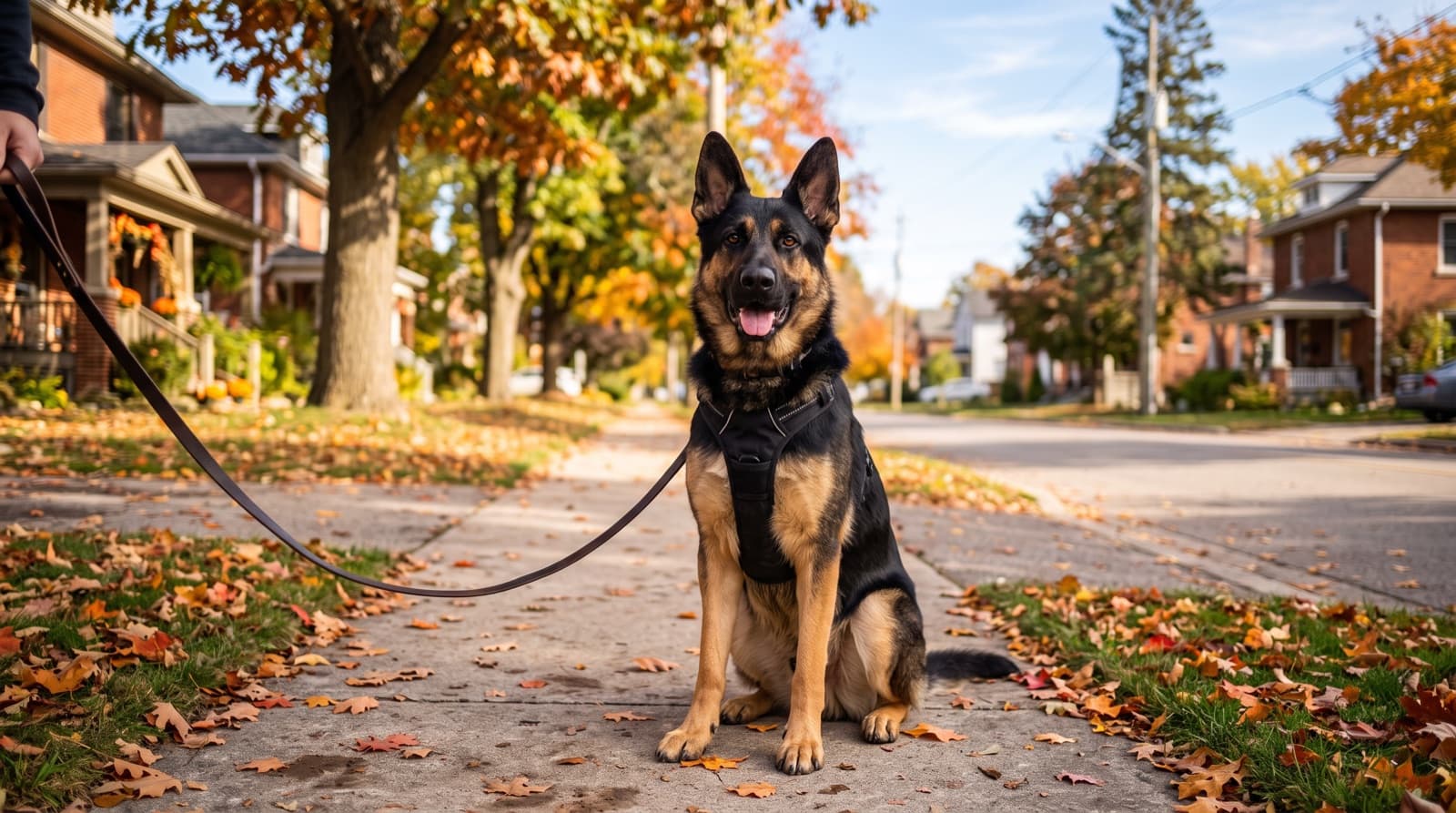
Where to adopt a German Shepherd in Winnipeg
German Shepherds and Shepherd crosses appear in Winnipeg rescues most months of the year, because they are both popular on the prairies and demanding to own. The three most reliable sources are the Winnipeg Humane Society, Manitoba Mutts Dog Rescue, and D'Arcy's ARC. You can browse all currently available Winnipeg Shepherds and Shepherd mixes across the Manitoba rescues we cover on LocalPetFinder's German Shepherd breed page, refreshed regularly.
A meaningful share of Manitoba rescue Shepherds arrive through Manitoba Mutts' northern and remote-community transport pipeline, where Shepherd and Shepherd-cross populations are common. Those dogs get fully vetted and assessed in a Winnipeg-area foster home before they are listed, which means you can ask the foster real questions: does the dog settle in the evening, how is it alone, how does it react to a stranger at the door. The Canadian Kennel Club publishes the breed standard if you want the formal background before you meet a dog.
Most rescue Shepherds are 1-to-5-year adults surrendered once the breed reality set in. Purebred puppies are rare here, though Shepherd-cross litters turn up more often.
Why so many Shepherds end up in Manitoba rescue
The story we hear from Winnipeg rescues is almost always the same. Someone bought a cute Shepherd puppy, the puppy grew into a 70-pound adult that needs 60 to 90 minutes of real exercise a day plus training and socialisation, and the owner could not keep up. An under-exercised, under-trained Shepherd does not just sit around bored. It barks, digs, chews, fence-runs, and fixates on movement, and it can slide into reactivity toward strangers or other dogs. That is the dog that gets surrendered.
Health-related surrenders happen too. Hip dysplasia, degenerative myelopathy, and a bloat surgery that can run into the thousands overwhelm owners who did not budget for a large working breed. And a share of intake comes through the northern transport pipeline rather than urban surrender.
The important point for an adopter: most of these dogs are not damaged. They are normal Shepherds whose first home did not match the breed. In a home that provides the exercise, training, and company the breed needs, the same dog is stable and easy to live with.
What it costs: rescue vs breeder
Winnipeg Shepherd adoption fees are low for a large breed, and the fee bundles in vet work you would otherwise pay for separately.
| Source | Typical cost | What is included |
|---|---|---|
| Winnipeg rescue (adult) | $300 to $500 | Spay/neuter, vaccines, microchip, deworming, vet workup |
| Winnipeg rescue (senior) | Often reduced | Same vetting, sometimes with known conditions disclosed |
| Breeder puppy (pet) | $1,500 to $3,000 | Puppy only; you pay the vet work yourself ($700 to $1,000) |
| Working / show line | $3,000+ | Purpose-bred; most pet homes do not need this |
On top of the fee, plan for the annual costs of a large breed: a Shepherd eats a lot, and the breed carries higher-than-average vet risk from its genetic predispositions. Pet insurance enrolled before any symptoms appear is worth serious consideration. And every Winnipeg dog over six months needs a $41.50 city licence (see our Winnipeg pet licensing guide).
The free-GSD and cheap-puppy trap
Because breeder Shepherds are expensive, “free” and suspiciously cheap listings draw a lot of clicks, and most of them are trouble. A genuinely free German Shepherd is almost always one of four things: a backyard breeder using free framing as bait, an owner offloading a dog with a behaviour history and no disclosure, a scam demanding a shipping or vet-release fee for a dog that does not exist, or a rushed rehoming with no medical workup.
Real GSD adoption is never free. Even the lowest Winnipeg rescue fee covers spay or neuter, vaccines, a microchip, and a vet exam at below cost. If a listing quotes rescue-style pricing but demands an e-transfer before you meet the dog, refuses a video call, or will only ship from out of province, walk away. Owner rehoming with a small fee can be legitimate, but only with vet records, original paperwork, and an in-person meeting at the dog's current home.
Working line, show line, pet line
People worry a lot about German Shepherd “lines,” and for a rescue adopter it matters less than you would think. Working-line Shepherds are bred for police and protection-sport work, with high drive and an intensity that overwhelms most pet homes. Show-line Shepherds are bred for the conformation ring, sometimes with the extreme sloping back that has been linked to hip and spinal issues. Pet line is a loose label for companion-bred dogs, often from untested backyard breeding.
Here is the useful part: almost every Shepherd in Manitoba rescue is a pet-line or mixed-line dog, not a high-drive working dog. So instead of chasing a line label, ask the foster the questions that actually predict how the dog will live with you: does it settle in the evening or pace, how does it handle an hour alone, and how does it greet a stranger. An even-tempered adult assessed in a foster home beats any pedigree on paper for a family pet.
Shepherd mixes you will see in Winnipeg
Manitoba rescue is full of Shepherd crosses, and the mix changes the dog. The most common:
- Sheprador (Shepherd + Lab): 60 to 85 lbs, more outgoing and family-friendly than a purebred GSD, less guarding instinct, very trainable. Common here.
- Shepweiler (Shepherd + Rottweiler): 80 to 110 lbs, intelligent and naturally protective, more stubborn than the purebreds, needs firm-but-fair handling.
- Gerberian Shepsky (Shepherd + Husky): 45 to 85 lbs, often the most demanding cross because it stacks Husky energy and escape drive on Shepherd brains. Secure fencing matters.
- Shepherd + Cattle Dog / Border Collie: high-drive herding crosses that need a real job. Common in prairie and rural intake.
Rescues often label a dog “Shepherd mix” on looks alone, and a DNA test would surprise you. Read the foster notes, not the label.
Browse adoptable German Shepherds in Winnipeg
A foster temperament assessment matters more than any line label for a family pet. See which Winnipeg Shepherds and Shepherd crosses are available now, with the foster's notes on each.
See Available German Shepherds →What a Shepherd is actually like to live with
A well-raised German Shepherd is one of the most rewarding dogs you can own: smart, loyal, endlessly trainable, and genuinely bonded to its family. The flip side is that all of those traits demand an outlet. The daily reality:
- Real exercise, every day. 60 to 90 minutes of activity, not a leashed lap of the block. Off-leash play at Kilcona Park or Charleswood Dog Park, a long hike at Birds Hill Provincial Park, fetch, or structured training all count.
- Mental work. Scent games, obedience, and puzzle feeders tire a Shepherd out as much as a walk, which matters during a Winnipeg cold snap when the walk gets cut short.
- Company. Shepherds are Velcro dogs. They struggle with long stretches alone and can develop separation anxiety, especially a dog that has been bounced between homes.
- Early and ongoing socialisation. The breed is reserved with strangers by default. Without socialisation that tips into reactivity.
- Cold tolerance. The double coat handles a Winnipeg winter well, which is one reason the breed thrives here. Summer humidity above 30 is the bigger risk, so exercise early or late in July and August.
Give a Shepherd those five things and you have a stable, easy dog. Skip them and you have the dog that fills rescues.
Are Shepherds good first dogs?
Honestly, they are a challenging first dog. But plenty of first-time owners do well with one, and the trick is picking the right individual and committing to the work. If a Shepherd is your first dog, the easier path is an adult or senior rescue rather than a puppy, because the temperament is already known and the foster can steer you toward a settled dog rather than a high-drive one.
Start force-free training in week one with a Winnipeg trainer experienced with working breeds, commit to the daily exercise year-round (with an indoor plan for the deep freeze), keep up socialisation, and budget for large-breed vet care. If your life is a small apartment plus a full-time office job with no plan for daytime company, a Shepherd is not the right first dog, and a calmer breed will make both of you happier.
Frequently asked questions
Where can I adopt a German Shepherd near me in Winnipeg?
German Shepherds and Shepherd crosses appear in Winnipeg rescues most months of the year. They are one of the more commonly surrendered large breeds in Manitoba. Best places to check: Winnipeg Humane Society, Manitoba Mutts Dog Rescue, and D'Arcy's ARC. Browse every currently available Winnipeg GSD and Shepherd mix (Sheprador, Shepweiler, Gerberian Shepsky) across the Manitoba rescues we cover on LocalPetFinder's German Shepherd breed page. Listings update regularly. The most common Winnipeg surrender reasons are exercise and training demands underestimated, reactivity from poor socialisation, hip or joint issues, and lifestyle changes. Most rescue Shepherds are 1-to-5-year adults, and purebred puppies are rare.
How much does it cost to adopt a German Shepherd in Winnipeg?
Most Winnipeg German Shepherd adoption fees fall in a $300 to $500 range, which is low for a large breed in a major Canadian city. Winnipeg Humane Society lists the fee on each dog's profile, and Manitoba Mutts and D'Arcy's ARC sit in the same band. The fee always includes spay or neuter, vaccinations, a microchip, deworming, and a vet workup. Doing that vet work yourself on a breeder puppy runs $700 to $1,000. A purchased GSD puppy from a breeder typically costs $1,500 to $3,000 for pet-quality, more for working or show lines. Senior Shepherds are often reduced. Budget separately for a $41.50 city licence and higher-than-average annual vet costs for a large breed.
Why are there so many German Shepherds in Manitoba rescue?
Two reasons stack. First, the breed is genuinely popular on the prairies, so there are simply a lot of them, and popular breeds fill rescues. Second, Shepherds are demanding, and a lot of owners underestimate that. The common surrender story is a dog bought as a cute puppy that grew into a 70-pound adult needing 60 to 90 minutes of real exercise, consistent training, and ongoing socialisation the owner could not sustain. Under-stimulated Shepherds become reactive, anxious, or destructive, which is exactly the dog that ends up surrendered. A share of Manitoba rescue Shepherds also come through northern and remote-community intake, where Shepherd and Shepherd-cross populations are common. Most surrendered Shepherds are normal dogs whose first home was the wrong fit.
Are there free German Shepherds for adoption in Winnipeg?
Almost never legitimately. Free German Shepherd listings on Kijiji, Craigslist, or Facebook Marketplace are usually one of four things: a backyard breeder using free framing as bait (the real cost appears when you arrive), an owner trying to bypass rescue screening by giving the dog to anyone (behavioural unknowns, no medical workup), an outright scam demanding a shipping or vet-release fee for a dog that does not exist, or a dog with a serious behaviour history being dumped without disclosure. Real GSD adoption is never free, because even the lowest Winnipeg rescue fee covers spay or neuter, vaccines, a microchip, and a vet exam at below cost. Owner rehoming with a small fee can be legitimate, but verify it: vet records, the original adoption paperwork, an in-person meeting at the dog's current home, and full honesty about any aggression history.
What is the difference between working line, show line, and pet line German Shepherds?
Three broad types within the breed. Working-line Shepherds are bred for police, protection sport, and military work, with higher drive, an athletic build, and an intensity that overwhelms most pet homes. Show-line Shepherds are bred for the conformation ring, often with the iconic sloping back (which in extreme cases is linked to hip and spinal problems) and a somewhat calmer temperament. Pet line is a loose term for dogs bred mainly as companions, often by backyard breeders, with unpredictable structure and temperament because no health or working testing was done. The good news for Winnipeg adopters: almost every Shepherd in Manitoba rescue is a pet-line or mixed-line dog, not a high-drive working dog. A foster who has lived with the dog can tell you whether it settles in the evening or paces, which matters far more than any line label.
What is a Sheprador, Shepweiler, or Gerberian Shepsky?
Common German Shepherd crosses that turn up regularly in Manitoba rescue. A Sheprador (Shepherd plus Labrador) is typically 60 to 85 lbs, more outgoing and family-friendly than a purebred GSD, with less guarding instinct. A Shepweiler (Shepherd plus Rottweiler) runs 80 to 110 lbs, intelligent and naturally protective, more stubborn than the purebreds. A Gerberian Shepsky (Shepherd plus Husky) is 45 to 85 lbs and often the most demanding cross, because it stacks Husky energy and escape drive on Shepherd intelligence. All Shepherd mixes inherit some combination of high energy, brains, training need, and possible reactivity. Manitoba rescues often label a dog "Shepherd mix" on appearance alone, and DNA frequently reveals extra breeds. Read the foster's temperament notes carefully rather than the label.
Are German Shepherd puppies available in Winnipeg rescues?
Rarely as purebreds. Most Winnipeg rescue Shepherds are 1-to-5-year adults, surrendered after the puppy phase revealed the full breed reality. Purebred Shepherd puppies almost never appear in rescue because they sell fast through breeders. Shepherd-cross puppies (especially Sheprador and Shepherd-Husky litters) do appear more often, usually as northern-intake or accidental litters. If you specifically want a puppy, expect a wait, and be open to a young adult of 1 to 3 years instead. A young adult has the same potential as a puppy but is past the worst chewing, is often house-trained, and you can verify hip and joint health, which is a real advantage in a breed prone to dysplasia.
How long do German Shepherds live?
German Shepherds typically live 9 to 13 years, shorter than most medium breeds. The shorter lifespan is driven by higher rates of hip and elbow dysplasia, degenerative myelopathy (a progressive spinal-cord disease), bloat (a deep-chested breed at high risk of gastric torsion), exocrine pancreatic insufficiency, and hemangiosarcoma (a blood-vessel cancer notably common in the breed). With good care, weight management, joint support from early on, a bloat-aware feeding routine, and proactive vet care, many Shepherds reach 11 to 14. A Winnipeg Shepherd adopted as a young adult will likely be with you for the better part of a decade. See our German Shepherd health issues guide for the breed-specific conditions and Manitoba vet costs.
What is a German Shepherd temperament like?
Intelligent, driven, and deeply bonded to their people. Shepherds are one of the most trainable breeds, but that intelligence cuts both ways: a bored or under-exercised Shepherd invents its own jobs, usually barking, digging, chewing, or fixating on movement. Key traits: handler-focused (unlike a Husky, a Shepherd looks to you for direction and thrives on training), high energy and high mental needs (60 to 90 minutes of exercise daily plus mental work), naturally reserved with strangers (breed standard, not aggression, but it becomes reactivity without early socialisation), sensitive (they respond to calm, consistent handling and poorly to harsh correction), and Velcro (they want to be with their family and struggle with long stretches alone). Well-raised Shepherds are stable, loyal, and easy to live with. Poorly socialised or under-stimulated ones fill rescues.
Are German Shepherds good for first-time dog owners in Winnipeg?
Generally challenging. Shepherds need consistent training, daily exercise, and ongoing socialisation to become stable adults, and without those things they become reactive, anxious, or destructive, which is why so many end up in Manitoba rescue. If you are set on a Shepherd as your first dog, treat five things as non-negotiable: force-free training from week one with a Winnipeg trainer experienced with working breeds, a real 60-to-90-minute daily exercise commitment year-round (including winter, which means indoor enrichment during extreme cold), lifelong socialisation, budget and time for vet care, and honest lifestyle fit (a small apartment plus a full-time office job plus no plan for daytime company usually means choose a different dog). An adult or senior rescue Shepherd is an easier first-Shepherd than a puppy, because the temperament is already known.
Should I adopt an adult or senior German Shepherd?
Strongly consider it. Adult and senior Shepherds are the bulk of Winnipeg rescue inventory and they make excellent first-Shepherd dogs. An adult arrives with a known temperament, verifiable hip and joint health, is often house-trained, and is past the worst chewing phase, all for a $300 to $500 fee. Senior Shepherds (8 and up) often appear when an elderly owner passes away or moves into care, and these dogs are typically calm, well-socialised, and bonded to whoever feeds them, frequently at a reduced fee. The main commitment with a senior is medical: joint care, possible degenerative myelopathy management, and twice-yearly wellness checks. Senior Shepherds are among the most settled, grateful adoptions you can make, and far calmer than a puppy or young adult through a first prairie winter.
How do I avoid German Shepherd scams in Winnipeg?
GSD scams are common because breeder pricing runs $1,500 to $3,000 or more. Red flags: asks for an e-transfer deposit before you have seen the dog or the location, refuses a video call or in-person meeting, will only ship the puppy from another province, uses photos that reverse-image search reveals as stolen, quotes rescue pricing that matches breeder pricing, demands cash or gift cards, posts only on Kijiji or Facebook Marketplace, pressures you to act fast, will not provide vet records or a microchip number, or advertises rare colours (panda, blue, liver) at a premium, which often signals unethical breeding. The safe path is the verified Winnipeg rescues: Winnipeg Humane Society, Manitoba Mutts, and D'Arcy's ARC, all with public listings and structured adoption processes. If you find a Shepherd outside that network, run every verification step before any payment.
Related Winnipeg guides
Adoptable Winnipeg Shepherds
Every available German Shepherd and Shepherd cross across Manitoba rescues.
German Shepherd Health Issues: Hips, DM, Bloat
German Shepherd health issues to plan for: hip and elbow dysplasia, degenerative myelopathy, bloat, EPI, hemangiosarcoma and drug sensitivity, plus what to ask your vet.
German Shepherd Training and Temperament
The confident, reserved working dog: socialisation, preventing leash reactivity, kids and other dogs, and brain work.
How to Adopt in Winnipeg
The full step-by-step, including the licence and the pit bull ban.
New dog? Start with these care guides
Everything a new adopter needs to set up a safe, happy home.