The short answer
Labradors are reasonably healthy but carry a few predictable weak spots: hip and elbow dysplasia, a strong tendency to obesity, exercise-induced collapse in some lines, and chronic ear infections from those water-loving drop ears. The single biggest lever on a Lab's health and lifespan is keeping the dog lean, because extra weight makes the joints and everything else worse. Screen for joint disease, dry the ears after every swim, watch for collapse after hard excited exercise, and know your nearest Winnipeg emergency vet. This is general information, not veterinary advice. Build every plan with your own vet.
Weight is the master health lever for this breed. A lean Labrador has far less joint strain, lower diabetes and heart risk, and lives longer than an overweight one. The American Veterinary Medical Association has clear guidance on canine obesity and body condition. Our Winnipeg Lab weight-management guide covers the how.
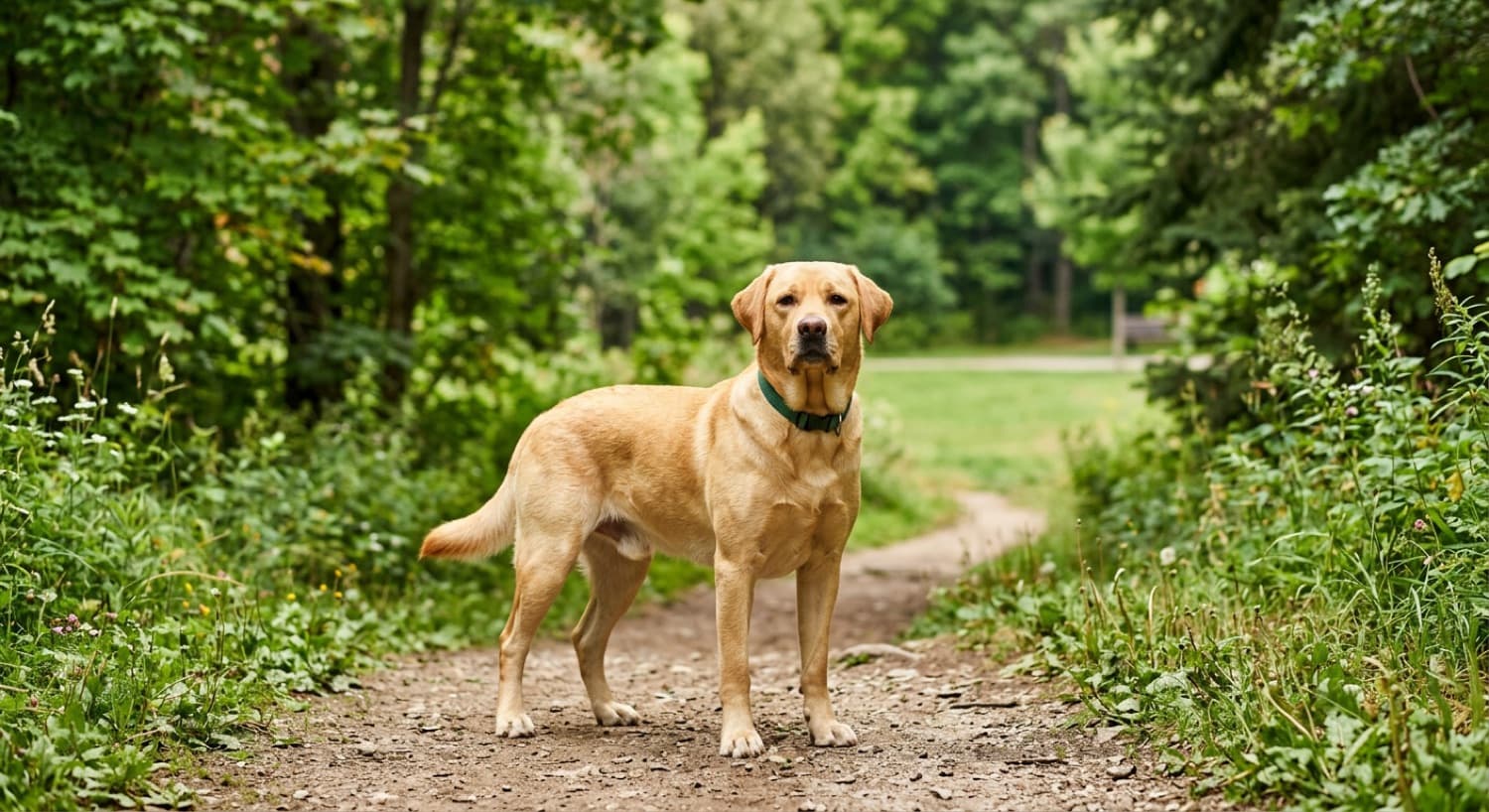
Here is the reassuring headline: Labradors are a hardy, long-lived breed, and most of what goes wrong is preventable or manageable if you stay ahead of it. The American Kennel Club and the Canine Health Information Center document the breed's recommended health screening, which centres on hips, elbows, and eyes.
One note before the conditions: this article is general information, not a diagnosis or treatment plan. Every dog is different, and the right person to screen and care for your Lab is your own vet. Where this guide gives signs or ranges, treat them as a prompt to ask, not a substitute for the visit.
Hip and elbow dysplasia
These are the conditions the Labrador is most associated with. Hip and elbow dysplasia are inherited malformations of the joint that lead to arthritis over time, and the Lab's size and activity make the wear show. Responsible breeders screen breeding dogs through the Orthopedic Foundation for Animals, so if you ever buy rather than adopt, ask to see hip and elbow scores on both parents.
Signs to watch for: stiffness after rest, reluctance to jump onto the couch or climb stairs, a bunny-hop gait in the back end, a front-leg limp (elbow), and slowing on walks. Because Labs are stoic and eager, they mask discomfort, so do not assume a willing dog is a pain-free one.
The most powerful protection is weight. Every extra pound multiplies the load on a vulnerable joint, so a lean Lab often stays comfortable for years longer than a heavy one with the same X-rays. Your vet can assess the joints with an exam and imaging and talk through management, from arthritis medication to, in serious cases, surgery. The AVMA has a plain-language overview of hip dysplasia.
Obesity: the condition behind the conditions
Labs are the most obesity-prone breed, and weight is not just its own problem, it makes everything else worse. Many Labs carry an appetite-related gene variant that leaves them feeling hungry even after a full meal, so they beg relentlessly and gain weight easily. Pair that with a generous owner and a long Winnipeg winter that shrinks the daily walk, and the pounds creep on without anyone noticing until spring.
The stakes are real. For a breed already prone to hip and elbow dysplasia, extra weight multiplies joint strain and brings arthritis sooner. It also raises diabetes and heart risk and worsens heat tolerance. Keeping a Lab at a lean body condition is the single highest-impact thing you can do, and it is entirely within your control. Because the how deserves its own space, we cover body condition scoring, portions, and winter exercise in the dedicated Winnipeg Lab weight-management guide.
Exercise-induced collapse (EIC)
EIC is an inherited condition seen in some Labrador lines where intense, excited exercise triggers muscle weakness and collapse, usually in the back legs, after 5 to 20 minutes of hard activity. The dog is typically normal at rest and between episodes, and most recover within about half an hour, but a severe episode can be dangerous. It shows up most often in young, fit, highly-driven Labs during strenuous retrieving or excited play.
A DNA test exists for the common genetic form, so a breeder can test for it and a vet can confirm a diagnosis. If your Lab wobbles, drags its back legs, or collapses after hard, excited exercise, stop the activity, let the dog rest and cool down, and see your vet, who can advise on managing activity levels. The key thing is not to push a dog through an episode. Many affected Labs live full lives with activity managed sensibly.
Chronic ear infections
This is the everyday Lab problem, driven by two breed traits: floppy drop ears that trap warmth and moisture, and a love of water. A Lab that swims at Charleswood in summer or gets a bath, without the ears drying properly, hands bacteria and yeast a warm, damp place to grow. Left unchecked, infections recur and can damage the ear canal over time.
Signs are head shaking, scratching at the ear, redness, odour, or discharge. Prevention is a routine, not a product: dry the ears thoroughly after every swim or bath, and check them regularly for early redness or smell. If an infection sets in, see your vet rather than reaching for a home remedy, because the wrong thing in an infected or ruptured ear can do harm. Ask your vet to show you a safe cleaning routine for a water-loving dog.
Browse adoptable Labradors in Winnipeg
Adopting an adult Lab from a foster home means you can ask about joints, weight, and any known conditions before you commit. See the Winnipeg Labs available now.
See Available Labradors →Vet costs and where to go in an emergency
Routine annual care for a healthy Lab runs into the low four figures a year in Winnipeg. The bigger, less predictable costs are the breed's known weak spots: joint disease can mean imaging, long-term arthritis management, or orthopaedic surgery running into the thousands, and recurrent ear infections add up over a lifetime. Pet insurance enrolled while the dog is young and healthy is worth serious consideration for a breed with predictable orthopaedic risk. Get specific quotes from your own vet, since prices vary by clinic. Our low-cost Winnipeg vet guide covers affordable routine care.
For after-hours emergencies, Winnipeg has 24-hour options including the Winnipeg Animal Emergency Hospital on Pembina Highway and Bridgwater Veterinary Hospital. Program a number into your phone now, because with bloat you are counting minutes. For specialist orthopaedic or eye work, your vet may refer to a veterinary specialist, occasionally as far as Saskatoon, but the vast majority of Lab care stays in the city.
Frequently asked questions
Are Labradors a healthy breed?
Reasonably, with a few well-known weak spots. Labradors typically live 11 to 13 years and most stay healthy on good food and regular vet care. The conditions to plan around are orthopaedic and metabolic rather than exotic: hip and elbow dysplasia, a strong tendency to obesity, exercise-induced collapse in some lines, and chronic ear infections. The single biggest lever on a Lab's long-term health is weight, because a lean Lab has far less joint strain and lives longer. Knowing the breed profile lets you screen and prevent instead of react. This article is general information, not veterinary advice, so build any specific plan with your own vet.
Do Labradors get hip and elbow dysplasia?
Yes, both, and the Labrador is one of the breeds these conditions are most associated with. Hip and elbow dysplasia are inherited malformations of the joint that lead to arthritis over time. Signs include stiffness after rest, reluctance to jump or climb stairs, a bunny-hop gait behind, limping on a front leg (elbow), and slowing on walks. Responsible breeders screen breeding dogs through the Orthopedic Foundation for Animals, which is why asking about hip and elbow scores matters if you ever buy rather than adopt. For an adopted Lab, ask the rescue whether joints were ever imaged. The most powerful thing you can do either way is keep the dog lean, because every extra pound multiplies the load on an already vulnerable joint. Your vet can assess with an exam and X-rays.
Why is obesity such a big deal for Labradors?
Because Labs are the most obesity-prone breed, and excess weight makes every other health problem worse. Many Labs carry an appetite-related gene variant that leaves them feeling hungry even after a full meal, so they beg hard and gain weight easily. For a breed already prone to hip and elbow dysplasia, carrying extra weight multiplies joint strain and brings arthritis on sooner and harder. Overweight also raises the risk of diabetes, strains the heart, worsens heat tolerance in a Manitoba summer, and complicates anaesthesia if surgery is ever needed. The encouraging flip side is that keeping a Lab lean is the highest-impact thing an owner can do, and no supplement or procedure comes close. We cover the how in detail in our Winnipeg Lab weight-management guide.
What is exercise-induced collapse in Labradors?
Exercise-induced collapse (EIC) is an inherited condition seen in some Labrador lines where intense, excited exercise triggers muscle weakness and collapse, usually in the back legs, after 5 to 20 minutes of hard activity. The dog is typically fine at rest and between episodes, and most recover within 30 minutes, but severe episodes can be dangerous. It shows up most often in young, fit, highly-driven Labs doing strenuous retrieving or play. A DNA test exists for the common genetic form, so a breeder can test for it and a vet can confirm a diagnosis. If your Lab wobbles, drags its back legs, or collapses after hard excited exercise, stop the activity, let the dog rest and cool down, and see your vet, who can advise on managing activity. Do not push a dog through it.
Why do Labradors get so many ear infections?
The Lab's floppy ears and love of water are the culprits. Those drop ears trap warmth and moisture in the canal, and a Lab that swims (or gets a bath) without the ears drying properly gives bacteria and yeast a place to grow. Signs of an ear infection are head shaking, scratching at the ear, redness, odour, or discharge. The prevention is routine: dry the ears thoroughly after every swim or bath, and check them regularly for early redness or smell. If an infection sets in, see your vet rather than reaching for a home remedy, because the wrong product in an infected or ruptured ear can do harm, and chronic untreated infections damage the canal. Ask your vet to show you a safe cleaning routine for a water-loving dog.
Are Labradors prone to any cancers?
Like most breeds, Labs face higher cancer risk with age, and a few types are seen relatively often in older Labs, including mast cell tumours, lymphoma, and others. The practical takeaway is not alarm, it is vigilance: run your hands over your dog regularly and get any new, growing, or changing lump checked promptly, because early evaluation gives the best options. Older Labs also benefit from twice-yearly wellness checks so a vet can catch changes you might miss. Cancer is a reason to keep up routine care and to act on anything unusual rather than wait, not a reason to avoid the breed. Any lump, unexplained weight loss, or persistent change deserves a vet visit.
Do Labradors have eye problems?
Some inherited eye conditions occur in the breed, which is why responsible breeders eye-test their dogs through the Orthopedic Foundation for Animals eye registry. The ones to know are progressive retinal atrophy (a gradual retinal degeneration that can lead to blindness) and hereditary cataracts. Watch for cloudiness, bumping into things, or hesitance in dim light, and get any visible eye change checked. Retinal disease is not painful and dogs adapt remarkably well to gradual vision loss, but early detection helps you plan and rule out other causes. An annual eye check is reasonable for the breed. If you notice a change in your Lab's eyes, see your vet, who may refer you to a veterinary ophthalmologist.
Are Labradors at risk for bloat?
Their risk is lower than a deep-chested breed like a German Shepherd or Great Dane, because the Lab is not built with that same deep, narrow chest, but bloat can affect almost any large dog and every owner should know the signs. Bloat, or gastric dilatation-volvulus (GDV), is when the stomach fills with gas and twists, and it is a same-minute emergency. Signs are a distended, hard belly, unproductive retching, drooling, restlessness, and collapse. If you see them, get to an emergency vet immediately. Sensible habits, such as avoiding one huge meal and heavy exercise right around eating, are reasonable precautions. Know your nearest Winnipeg emergency vet before you ever need it, because with bloat you are counting minutes.
How much do Labrador vet bills cost in Winnipeg?
Routine annual care for a healthy adult Lab (wellness exam, vaccines, parasite prevention, good food) runs into the low four figures a year in Winnipeg. The bigger, less predictable costs are the breed's known weak spots: joint disease can mean X-rays, long-term arthritis management, or in serious cases orthopaedic surgery running into the thousands; recurrent ear infections add up over a lifetime; and any emergency is its own bill. Pet insurance enrolled while the dog is young and healthy is worth serious consideration for a breed with predictable orthopaedic risk, because it covers the big surprises. Get specific quotes from your own vet, since prices vary by clinic and by the individual dog. Our low-cost Winnipeg vet guide covers affordable routine care.
Where do I take a Labrador for an emergency in Winnipeg?
Know this before you need it. Winnipeg has 24-hour emergency options including the Winnipeg Animal Emergency Hospital on Pembina Highway and Bridgwater Veterinary Hospital, both of which handle after-hours and critical care. Program a number into your phone now and know the drive from home. The Lab emergencies most likely to come up are bloat (a same-minute emergency), a severe exercise-induced collapse episode, a heat emergency on a hot summer day, and acute injuries. For a suspected bloat, do not wait to see if it passes, drive. For specialist orthopaedic or eye work, your Winnipeg vet may refer to a veterinary specialist, occasionally as far as the Western College of Veterinary Medicine in Saskatoon, but the vast majority of Lab care stays right in the city.
Related Winnipeg guides
Labrador Adoption Winnipeg
Rescues, real costs, Lab crosses, and the breed reality.
Keeping a Lab Lean in Winter
The highest-impact thing you can do for a Lab's joints and lifespan.
Adoptable Winnipeg Labradors
Every available Lab and Lab cross across Manitoba rescues.
Low-Cost Vet Winnipeg
Affordable routine care, clinics, and payment options.
New dog? Start with these care guides
Everything a new adopter needs to set up a safe, happy home.