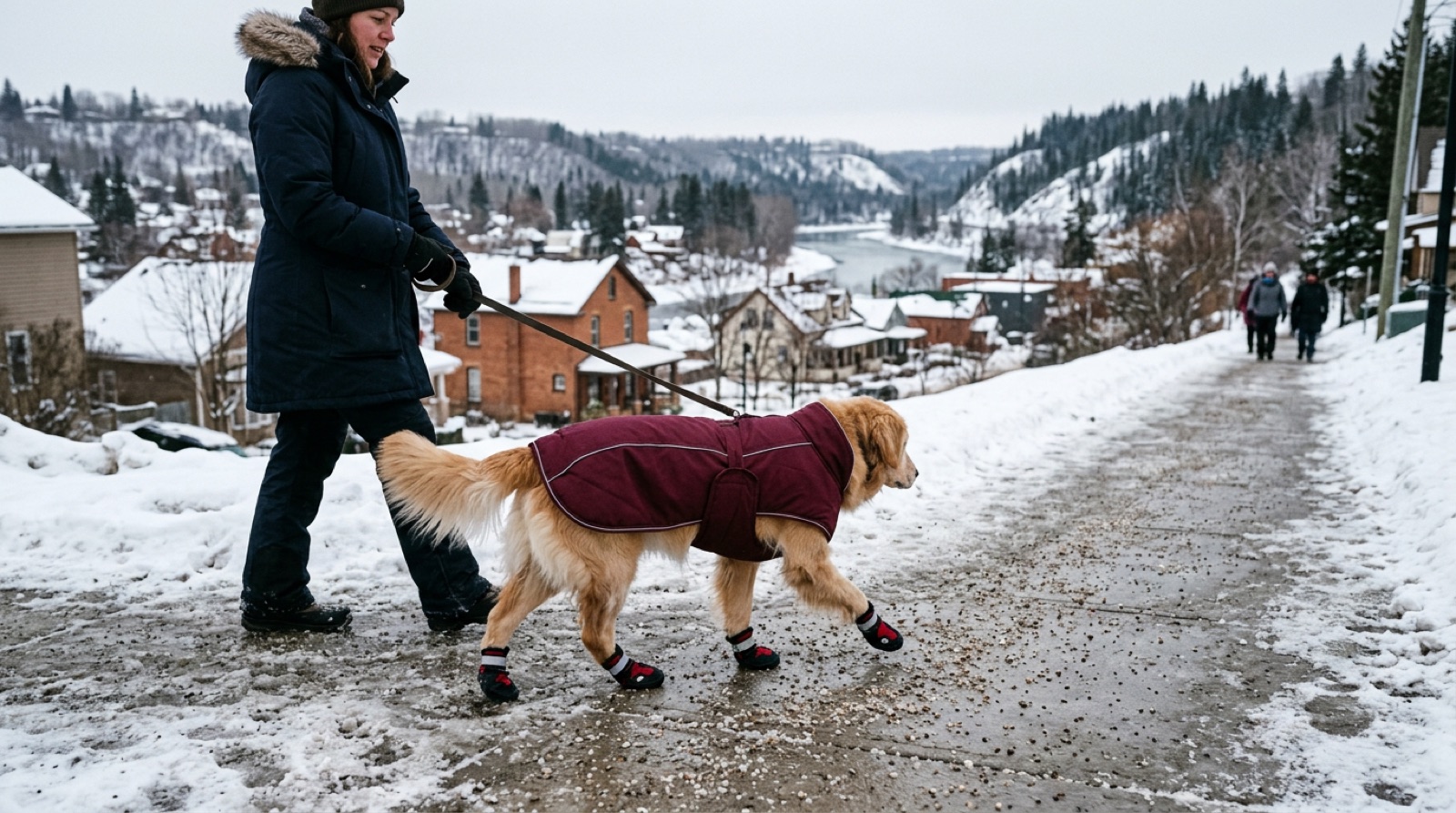
The short answer
Four rules carry the season. Protect paws: balm or boots on salted routes, rinse feet at the door. Match gear to the dog: double coats need nothing, short coats and seniors need a jacket in real cold. Shorten, not skip: cold-snap days get brief outings plus indoor games, not cancelled exercise. And stay off the river ice, leashed near open water all winter. Watch the dog, not the forecast: lifted paws and shivering mean go home.
Heads up: This article is informational and is not veterinary advice. Cold tolerance varies enormously by breed, size, age, coat, and health, so ask your Fredericton vet where your specific dog's limits sit. For suspected frostbite, hypothermia, or antifreeze ingestion, call a veterinary professional immediately.
A New Brunswick winter is not one season; it is three that keep trading places. There is the deep-snow stretch, when sidewalks narrow to trenches and small dogs pogo through drifts. There is the thaw, when everything melts, refreezes overnight, and turns the Green into a skating rink by morning. And there are the cold snaps, when the wind coming down the river valley makes the posted temperature feel like a polite fiction. Dogs handle all three well, provided the human plans for the right one on the right day.
None of this is a reason to dread winter with a dog. Snow is, for most dogs, the best toy ever invented, and a bright February afternoon in Odell Park beats most July walks. The playbook below covers the hazards, the gear, the paw routine, and the judgment calls, plus what changes for a rescue dog spending its first winter with you.
The Six Winter Hazards, Ranked by How Often They Bite
| Hazard | The Risk | The Fix |
|---|---|---|
| Road salt and ice melter | Chemical burns between pads; stomach upset when licked off | Rinse or wipe paws after every salted walk. Booties or paw balm for daily routes. Use pet-safer melter on your own steps. |
| Freeze-thaw ice | Slips, pulled muscles, cut pads on refrozen crust | Shorten the stride, walk the snowy edge instead of the glazed middle, and keep nails trimmed for grip. |
| Antifreeze drips | Ethylene glycol is sweet-tasting and can be lethal in small amounts | Steer around driveway stains. Any suspected lick is an immediate call to the emergency vet, not a wait-and-see. |
| River and lake ice | Dogs fall through unpredictable ice; rescuers follow them in | Leash near open water all winter. Never send a dog onto the Saint John River ice, and never follow one out. |
| Deep cold snaps | Frostbite on ears, tail, and paws; hypothermia in small or thin dogs | Short, purposeful outings on the coldest days. Coat for lean or short-haired dogs. Watch for lifted paws and shivering. |
| Snowbanks at roadsides | Dogs hidden from drivers at crossings; leashes snagging | Cross at cleared corners, keep the leash short in traffic, and add a light or reflective gear in the long darkness. |
Paw Care: The Daily Routine That Prevents Most Problems
Before the walk: a wax-style paw balm across the pads builds a barrier against salt and ice. Thirty seconds, and it doubles as a crack treatment. Trim the fur between pads so ice balls have less to cling to, and keep nails short; long nails splay the toes and worsen slipping on ice.
During the walk: route around the heaviest salt where you can, favouring snowy boulevard edges over white-crusted pavement. Watch for the sudden limp-and-lift, which usually means an ice ball or salt sting rather than injury; clear the paw and carry on.
After the walk: rinse or wipe all four feet at the door, between the pads especially. Salt left on paws gets licked off, and swallowed road salt irritates the stomach. A shallow tray of lukewarm water by the door and an old towel make this a 60-second habit.
Boots, honestly assessed: the best protection for daily sidewalk dogs, and about half of dogs act personally insulted the first week. Fit snug above the stopper pad, practise indoors in short treat-heavy sessions, and start in November rather than during the first cold snap. If boots lose the war, balm plus the rinse routine covers most city dogs fine.
On your own property: choose a pet-safer ice melter for steps and walkways. It costs a little more and spares every paw that visits, including yours after the dog tracks the cheap stuff inside.
Gear, Matched to the Dog
Double-coated dogs (huskies, shepherds, labs, most northern mixes) are built for this climate and need nothing but paw care. A coat on a thick-coated dog during a mild spell can overheat it; the giveaway is heavy panting in weather you find brisk.
Short-coated, lean, small, senior, and underweight dogs lose heat fast and earn a proper insulated coat once real cold arrives. Fit covers chest and belly without pinching the shoulders. If the dog shivers on the porch, the debate is over.
Everyone benefits from visibility. Fredericton's winter daylight ends before most workdays do, so an LED clip light or reflective leash turns the 5:30 p.m. walk from an act of faith into a safe routine, especially at snowbank-narrowed crossings.
A towel station at the door is the unglamorous MVP: paws rinsed, belly slush wiped, and the wet-dog chill taken off before it becomes a shivering dog on a cold floor.
The Cold-Day Judgment Call
People want a magic number, and dogs refuse to provide one. A husky mix and an elderly whippet living on the same street have completely different winters. So use a sliding rule instead: as general guidance, most healthy dogs are fine in ordinary Fredericton winter weather with normal precautions; once a real cold snap lands, outings shorten for everyone; and small, short-coated, young, senior, or unwell dogs hit their limits well before big double-coated dogs do.
Then let the dog vote. Lifted paws, shivering, a tucked tail, slowing down, or turning toward home are all exit polls. A dog bouncing through drifts with its mouth open is telling you the opposite. When in doubt, do the shorter loop and finish the exercise indoors.
Cold snaps also change the errand math. A car parked in a Fredericton cold snap becomes a refrigerator quickly, so the summer rule applies in mirror image: on extreme days, leave the dog warm at home rather than waiting in the car.
The River Ice Rule
Fredericton life happens along the Saint John River, and in winter the river pretends to be a field. Do not trust it with your dog. Current, springs, and mid-winter thaws leave the ice wildly uneven in thickness, and it fails without warning where it looks most solid. The pattern in dog-and-ice tragedies across Canada is grimly consistent: the dog goes through, the owner goes after it, and the owner is the one who does not come home.
- Leash near open water and river banks all winter, even for dogs with excellent recall
- Never throw anything for a dog toward a frozen river, pond edge, or lake outflow
- If a dog goes through ice, call 911 and stay on shore; keep calling the dog toward you
- The same caution applies at Killarney Lake, where winter walks are leashed anyway from December through April
Keeping a Dog Exercised From December to April
The fenced parks stay open. Cityview and Knowledge Park Drive run year-round, and Cityview's dusk-to-dawn lighting rescues the after-work slot. Bring your own water; the park sources are seasonal. With Killarney's off-leash trails closed December through April, the fenced parks are also busier on mild weekends, which suits social dogs fine.
Odell Park is the wind shelter. Four hundred acres of old-growth forest knock the river valley wind down to a murmur, which makes Odell the most comfortable serious walk in the city on a blowing day. Leashed, per the 2-metre rule in By-law S-11.
Indoor days still count. On the handful of genuinely brutal days, swap distance for thinking: scatter-feeding kibble around a room, puzzle feeders, hide-and-seek, tug with rules, and five-minute training sessions. Mental work tires a dog at a surprising exchange rate, and February is when that trade saves furniture.
Watch the winter waistline. Less movement plus unchanged portions is the standard winter weight-gain recipe. Weigh monthly and adjust; a lean dog slips less, overheats less, and costs less at the vet.
A Rescue Dog's First Fredericton Winter
A newly adopted dog meeting its first Maritime winter deserves a little extra planning. You do not yet know this dog's cold tolerance, so start with shorter outings and read the signals conservatively. House-training gets easier with a shovelled toilet patch by the door and a lit porch. And the settling-in rules from our first-week guide apply with a winter accent: quiet routes, repeated routines, and no pressure to perform in a snowbank.
One silver lining: winter adoptions come with built-in couch time, and couch time is what bonds a rescue dog to a family. The dog that arrives in January is usually fully yours by the time the Killarney trails reopen in May.
Browse adoptable Fredericton dogs
Winter is a wonderful season to adopt: quiet settling-in weeks, snow to play in, and a bonded dog by spring.
See Available Fredericton Dogs →Frequently Asked Questions
How cold is too cold to walk a dog in Fredericton?▾
It depends on the dog more than the thermometer. As general guidance, most healthy medium and large dogs handle light-jacket weather fine; small, short-coated, very young, senior, or thin dogs feel the cold much sooner and may need a coat once temperatures drop well below freezing. In a real New Brunswick cold snap, keep outings short and purposeful for every dog and watch the dog rather than the forecast: lifted paws, shivering, and a tucked posture all mean head home. Ask your vet where your specific dog's limits sit.
Does my dog need boots in Fredericton?▾
For salted sidewalk routes in the city, boots are the single best investment for most dogs. They block salt burns, ice-ball buildup between pads, and cut pads on refrozen crust. Plenty of dogs need a week of short, treat-heavy practice sessions before walking normally in them, so start before deep winter. If your dog refuses boots, the fallback is paw balm before walks and a rinse-and-towel routine at the door after every salted outing.
How do I protect my dog's paws from road salt?▾
Three habits cover it. Before the walk, a wax-style paw balm creates a barrier. During the walk, favour snowy edges over heavily salted pavement where you can. After the walk, rinse or wipe all four paws, including between the pads, because salt that stays gets licked off and irritates the stomach. Check weekly for cracks or redness between pads, and trim the fur there so ice balls have less to grip.
What are the signs of frostbite in dogs?▾
Frostbite targets the extremities: ear tips, tail tip, and paws. Early signs are pale, grey, or bluish skin that feels cold and hard, followed by pain and swelling as it warms; blisters or blackened skin appear in serious cases, sometimes days later. If you suspect frostbite, warm the area gradually with lukewarm (never hot) water, do not rub it, and call a vet. Capital City Emergency Veterinary Hospital at 506-447-8387 answers around the clock.
What are the signs of hypothermia in dogs?▾
Strong shivering is the early warning, followed by lethargy, stiffness, clumsy movement, and in severe cases shallow breathing and unresponsiveness. Small, lean, short-coated, senior, and wet dogs chill fastest. If you see moderate signs, get the dog indoors, wrap it in dry blankets, and call a vet for guidance; severe signs are an emergency trip. Prevention is simpler: short outings in deep cold, a coat for vulnerable dogs, and dry towels after wet snow.
Is it safe for my dog to walk on the river ice?▾
Treat the answer as no. The Saint John River's ice thickness varies with current, springs, and mid-winter thaws, and it can look solid where it is not. Dogs fall through every winter somewhere in Canada, and the drownings that follow are often the owners who went after them. Keep dogs leashed near open water all season, and if a dog does go through, call 911 and keep yourself on shore. It is the hardest instruction in this guide and the most important.
Do dogs still need exercise in a Fredericton winter?▾
Yes, and behaviour problems in February are usually the receipts for skipped exercise in January. The fenced dog parks at Cityview and Knowledge Park Drive stay open year-round, and Cityview's lighting covers the early darkness. Odell Park's forest trails are the most wind-sheltered walk in the city. On the genuinely brutal days, swap distance for brains: puzzle feeders, scent games in the house, training sessions, and tug will drain a dog surprisingly well until the cold breaks.
Should my dog wear a coat?▾
Depends on the build. Huskies, shepherds, labs, and most double-coated dogs are dressed for New Brunswick already, and a coat can even overheat them on a mild day. Short-coated breeds, lean sighthound types, small dogs, seniors, and thin rescue dogs benefit from one once real cold arrives. Fit matters more than fashion: it should cover chest and belly without restricting the shoulders. A shivering dog is the clearest possible vote in favour.
What about the off-leash trails in winter?▾
The Killarney Lake off-leash season ends November 30 and does not reopen until May 1, so winter off-leash time happens at the two fenced parks. That is not just bylaw trivia: the winter trails hide their own hazards, from glazed ice underfoot to the lake itself. Leashed Killarney loops are still lovely on a bright February day. Our off-leash guide covers the full seasonal map.
How do I handle house-training a dog in winter?▾
Make outside easy and fast. Shovel a dedicated toilet patch close to the door, keep the porch light on for the 5 p.m. darkness, and go out with the dog so you can reward the instant it performs. Puppies and small dogs genuinely dislike deep snow on bare paws, and a cleared patch removes the biggest excuse. If a previously reliable dog starts having indoor accidents in winter, mention it to your vet before blaming the weather; medical causes like urinary infections do not care about the season.
Is antifreeze really that dangerous?▾
Yes. Traditional antifreeze contains ethylene glycol, which tastes sweet, and even a small puddle licked off a driveway can cause fatal kidney failure. Damage starts within hours while the dog still looks fine, so a suspected lick is an immediate phone call, not a monitoring situation. Call Capital City Emergency Veterinary Hospital at 506-447-8387 any hour, or the walk-in clinic on Smythe Street before midnight. At home, store containers sealed and clean drips immediately.
Does winter change what I feed my dog?▾
Usually less than people think. A dog doing real outdoor work in the cold burns more calories, but the typical Fredericton pet dog moves less in winter, not more, and quietly gains weight instead. Weigh the dog monthly through winter and adjust portions to hold a lean body condition; you should feel ribs easily under a light fat layer. If you are unsure, bring the question to your annual exam. Winter weight gain is one of the most preventable vet-bill drivers in senior dogs.
Related Fredericton Guides
Winter Is a Dog Season Here.
Snow, trails, and a warm couch afterward. Find the dog to share it with.
Browse Available Fredericton Dogs →New dog? Start with these care guides
Everything a new adopter needs to set up a safe, happy home.