The short answer
Set up one small quiet room with food, water, a litter box at the far end and somewhere to hide. Expect the cat to disappear for a few days. Use the same food and same litter the shelter used, and change both slowly weeks later. Book a vet within the first week or two and buy the $15 city cat licence. Learn one emergency sign now: straining in the litter box with no urine, especially in a male cat, needs a vet the same hour.
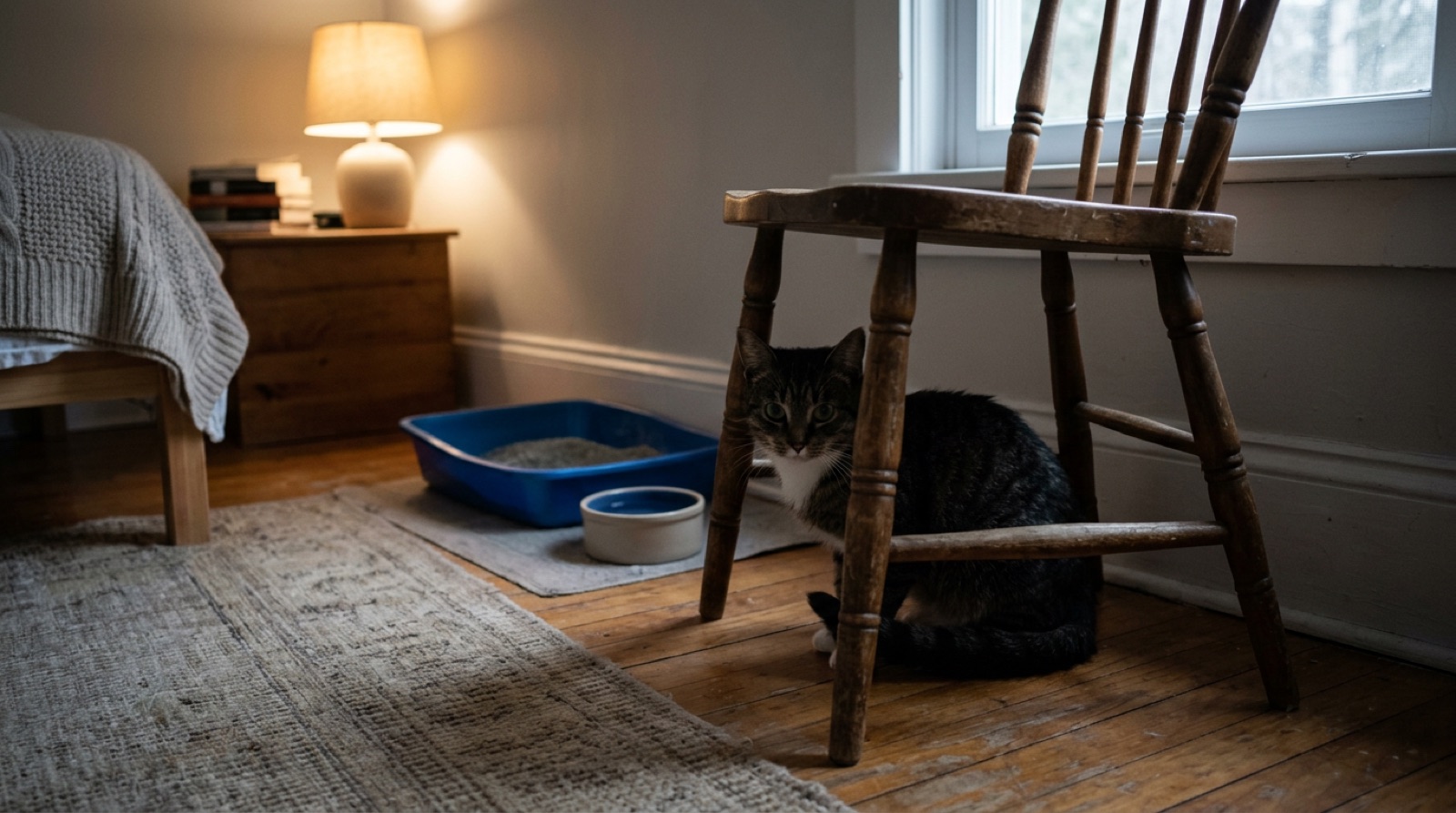
The most common message rescues get from new adopters lands somewhere around day two, and it is always a version of the same thing: the cat has vanished behind the dryer and will not come out, did we do something wrong. No. That is a cat behaving exactly as cats behave when everything they know has been replaced in an afternoon.
The first week is not about bonding. It is about giving the animal enough space and predictability that bonding becomes possible later. Almost everything that goes wrong in week one comes from doing too much rather than too little.
Here is how to set the house up, what the timeline actually looks like, and the handful of symptoms that mean stop reading and phone a vet. If you have not chosen a cat yet, the St. John's cat listings pull from local rescues and are refreshed regularly.
Read this before anything else: the emergency you must recognise
If your cat is crouching in the litter box straining and producing no urine, treat it as an emergency and get to a veterinarian immediately. In male cats especially, this can be a urinary blockage, and it is fatal within hours rather than days. Cats in this state often cry, lick at themselves repeatedly, or go in and out of the box over and over. It is easily mistaken for constipation. Do not wait overnight to see whether it improves.
Other signs that mean phone a vet rather than wait: laboured or open-mouthed breathing, repeated vomiting, collapse or extreme lethargy, a swollen painful abdomen, a suspected poisoning, or complete refusal of food beyond 24 hours.
Never give a cat human medication. Several common household painkillers are toxic to cats even in small amounts. Phone a veterinarian first and follow their instructions rather than trying anything at home.
What the First Month Actually Looks Like
| When | What to expect | What you should be doing |
|---|---|---|
| Day 1 | Cat hides immediately, often behind or under something | Leave it alone. Food, water, litter in the room. Sit quietly, do not reach in. |
| Days 2 to 3 | Eating and using the litter box overnight, still hiding by day | Keep the room quiet. Talk normally. Check litter to confirm it is eating and toileting. |
| Days 4 to 7 | Coming out while you are in the room, some curiosity | Wand play from a distance. Do not pick the cat up yet unless it asks. |
| Weeks 2 to 3 | Exploring further, testing the rest of the house | Open the safe room door and let the cat expand at its own pace. |
| Month 1 onward | Real personality appears, often different from the shelter version | Book the first vet visit. Start the licence. Settle into a routine. |
This is a typical pattern, not a schedule. Confident cats compress it into days. Undersocialised or previously outdoor cats stretch it into months, and both are normal.
Setting up the safe room
Pick small and quiet. A spare bedroom or a bathroom works far better than an open-plan living space. A cat in a large room has too much to monitor.
Separate the ends. Food and water at one end, litter box at the other. Cats will not happily eat next to their toilet.
Give it somewhere to hide. A cardboard box on its side or a covered bed. A cat with a hiding place comes out sooner than a cat with nowhere to go, which feels backwards but holds true every time.
Block the impossible spots. Gaps behind appliances, open vents, the back of a wardrobe you cannot reach. Do this before the cat arrives rather than at midnight.
Match the shelter. Same litter, same food. Novelty in week one belongs to nothing at all.
Visit without demanding. Sit in the room, read aloud or work quietly, and do not reach under the furniture. You are becoming background rather than making friends.
Changing food and litter without causing problems
Ask the shelter or foster what the cat has been eating and buy that before pickup. A cat that has just lost its entire environment does not also need a new diet, and abrupt food changes reliably produce diarrhoea in an already stressed animal.
Once the cat is settled and eating well, usually a couple of weeks in, transition over about seven days by mixing a rising proportion of the new food into the old. If loose stools or hesitation appear, drop back a step and move slower.
Litter follows the same logic. Texture underfoot matters enormously to cats, and a cat that dislikes a new substrate looks for an alternative surface, which is how litter box problems begin. Keep the box uncovered, larger than seems necessary, scooped daily and away from noisy appliances.
Registering with a vet here
Get on a clinic's books in the first week or two rather than waiting until something is wrong. A practice that already has your cat on file is much easier to reach in a hurry. Established St. John's area options include Avalon Animal Hospital on Logy Bay Road and Paradise Animal Hospital on Karwood Drive, and the Newfoundland and Labrador Veterinary Medical Association lists licensed clinics across the province.
Know the emergency picture in advance, because St. John's has a genuine weekend gap. The Veterinary Specialty Centre of NL in Mount Pearl runs 24 hours Monday to Thursday, closes Friday morning, stays closed Saturday and reopens Sunday evening. Day clinics are generally closed at weekends too. Save the numbers now.
Two admin jobs belong in this same fortnight. Buy the $15 city cat licence, and make sure the microchip is registered to you rather than still showing the shelter. If your cat came from City Humane Services, its fee did not include spay or neuter surgery, so raise that at the first appointment. Our spay and neuter guide covers what that costs and who subsidises it.
Browse adoptable St. John's cats
Set the safe room up before you go, not after. See who is available across St. John's rescues right now. Listings refreshed regularly.
See Available St. John's Cats →Frequently Asked Questions
Why is my new rescue cat hiding?
Because it is a cat that has just had its entire world replaced, and hiding is how cats handle that. This is the single most common worry from new adopters and it is almost never a problem. A cat that hides for the first few days is regulating itself sensibly, not rejecting you. What matters is not whether it hides but whether it eats, drinks and uses the litter box, and most do that overnight while the house is quiet. Give it a small room, resist the urge to pull it out from under the bed, and let it decide when to come out.
What is the 3-3-3 rule?
A rough guide to how long settling takes. Three days for the initial fear to ease, three weeks for the cat to learn the routine and start behaving normally, and three months for it to genuinely feel at home and show you who it actually is. It is not a schedule and plenty of cats run faster or slower. Its real value is managing expectations. Adopters who know the timeline stop panicking on day four, and cats settle better in a household that is not anxiously hovering over them.
How do I set up a safe room?
Pick the quietest small room you have, ideally a spare bedroom or a bathroom rather than an open-plan space. Put food and water at one end and the litter box at the other, since cats do not like eating beside their toilet. Add a hiding place such as a cardboard box on its side or a covered bed, because a cat with a hiding spot relaxes faster than one with nowhere to go. Keep the door shut, close off gaps behind appliances, and let the cat own that room completely before offering the rest of the house.
Should I change my cat's food right away?
No, and this catches out well-meaning people constantly. Ask the shelter or foster what the cat has been eating and buy that first, even if you plan to switch. A sudden food change on top of the stress of moving house is a reliable way to produce diarrhoea in an animal that is already unsettled. Once the cat is eating well and settled, usually a week or two in, transition slowly over about a week by mixing increasing proportions of the new food into the old. If the cat stops eating at any point, slow down.
What about litter? Can I use whatever I have?
Use whatever the cat used before, at first. Litter texture matters more to cats than people realise, and a cat that dislikes the substrate may look for somewhere else to go, which starts a habit nobody wants in week one. Ask what the shelter used. Keep the box uncovered and larger than you think necessary, scoop daily, and place it somewhere quiet rather than beside a noisy appliance. If you want to switch later, do it gradually by mixing, and go back a step if the cat starts hesitating at the box.
When should I take my new cat to the vet?
Within the first week or two, once the cat has settled enough to travel without falling apart. Register with a clinic early rather than waiting until something is wrong, because a practice that already has your cat on file is far easier to reach in a hurry. Bring whatever paperwork the shelter gave you. If your cat came from City Humane Services, remember its adoption fee does not include spay or neuter surgery, so that conversation belongs in this first appointment too.
What symptoms mean I should call a vet immediately?
Straining in the litter box without producing urine is the one to memorise, particularly in a male cat. That can be a urinary blockage, it is life-threatening within hours rather than days, and it needs emergency veterinary care immediately rather than a wait-and-see night. Also treat as urgent: repeated vomiting, laboured or open-mouthed breathing, collapse, a swollen painful abdomen, complete refusal of food for more than 24 hours, or a suspected poisoning. Do not attempt home remedies and never give human medication to a cat. Phone a vet first.
Where do I go for emergency vet care in St. John's?
The Veterinary Specialty Centre of NL on Topsail Road in Mount Pearl handles emergencies, and their exam starts at $262 plus HST before treatment. Know their hours in advance, because coverage here has a real gap. They run 24 hours Monday through Thursday, close Friday morning, remain closed Saturday and reopen Sunday evening. Local day clinics are generally closed at weekends as well. Save the number in your phone the day you bring the cat home rather than looking it up at eleven at night with a sick animal in a carrier.
Do I need to licence my new cat right away?
St. John's offers a $15 cat tag, the same as a dog, which will surprise you if you have owned cats elsewhere in Atlantic Canada. Whether it is strictly required is genuinely unclear: the City's licence page implies all pets must be licensed, but its pet owner page calls cat tags available rather than mandatory. At $15 it is the cheapest way to get a lost cat home, so do it in the first couple of weeks anyway, alongside confirming the microchip details are registered to you rather than the shelter. Buy or renew online, email a completed form to humaneservices@stjohns.ca, or drop a form at City Hall on New Gower Street, Humane Services on Higgins Line, or the Mews or Paul Reynolds community centres.
How do I introduce a new cat to a resident cat?
Slowly, through a closed door, and slower than you want to. The new cat stays in its safe room for at least the first week while both cats get used to each other by smell alone. Swap bedding between them so each learns the other's scent. Feed them on opposite sides of the closed door so proximity predicts something good. Only then try brief supervised visual contact, and separate before anyone gets upset. Rushing this is the most common cause of a resident-cat relationship that never recovers.
What if my new cat will not let me touch it?
Stop trying, and let the cat come to you instead. Sit in the room doing something boring, reading or working, without looking directly at it. Direct eye contact reads as a threat to a nervous cat. Use a wand toy so interaction happens at a distance that feels safe, and put treats near you rather than in your hand at first. Most cats close that gap on their own within a few weeks. Cats that were undersocialised or lived outdoors take longer, and a small number stay reserved permanently.
My cat is not eating. How worried should I be?
Mildly worried on day one, seriously worried after 24 hours. Some newly adopted cats eat nothing the first evening and then eat overnight when the house is dark and quiet, so check the bowl in the morning before assuming. Warming wet food slightly makes it smell stronger and often helps. But a cat that genuinely eats nothing for more than about 24 hours needs veterinary attention rather than more coaxing, because prolonged fasting in cats can cause serious liver problems. This is not a wait-until-Monday situation.
What should I have bought before the cat arrives?
Less than the shop will sell you. A carrier, a litter box, the same litter the shelter used, the same food the shelter fed, bowls, a scratching post and a wand toy. That genuinely covers week one. The carrier is not optional since shelters will not hand over a loose cat. Hold off on the expensive cat tree until you know what this particular animal likes, because a surprising number ignore an elaborate tower and sleep in the box it arrived in. Our cost guide breaks down what the first year actually runs.
This guide is general information for St. John's cat adopters, not veterinary advice. If you are worried about your cat, phone a veterinarian rather than working from an article.
Related St. John's Guides
One search, every St. John's rescue
Shelter cats and foster cats from across the Avalon, in a single list.
Browse Available St. John's Cats →New cat? Start with these care guides
Everything a new adopter needs to set up a safe, happy home.