The short answer
Beagles reach St. John's rescue at low to moderate volume. The work is scent management, noise tolerance, and weight control. Beagle Paws is a Newfoundland rescue that has historically focused on the breed, so it is the natural first call, and the SPCA St. John's is the other consistent local source. Fees $200 to $375 at the SPCA St. John's, plus a secure-fence or long-line plan. A Beagle is a scent hound: it bays, it wanders off on a smell, and it eats anything it can reach. Off leash in an unfenced space is not safe for most Beagles, so a fenced yard plus a leash everywhere else is the St. John's reality. Five surrender patterns drive intake: noise complaints, escape, food obsession and obesity, adolescence, and ex-research beagles. Plan two to three months from application to dog-in-home.
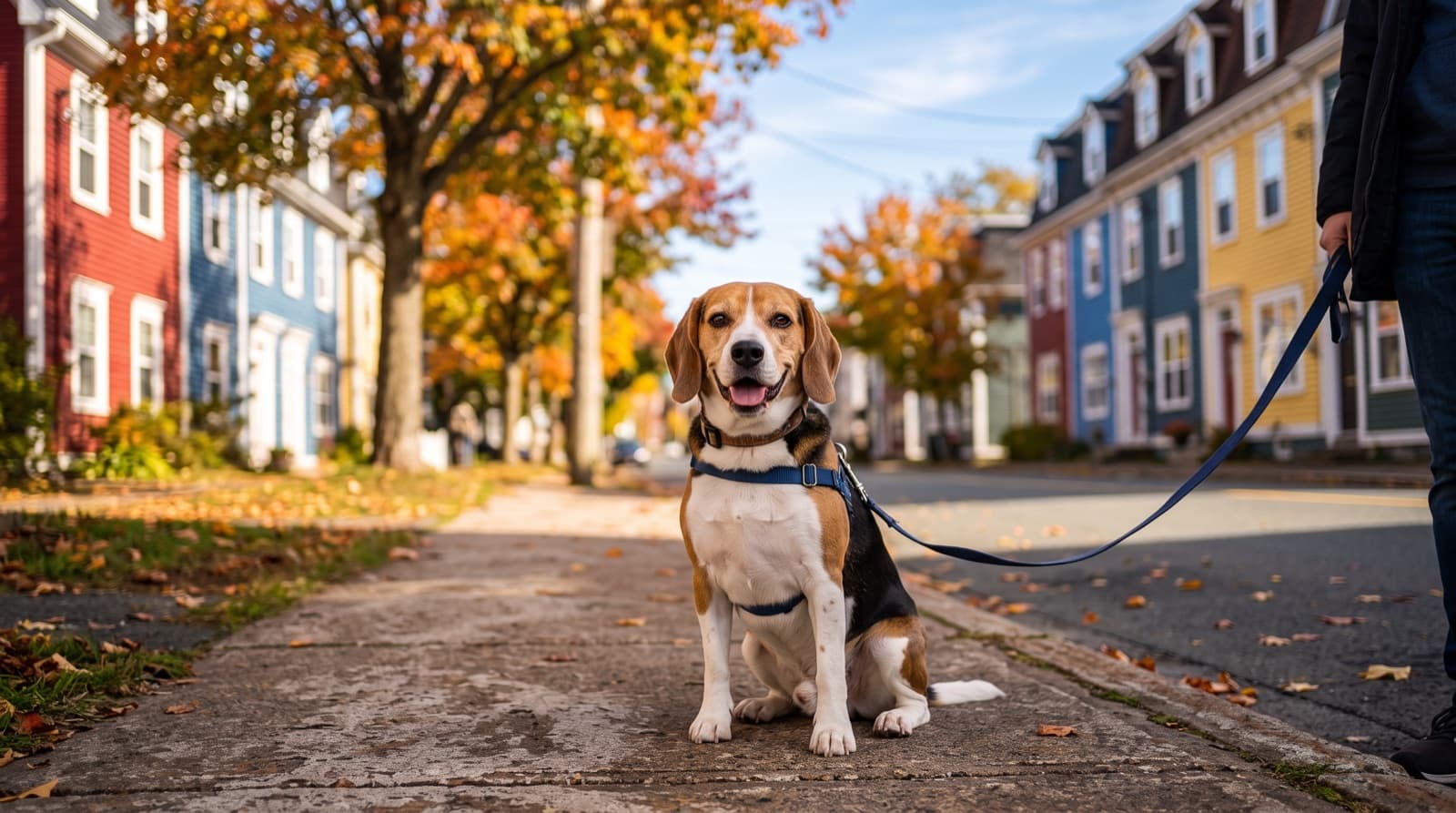
Why Beagles surrender in St. John's
Beagle surrender patterns in St. John's are unusually predictable. Five reasons drive most intake, and few of them are about a bad dog. Understanding the patterns helps adopters read foster write-ups accurately and budget for what comes next.
- Baying and noise complaints. The most common St. John's Beagle surrender story, especially from downtown row houses with shared walls, apartments, and close-set rentals. The Beagle bay is a long, carrying howl bred to alert hunters over distance, and it is not something you train away. A bored or lonely Beagle in tight housing generates neighbour complaints, then a landlord notice, then a surrender. In a detached home with a yard it is far more manageable, but honesty about the noise reality before adopting saves everyone heartbreak.
- Escape and recall failure. A Beagle follows its nose, full stop. When a strong scent takes over, the dog stops hearing you and simply leaves, sometimes travelling kilometres. Households that let a Beagle off leash on an unfenced trail, or that had a fence with a gap under it, lose the dog and often surrender in frustration after the second or third escape. This is hardwired behaviour, not disobedience, and it means a secure fence and a leash are non-negotiable for the breed.
- Food obsession and obesity. Beagles are ruled by their stomachs. Counter-surfing, garbage raiding, stealing food off tables, and relentless begging are all standard Beagle behaviour, and an owner who free-feeds or over-treats ends up with an obese dog. Obesity then worsens the breed's back and joint problems, the vet bills climb, and some households give up. Weight management is a daily discipline with this breed, not an afterthought.
- Adolescent stubbornness. Beagle adolescence, roughly six to eighteen months, is where the charming puppy becomes a determined teenager with selective hearing. House-training regressions, chewing, escaping, and a general refusal to cooperate hit at once. Families who expected an easy small dog get overwhelmed and surrender. The behaviour is normal and it passes with consistency, but it catches unprepared owners off guard.
- Ex-research and ex-hunting beagles. Beagles are the most-used breed in laboratory research, and small numbers reach Canadian rescue through release programs. Ex-research beagles are gentle but under-socialised and need patient decompression. Ex-hunting beagles are more confident but often have very high prey drive and few house manners. Both types come into rescue needing a calm, experienced home.
Reading these patterns ahead of time matters. A Beagle surrender note that says “too much for us” usually means one of the five patterns above. Ask the rescue specifically: how vocal is this dog, what is its recall like, what is its body condition and feeding routine, and is there any history of escaping. The Newfoundland rescues that handle hounds will have honest answers.
St. John's and NL rescues that list Beagles
A handful of Newfoundland organisations list Beagles or Beagle mixes, and because St. John's is a small market, a wider net across the province helps. Set up listing alerts on every rescue you would consider; a multi-rescue alert net catches the right dog within a few weeks. For a fuller directory, see our guide to the best dog rescues in St. John's.
- Beagle Paws: a Newfoundland rescue that has historically focused on Beagles and Beagle mixes, alongside other dogs, which makes it the natural first stop for a beagle adopter in the province. As a foster-based rescue, its dogs live in real homes, so the temperament notes on baying, recall, and how the dog handles being alone tend to be more accurate than a shelter-only setting. That accuracy matters a great deal for this breed. Set up alerts and reach out early, because breed-specific rescues place fast when the right dog appears.
- SPCA St. John's: the main shelter in the metro area and the most consistent general source of Beagle intake, mostly through urban owner surrender and stray intake. The facility lets adopters meet the dog in person before applying, and the shelter team produces a clear write-up covering temperament, noise level, body condition, and any flagged medical history. Adoption fees run $200 to $375 depending on the dog's age.
- Municipal and stray intake: found strays and some owner surrenders are handled through the local shelter system, and given the Beagle reputation for wandering off on a scent, Beagles turn up as strays fairly often. If you have lost or found a Beagle, the City of St. John's handles animal services and licensing. Check available-animal lists directly and act fast, as municipal holds move on a timeline.
For veterinary and welfare context province-wide, the Newfoundland and Labrador Veterinary Medical Association is the professional body for NL vets and a useful reference when you are choosing a clinic. Verify any breed-specific rescue claim through a real address, charitable-registry status, and a current adoptable-dog list before sending money; free-purebred-Beagle offers online are a common scam, and a legitimate NL rescue will always want an application and a conversation first.
The scent-hound reality
Everything about living with a Beagle comes back to one fact: this is a nose on legs. The breed was developed to trail rabbits and hares for hours, head down, following scent independently of the handler. That heritage produces a wonderful, driven, endearing dog, and it also produces the two behaviours that surprise unprepared owners most.
The first is recall failure. When a Beagle locks onto a scent, the rest of the world switches off. This is not stubbornness you can correct with enough training; it is what the dog was built to do. The practical consequence for St. John's owners is simple and firm: most Beagles should never be off leash in an unfenced space. A securely fenced yard gives the dog freedom to run and sniff safely. Everywhere else, including the trails through Pippy Park and the coastal paths near the city where the ground is layered with wildlife scent, the Beagle stays on a leash or a long-line. A fully fenced off-leash area is the safest place to let the dog run loose. Check any home fence for gaps at the bottom, because Beagles dig and squeeze, and confirm gates latch. Treating an open trail or a quiet street as safe is precisely how Beagles go missing.
The second is the voice. Beagles bay, bark, and howl, and they are genuinely loud for their size. In a house with a yard this is background noise; in an apartment, a downtown row house, or a close-set rental it is the number-one route to a noise complaint and a surrender. You cannot train a Beagle silent, but you can lower the volume by meeting the dog's exercise and enrichment needs and by not leaving it alone for long stretches.
The good news is that the same nose that causes the trouble is also the solution. Scent work satisfies a Beagle more deeply than distance. A slow sniffari where the dog reads every smell, scatter-feeding meals across the yard, puzzle feeders, and hide-and-seek scent games all drain the mental energy that otherwise turns into baying and escape attempts. Aim for 60 to 90 minutes of activity a day for an adult, weighted toward sniffing rather than forced marching. A tired Beagle with a full nose is a quiet, content Beagle. St. John's winters, wet and windy off the Atlantic, are a real consideration: the breed's short coat handles a brisk cold walk, but a thin or senior Beagle wants a sweater when the wind chill drops below roughly -10 C, and the driving damp cuts colder than the thermometer says. Salted sidewalks and slushy streets mean rinsing the paws after walks.
Beagle health, in brief
Beagles are a fairly hardy, long-lived breed (12 to 15 years is typical), but a few conditions are worth planning around so adopters apply with realistic expectations.
- Chronic ear infections. The long drop ears trap moisture and limit airflow, so weekly ear checks and cleaning are part of Beagle ownership. Neglected ears lead to recurring painful infections.
- Obesity. The single biggest day-to-day health risk. A food-obsessed Beagle overeats given any chance, and extra weight then worsens back and joint problems. Measured meals, minimal treats, and a firm no-table-scraps rule are essential.
- IVDD and back injuries. The long-backed build makes intervertebral disc disease and back strain a risk, made worse by obesity and by jumping off furniture.
- Epilepsy and seizure disorders. Over-represented in the breed. Usually manageable with medication when it appears, typically in young to middle-aged dogs.
- Cherry eye. A prolapsed third-eyelid gland is common and usually corrected with a minor surgery.
- Hypothyroidism. Shows up in middle age and is diagnosed with bloodwork and managed with a daily pill.
For breed-level health-testing standards, the Orthopedic Foundation for Animals maintains public screening databases at ofa.org. A rescue Beagle will not usually have OFA records, but the resource is useful context for the conditions the breed is screened for. Plan a baseline vet visit in your first month to establish records, score body condition, and check the ears. Clinics such as Avalon Animal Hospital handle routine care around the metro area, and the Veterinary Specialty Centre is the referral option for anything beyond a general practice, so it is worth knowing where the nearest after-hours help is before you need it.
What a St. John's rescue Beagle actually costs
Adoption fees at the SPCA St. John's run $200 to $375 depending on the dog's age, with puppies at the top of the range and seniors at the bottom. Beagle Paws sets its own fee as a foster-based Newfoundland rescue, which may differ from the SPCA schedule, so confirm the number when you apply. Whatever the fee, it is not a sale price; it is a partial recovery on the medical work the rescue has already done. A typical Beagle adoption fee covers spay or neuter, core vaccinations, microchip and registration, deworming and parasite treatment, and a basic vet workup. Stacked at retail Newfoundland vet pricing, those services would run well past the adoption fee, so it is a genuine bargain against the real cost of the care already provided.
Compare that to a Beagle puppy from a breeder at $1,200 to $2,500 with no medical work yet done, and the rescue path is significantly cheaper and the dog often arrives with a known temperament. Plan an additional $150 to $350 in the first month for your own vet baseline. The other real first-month cost for this breed is containment: a secure fence repair, a taller or dig-proofed fence line, or a good long-line and a training plan if a fenced yard is not an option. For a fuller local breakdown, see our St. John's dog adoption cost guide.
Ongoing Beagle costs run $1,500 to $3,000 a year: measured food for a 20 to 30 lb dog, routine vet care, pet insurance (genuinely worth it for a breed with documented ear, back, and eye risks), and a City of St. John's dog licence, which the municipality administers and renews annually. If your Beagle is not already spayed or neutered, our St. John's spay and neuter guide covers the local options, though most rescue Beagles arrive already altered.
Browse adoptable St. John's Beagles and Beagle mixes
Current Newfoundland listings from Beagle Paws, the SPCA St. John's, and other local rescues in one place. Beagles are popular and St. John's is a small market, so alerts and same-day applications win.
See St. John's Adoptable Dogs →The first 30 days with a St. John's Beagle
Beagles run on the same 3-3-3 arc as any rescue dog: the first three days are raw decompression, the routine clicks into place over about three weeks, and the real bond takes closer to three months. Most Beagles land on the faster end because the breed is social and wired for company. What you cannot ease off on, even in week one, is containment, because a nose-led escape from a jellybean-row-house yard can happen the first afternoon. Our first week with a rescue dog guide covers the general decompression plan; here is the Beagle-specific version.
- Secure the yard before the dog arrives. Walk the fence line looking for gaps at the bottom, loose boards, and gates that do not latch. Assume the dog will test every weak point. If you do not have a fence, have a long-line and a plan ready from day one.
- Leash on for every outing, no exceptions. Until you know this individual dog, treat off-leash freedom outside a fenced area as off the table. A martingale or a well-fitted harness reduces the risk of a Beagle backing out of a collar mid-scent.
- Set the feeding routine and weight plan immediately. Measured meals, no free-feeding, treats counted into the daily total, and a firm household rule that nobody feeds table scraps. Score body condition at the first vet visit.
- Book a baseline vet visit in the first two weeks. Establish records, check the ears, confirm the microchip is registered to you, and discuss any breed-specific monitoring.
- Start the ear-care routine. Weekly checks and cleaning with a vet-recommended cleaner. Watch for redness, odour, or head-shaking.
- Enrol in pet insurance in week one. Before any pre-existing conditions appear in your records. Beagle back and ear issues are cheaper to insure against when enrolled early.
- Licence the dog with the City of St. John's. Required for dogs in the city, and quick to arrange through animal services.
- Build the enrichment habit. Puzzle feeders, scatter-feeding, and scent games from the start. The mental work prevents the boredom that fuels baying and escape.
- Manage the noise expectations with neighbours. If you are in shared or close housing, a friendly heads-up to neighbours and a plan to not leave the dog alone for long stretches goes a long way in the settling weeks.
- Crate train from night one. Even a house-trained Beagle benefits from a crate routine for the first month, and it gives the dog a safe den during decompression.
- Same routes, same routine for the first two weeks. Predictability speeds settling. Save fenced dog parks and new friends for after week three.
- Winter paw care. Rinse or wipe the paws after salted-sidewalk and slushy walks, and consider a sweater for a thin or senior Beagle in the damp Atlantic cold.
Somewhere around week three the household rhythm settles and the dog you actually adopted starts to show through. By the three-month mark the bond feels solid and the ear-cleaning, weight-watching, scent-walking routine is just how your week runs. Hold off on big judgements through those first 90 days; most early worries fade with steady containment, a set feeding plan, and time.
Frequently asked questions
Where can I adopt a Beagle near me in St. John's?
Beagle Paws is the natural first call. It is a Newfoundland rescue that has historically focused on Beagles and Beagle mixes (alongside other dogs), so an NL adopter set on the breed should start there and set up alerts. The SPCA St. John's is the other consistent local source and lists Beagles and hound-type mixes through owner surrender and stray intake. Beagles also turn up as found strays given the breed reputation for wandering off on a scent, so check municipal and shelter stray lists too. Most rescue Beagles in Newfoundland are purebred Beagles or Beagle-hound mixes, and occasionally an ex-research beagle reaches Canadian rescue. St. John's is a small market, so widen your alerts across every local rescue and apply the same day a Beagle that fits your household appears.
Why do Beagles end up in rescue in St. John's?
Five patterns drive most St. John's Beagle surrenders, and few are about a difficult dog. Baying and howling that triggers noise complaints in downtown row houses, apartments, and shared rentals is the most common. Escape and recall failure when a Beagle catches a scent and simply leaves. Food obsession that leads to counter-surfing, garbage raiding, and unplanned obesity. Adolescent stubbornness between six and eighteen months when the sweet puppy becomes a determined teenager. And occasionally an ex-research beagle needing patient decompression. The dogs themselves are usually friendly, affectionate, and good with families once the household matches the breed's real needs.
How much does it cost to adopt a Beagle in St. John's?
The SPCA St. John's sets adoption fees at $200 to $375 depending on the dog's age, with puppies at the top of that range and seniors at the bottom. Beagle Paws, a foster-based Newfoundland rescue, sets its own fee, which can differ from the SPCA schedule. Whatever the fee, it covers spay or neuter, core vaccinations, microchip, deworming, parasite treatment, and a basic vet workup. Stacked at retail NL vet pricing, those services would run well past the adoption fee, so the fee is a genuine bargain against the real cost of care already provided. Plan an additional $150 to $350 in the first month for your own vet baseline and, for any Beagle carrying extra weight, a body-condition assessment. A secure fence or a committed long-line plan is the other real first-month cost for this breed.
Can a Beagle ever be trusted off leash?
For most Beagles, no, not in an unfenced space. The Beagle was bred to follow a scent for hours with its nose down and its ears switched off. When a strong scent takes over, recall collapses and the dog keeps going, sometimes for kilometres. This is a hardwired trait, not a training failure. The realistic plan for St. John's is a securely fenced yard for off-leash freedom and a leash everywhere else, including the trails through Pippy Park and the East Coast Trail sections near the city where wildlife scent is layered everywhere. Fully fenced off-leash areas are the only safe place to let a Beagle run loose; treating an open trail or a quiet street as safe is how Beagles go missing.
Are Beagles loud, and will that be a problem in a St. John's apartment?
Beagles are one of the most vocal breeds. They bay, which is a long carrying howl bred to alert hunters over distance, and they bark at movement, boredom, and separation. In a detached house with a yard this is manageable. In a St. John's apartment, a downtown row house with shared walls, or a rental with close neighbours, baying is the single most common reason Beagles get surrendered from multi-unit housing. If you rent or live close to neighbours, be honest with yourself and them about the noise before adopting. Exercise, enrichment, and not leaving the dog alone for long stretches lower the volume, but you cannot train a Beagle into silence.
Are Beagles good with kids and other dogs?
Generally yes on both counts. Beagles were bred to hunt in packs, so most are sociable with other dogs and tolerant, affectionate family companions with children. The breed's food obsession is the main caution around kids: a Beagle will hoover up dropped snacks and may guard a high-value chew, so supervise meals and teach children not to bother the dog while it eats. St. John's rescues do a foster or shelter assessment and flag any resource-guarding or tolerance concerns in the write-up. For homes with toddlers, look for a foster note that confirms the dog has lived with young children, and supervise interactions through the first few months.
What health problems do Beagles have?
Beagles are a fairly hardy breed but carry a few predictable risks. Chronic ear infections are common because the long drop ears trap moisture, so weekly ear checks and cleaning are part of Beagle ownership. Intervertebral disc disease (IVDD) and back injuries appear because of the long-backed build, made worse by obesity. Epilepsy and seizure disorders are over-represented in the breed. Cherry eye, a prolapsed third-eyelid gland, is common and usually needs a minor surgical correction. Hypothyroidism shows up in middle age. And obesity is the single biggest day-to-day health risk, because a food-obsessed Beagle overeats given any chance, which then worsens the back and joint problems.
Do Beagles need a lot of exercise?
Yes. A Beagle is a working scent hound with real stamina, and an under-exercised Beagle is a bored, vocal, destructive Beagle. Plan 60 to 90 minutes a day for an adult, split across walks and sniff-focused activity. The good news is that scent work satisfies a Beagle more than distance alone, so a slow sniffari through the trails at Pippy Park where the dog reads every smell is worth more than a brisk march. Puzzle feeders, scatter-feeding meals in the yard, and scent games at home burn mental energy. A tired Beagle with a full nose is a quiet, content Beagle; an under-stimulated one bays and finds trouble.
What are ex-research beagles like?
Beagles are the most commonly used dog in laboratory research because of their size and gentle temperament, and small numbers occasionally reach Canadian rescue through release programs. Ex-research beagles are usually friendly but under-socialised: they may never have walked on grass, climbed stairs, or worn a collar, and everyday household sounds can overwhelm them at first. They decompress well with patience, a calm home, and low expectations for the first few weeks. If an NL rescue lists a beagle with this background, ask specifically about house-training status, stair confidence, and noise sensitivity, and expect the settling window to run longer than for a typical surrender.
Should I adopt a Beagle puppy or an adult?
For most St. John's households, an adult Beagle is dramatically easier. Beagle adolescence runs roughly six to eighteen months and stacks selective deafness on a scent, counter-surfing, baying, and a determined stubborn streak all at once. An adult Beagle has a settled temperament, established house manners, a documented medical history, and a lower adoption fee. Senior Beagles, eight years and up, are often the calmest companions available and place beautifully into quieter homes. If you specifically want a puppy and have the time and budget for eighteen months of intensive training plus recall work, a Beagle puppy can work, but for most adopters an adult or senior is the better fit.
How long is the wait for a Beagle in St. John's rescue?
Two to three months is a realistic average from application approval to dog-in-home, sometimes longer because St. John's is a small market and Beagle intake is modest. The wait depends on which specific dog matches your household. Young adult Beagles place fast, often within one to two weeks of listing, because the breed is popular. Senior Beagles and dogs with managed medical needs wait longer. Setting alerts on both Beagle Paws and the SPCA St. John's, and staying open to a Beagle mix rather than a purebred, shortens the wait. Same-day applications win most placements, so get your references, landlord approval, and vet contacts ready before you find the dog, not after.
Related St. John's adoption guides
St. John's Adoptable Dogs
Current Newfoundland Beagle and Beagle-mix listings from Beagle Paws, the SPCA St. John's, and other local rescues.
Best Dog Rescues in St. John's
A directory of the Newfoundland shelters and foster-based rescues worth setting listing alerts on, with what each is known for.
St. John's Dog Adoption Costs
What rescue fees actually cover, first-month vet and containment costs, and the true ongoing budget for a dog in St. John's.
First Week With a Rescue Dog
The 3-3-3 decompression plan, settling routines, and what to expect in the first days with a newly adopted St. John's rescue dog.
Find your St. John's rescue Beagle
Browse current Newfoundland Beagle and Beagle-mix listings. Beagles are popular and St. John's is a small market; alerts and same-day applications still win.
Browse All St. John's Dogs →New dog? Start with these care guides
Everything a new adopter needs to set up a safe, happy home.