The short answer
Indoors, with enrichment. Halifax combines dense traffic, established coyote presence across HRM, storms that arrive with little warning, and a roaming-cat disease load that includes feline leukemia and FIV. Wet coastal cold and road salt add their own problems. HRM licenses dogs but not cats, so the decision sits entirely with you rather than a bylaw. Give an indoor cat vertical space, a window, and real daily play, and add a catio or harness training if it wants air.
Plenty of people in Halifax grew up with a cat that came and went as it pleased, and the cat was fine. That memory is doing a lot of work in this conversation. Traffic volumes have grown, coyotes are established across the municipality in a way they were not decades ago, and the storms have been getting louder about it.
The other thing that has changed is what we know. Shelters and vets across HRM see the same injuries repeatedly, and they are not random. Abscesses from territorial fights. Road trauma. Cats that came in as strays already positive for feline leukemia. None of it is exotic, and all of it is concentrated among cats that go out unsupervised.
So this guide is not a lecture about keeping a cat in a box. It is the coastal-specific risk picture, plus the compromises that actually satisfy a cat that stares out the window at Point Pleasant Park like it has somewhere to be.
What an Outdoor Cat Faces in HRM
| Risk | Why it matters here |
|---|---|
| Traffic | Peninsula streets, Dartmouth arterials, and no safe crossing anywhere near the bridges or Bedford Highway. |
| Winter storms | Nor easters and hurricane remnants arrive fast. A cat out when one lands may be out for two days. |
| Freeze-thaw and salt | Road salt irritates paws and is licked off during grooming. Wet cold at zero is harder on a cat than dry cold well below it. |
| Wildlife | Coyotes are present across HRM including wooded urban edges. A cat is prey-sized. |
| Other cats | Territorial fights drive abscesses, and unvaccinated roaming cats spread feline leukemia and FIV. |
| People | Cats are stolen, taken in as strays by well-meaning neighbours, or shut in a shed until somebody notices. |
The Weather Is the Part People Underestimate
Halifax winter is not prairie winter, and that matters more than it sounds. Prairie cold is dry and steady. Maritime cold hovers near freezing, cycles above and below it repeatedly, and arrives with wind and wet off the harbour. A soaked cat at 0°C is in worse shape than a dry cat at -20°C, because wet fur stops insulating entirely.
Then there is road salt, which is everywhere from November through March. It irritates paw pads, and cats ingest it grooming their feet. Freeze-thaw also creates the specific hazard of a cat sheltering under a car for warmth on a cold night.
And then there are the storms. Nor easters and hurricane remnants build over hours, not days, and anyone in Halifax who lived through Fiona remembers how fast the trees started coming down. A cat three streets over when one of those lands has nowhere to go. The cats that turn up at shelters after a big storm are a predictable annual event here.
Traffic and Coyotes
A cat has no useful instinct for a car. On the peninsula the streets are narrow, parked cars block sightlines, and there is nowhere a cat can safely cross. Around the Bedford Highway, the bridge approaches, and the Dartmouth arterials, the speeds make an impact unsurvivable rather than expensive.
Coyotes are established across mainland Nova Scotia and move through HRM along wooded corridors, greenbelts, and quiet residential streets, mostly at dawn and dusk. A house cat is prey-sized. If you live backing onto woods anywhere in Bedford, Sackville, Dartmouth, or the suburban edges, the early morning and evening hours are exactly when a cat should be inside.
The disease side is quieter but adds up. Fights between unfixed roaming males produce abscesses that need veterinary drainage, and feline leukemia and FIV both move through roaming cat populations. Halifax rescues test for FeLV before adoption precisely because of what they see coming in off the street.
Better Compromises: Catio, Balcony, Harness
A catio. Anything from a window box to a fully screened deck. Build it for Halifax weather rather than a catalogue photo: anchor it properly for wind, choose hardware that tolerates salt air, and make sure a flat roof panel will not fold under February snow. Even a small one changes an indoor cat's day, because smells and sounds are most of what it is missing.
A secured balcony. Common in Halifax apartments and workable with proper netting from railing to ceiling. Cats fall from balconies more often than owners believe, and a partial barrier is not a barrier.
Harness walks. Slow to build and worth trying. Introduce the harness indoors over weeks with something good happening every time, and only go outside once the cat is genuinely relaxed in it. Never leave a harnessed cat tied and unattended. Some cats patrol a quiet backyard happily. Others flatten to the pavement and want to go home, and that is a full answer rather than a training problem.
Keeping an Indoor Cat Genuinely Happy
Go vertical. Floor space is not what a cat wants. A tall tree or a couple of wall shelves near a window doubles the usable territory in a small Halifax flat.
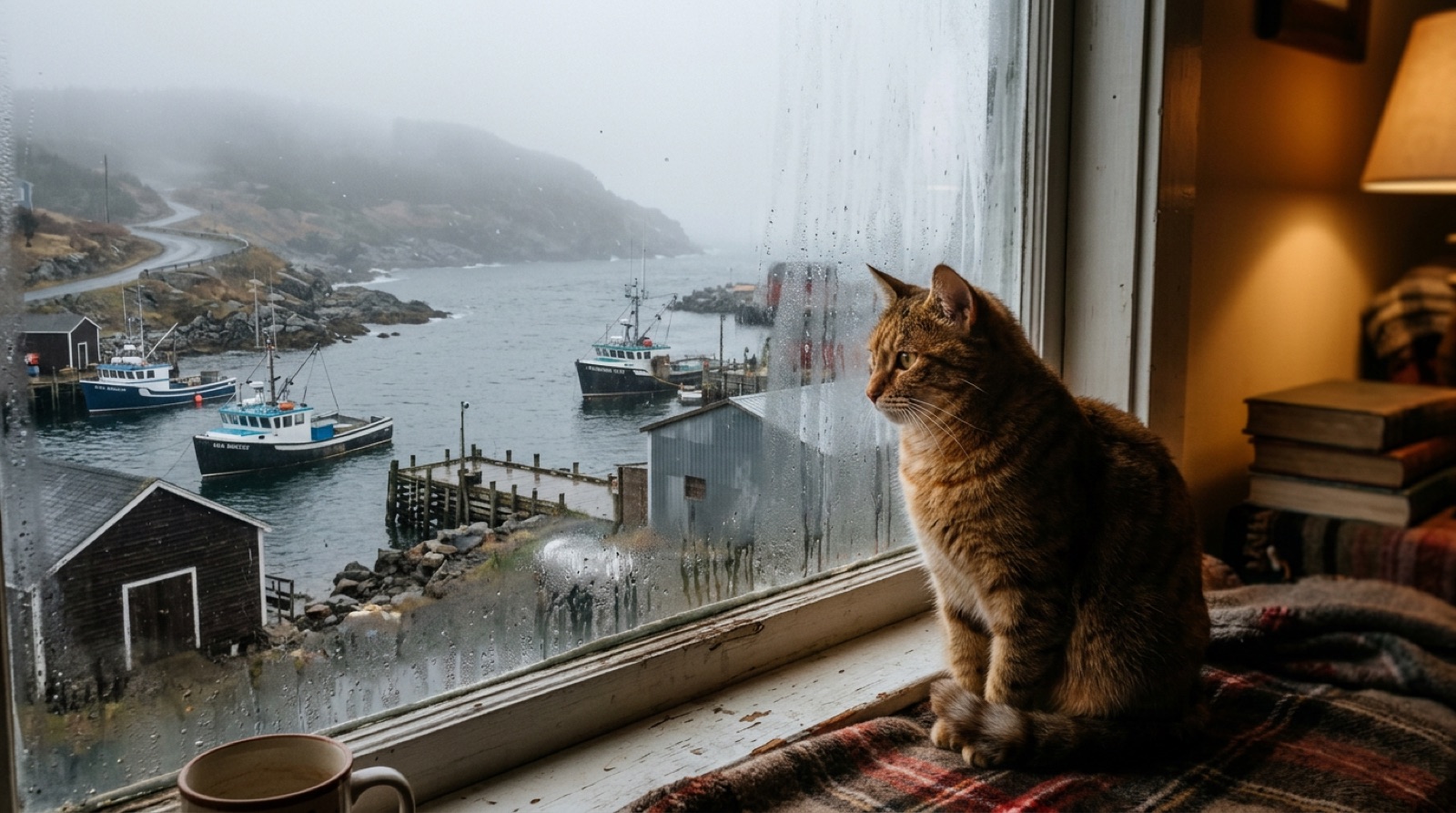
Give it a window worth watching. A perch facing a bird feeder, a tree, or the harbour holds a cat's attention for hours. This is the single cheapest fix for a bored cat.
Play like prey. Two sessions a day with a wand toy, ending with a catch and then a meal, satisfies the hunting sequence far better than a bowl left out.
Make food into work. Puzzle feeders and scattered kibble turn eating into an activity. Free-feeding from a bowl is the fastest route to a bored, overweight indoor cat.
Rotate the toys. Keep two thirds put away and swap them weekly. Old toys become new toys.
If your indoor cat gets out
Search close and search low. An escaped indoor cat almost always hides within a few properties rather than travelling, so check under decks, sheds, porches, and parked cars nearby, at night when it is quiet enough to hear a response. Put the used litter box outside the door, since the scent carries.
Call the Nova Scotia SPCA, post to neighbourhood groups, and check your microchip registration is current with your phone number. That last step takes two minutes and is the thing that most often gets a Halifax cat home.
Browse adoptable Halifax cats
Plenty of cats listed here are already settled indoor cats, and foster carers can tell you which ones have never shown any interest in the door. Listings refreshed regularly.
See Available Halifax Cats →Frequently Asked Questions
Should I let my cat outside in Halifax?
Most Halifax rescues will ask you to keep the cat indoors, and the local conditions back that up. HRM combines dense peninsula traffic, coyotes across wooded urban edges, storms that arrive faster than a cat can get home, and the disease load that comes with a roaming cat population. An indoor cat here reliably outlives an outdoor one by years. If your cat wants fresh air, the answer is a catio, a secure balcony, or harness training rather than an open back door.
Is there a bylaw about cats roaming in Halifax?
Halifax Regional Municipality licenses dogs but not cats, so there is no cat tag and no cat licence to buy. By-law A-700, Respecting Animals and Responsible Pet Ownership, still applies to cat owners through behaviour and responsibility rules rather than a licence. What that means practically is that no bylaw officer is going to hand you a licence ticket for a cat, but you remain responsible for the animal and for how it affects neighbours and their property. Check halifax.ca for the current bylaw text before relying on any specific detail.
How much longer do indoor cats live?
The gap is large, and every shelter and vet in Halifax will tell you the same thing. Indoor cats commonly live into their mid and late teens. Outdoor cats in a coastal city with traffic, storms, and predators frequently do not reach half of that, because the risks are cumulative rather than occasional. It is not one dramatic event. It is the compounding chance across years that a cat meets a car, a coyote, an infection, or a storm it cannot get home from.
Are there coyotes in Halifax that would take a cat?
Yes. Coyotes are established across mainland Nova Scotia including within HRM, and they move through wooded edges, greenbelts, and quiet suburban streets at dawn and dusk. A domestic cat sits squarely in the size range a coyote will take. The risk is highest exactly when many owners let a cat out, which is early morning and around dusk. If you live near a wooded corridor in Bedford, Sackville, or the edges of Dartmouth, treat that as a hard no on unsupervised outdoor time.
What does Halifax winter do to an outdoor cat?
The Maritime version of winter is harder on a cat than the number on the thermometer suggests. Halifax gets wet cold near freezing, repeated freeze-thaw cycles, and driving wind off the harbour, so a cat gets soaked and then chilled rather than staying dry and cold. Road salt irritates paw pads and gets ingested during grooming. Then there are the storms. A nor easter or a hurricane remnant like Fiona arrives faster than a cat wandering three streets away can get home.
What is a catio and does it work in Halifax?
A catio is an enclosed outdoor space, anything from a window box the size of an air conditioner to a full screened deck, that lets a cat experience outside without being loose in it. They work very well here and solve the real problem, which is boredom rather than a need to roam. Build for the weather: fasten it properly for high wind, use materials that tolerate salt air, and make sure snow load will not collapse a flat roof panel in February.
Can I harness train a rescue cat?
Often yes, though it goes slowly and it is not for every cat. Start indoors by leaving the harness on for a few minutes at a time with something good happening, then build up over weeks rather than days. Go outside only once the cat is genuinely relaxed wearing it. Never tie a harnessed cat out and leave it alone. Some cats take to it and enjoy a slow patrol of a quiet backyard. Others flatten themselves to the ground and clearly hate every second, and that is a complete answer.
My rescue cat was a stray. Does it need to go outside?
Almost never, and this is one of the most common misconceptions among new Halifax adopters. A cat that lived rough was surviving, not enjoying a lifestyle. Most former strays settle into indoor life quickly once they trust that food arrives reliably and nothing chases them. What they do need is stimulation to replace the hunting: window perches with a view of birds, food puzzles, and daily play with a wand toy. Give it those and the door stops being interesting.
How do I stop my cat from bolting out the door?
Make the doorway boring and make somewhere else rewarding. Feed or play at a fixed spot away from the entry so the cat has a reason to be elsewhere when the door opens. Keep treats near the door and toss one away from it as you come in, which builds a habit of running inward rather than outward. A double barrier helps in a Halifax apartment building, since a vestibule or a baby gate buys you a second chance. Bolting fades with consistency, but it takes weeks.
What if my indoor cat gets out in Halifax?
Search close and search low first. Escaped indoor cats usually hide within a few houses rather than travelling, so check under decks, sheds, porches, and parked cars in your immediate area at night when it is quiet. Put the litter box and something that smells of you outside the door. Call the Nova Scotia SPCA and post to local neighbourhood groups. This is also the moment a microchip earns its keep, so make sure your contact details on the registry are current before you ever need them.
Are indoor cats bored or unhappy?
Only if you leave them nothing to do, which is a solvable problem rather than an argument for the outdoors. Cats need vertical space, a window with something moving outside it, prey-shaped play with a wand toy twice a day, and food that takes some work to get. A Halifax apartment with a cat tree in a harbour-facing window and ten minutes of play morning and evening is a genuinely good life. A bare room with a bowl in it is not, and no amount of outdoor access fixes the underlying problem.
Do Halifax rescues require cats be kept indoors?
Many strongly prefer it and will ask about your intentions during the adoption conversation. Bide Awhile checks references and asks about your household as part of its process, and foster-based groups like Halifax Cat Rescue Society tend to know exactly which of their cats have already been hit by a car or come in with an abscess from a fight. Answer honestly rather than telling them what you think they want to hear. If you genuinely want a barn or working cat, say so, because Spay Day HRM runs a barn cat placement program for exactly that.
Related Halifax Guides
Find a cat that suits your home
Halifax and Dartmouth rescue cats, including plenty of settled indoor-only cats.
Browse Available Halifax Cats →New cat? Start with these care guides
Everything a new adopter needs to set up a safe, happy home.