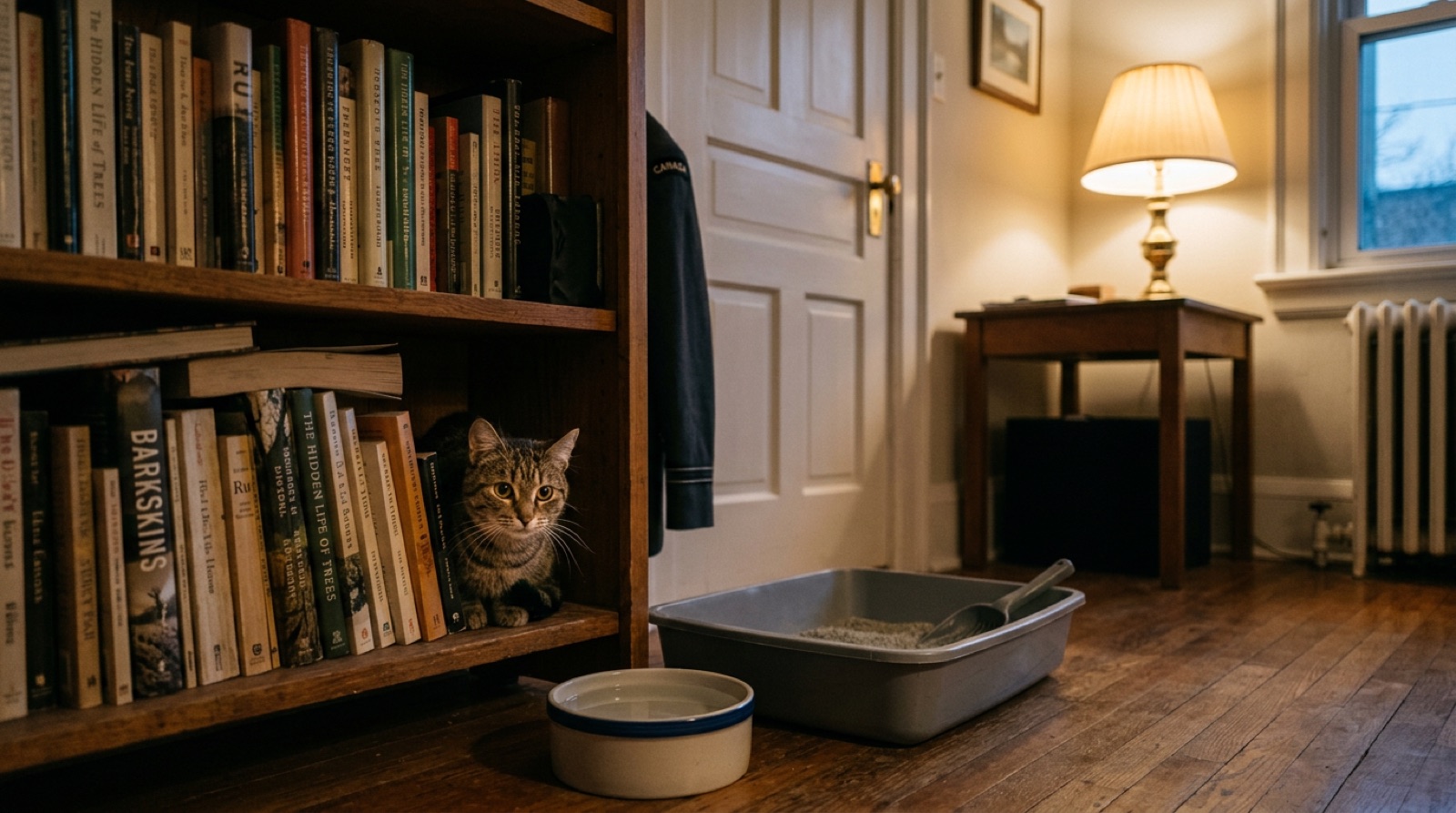
The short answer
Set up one quiet safe room before pickup, with food, water, a litter box away from the food, a hiding spot and a scratching post. Put the carrier down, open it and leave. Expect hiding for the first three days. Keep the same food and litter the cat already knows. Book a London vet appointment in week one or two and register for the City cat licence. Straining to urinate without producing anything is an emergency, not a wait-and-see.
The most common message rescues get in week one is some version of the same worry: the cat is hiding, it will not come out, and the adopter is convinced they have done something wrong or picked the wrong cat.
Nearly always, nothing is wrong. A cat that has moved from a foster spare room or a shelter kennel into a strange house has lost every familiar smell and sound in one afternoon. Hiding is the sane response. The cat that walks in, tours the place and jumps on the sofa within an hour is the unusual one.
What follows is the plan that gets a London rescue cat from under the bed to on the sofa, plus the local steps that belong in week one. If you have not chosen a cat yet, the live London cat listings are refreshed regularly.
What the first three months look like
| When | What to expect | Why |
|---|---|---|
| Day 1 | Cat goes straight into the safe room, carrier door open, and you leave | Choice reduces panic more than comfort does |
| Days 1 to 3 | Hiding, eating overnight, using the box when nobody is watching | Normal. Do not pull the cat out from under anything |
| Days 3 to 7 | Comes out while you are in the room, starts investigating | The cat is testing whether you are predictable |
| Week 2 to 3 | Explores the rest of the home, starts a routine | Open the safe room door and let the cat set the pace |
| Month 1 to 3 | Real personality surfaces, confidence settles | The cat you adopted is the cat you meet now |
This is the 3-3-3 pattern rescues use as shorthand. Treat it as a shape, not a schedule. Plenty of cats move faster and some take considerably longer.
Set the safe room up before pickup
Pick one quiet room with a door. A spare bedroom is ideal, a bathroom works, a busy hallway does not. Get it ready before you collect the cat, because doing it afterwards means carrying a frightened cat around while you look for the litter box.
Food and water on one side of the room, in the same brand the rescue was feeding.
Litter box as far from the food as the room allows, using the litter the cat already knows.
A hiding place you can still reach. A cardboard box on its side or the carrier with the door removed. If the only hiding spot is under a bed frame, you cannot check on the cat without dragging it out.
A scratching post and a couple of toys, including a wand toy for later in the week.
Something that smells of the foster home if the rescue will give you a blanket or towel. This helps more than anything you buy new.
Then, on arrival, put the carrier on the floor, open the door and leave the room. Do not lift the cat out. Letting the cat choose when to emerge is the single most useful thing you do all week.
Do not change the food or the litter yet
Ask the rescue what the cat has been eating and buy that before pickup, even if you intend to switch to something else. A stressed cat given unfamiliar food often gets diarrhoea, which turns a normal settling week into a vet visit and a cat that now associates the new house with feeling unwell.
Same logic with litter. Cats have firm opinions about texture and depth, and a cat that dislikes the box may choose a corner of the room instead. That habit is far harder to undo than it was to avoid. Unscented clumping litter is a safe default if you cannot find out what the cat used.
Once the cat is eating reliably and moving around confidently, usually two to three weeks in, transition either one over seven to ten days by mixing increasing amounts of the new into the old.
Week-one London admin
Book a vet appointment. Your adopted cat arrives vaccinated, fixed and microchipped, so this visit is about establishing a relationship with a London clinic before an emergency forces one. Bring the adoption paperwork. Ask about follow-up vaccines, parasite prevention for an indoor cat, and the clinic's after-hours arrangement.
Register for the cat licence. London requires it annually through the London Animal Care Centre, indoor cats included. An adopted cat is already spayed or neutered and microchipped, so it qualifies for the lowest tier at $23. You need proof of rabies vaccination and the spay, neuter and microchip documentation, all of which come with your adoption paperwork.
Update the microchip registration. The chip is only useful if the contact details attached to it are yours. The rescue will tell you which registry the chip is with, and the transfer is usually a short online form.
Save the emergency numbers. Put your regular clinic and a 24-hour option in your phone now rather than searching for them at 2 a.m.
Symptoms that mean go tonight
A male cat straining in the litter box without producing urine is a veterinary emergency. A urinary blockage becomes life-threatening within hours rather than days, and it is easy to misread as constipation or a protest about the new box. Go to a vet first and work out the behavioural explanation afterwards. The same applies to laboured breathing, repeated vomiting, collapse, seizure, or refusing all food and water beyond roughly 24 hours.
London has 24-hour emergency coverage at London Regional Veterinary Emergency and Referral Hospital on Adelaide Street North at 519-432-3300, with weekend and overnight coverage also at Southwest Veterinary Hospital on Wellington Road South at 519-672-1623. Hours shift, so phone ahead. Never give a cat human medication. Several common painkillers are fatal to cats at small doses.
Introducing a resident cat or dog
The safe room is doing most of this work already. Your resident animal spends several days smelling the newcomer under a closed door, which is exactly the pace you want. Rushing past this stage is the most common reason introductions go badly, and a bad first meeting takes weeks to repair.
Swap scents. Move bedding or a towel between the two so each learns the other's smell as ordinary background rather than an intruder alert.
Feed on opposite sides of the closed door. The other animal's smell now arrives alongside something good.
Then brief visual contact, through a cracked door or a baby gate, kept short and ended before anyone gets tense.
With a dog, keep the dog leashed for early meetings and make sure the cat always has an escape route upward. A cat that can get high feels far safer than one that can only run.
Do not force interaction and do not leave them unsupervised until you have seen several calm meetings.
Browse adoptable London cats
Foster-based listings often include notes on how the cat handles kids, dogs and noise, which makes week one considerably easier to plan. Listings refreshed regularly.
See Available London Cats →Frequently Asked Questions
Why is my new rescue cat hiding?
Because it just lost everything it knew, and hiding is what a cat does about that. Your new cat has been moved between a foster home or a shelter and a house full of unfamiliar smells, sounds and people, all in a single afternoon. Hiding under a bed or behind a sofa for the first few days is the normal, healthy response, not a sign that the cat dislikes you or that the adoption was a mistake. The mistake would be pulling the cat out to reassure it. Let it come out on its own timeline and it almost always does.
What is the 3-3-3 rule for rescue cats?
It is a rough guide to how a rescue animal settles: three days to decompress, three weeks to learn the routine, three months to feel genuinely at home. In the first three days expect hiding, eating overnight and using the litter box when nobody is watching. By three weeks most cats have a routine, a favourite spot and opinions about your schedule. By three months the real personality is out. Treat it as a shape rather than a schedule, because plenty of London rescue cats move faster and some take longer.
How do I set up a safe room for a new cat?
Pick one quiet room with a door, ideally a spare bedroom or a bathroom, and put everything the cat needs inside it before pickup. That means food and water on one side, the litter box well away from the food, a bed or a covered hiding spot, a scratching post and a couple of toys. Add somewhere the cat can hide that you can still reach, such as a box on its side or a carrier with the door removed. When you get home, put the carrier down, open the door and leave the room. Do not lift the cat out.
Should I change my new cat's food right away?
No, and this is one of the most common first-week mistakes. Ask the rescue what the cat has been eating and buy that food before pickup, even if you plan to switch later. A cat that is already stressed by a move and then given unfamiliar food frequently gets diarrhoea, which turns a settling-in week into a vet visit. If you want to change food, wait until the cat is eating reliably and settled, then transition over seven to ten days by mixing an increasing proportion of the new food into the old.
What about litter? Do I have to use the same kind?
Start with whatever the cat used at the shelter or foster home, then transition gradually if you want something different. Cats are particular about litter texture and depth, and a cat that dislikes the box may go elsewhere, which is much harder to undo than it was to prevent. Use an unscented clumping litter as a default if you cannot find out what the cat had. Put the box somewhere quiet and away from food, and keep at least one box per cat plus one spare once the cat has the run of the house.
When should I book the first vet appointment in London?
Within the first week or two, even though your adopted cat arrives already vaccinated and fixed. The point of that first visit is establishing a relationship with a London clinic before you need one urgently. Bring the adoption paperwork so the clinic has the vaccination dates, microchip number and spay or neuter record. Ask about the follow-up vaccine schedule, parasite prevention for an indoor cat, and what the clinic wants you to do after hours. Knowing who to phone at 11 p.m. is worth the appointment on its own.
When is something actually an emergency?
Straining in the litter box without producing urine is an emergency in a male cat and needs a vet within hours, not the next morning. A urinary blockage is life-threatening fast, and it is easy to mistake for constipation or a litter box protest. Go to a vet first and sort out the behavioural explanation afterwards. The same urgency applies to laboured breathing, repeated vomiting, collapse, or refusing all food and water for more than about 24 hours. London has 24-hour emergency coverage and no clinic minds a false alarm.
How do I introduce a new cat to my existing cat?
Slowly, and through a closed door first. The safe room does this work for you: your resident cat smells the newcomer under the door for several days without any confrontation. Swap bedding between them so each learns the other's scent as something ordinary. Then feed them on opposite sides of the closed door so the smell arrives with something good. Only after that do you allow brief supervised visual contact. Rushing this is the single most common cause of a cat introduction going badly, and a bad first meeting takes weeks to undo.
What if my new cat will not eat?
Give it a day or so of grace, then take it seriously. A newly adopted cat often will not eat while you are in the room and then clears the bowl overnight, so check whether food is actually disappearing before concluding the cat is not eating. Warming wet food slightly makes it smell stronger and often tempts a nervous cat. If a cat genuinely eats nothing for more than about 24 hours, phone your vet. Cats should not go without food for long, and a prolonged fast causes real problems rather than just weight loss.
Do I need to register my cat with the City of London?
Yes, and put it on the first-week list. London runs an annual Cat Identification program through the London Animal Care Centre and it applies to indoor cats too. An adopted cat is already spayed or neutered and microchipped, which qualifies it for the lowest fee tier at $23 rather than $53 for an intact cat. You bring proof of rabies vaccination and documentation of the spay, neuter and microchip, all of which come with your adoption paperwork. Licences expire December 31 each year regardless of when you register.
My cat seems fine and then hides again. Is that a setback?
It is normal, not a setback. Settling is not a straight line, and a cat that spent the evening on the sofa may retreat under the bed the next morning because a delivery arrived or the furnace kicked on. What matters is the trend across weeks rather than the shape of any given day. Keep the routine steady, keep the safe room accessible as a retreat, and resist the urge to change the environment to fix it. Predictability is the thing that builds confidence, and it works slowly.
How long until my cat actually likes me?
Longer than you want and less time than it feels like in week one. Most London rescue cats are visibly comfortable by the three-week mark and genuinely themselves by three months. The fastest way to get there is counterintuitive: stop trying. Sit in the room reading or working, let the cat approach on its own terms, and let it walk away without being followed. Cats bond to people who are predictable and who do not corner them. A wand toy helps more than a lap does at this stage.
Related London Guides
Start with the right cat
Adoptable cats from London and Middlesex County rescues, in a single list.
Browse Available London Cats →New cat? Start with these care guides
Everything a new adopter needs to set up a safe, happy home.