The short answer
Set up one safe room before pickup with food, water, a litter box and somewhere to hide. Open the carrier and leave. Expect the cat to hide for several days, which is normal. Keep the shelter's food and litter for at least a fortnight before changing anything. Register with a St. Catharines vet in week one. Three days, three weeks, three months is the timeline everybody underestimates.
The most common message a rescue gets on day two is some version of: the cat is under the bed and will not come out, did we make a mistake. The answer is almost always no. A cat that has just lost every familiar smell it had is doing exactly what a healthy cat does, which is find somewhere small and dark and wait to see whether this place is safe.
What you do in that first week decides whether that assessment finishes in days or drags on for months. Mostly it involves doing less than you want to.
Below is the day-by-day version, the setup that makes it work, and the small number of symptoms that override all of it and mean phone a vet immediately. If you have not chosen a cat yet, the live St. Catharines cat listings are refreshed regularly.
What Each Day Looks Like
| When | What to expect | What to do |
|---|---|---|
| Day 1 | Cat hides immediately and does not eat much | Open the carrier in the safe room and walk away |
| Days 2 to 3 | Eating overnight, using the box, still hiding by day | Sit in the room reading aloud, no direct approach |
| Days 4 to 7 | Emerging while you are present, first curiosity | Offer a wand toy, let the cat set the distance |
| Week 2 | Exploring more of the house on its own terms | Open the safe room, keep it available as a retreat |
| Week 3 onward | Real personality appears, routines settle | Book the first wellness visit if not already done |
Confident cats move faster and older or under-socialised cats move slower. The order rarely changes even when the pace does.
Building the safe room
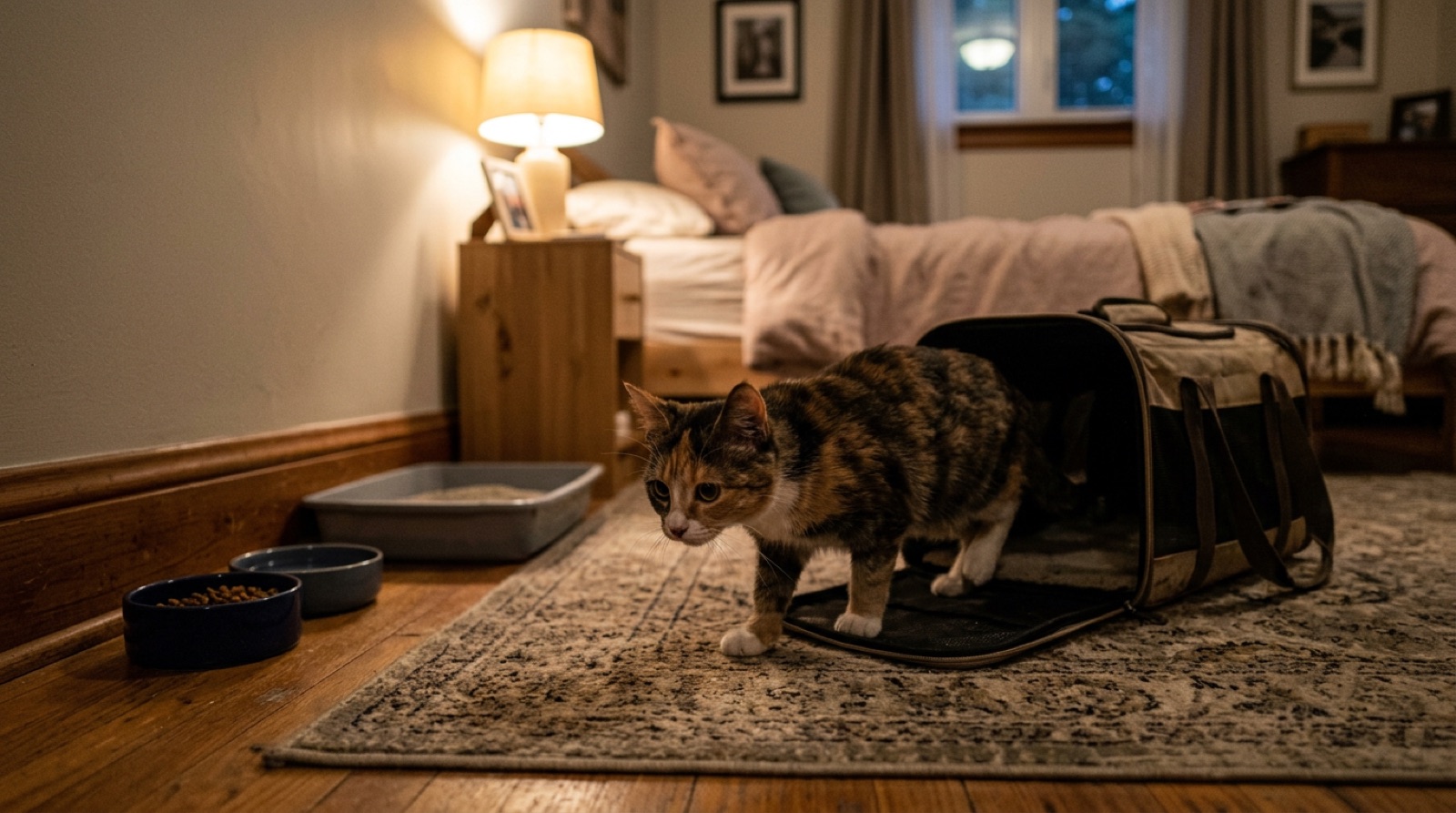
Pick the smallest sensible room you have. A spare bedroom works, a bathroom works, an office works. What you want is a space the cat can learn completely in a day, because the whole house is far too much information for an animal that arrived in a carrier an hour ago.
Put in food, water, a litter box on the opposite side of the room from the food, a bed, and at least two hiding options. A cardboard box on its side beats anything you can buy. Leave the carrier in the room with the door open, since it is now the only object in the house that smells familiar.
Then open the carrier door and leave the room. Do not lift the cat out, do not sit and stare, and do not invite anyone over to see the new cat. That last one is genuinely the hardest instruction to follow and the one that matters most.
Food, litter and the slow transition
Ask the shelter what the cat was eating and what litter it was using, then buy exactly those before pickup. You can change both later. Changing either during the first fortnight stacks a digestive upset or a litter box refusal on top of an already stressed cat.
When you do change food, take seven to ten days. A quarter new, then half, then three quarters, then all of it. If loose stool appears, back up a step and slow down further. The same principle applies to litter, though most cats care less about brand than they care about depth and cleanliness.
One box per cat plus one spare, cleaned daily, in a quiet spot away from the washing machine. Nearly every litter box problem a new adopter reports traces back to either a medical issue or one of those three things.
Finding a vet in St. Catharines
Register with a practice in week one, before you need one. Clinics across Ontario vary in whether they are accepting new patients, and discovering that during an emergency at nine on a Sunday night is a bad way to find out.
The Humane Society of Greater Niagara at 160 Fourth Avenue runs a full-service veterinary clinic alongside the shelter, which is a straightforward option if you adopted from them. Private practices across the city do the same work. Ask what the after-hours arrangement is when you register, because that is the answer you will care about eventually.
Bring the shelter paperwork to the first visit. It tells the vet which vaccines are done, when the spay or neuter happened, and what the microchip number is, which saves you paying for anything twice.
When to stop reading and phone a vet
A male cat straining in the litter box and producing nothing, crying in the box, or going in and out repeatedly may have a urinary blockage. That is life-threatening within hours. Go to a veterinarian or an emergency clinic immediately. It is not a litter box training problem and it will not resolve overnight.
Also urgent: laboured or open-mouthed breathing, collapse, seizures, repeated vomiting, suspected poisoning, or a cat that has eaten nothing at all for twenty four hours. Everything else in this guide can wait. These cannot.
Browse adoptable St. Catharines cats
Foster-based listings often include notes on how a cat handles new spaces, which tells you a great deal about how week one will go. Listings refreshed regularly.
See Available St. Catharines Cats →Frequently Asked Questions
How long does a rescue cat take to settle in?
The rough guide most rescues use is three days, three weeks, three months. Three days to stop being terrified, three weeks to learn the routine of the house, three months to genuinely feel at home and show you who the cat actually is. Some cats compress that into a weekend and some take longer, especially older cats or ones that came from a hoarding situation. The mistake is deciding at day four that the adoption is not working. Almost nobody meets their real cat in the first week.
Why is my new cat hiding under the bed?
Because it is a cat that has just been moved, and hiding is exactly what a healthy cat does in that situation. It is not fear of you specifically or evidence of a bad match. A cat that hides is regulating itself, and the useful response is to leave it alone rather than pull it out. Check that it is eating and using the litter box overnight, which most hiding cats do once the house is quiet. Dragging a hiding cat into the open sets the timeline back rather than forward.
What is a safe room and why does it matter?
One small room, usually a spare bedroom or a bathroom, where the cat spends its first several days with everything it needs in arm's reach. Food, water, litter box, a bed and somewhere to hide, ideally a cardboard box on its side. The reason it works is that a whole house is overwhelming to an animal that has just lost every familiar smell it had. A small room is learnable in a day. Once the cat owns that room, the rest of the house expands from a position of confidence.
What should I have ready before pickup day?
A hard-sided carrier with a top opening, a litter box and litter matching what the shelter used, the same food the shelter was feeding, two bowls, and something to hide inside. That is genuinely the whole list. Skip the cat tree, the automatic feeder and the designer bed until you know what your cat actually likes. Our cost guide runs the numbers, but the practical point is that most of the fun purchases work better in week four when you have met the animal.
How do I switch my cat to a different food?
Slowly, over seven to ten days, and only after the cat has settled. Start at roughly a quarter new food to three quarters old, then move to half and half, then three quarters, then all new. A sudden switch on top of the stress of moving house gives you diarrhoea and a cat that now associates the new food with feeling unwell. Ask the shelter what the cat was eating and buy a bag of exactly that first, even if you intend to change it later.
What if my cat will not eat?
A meal or two skipped on day one is normal, and most cats eat overnight once the house goes quiet. What is not normal is a cat that has eaten nothing for twenty four hours. Cats can develop serious liver problems from not eating, and that risk is real rather than theoretical, so phone a vet rather than waiting it out. In the meantime, try warming wet food slightly to raise the smell, and put the bowl near the hiding spot rather than out in the open.
When should I take my new cat to a vet?
Book a wellness visit within the first two to four weeks unless something is wrong sooner, in which case go immediately. Register with a St. Catharines practice as soon as you adopt rather than waiting for a problem, because finding a clinic taking new patients during an emergency is a bad experience. Bring the shelter paperwork so the vet knows what vaccines and treatments are already done. The Humane Society of Greater Niagara also runs a full-service clinic on Fourth Avenue.
What symptoms mean I should call a vet tonight?
Straining in the litter box with nothing coming out, especially in a male cat, is a life-threatening emergency and needs a vet within hours rather than in the morning. So do laboured or open-mouthed breathing, repeated vomiting, collapse, seizures, or a suspected poisoning. Refusing all food for twenty four hours also warrants a call. Sneezing, mild eye discharge and a quiet appetite in a newly adopted cat are common and worth mentioning at the wellness visit rather than at midnight.
How do I introduce a new cat to my existing cat?
Through a closed door first, and much more slowly than feels necessary. Keep the new cat in the safe room for at least a week while both cats get used to each other's smell under the door. Then swap their spaces so each explores the other's scent without a face to face meeting. Then feed them on opposite sides of a cracked door. Only then do you allow supervised visual contact. Rushing this is the most common reason two cats never get along afterwards.
Should I let my new cat outside once it settles?
No, and especially not in the first months when the cat has no attachment to your house yet. A newly adopted cat that gets out will try to travel, and St. Catharines gives it the QEW, Highway 406 and the Welland Canal to travel through. Keep doors and screens secure from day one. If you want your cat to have outdoor time, build the enclosed or supervised version instead. Our indoor versus outdoor guide covers the Niagara specifics and the safer alternatives.
My cat is not using the litter box. What now?
Rule out medical before behaviour, every time. Straining, blood, or repeated trips producing nothing means phone a vet, not a training article, and in a male cat it is urgent. If the cat is healthy, look at the setup. Same litter as the shelter used, box in a quiet spot away from noisy appliances, uncovered rather than hooded, and cleaned daily. One box per cat plus a spare is the rule. Cats are picky about the box in ways they are picky about very little else.
Should I get one cat or two?
Two often settles faster than one, particularly with young cats or a bonded pair that arrived together. They regulate each other, they play with each other instead of your ankles at four in the morning, and the extra cost is mostly food and litter rather than gear. The Niagara SPCA prices bonded pairs below two separate adoptions for exactly this reason. If you are adopting an adult cat that a foster home describes as preferring to be an only cat, believe them.
Related Niagara Guides
One search, every Niagara rescue
Shelter cats and foster cats from across the Niagara region, in a single list.
Browse Available St. Catharines Cats →New cat? Start with these care guides
Everything a new adopter needs to set up a safe, happy home.