The short answer
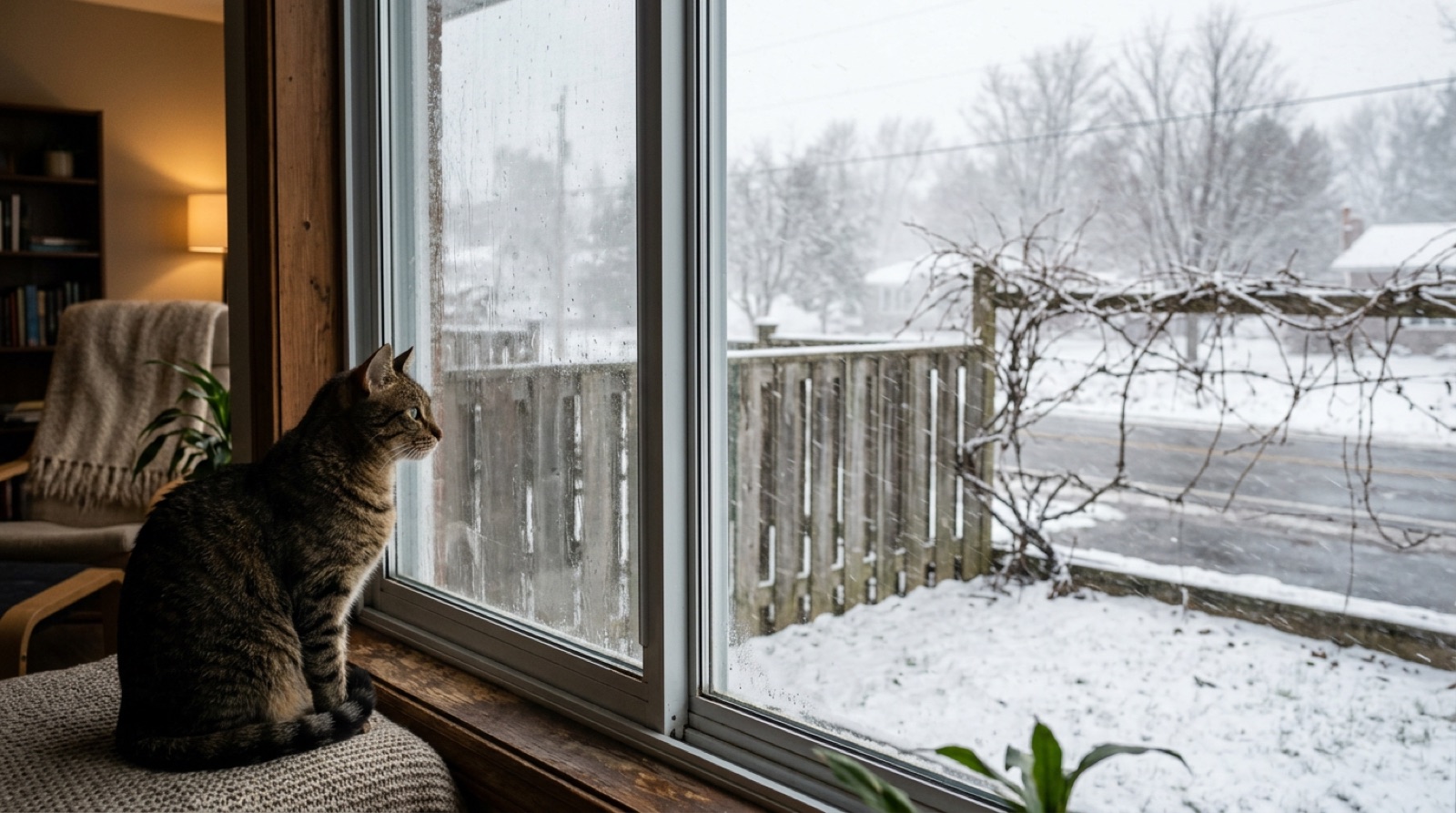
Indoors, with supervised or enclosed outdoor access. Niagara puts fast traffic, a shipping canal with walls a cat cannot climb, escarpment coyotes and winter engine bays inside one small city. A catio, a harness and lead, or a supervised back garden gives your cat the smells and the sunshine with none of that. Keep the microchip registration current either way, because the day a cat slips out is the day it matters.
Plenty of people grew up letting the cat out in the morning and calling it in at night. That was a reasonable thing to do in a quieter era. St. Catharines in 2026 is a different place, and the specific things that hurt cats here are not the ones people expect.
It is not mainly the winter. Niagara has the mildest climate in Ontario, which is why the fruit belt and the wineries are here. The risks are the QEW, the canal, the coyotes moving along the escarpment, and a warm engine bay on a February morning.
None of that means a cat has to live entirely indoors and stare at a wall. It means you build the outdoor access instead of leaving it to chance. Here is what the region actually does to a roaming cat, and four ways around it. If you are still choosing a cat, the live St. Catharines cat listings flag which ones rescues consider indoor-only.
The Niagara Risk List
| Risk | What it looks like here | When |
|---|---|---|
| Traffic corridors | The QEW, Highway 406 and busy arterials like Lake Street | Year-round |
| Canal and lock infrastructure | Steep concrete walls and water a cat cannot climb out of | Year-round |
| Coyotes and predators | Escarpment edges, Bruce Trail corridors and ravine greenspace | Worst at dusk and dawn |
| Engine bay sheltering | Cats climb into warm engine compartments overnight | Late autumn to early spring |
| Lake-effect snow and cold snaps | Heavy squalls and frozen paws despite the mild reputation | December to March |
| Humid heat and dehydration | Lake-moderated summers still hit hard humidity | July and August |
| Disease from other cats | Feline leukemia and FIV spread through fights and contact | Year-round |
| Vehicle traffic near the wineries | Rural roads carry fast traffic with no sidewalks or lighting | Year-round |
The canal is the one people forget
Most cities have roads and wildlife. St. Catharines also has a working shipping canal running through the middle of it, and that is genuinely different. The Welland Canal is engineered infrastructure with steep vertical concrete walls, locks and deep cold water. There is no gentle bank.
Cats swim adequately for short distances and cannot climb a wet vertical wall at all. That combination is why the canal is worse for a cat than a creek would be, and parts of Twelve Mile Creek carry the same problem where the banks are steep and undercut.
A curious cat exploring near the canal is not doing anything unusual for a cat. It is simply somewhere that offers no way back up. If your cat does go missing near the water or anywhere else in the city, the Humane Society of Greater Niagara holds the animal control contract for St. Catharines and is the first place to check.
Traffic, the escarpment and the weather
Traffic. The QEW and Highway 406 carry fast continuous traffic through the city, and arterials like Lake Street and Ontario Street are busy well into the evening. Out in the fruit belt and wine country the roads are quieter but faster, with no sidewalks and very little lighting.
Coyotes. The Niagara Escarpment and the Bruce Trail give wildlife a continuous green corridor that runs close to residential edges, and ravine greenspace around Burgoyne Woods and the creek systems does the same. Coyotes hunt at dusk and dawn, exactly when a cat wants to be out.
Winter. Milder than most of Ontario, and still cold enough for frostbitten ears and ice between the toes, with heavy lake-effect snow arriving in squalls. The real winter hazard is the engine bay a cat climbs into for warmth.
Summer. Lake-moderated but genuinely humid in July and August. Cats outdoors need shade and water, and a cat shut in a shed or a garage in that weather is in trouble faster than people assume.
Bang on the bonnet before you start the car
From late autumn through early spring, cats climb into wheel wells and engine compartments for the leftover heat from a recently driven car. When the engine starts, the injuries are severe. It happens to indoor-outdoor pets and community cats alike, all over Niagara, every winter.
The fix costs nothing. Thump the bonnet, knock the wheel arch, or tap the horn before you start on a cold morning. Ten seconds of noise gets a sheltering cat out from under the car, and it is worth doing whether or not you own a cat yourself.
Four safer ways to give a cat the outdoors
1. A catio. Anything from a window box to a screened deck. Niagara summers are pleasant enough that this gets used constantly, and a renter-friendly window-mounted version leaves no marks on the building.
2. Harness and lead. Works for many cats if you start indoors and go slowly. Use a harness, never a collar. If your cat flattens and refuses, accept the answer and stop.
3. Supervised garden time. You are outside with the cat, in a fenced yard, in daylight, not at dusk. Simple, free, and the version most people actually stick with.
4. A properly enriched indoor space. Height, hiding spots, a scratching post, window perches and daily wand play. This is what makes indoor life work, and skipping it is why people wrongly conclude indoor cats are miserable.
Browse adoptable St. Catharines cats
Many Niagara rescue cats are already settled indoor cats, and their listings say so. Filter for the ones that suit an apartment or a house without a garden. Listings refreshed regularly.
See Available St. Catharines Cats →Frequently Asked Questions
Should cats go outside in St. Catharines?
Most Niagara rescues will tell you no, and they have reasons rather than opinions. The city is threaded with fast traffic on the QEW and Highway 406, the Welland Canal runs straight through it with steep walls a cat cannot climb, and the escarpment brings coyotes closer to backyards than people expect. Indoor cats in Ontario reliably live longer than roaming ones. That does not mean a cat has to see nothing but drywall. It means the outdoor access should be supervised or enclosed rather than unsupervised roaming.
Is the Welland Canal actually a danger to cats?
Yes, and it is the Niagara hazard people from other cities never think of. The canal is engineered infrastructure with steep vertical concrete walls, locks and cold deep water. A cat that goes in has no gradual bank to scramble out on, unlike a creek. The same applies to sections of Twelve Mile Creek where the banks are steep. Cats are decent swimmers over short distances and terrible at self-rescue from vertical surfaces, which is the combination that turns a curious walk into a drowning.
Are there coyotes in the St. Catharines area?
Yes. Coyotes are established across southern Ontario and the Niagara Escarpment gives them a continuous green corridor running right past residential edges, including along stretches of the Bruce Trail and through ravine greenspace. They are most active around dusk and dawn, which is exactly when cats prefer to hunt. If you live near Burgoyne Woods, the escarpment edge or any of the creek ravines, an outdoor cat is sharing that space. Bringing cats in before dusk removes most of the exposure.
Do Niagara winters really hurt cats if they are mild?
Milder than Ottawa is not the same as safe. Niagara gets heavy lake-effect snow off Lake Erie, and cold snaps still drop well below freezing even in a region known for a long growing season. Cats get frostbite on ears and paw pads, and wet snow between the toes turns to ice. The bigger winter hazard is not the cold itself but where cats go to escape it, which is under vehicles and into warm engine compartments. That is a specifically Niagara-in-February way to lose a cat.
What is the engine block risk and how do I prevent it?
Cats climb into wheel wells and engine bays for the residual heat from a recently driven car, then get badly hurt when the engine starts. It happens across the region from late autumn through early spring and it happens to indoor-outdoor cats and community cats alike. The prevention is simple and free. Bang on the bonnet, thump the wheel arch, or give the horn a short tap before starting the car on a cold morning. Ten seconds of noise gets the cat out.
What is a catio and does it work in Niagara?
A catio is an enclosed outdoor space, anything from a window box the size of a microwave to a full screened deck. It works extremely well here because Niagara summers are genuinely pleasant and cats want the smell of the garden more than they want the territory. The cat gets fresh air, bird watching, sun and grass. You get a cat that is not crossing Lake Street. Renters can build a freestanding or window-mounted version that leaves no marks, which is worth knowing in a rental-heavy city.
Can I leash train a cat?
Many cats take to it, especially ones adopted young or ones with confident personalities. Use a proper harness rather than a collar, because a frightened cat reverses out of a collar in about a second. Start indoors, let the cat wear the harness with no lead until it stops noticing, then try a quiet space rather than a busy park. Some cats never accept it and freeze or flatten. If yours does, stop. A forced walk is not enrichment, it is a bad afternoon for both of you.
My cat was outdoors before I adopted it. Can it adjust to indoors?
Usually yes, and it takes longer than people expect rather than being impossible. The transition is easier if you replace what the cat is losing rather than just closing the door. That means vertical space, window perches, puzzle feeders and daily play with a wand toy that lets the cat actually catch things. Expect protest at doors for a few weeks. Feed near a window, keep the routine steady, and most former outdoor cats settle into being extremely committed indoor cats within a couple of months.
Do indoor cats get bored?
They get bored in an empty room, not indoors as a concept. A cat needs height, hiding places, something to scratch, something to hunt and a person who plays with it. Give it all five and indoor life is rich. Skip them and you get the behaviours people blame on indoor living, like waking you at four in the morning or attacking your ankles. Two short play sessions a day, ideally one before bed, solves most of it. A cat tree by a window does most of the rest.
What about barn cats and community cats in the fruit belt?
They are a different situation and they need different things. Working barn cats and managed community colonies exist across the Niagara fruit belt and wine country, and the responsible version involves sterilisation, vaccination, food, water and winter shelter with a caregiver who checks on them. That is not the same as letting a pet cat roam. If you are feeding unowned cats, contact a Niagara group about trap-neuter-return, because feeding alone grows a colony faster than anything else.
Does St. Catharines have a bylaw about cats going outside?
The city licenses dogs through its DocuPet program, and that platform lists dogs as the species required to be licensed. City by-laws do govern the keeping of animals more broadly, and animal control for St. Catharines is handled through the Humane Society of Greater Niagara, so they are the practical people to ask about a specific situation. If your question is about a neighbour's cat or a cat you have found, phoning them gets a clearer answer than reading a by-law index.
Is a microchip enough if my cat gets out?
It is the single most useful thing, and only if the registration is current. A chip with a disconnected phone number gets scanned and leads nowhere, which is a genuinely common way for cats to sit in shelters for weeks. Update the record whenever you move or change your number, which matters in a student city where people move frequently. Add a breakaway collar with a tag as a visible backup, since a neighbour reads a tag instantly while a chip requires somebody to bring the cat to a clinic.
Related Niagara Guides
One search, every Niagara rescue
Shelter cats and foster cats from across the Niagara region, in a single list.
Browse Available St. Catharines Cats →New cat? Start with these care guides
Everything a new adopter needs to set up a safe, happy home.