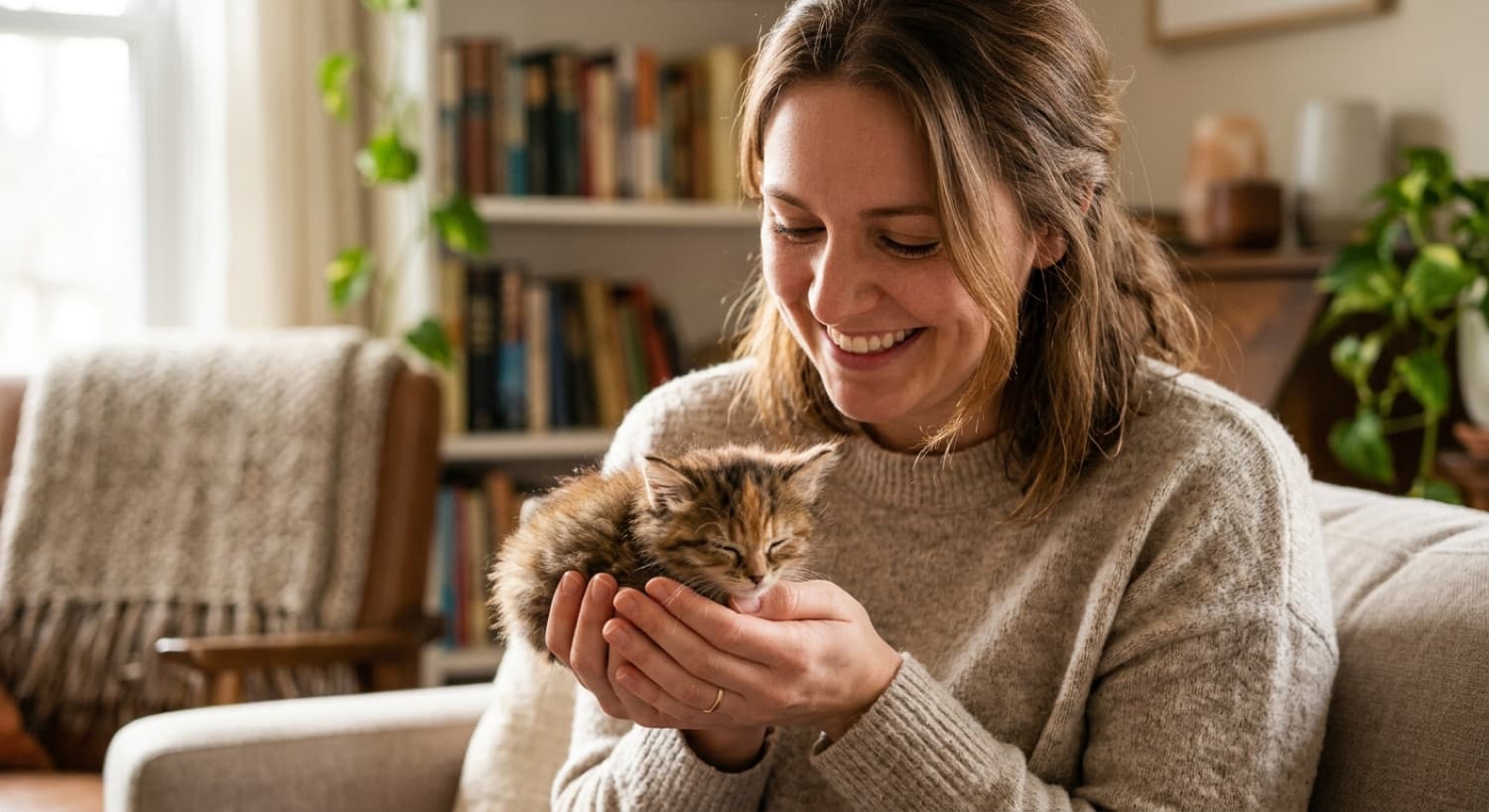
The short answer
Fostering means temporarily caring for a rescue cat in your home until it is adopted, and it is the backbone of Toronto cat rescue, since rescues like Toronto Cat Rescue and Annex Cat Rescue are foster-based. You provide a safe space, daily care, and attention; the rescue covers vet care, spay or neuter, vaccines, and usually food and supplies. Placements (mom and kittens, bottle babies, shy-cat socialisation, medical recovery, or a calm adult) last a few weeks to a couple of months, and demand peaks in spring and summer kitten season. Apply through a rescue's foster or volunteer page. Browse adoptable Toronto cats to see who you could help.
The most important thing to know: fostering should not cost you out of pocket for the cat's needs. Reputable Toronto rescues cover the medical side and usually food and litter too, so what you invest is time, space, and care. That makes it accessible even on a tight budget, and it is genuinely one of the highest-impact ways to help, because every cat in a foster home frees up a spot to save another. If you are considering adopting rather than fostering, our adoption guide walks through that path.
Or adopt a Toronto cat
Not ready to foster? Adopting frees up a foster home too. Browse adoptable cats from the Toronto Humane Society and GTA rescues.
Browse Toronto Cats →Frequently Asked Questions
What does fostering a cat in Toronto actually involve?
Fostering means temporarily caring for a rescue cat in your home until it is ready for adoption, and it is the backbone of Toronto cat rescue. Many of the city's cat rescues, including Toronto Cat Rescue and Annex Cat Rescue, are largely or entirely foster-based, keeping cats in volunteer homes rather than a central shelter. Day to day, you provide a safe space, food, water, a clean litter box, daily care and attention, and you watch for any health or behaviour changes to report to the rescue. The rescue handles adoption, screening, and the medical side. Placements range from a couple of weeks to a couple of months, depending on the cat.
What types of foster placements are there?
A few common ones, and rescues try to match you to what suits your home and experience. Mom and kittens: a nursing mother with her litter, needing space and time until the kittens are old enough to adopt. Bottle babies: orphaned neonatal kittens needing round-the-clock feeding, which is high-commitment and usually for experienced fosters. Socialisation: a shy or under-socialised cat that needs patience and gentle handling to learn to trust people. Medical recovery: a cat healing from surgery, illness, or injury that needs a quiet space and some monitoring. And adult cats simply waiting for a home, which is often the easiest, lowest-key placement. Tell the rescue your experience and availability and they will match you.
What does the rescue pay for?
Reputable Toronto rescues cover the costs of the cat you foster: veterinary care, spay or neuter, vaccinations, and usually food, litter, and any medical supplies, either provided directly or reimbursed. You provide your home, your time, and daily care. Always confirm the specifics with the individual rescue before you start, since arrangements vary, but the core principle is that fostering should not cost you out of pocket for the cat's needs. What you invest is time, space, and care, and the rescue handles the rest, which is what makes fostering accessible even on a budget.
How much time does fostering take?
It depends on the placement. A calm adult cat is much like having your own cat: daily feeding, litter, and companionship, so a normal working schedule is fine. Kittens are more work, especially bottle babies, which need feeding every few hours around the clock for a period. Socialisation fosters need consistent, patient daily time. Most placements last a few weeks to a couple of months, and you usually have flexibility about when you take a break between fosters. Be honest with the rescue about your availability, since a good match, a low-key adult when you are busy, kittens when you have more time, is what makes fostering sustainable and enjoyable.
Will I be able to give the cat up at adoption time?
It is the hardest part, and it is normal to feel attached. The reframe that helps most fosters: by letting one cat go to its adoptive home, you free up your space to save the next cat, so each goodbye is what makes room for the next rescue. Many fosters find the send-off genuinely rewarding once they see the cat settled with a loving family. And if you truly cannot part with one, "foster fail" (adopting the cat yourself) is a beloved rescue tradition and always an option. Either way, you gave a cat exactly what it needed at a vulnerable time.
How do I sign up to foster a cat in Toronto?
Start with the foster-based rescues: Toronto Cat Rescue and Annex Cat Rescue both run on volunteer foster homes and actively recruit fosters, and the Toronto Humane Society and other GTA rescues have foster programs too. Look for the “foster” or “volunteer” section on their websites and fill out the application; expect some questions about your home, any resident pets, and your experience, and sometimes a quick home check. Demand for fosters is highest in spring and summer kitten season, when help is needed most. Fostering is one of the most direct, high-impact ways to help Toronto cats without permanently expanding your own household.
Best Cat Rescues in Toronto
The rescues that run foster programs, and what each is known for.
How to Adopt a Cat in Toronto
The full step-by-step adoption process.
First Week with a Rescue Cat: 3-3-3 Rule Day-by-Day
Day-by-day guide to the first week with your rescue cat. Decompression, hiding, eating, slow introductions, and the 3-3-3 rule.
Senior Cat Adoption
Senior cats make wonderful, low-key fosters and adoptions.
New dog? Start with these care guides
Everything a new adopter needs to set up a safe, happy home.