The short answer
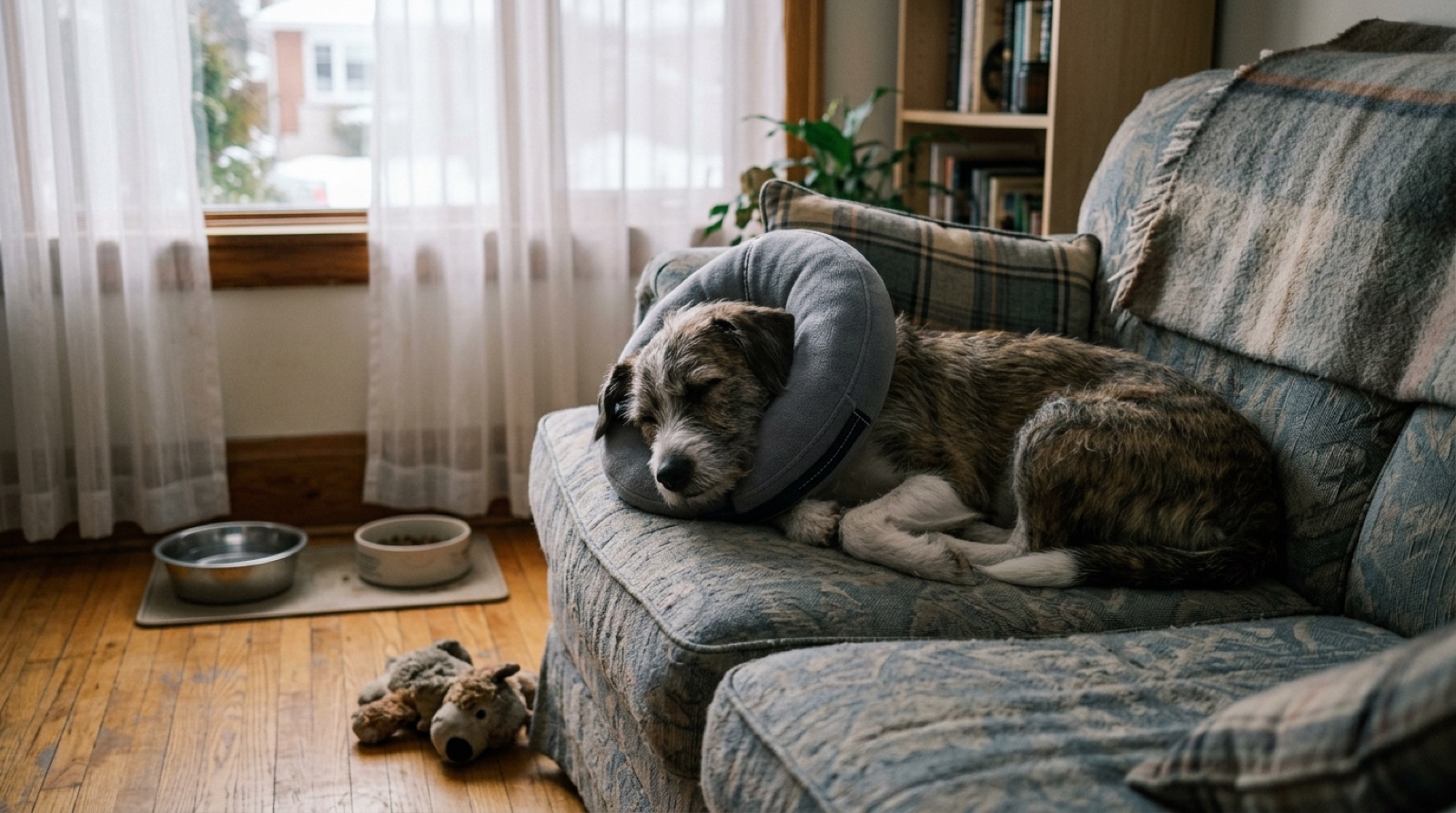
An adopted Hamilton dog arrives already fixed, so this is mostly a guide for owners of puppies and unaltered dogs. The Hamilton/Burlington SPCA runs canine surgery by income qualification only, for dogs 35 kg or under, entered through a Pet Health Outreach Clinic appointment at 905-574-7722. Everyone else books a private clinic. Timing has shifted later for large breeds. Plan on fourteen days of restricted activity afterwards, cone included.
Two questions come up constantly from Hamilton owners: where do I get this done affordably, and when should I do it. The second one has a more interesting answer than it did ten years ago.
The old default was six months for every dog. That has softened considerably, particularly for large and giant breeds, where there is real veterinary interest in whether waiting closer to skeletal maturity protects joints. It is not settled science and it is not one-size-fits-all, which is exactly why the decision belongs in a conversation with your own vet rather than in a blog post.
The affordability question has a clearer answer in Hamilton, and it is more restrictive than most people hope.
The Hamilton/Burlington SPCA Canine Programme
The SPCA's Companion Animal Hospital at 245 Dartnall Road is the low-cost option in this city, and it comes with two firm conditions.
Income qualification. The SPCA states plainly that because of limited capacity, canine spay and neuter surgeries are available by income qualification only. This is different from their cat programme, which is open to the general public at set prices. The dog side is a support programme, not a discount for everyone.
A 35 kg weight limit. Dogs must be 35 kg or less for surgery there. If you have a large-breed dog, this route is closed regardless of income and you will be booking a private clinic.
How you get in. Not by booking surgery. You attend a Pet Health Outreach Clinic appointment first, which establishes care and determines eligibility. Contact 905-574-7722 or cah@hbspca.com to ask about the current process and dates. Our Hamilton low-cost vet guide puts the outreach clinics alongside the Farley Foundation and the payment-plan options, if surgery is only part of what you need covered.
Getting a Quote From a Private Clinic
For most Hamilton owners this is the route, and the prices differ meaningfully between clinics on the Mountain, in the lower city, in Dundas and out in Ancaster and Stoney Creek. Phone three and ask the same questions of each.
Ask what the quote includes. Pre-anaesthetic bloodwork, IV fluids during surgery, pain medication to go home with, the cone, and the recheck appointment. A quote that leaves out take-home analgesia is not a bargain, it is an incomplete estimate that will get topped up on the day.
Ask how they price by weight. A spay on a 35 kg dog is not the same procedure as a spay on a 7 kg dog. Anaesthetic drugs are dosed by weight, surgical time is longer, and monitoring is more involved. Any clinic that quotes a single number regardless of size is quoting an average, not a price.
Ask about monitoring. A dedicated registered veterinary technician watching anaesthesia, with proper monitoring equipment, is the part of the bill you least want to cut. Ontario clinics are regulated by the College of Veterinarians of Ontario, and any accredited practice will answer this question happily.
The Fourteen-Day Recovery Plan
| When | What to expect | What you do |
|---|---|---|
| Night of surgery | Groggy, wobbly, maybe not hungry | Quiet room, small meal, cone on |
| Days 1 to 3 | Appetite returns, some bruising | Give all pain medication as prescribed |
| Days 4 to 7 | Dog feels well and wants to run | This is the hard part. Keep restricting |
| Days 8 to 14 | Incision closing, swelling settling | Lead walks only, no stairs, no baths |
| Recheck | Vet clears normal activity | Then and only then, back to the dog park |
General guidance only. Follow the specific instructions your own veterinarian gives you for your dog.
When to phone a vet immediately
Ring your clinic if the incision is bleeding, gaping or discharging anything beyond a small amount of clear fluid, if redness and swelling are worsening after day three, if your dog will not eat by 24 hours, is repeatedly vomiting, or seems painful despite medication. After hours, the Hamilton Region Emergency Veterinary Clinic at 50 Dundurn Street South is open 24/7/365 at 905-529-1004, and Burlington Veterinary Emergency & Referral at 775 Woodview Road runs 24/7 at 905-637-8111. Do not wait until morning to see if it settles.
Browse adoptable Hamilton dogs
Adopting skips this entirely. Rescue dogs in Hamilton go home already spayed or neutered, with the surgery, the microchip and the recovery behind them. Refreshed regularly.
See Available Hamilton Dogs →Frequently Asked Questions
Where can I get my dog spayed or neutered in Hamilton?
How much does it cost to spay or neuter a dog in Hamilton?
Does the Hamilton/Burlington SPCA spay and neuter dogs for the public?
Does my adopted Hamilton dog already need spaying?
What age should a dog be spayed or neutered?
Is spaying or neutering safe for dogs?
What does dog spay and neuter recovery look like?
How do I stop my dog licking the incision?
When should I call the vet after a spay or neuter?
What are the health benefits of spaying a female dog?
Does neutering fix behaviour problems in dogs?
Can I get help paying for a dog spay in Hamilton?
Related Hamilton Guides
Adopt a Dog That Is Already Sorted
Surgery done, microchip in, vaccines current. It is the single best-value part of adopting.
Browse Available Hamilton Dogs →Spay & Neuter Cost Across Canada
What the surgery costs by province, what subsidised clinics charge, and how to find one near you.
New dog? Start with these care guides
Everything a new adopter needs to set up a safe, happy home.