The short answer
The Hamilton/Burlington SPCA at 245 Dartnall Road charges $325 to spay a cat and $175 to neuter one. Those are integrated prices covering the exam, FVRCP and rabies vaccines, a microchip, parasite treatment, anaesthesia, surgery and a 24-hour pain injection. Low-income owners can access the same surgery through the Pet Health Community Outreach Program. Call 905-574-7722. If you adopted from a Hamilton rescue, this is already done.
Most people reading this fall into one of three groups. You bought or were given a kitten and need it fixed. You are on a tight budget and heard there is a subsidised option. Or you are feeding cats behind a building somewhere in the lower city and want to stop the colony growing.
Hamilton handles all three through the same building on Dartnall Road, but the routes are different and so are the costs. The routine surgery has a published price. The subsidised stream needs income verification. The community cat work runs on donations and starts with registering as a caregiver, not with a trap in your car.
Here is each one. If you have not adopted yet, worth knowing that every cat on the Hamilton cat listings is already fixed, so this becomes a page you never need.
Hamilton Cat Surgery Prices
| Service | Price | What is included |
|---|---|---|
| Cat spay (female) | $325 | Exam, FVRCP, rabies, microchip, e-collar, selamectin, surgery, pain injection |
| Cat neuter (male) | $175 | Exam, FVRCP, rabies, microchip, selamectin, surgery, pain injection |
| Subsidised stream | Income qualified | Same integrated package via the Pet Health Community Outreach Program |
| Community cat TNVR | Shelter funded | Spay or neuter, vaccines, ear tip, deworming, flea treatment, microchip for barn cats |
Prices verified July 2026 from the Hamilton/Burlington SPCA spay and neuter page. Confirm current pricing when you book, since fees change. Pre-anaesthetic bloodwork is usually quoted separately, about $50 to $100, and is recommended for cats over 5. Ask for an itemized estimate before booking.
What the price actually covers
This matters when you compare quotes, because a cheaper number elsewhere often covers less. The HBSPCA feline package is bundled at one price and includes the pre-surgical exam, the FVRCP vaccine, the rabies vaccine, a microchip, a selamectin application for parasites, a nail trim if needed, general and local anaesthesia, the surgery, and a post-operative pain medication injection covering the first 24 hours. Female cats also go home with an e-collar.
The rabies vaccine and the microchip are listed as required rather than optional add-ons, which is the honest structure. A private clinic quoting $200 for a spay with everything else itemised separately is not necessarily cheaper once the vaccines, the chip and the pain control are added back.
The hospital sits at 245 Dartnall Road and runs Monday to Friday, 8 a.m. to 4 p.m., closed weekends. Phone 905-574-7722 or email cah@hbspca.com to book. The Ontario SPCA also publishes general spay and neuter guidance for owners comparing options across the province.
The subsidised route, if money is the barrier
The HBSPCA operates a Pet Health Community Outreach Program designed for low-income-verified pet owners, and the shelter is direct about the purpose: cost should not stop somebody accessing quality surgical care. There is also a subsidised local community stream supporting population control and animal health across Hamilton and Burlington.
The process starts with an appointment rather than a form. For dogs, the shelter requires owners to attend a Pet Health Outreach Clinic appointment first to establish care and determine eligibility, and the same style of intake applies on the feline side. Call 905-574-7722 and ask directly what documentation you need.
One practical note. Ask before you book a full-price surgery, not after you have paid for one. Programmes like this have limited capacity and specific eligibility rules, and nobody at the clinic can retroactively apply a subsidy to a surgery that already happened.
Community cats, barn cats and the TNVR route
If the cats you are worried about are not yours, this is the programme you want. The HBSPCA Community Cat Program runs trap, neuter, vaccinate and return across the region, and the shelter estimates there are tens of thousands of community cats living in Hamilton and Burlington.
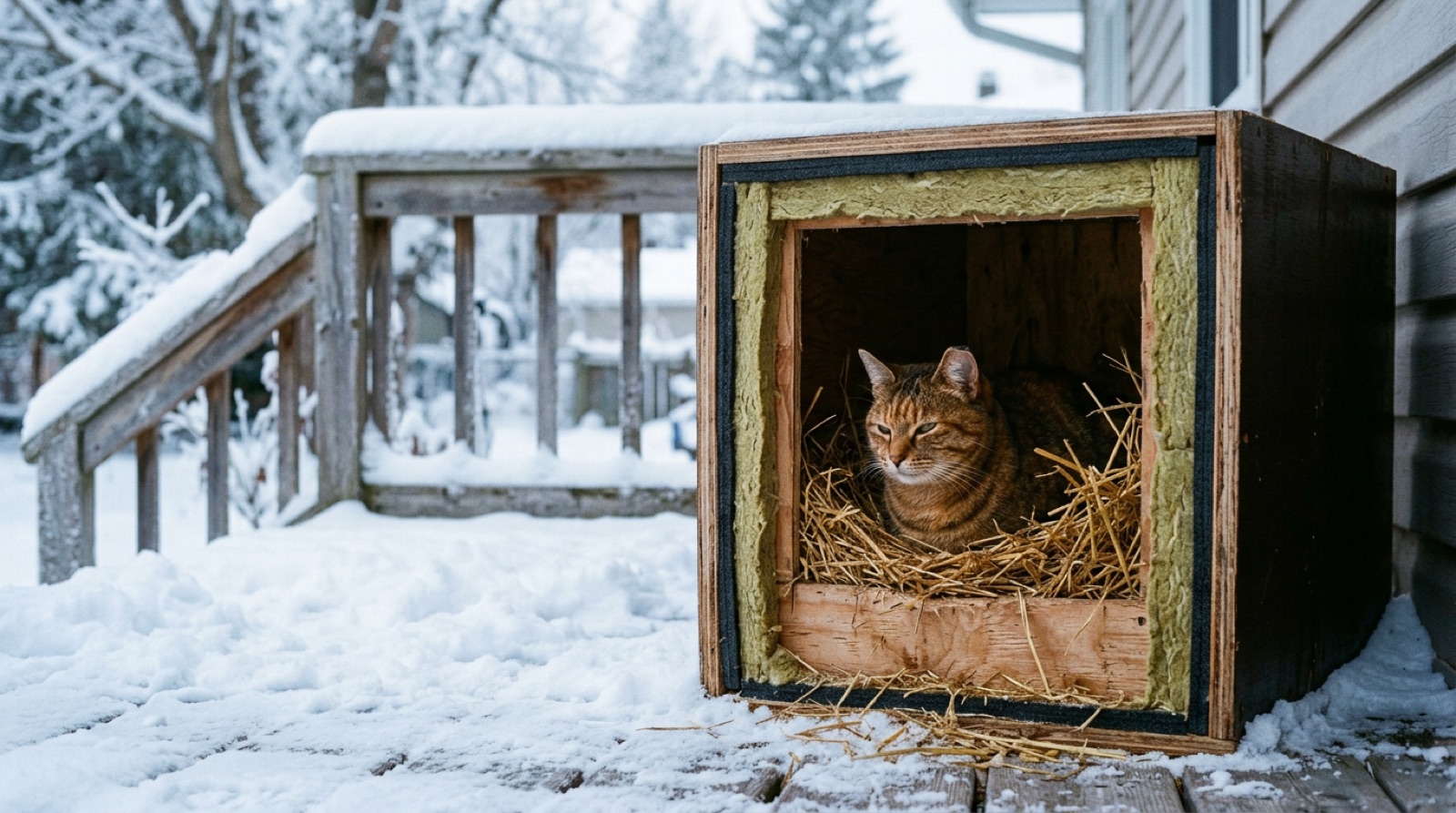
Caregivers register first, and approval takes five to ten business days. Registered caregivers borrow humane traps at no cost and get winterized outdoor shelters free. Unregistered individuals pay $50 a month to rent a trap plus a refundable deposit, and $25 for a winter shelter. You trap with the shelter's guidance, the cat is fixed, vaccinated and ear tipped, it recovers at the HBSPCA for a day, and you return it to the exact location it came from.
Rural property owners get the same package under the barn cat stream, with deworming, flea treatment and microchipping included. The shelter puts the full cost of processing one community cat at $750 to $1,000 or more, funded through donations rather than charged to caregivers.
One useful outcome: cats that turn out to be friendly rather than feral get a behaviour assessment, and those that pass can enter the adoption stream. That is where a meaningful share of Hamilton's summer kittens come from. Our rescue guide covers where they land.
The recovery week, realistically
Day one. Groggy, unsteady, possibly not interested in food. Keep the cat somewhere quiet, warm and confined, away from other pets and stairs. Offer water. Do not panic about a skipped meal on the first evening.
Days two to three. A neutered male is often close to normal. A spayed female is still sore and should be doing far less than she wants to. This is when the jumping starts and when owners relax too early.
The whole period. Leave the e-collar on. Check the incision once a day in decent light. You are looking for swelling, redness spreading outward, discharge, or an opening. Follow your clinic's restriction instructions for the full window they specify rather than the window your cat seems to need.
Litter. Ask your clinic whether they want you using a different litter during healing. Some recommend it, and this is a question for them rather than the internet.
When to call a vet immediately
Call your clinic, or a 24-hour hospital if it is after hours, for any of the following after surgery: an incision that has opened, is bleeding, is weeping discharge or is swelling rather than settling; a cat that will not eat or drink beyond the first day; repeated vomiting; laboured breathing; or a cat that seems to be getting worse rather than better after day two.
Separately, and unrelated to surgery, one emergency every Hamilton cat owner should know: a male cat straining in the litter box and producing nothing is a urinary blockage until a vet proves otherwise. That is a life-threatening emergency measured in hours, not days. Go now. Do not wait until morning, do not try to manage it at home, and do not treat it as a behaviour problem because the cat is crying in the box.
Hamilton has round-the-clock coverage. The Hamilton Region Emergency Veterinary Clinic at 50 Dundurn Street South is open 24/7 at 905-529-1004, and Burlington Veterinary Emergency & Referral Hospital at 905-637-8111 covers the same hours roughly twenty minutes east. Never give a cat human medication. Many common painkillers are toxic to cats, and dosing decisions belong to a veterinarian.
Browse adoptable Hamilton cats
Every cat listed here is already spayed or neutered, vaccinated and microchipped, so the surgery on this page is one you never have to book. Listings refreshed regularly.
See Available Hamilton Cats →Frequently Asked Questions
How much does it cost to spay or neuter a cat in Hamilton?
The Hamilton/Burlington SPCA charges $325 to spay a female cat and $175 to neuter a male, and that is the affordable high-volume option in the city rather than a premium one. Both prices are integrated, meaning the number covers the pre-surgical exam, the FVRCP vaccine, the rabies vaccine, a microchip, a selamectin application, general and local anaesthesia, the surgery itself, and a 24-hour post-operative pain medication injection. Female cats also go home with an e-collar. Private Hamilton clinics price these procedures individually and vary widely, so ask what is bundled before comparing numbers.
Is there a low-cost or free spay and neuter option in Hamilton?
Yes, through the same organisation. The HBSPCA runs a Pet Health Community Outreach Program built specifically for low-income-verified pet owners, so that cost does not block access to surgical care, and it also operates a subsidised local community stream supporting population control across Hamilton and Burlington. The shelter describes both the regular and subsidised programs as one integrated price rather than an unbundled menu. Call the Companion Animal Hospital at 905-574-7722 or email cah@hbspca.com to ask what you qualify for. Ask before you book, not after.
When should a kitten be spayed or neutered?
That is a conversation with your veterinarian rather than a number to read off a website, because it depends on the individual cat's weight, health and living situation. What is not in dispute is that it should happen before a cat can reproduce, and cats reach sexual maturity earlier than most new owners expect. If you adopted from a Hamilton rescue, this is already handled. Every cat leaving the HBSPCA or a foster group like Abandoned Cats Rescue is spayed or neutered before placement, so the question only applies to kittens you acquired elsewhere.
What happens on surgery day?
You drop the cat off in the morning at 245 Dartnall Road, the team performs a pre-surgical exam, and surgery happens under general and local anaesthesia the same day. Vaccines and the microchip go in while the cat is under, which is why the package price makes sense. The cat receives a pain medication injection covering the first 24 hours before it goes home. Hospital hours are Monday to Friday, 8 a.m. to 4 p.m., closed weekends. Follow the fasting instructions the clinic gives you exactly, because an unfasted cat may have surgery cancelled on the day.
What does the recovery week look like?
Quieter than you expect for a neuter and more involved for a spay. A male cat is usually close to normal within a day or two. A female has an abdominal incision and needs genuine restriction for the period your clinic specifies, which means no jumping onto counters or the back of the sofa, and that is harder to enforce than it sounds. Keep the cat indoors and alone if you have other pets. Leave the e-collar on. Check the incision daily for swelling, discharge or gaps, and call the clinic if anything looks wrong rather than waiting to see.
My cat is licking the incision. What should I do?
Put the e-collar back on and leave it on. Licking is the single most common reason a routine cat spay turns into a second veterinary visit, because a cat's tongue will open an incision faster than most owners believe. The collar is not cruelty, and a cat that seems miserable in it for two days is far better off than one with an infected or opened wound. If the incision is already red, swollen, weeping, or has visibly opened, that is a call to the clinic today rather than a wait-and-see.
Does spaying or neutering change a cat's personality?
It changes hormone-driven behaviour, not personality. Spraying, yowling, roaming pressure and fighting drive all drop, and those are usually the behaviours owners wanted addressed in the first place. The cat that likes sitting on your chest still likes sitting on your chest. What does change is metabolism, so fixed cats need less food than their pre-surgery appetite suggests. Weight gain after neutering is common and entirely preventable with portion control, and it is worth raising with your vet at the first annual exam.
Why does the shelter say community cat surgeries cost $750 to $1,000?
Because a community cat is not a routine appointment. The HBSPCA gives that range for the full cost of processing a cat through its Community Cat Program, which covers humane trapping equipment and support, the surgery, vaccinations, ear tipping, deworming and flea treatment, plus recovery housing at the shelter before the cat is returned to its colony. The shelter absorbs that cost through donations rather than charging caregivers. It is a useful number for understanding why TNVR programmes run on fundraising rather than fees.
How do I get a community cat or barn cat fixed in Hamilton?
Through the HBSPCA Community Cat Program, and you start by registering as a colony caregiver rather than by turning up with a cat. Registration takes five to ten business days to approve. Once registered, caregivers borrow humane traps free of charge, trap with the shelter's guidance, and the cat is fixed, vaccinated and ear tipped at the HBSPCA before recovering there and going back to the exact spot it came from. Unregistered individuals can rent a trap at $50 a month plus a refundable deposit. Barn owners on rural properties get the same TNVR package with microchipping included.
What is an ear tip and why does it matter?
It is a small straight cut off the tip of one ear, done while the cat is already under anaesthetic, and it is the universal signal that a community cat has been fixed and vaccinated. The point is to prevent that cat being trapped and re-anaesthetised by somebody else months later. If you see an ear-tipped cat around your Hamilton neighbourhood, it belongs to a managed colony and has already been through the programme. It does not need rescuing, and picking it up removes it from a territory it knows.
Can an older cat still be spayed or neutered?
Usually yes, and it is worth asking rather than assuming a cat is past it. Age alone is not a disqualifier. What matters is the individual cat's health, which is exactly what the pre-surgical exam is for, and your veterinarian may recommend bloodwork first on an older animal. The benefits still apply. For an unspayed older female, the reduction in reproductive-tract disease risk is a real argument that vets will walk you through. Ask the clinic directly rather than deciding on your cat's behalf.
My cat seems fine the day after surgery. Can I let it out?
No, and this is the mistake that causes the most avoidable complications. A cat that feels well is a cat that jumps, and jumping is exactly what an abdominal incision cannot tolerate in the first days. Keep the cat indoors and restricted for the full period your clinic specifies, even when it seems unnecessary. Hamilton also advises keeping cats indoors generally, and a cat with a healing incision outside among the escarpment ravines and the traffic on Main and King is a genuinely bad combination.
Related Hamilton Guides
One search, every Hamilton rescue
Shelter cats and foster cats from across Hamilton, in a single list.
Browse Available Hamilton Cats →New cat? Start with these care guides
Everything a new adopter needs to set up a safe, happy home.
Cat & Dog Spay/Neuter Cost in Canada
Standard and subsidised pricing by province, and how to find a low-cost clinic wherever you are.