The short answer
German Shepherds reach Kingston rescue at a steady pace. The work is exercise, training, and housing planning. The Kingston Humane Society is the largest local source, and Kingston Animal Rescue lists Shepherds and Shepherd mixes when they come in. Fees run $330 to $850, plus $200 to $400 in a first-month baseline vet and large-breed orthopaedic check. German Shepherds are not restricted in Kingston or Ontario; the real limits are private landlord, condo, and insurance rules. Four surrender patterns drive intake: adolescence overwhelm, reactivity, working-line mismatch, and housing restrictions. Plan for hips, degenerative myelopathy, bloat, and 60 to 90 minutes of daily exercise along the Lake Ontario waterfront. Expect two to four months from application to dog in the house.
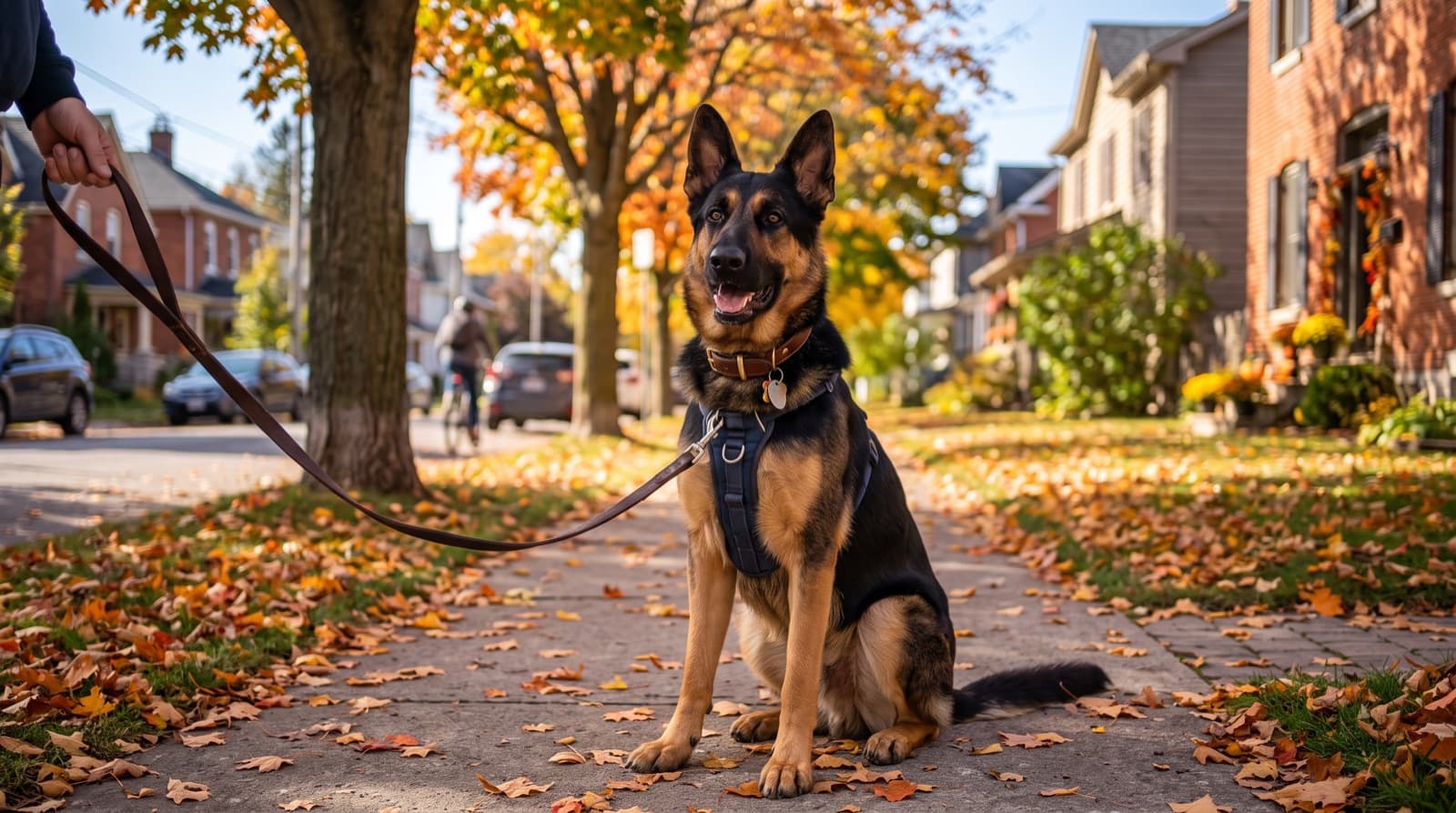
Why German Shepherds surrender in Kingston
German Shepherd surrender patterns are unusually predictable, and Kingston is no exception. Four reasons drive most intake, and hardly any of them come down to a bad dog. Knowing the patterns in advance helps you read foster write-ups honestly and plan for what the dog will actually need once it comes home.
- Adolescence overwhelm. This is the most common Kingston GSD surrender story by a wide margin. A household brings home a puppy, then reaches the six to eighteen month window when the dog is suddenly large, strong, mouthy, and full of energy it has not learned to control. Without steady training and heavy daily exercise, the dog jumps, pulls, chews, and barks, and the family runs out of patience. The dog goes to rescue, gets structure and exercise in a foster home, and often turns out to be a great dog that simply never got the work it needed. This is why an adult Shepherd, past the adolescent peak, is so much easier for most adopters.
- Reactivity from missed socialisation. Shepherds are naturally alert and protective, and a puppy that missed early, positive exposure to people, dogs, and busy places can grow into a reactive adult that lunges or barks on leash. It looks alarming and it embarrasses owners, so the dog gets surrendered. In a foster home, a rescue can assess whether the reactivity is fear-based, frustration-based, or a plain training gap, and whether it responds to a structured plan. Most leash reactivity improves with a committed adopter and a Kingston-area force-free trainer.
- Working-line versus show-line mismatch. Some Shepherds are bred for police, protection sport, or detection work, with drive and stamina well beyond what a typical pet home can meet. A family buys a high-drive puppy expecting a calm companion and instead gets a dog that needs a job and pours unspent energy into the house. When the mismatch becomes unmanageable, the dog is surrendered. The dog is not broken; it was bred for a different life. Good rescues flag high-drive dogs in the write-up so they land in homes that can meet the need.
- Housing, insurance, and landlord restrictions. German Shepherds face no breed ban in Ontario, but plenty of private landlords, condo boards, and home-insurance policies restrict or surcharge large guardian breeds. A tenant moves, the new building says no, and the dog has to be rehomed. Sometimes an insurer adds a Shepherd to an excluded-breeds list and the owner cannot keep the coverage. These surrenders are about paperwork, not the dog, and the dogs are often stable, house-trained adults.
When you read a Shepherd surrender note, ask the rescue directly: what was the exact reason, how does the dog do with training and exercise, and is there any reactivity or resource-guarding history. The Kingston-area rescues that handle Shepherds regularly will give you straight answers, because a bad match helps no one.
Kingston rescues that list German Shepherds
A handful of Kingston-area organisations list German Shepherds or Shepherd mixes with some regularity. Set up listing alerts on every one you would consider; the breed appears often enough across eastern Ontario that a multi-rescue alert net usually catches the right dog within a few weeks.
- Kingston Humane Society: the city's main shelter and the most consistent source of Shepherd intake. It sees GSDs mostly through owner surrender and stray intake, with the four surrender patterns above driving most cases. The facility lets adopters meet the dog in person before applying, and the staff produce a clear write-up covering temperament, energy level, and any flagged medical or behavioural history.
- Kingston Animal Rescue: a foster-based rescue serving Kingston and the surrounding area. It lists Shepherds and Shepherd crosses when they come in, and because each dog lives in a foster home, the notes on temperament tend to be detailed. Ask directly how the dog handles being alone, how it does with other dogs and cats, and how much exercise it genuinely needs. That detail matters a great deal for a high-drive breed.
- Ontario SPCA: the provincial network lists adoptable dogs at animal centres and affiliated communities across Ontario, and Shepherds appear regularly. If you are willing to travel a reasonable distance from Kingston, adding the Ontario SPCA to your alert net widens the pool considerably.
Some Shepherds also come through smaller eastern-Ontario foster rescues that do not always tag breed accurately, so it is worth scanning listings by photo and description rather than trusting a breed filter alone. For any breed-specific rescue you find online, verify it is real before sending money: look for registered charitable status, a real address, a current adoptable-dog list, and a proper application and contract. The Canadian Kennel Club also publishes breed-club information that sometimes includes rehome referrals for retired adults from ethical breeders. For a fuller local picture, our guide to the best dog rescues in Kingston walks through each organisation and how to set up alerts across all of them.
Working line vs show line: what it means for adopters
A German Shepherd is a single breed pulled toward two very different jobs, and that split trips up more first-time adopters than almost any other breed detail. A Kingston rescue will rarely hand you a certified line label, but knowing the two types lets you make sense of a foster's energy-level notes instead of guessing.
Working-line Shepherds
- Purpose: police, protection sport, detection, and herding. The prized traits are drive, stamina, steady nerve, and a willingness to work closely with a handler.
- Physical stamp: usually leaner, with a straighter back than show dogs, built to keep going all day.
- What they demand: hard daily exercise paired with a real mental job. Leave a working-line dog idle and it invents its own project, which tends to be loud or destructive.
- Right home: experienced, active households ready for training, structure, and a dog sport or serious exercise habit.
Show-line Shepherds
- Purpose: bred to the conformation standard. The North American type carries the familiar sloped back; the West German type is stockier and often steadier.
- Physical stamp: heavier bone and a thicker coat than working lines, with toplines that vary by type.
- What they demand: still an intelligent, active dog that needs daily walking and training, but generally with less raw drive than a working line.
- Right home: committed pet households that can supply structure and 60 to 90 minutes of daily activity.
Most Shepherds in Kingston rescue land somewhere in the middle, as pet-line or mixed-background dogs, and the truthful answer to “what line is this?” is usually “nobody knows.” That is fine. The thing that actually matters is how much daily exercise the dog needs to settle, how it copes when left alone, and how it reads people and other animals. Whether you walk the Lake Ontario waterfront once a day or twice, a calm show-type dog and a driven working-type dog place very different demands on that routine, and the foster's read tells you which one you are looking at far better than any pedigree guess.
The German Shepherd health reality
The German Shepherd is a big, deep-chested working dog, and it carries a well-mapped set of health risks. A rescue Shepherd almost never arrives with breeder health-testing paperwork, so a first-month baseline exam and a large-breed orthopaedic check earn back their cost quickly. Five conditions should shape your planning:
- Hip and elbow dysplasia. The concern the breed is best known for. Careful breeders screen their dogs through OFA or PennHIP, paperwork a rescue dog almost never comes with. Watch for stiffness after rest, hesitation on the stairs, or a dog that stops wanting to jump, and book a baseline orthopaedic look early. Keeping the dog lean is the single biggest lever you control.
- Degenerative myelopathy. A slow-moving spinal-cord disease the breed sees more than most, usually surfacing after about age eight. It opens with hind-end weakness and a loss of coordination, then worsens over months. There is no cure, but physiotherapy and supportive care protect quality of life, and because a genetic test exists, some rescue seniors arrive already screened.
- Bloat, or gastric dilatation-volvulus. In a deep-chested dog the stomach can fill with gas and rotate, and this one can kill within hours. Commit the warning signs to memory now: a swollen belly, unproductive retching, pacing and restlessness, heavy drooling. Smaller meals and no hard exercise straight after eating lower the odds. If it happens, drive straight to Kingston Pet Emergency, whose 24-hour service is worth locating before you ever need it.
- Exocrine pancreatic insufficiency. The pancreas quits making enough digestive enzymes, so the dog eats hungrily yet stays thin with loose, greasy stool. Shepherds are over-represented here. Once diagnosed it is managed for life with an enzyme supplement and the right diet, so flag any thin, ravenous, chronically loose-stool Shepherd to your vet.
- Panosteitis. Growing pains in young dogs, showing as a lameness that shifts from leg to leg. It looks worse than it is and usually clears on its own as the dog matures, with pain relief during flare-ups.
The practical move is to enrol in pet insurance on day one, before anything shows up in the vet record, and to budget like the large-breed owner you now are. Realistic annual GSD costs run about $2,000 to $4,000 across food, routine care, and insurance, and one orthopaedic surgery can add several thousand dollars on its own. Kingston's lake-effect winters do not change the medical picture much, but they do put a Shepherd on salted sidewalks for months, so rinse the paws and keep an eye on the joints in the cold. If money is tight, the Farley Foundation subsidises veterinary care for low-income owners through participating Ontario clinics. For the full picture, the Kingston dog adoption cost guide breaks down the numbers.
Browse adoptable Kingston German Shepherds and Shepherd mixes
Current Kingston-area listings from the Kingston Humane Society, Kingston Animal Rescue, and the Ontario SPCA in one place. Purebred adult Shepherds place fast; alerts and same-day applications still win.
See Kingston Adoptable Dogs →What a Kingston rescue German Shepherd actually costs
Kingston rescue adoption fees for German Shepherds range from about $330 to $850 depending on the organisation. The Kingston Humane Society runs roughly $330 to $530 (senior to puppy, around $410 for an adult), while a foster-based rescue like Kingston Animal Rescue runs about $750 to $850. The fee is not a sale price; it is a partial recovery on the medical work the rescue has already done. A typical Shepherd adoption fee covers:
- Spay or neuter surgery. Standalone at a Kingston vet clinic for a large-breed dog, $500 to $900.
- Core vaccinations. DAPP and rabies at minimum, with Bordetella often included if the dog has been boarded.
- Microchip implant and registration. Required alongside a City of Kingston dog licence.
- Deworming and parasite treatment. Standard intake processing.
- Basic vet workup. Physical exam, dental scoring, a lameness check for a large-breed dog, and bloodwork for older dogs.
Stacked at retail Kingston vet pricing, those services would cost $900 to $2,000. The rescue fee recovers only part of that; donations cover the rest. Compare it to a GSD puppy from an Ontario breeder, which runs $1,500 to $3,500 with no medical work done and no known adult temperament. The rescue path is much cheaper, and the dog often arrives with a documented history plus a foster's honest read on its temperament.
Budget an extra $200 to $400 in the first month for a baseline vet visit, a large-breed orthopaedic check, and your City of Kingston dog licence, which the city administers through DocuPet. Even when the rescue has done recent vet work, the first-month visit establishes your records and lets you set up ongoing care and a monitoring plan for the breed's known risks. If you are weighing spay or neuter costs, our Kingston spay and neuter guide covers local options and pricing.
Ongoing Shepherd costs run roughly $2,000 to $4,000 a year. Food for a 50 to 90 lb dog at $70 to $130 per month. Routine vet care $500 to $1,000 a year. Pet insurance for an adult GSD in Kingston at $60 to $110 per month, genuinely worth it for a breed with documented orthopaedic and neurological risks. Add training, especially in the first year, which is one of the highest-value investments you can make in a Shepherd. A reputable Kingston-area force-free trainer or group class pays for itself in a better-behaved, safer dog.
The first 30 days with a Kingston Shepherd
The 3-3-3 rule (roughly three days to start decompressing, three weeks to learn the routine, three months to fully bond) fits Shepherds particularly well, because the breed is sensitive to change and slow to hand out trust. Keep the early world small and let the dog set the pace. Here is what to prioritise from week one through month one:
- Keep the opening days low-key. Hand the dog a quiet space of its own, hold off on visitors, and stay away from the dog park. A Shepherd has to decompress before its real personality shows. Whatever reactivity or nerves you see in week one usually eases by week three.
- Book a baseline vet visit inside two weeks. Get the dog onto the books with a Kingston vet, load its records into the system, and request a large-breed orthopaedic assessment along with a talk through the breed's risk profile.
- Enrol in pet insurance in week one. Sign up before anything appears in the record. GSD coverage is cheaper and easier to secure early, and the breed's orthopaedic and neurological risks are exactly what you want covered.
- Licence the dog with the City of Kingston. Every dog in the city needs one, and registration runs through DocuPet. Confirm at the same time that the microchip is registered to your contact details.
- Lock in structure from day one. Shepherds run on predictability, so set steady feeding, walking, and rest times early and use month one to build the habits you want to keep for the next decade.
- Bring exercise up to level gradually. Work toward 60 to 90 minutes a day of body and brain work. The Lake Ontario waterfront pathways and the City of Kingston off-leash dog parks give you room for structured walks and long-line practice; layer in training games and scent work to tire the mind.
- Get a trainer in early if there is any reactivity. A Kingston-area force-free trainer is the best money you can spend on a reactive or adolescent Shepherd. Do not wait for it to escalate, start a plan inside the first month.
- Memorise the bloat signs now. Feed smaller meals, hold off on hard exercise right after eating, and note that Kingston Pet Emergency runs a 24-hour service well before you ever need it.
- Plan for winter paws. The double coat shrugs off Kingston cold and lake-effect snow, so walks carry on year round, but wipe road salt off the paws after treated sidewalks so they do not crack or burn.
- Go slow with kids and other pets. Supervise every early meeting, leave the dog an escape route, and follow the foster's tolerance notes. The first-week rescue dog guide for Kingston walks through the decompression routine in full.
By week three the routine has taken hold and the real dog starts to emerge. By month three the bond is solid and the house has settled around a large, sharp, devoted breed. Treat the first 90 days as a no-big-decisions window. Most early worries, from wariness to leash reactivity, ease off with consistency, structure, and time.
Adopter readiness check
Adopting a Shepherd comes down to an honest self-assessment on three fronts: how much exercise you can deliver, how committed you are to training, and how stable your housing is. Sit with these eight questions before you apply:
- Will you give the dog 60 to 90 minutes of body-and-brain work every single day? Not when it is convenient. Every day, for the dog's whole life. If your honest answer is “probably,” this may be the wrong breed.
- Are you ready to train, and to pay for help when you need it? Shepherds are sharp and need structure, and a reactive or adolescent dog needs a real plan, often with a Kingston-area trainer alongside you.
- Does your housing genuinely permit a large guardian breed? Get it in writing from your landlord or condo board, and check that your home insurer does not exclude or surcharge the breed, before you send the application.
- Do you carry a $5,000-plus vet cushion or insurance from day one? Orthopaedic surgery and a bloat emergency can both land early and run into the thousands.
- Is someone home during the day, or do you have a midday plan? Shepherds attach hard and many struggle with long stretches alone, especially in the early weeks.
- Do you have experience with a strong, smart, driven dog, or a concrete plan to get it? First-time large-dog owners do succeed, but only with clear expectations and support already lined up.
- If there are kids or other pets, are you set for careful introductions? Match the individual dog to your household using the foster's notes, and supervise every early interaction.
- Is your housing stable for the next ten-plus years? Shepherds live roughly 9 to 13 years, so this is a long commitment, not a short one.
A “no” or an “unsure” on any of the first four questions is a real signal that either the breed or the timing is off. Working through this honestly up front is what makes a Shepherd placement stick, and it is precisely what a good Kingston rescue wants to see in your application.
Frequently asked questions
Where can I adopt a German Shepherd near me in Kingston?
German Shepherds and Shepherd mixes turn up in Kingston rescue at a steady pace. The Kingston Humane Society is the larger, most consistent local source, and Kingston Animal Rescue, a foster-based group, lists Shepherds and Shepherd crosses when they come in. The Ontario SPCA network is worth adding to your search if you can travel a short radius. Purebred adult Shepherds tend to place quickly, so put listing alerts on every Kingston-area rescue and apply the same day a Shepherd that suits your household appears. Most rescue Shepherds around Kingston and eastern Ontario are pet-line or mixed-line dogs rather than titled working or show dogs, and the foster write-up on the individual dog tells you more than any line label ever will.
How much does it cost to adopt a German Shepherd in Kingston?
Kingston rescue adoption fees for German Shepherds range from about $330 to $850 depending on the organisation. The Kingston Humane Society runs roughly $330 to $530 (senior to puppy, around $410 for an adult), while a foster-based rescue like Kingston Animal Rescue runs about $750 to $850. The fee covers spay or neuter, core vaccinations, microchip, deworming, parasite treatment, and a basic vet exam. Many rescues also run a dental and a lameness check on a large-breed dog before it is listed, which the fee partly reflects. A GSD puppy from an Ontario breeder, by comparison, runs $1,500 to $3,500 with no medical work done yet. Budget an extra $200 to $400 in the first month for a baseline vet visit, a large-breed orthopaedic check, and your City of Kingston dog licence through DocuPet.
Why do German Shepherds end up in Kingston rescue?
Four patterns account for most Kingston GSD surrenders. Adolescence overwhelm leads the list: someone brings home a puppy, then hits the six to eighteen month stretch when the dog is large, strong, mouthy, and short on training. Reactivity from missed early socialisation is second, often showing as leash lunging or barrier frustration. Working-line versus show-line mismatch is third, where a family took on a high-drive dog bred for police or sport work and cannot meet its needs. Housing is fourth: a landlord, condo board, or insurer restricts large guardian breeds, and the tenant has to rehome. Almost none of these are about a bad dog. They are training gaps, mismatched expectations, or life changes.
What is the difference between working-line and show-line German Shepherds?
They are the same breed shaped for very different jobs. Working-line Shepherds are bred for drive, stamina, and biddability for police, protection sport, and detection work. They run leaner, straighter in the back, and need heavy daily exercise plus a real job or that energy turns into household trouble. Show-line Shepherds, both the sloped-back North American type and the sturdier West German type, are bred toward the conformation standard and tend to be calmer, though still active. Kingston rescue rarely hands you a certified line label. What you get is a foster read on the actual dog: how much exercise it needs, how it copes alone, and how it does with dogs, cats, and kids. Trust that read over any guess about pedigree.
Are German Shepherds restricted in Kingston or Ontario?
No. German Shepherds are not a restricted breed anywhere in Ontario. The provincial breed-specific legislation under the Dog Owners' Liability Act targets pit bull type dogs only, and that ban does not cover German Shepherds. There is no municipal breed restriction on Shepherds in Kingston. The real limits are private: some landlords, condo boards, and home-insurance policies restrict or surcharge large guardian breeds, Shepherds included. If you rent or live in a condo, confirm in writing that your building and insurer allow the breed before you apply. Kingston rescues often ask for that written approval during the application anyway.
What health issues should I plan for with a rescue German Shepherd?
Five conditions shape GSD health planning. Hip and elbow dysplasia are the best known; ethical breeders screen through OFA or PennHIP, but rescue dogs rarely arrive with that paperwork, so a large-breed orthopaedic check early is worthwhile. Degenerative myelopathy is a progressive spinal cord disease the breed is over-represented in, usually showing after age eight. Bloat, or gastric dilatation-volvulus, is a life-threatening emergency in deep-chested breeds, and every GSD owner should know the signs. Exocrine pancreatic insufficiency shows up as a dog that eats well but stays thin with loose stool, and it is manageable with enzyme supplementation once diagnosed. Panosteitis, or growing pains, causes shifting lameness in young dogs and usually resolves on its own. Pet insurance from day one genuinely pays off for this breed.
How much exercise does a German Shepherd need in Kingston?
Plan on 60 to 90 minutes a day of real physical and mental work for a healthy adult GSD, and more for a working-line dog. A leashed stroll alone rarely covers it; Shepherds need their brains worked too. Kingston has good options: the Lake Ontario waterfront pathways give long stretches for structured walking and long-line practice, and the City of Kingston off-leash dog parks add room to move once the dog is settled and reliable with recall. Fold in training games, scent work, or fetch to tire the mind. A bored, underexercised Shepherd is where most destructive and reactive behaviour comes from. The double coat handles Kingston cold and lake-effect snow easily, so outdoor work continues year round; just wipe road salt off the paws after walks on treated sidewalks.
Are German Shepherds good with kids and other pets?
Often yes, with the right individual dog and careful introductions. Well-socialised Shepherds are famously loyal and gentle with their own family, children included. The caveats matter and are individual: a Shepherd with a strong guarding instinct, a reactive history, or high prey drive needs a thoughtful match. That is exactly why Kingston rescues assess each dog in a foster home and write up how it does with kids, dogs, and cats. For a home with young children or a resident cat, look for a foster note that specifically confirms the dog has lived successfully with them. Supervise every early interaction and give the dog a quiet space of its own for the first few months.
Should I adopt a German Shepherd puppy or an adult?
For most Kingston households, an adult Shepherd is far easier. GSD adolescence runs roughly six to eighteen months and is intense: a large, strong, smart dog that needs consistent training, heavy exercise, and firm structure all at once. Miss that window and you get the exact behaviour that fills rescues. An adult Shepherd offers a settled temperament, a known energy level, a documented history, and a lower fee. Senior Shepherds are often the calmest companions on the list. If you specifically want to raise a puppy and have the time, budget, and training commitment for an eighteen-month project, a puppy can work. For most adopters, an adult or senior is the safer, better-fitting choice.
How long is the wait for a German Shepherd in Kingston rescue?
Two to four months is a realistic average from approved application to dog in the house if you are waiting for a specific profile. Shepherds and Shepherd mixes list at a steady rate in the Kingston area, but purebred adults with clean histories place fast, sometimes within days of listing. Seniors and dogs with managed medical or behavioural needs wait longer. The adopters who get matched are the ones who apply prepared: alerts set on every Kingston-area rescue, references ready, landlord or condo approval in hand, and a same-day application. If you stay open to Shepherd mixes as well as purebreds, the wait shortens noticeably.
What do Kingston rescues look for in a German Shepherd adopter?
Kingston rescues screen GSD applications for exercise capacity, training commitment, and housing stability. Expect questions about your daily schedule and exercise plan, your experience with large or high-drive dogs, whether anyone is home during the day, and how you would handle reactivity or adolescence. If you rent or live in a condo, they will want written approval that allows the breed. A specific answer wins: describing your walking routine, your training plan, and your vet and insurance setup reassures a rescue far more than saying you love the breed. The whole process exists to make the placement last, so being honest about your limits helps everyone, the dog most of all.
Related Kingston adoption guides
Kingston Adoptable Dogs
Current Kingston-area German Shepherd, Shepherd-mix, and other dog listings from the Kingston Humane Society, Kingston Animal Rescue, and the Ontario SPCA.
Best Dog Rescues in Kingston
A guide to the reputable Kingston-area shelters and foster-based rescues, how each one works, and how to set up listing alerts across all of them.
Dog Adoption Costs in Kingston
Adoption fees, first-month vet costs, and the real annual budget for a Kingston dog, with the large-breed numbers that matter for a German Shepherd.
First Week With a Rescue Dog
The 3-3-3 decompression routine, settling a new dog into a Kingston home, and the early steps that set a Shepherd up to succeed.
Find your Kingston rescue German Shepherd
Browse current Kingston-area German Shepherd and Shepherd-mix listings. Purebred adult Shepherds place fast; alerts and same-day applications still win.
Browse All Kingston Dogs →New dog? Start with these care guides
Everything a new adopter needs to set up a safe, happy home.