The short answer
Labrador Retrievers are among the most common dogs in Kingston rescue, because they are one of the most popular breeds and popularity feeds rescue volume. The Kingston Humane Society, Kingston Animal Rescue, and the Ontario SPCA all list Labs and Lab mixes. Fees run $330 to $850, plus $200 to $400 for a first-month vet baseline. Black, yellow and chocolate are one breed, not three. Most Labs surrender for a single reason: a family underestimated the energy and the two-to-three-year adolescence. Plan real daily exercise, lifelong portion control (obesity is the breed issue), and joint awareness. Kingston sits on Lake Ontario, so a water-loving Lab has somewhere to swim. Young adult Labs place fast, so apply prepared and same-day.
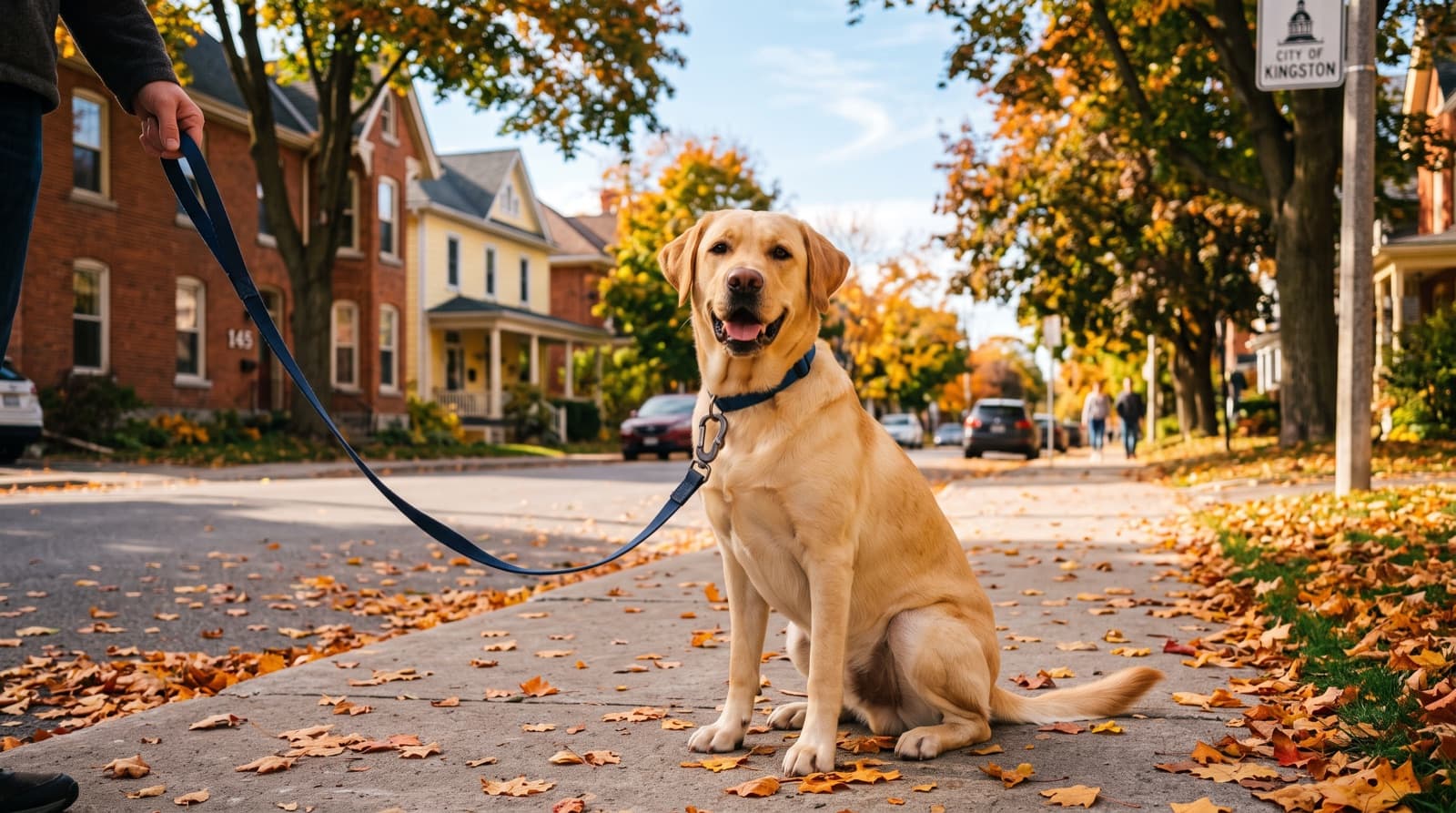
Why Labradors surrender in Kingston
Here is the piece most first-time adopters miss: Labs are common in rescue because they are popular, not despite it. The most-adopted breed is also the most-surrendered one, and the reasons are remarkably consistent. Understanding them helps you read foster write-ups honestly and set your household up so the same story does not repeat.
- Underestimated energy and a long adolescence. This is the number-one Lab surrender story. Labradors stay adolescent to roughly two to three years old, and that stretch is loud: chewing, mouthing, jumping, counter-surfing and leash-pulling from a dog that may already weigh 60 lb. A family that pictured a calm couch companion gets a strong, bored teenager who eats the baseboards, and the dog goes to rescue at around ten to eighteen months. The dog is not broken; it is under-exercised and under-trained.
- Impulse family-dog adoptions. The Lab is the default “good family dog,” so people choose the breed for its reputation without matching the exercise reality. A Lab needs real physical work every day, not a walk around the block. When that daily hour does not happen, the destructive behaviour follows, and the family concludes the dog is the problem.
- Size and housing restrictions. A full-grown Lab is a large dog, and rentals, condos and some insurers push against large breeds. Kingston is a student-heavy city with a lot of rental turnover, so a move to a new apartment with a weight cap, a landlord who says no, or a lease that changes hands can end a Lab's placement even when the family wanted to keep the dog.
- Life changes. New babies, job relocations, finances, a new diagnosis of allergies, a relationship breakup. These push all breeds into rescue, and because there are simply more Labs in homes, more Labs arrive this way.
- Health-cost surprises. A cruciate ligament tear or a hip that needs surgery can run into the thousands, and some families surrender when the bill lands. Rescues that take these dogs often stabilise them and adopt out with the medical plan documented.
Read the patterns before you apply. A Lab surrender note that says “we didn't have enough time” almost always means underestimated energy. Ask the rescue directly: how much daily exercise has the foster been giving, what does the dog do when left alone, and is there any joint or weight concern to budget for. The Kingston rescues that handle Labs regularly will give you straight answers.
Kingston rescues that list Labradors
Because Labs are so common, a multi-rescue alert net across the Kingston area usually surfaces the right dog within a few weeks. Set up listing alerts on every organisation you would consider, and read the full foster write-up when a Lab appears.
- Kingston Humane Society: the city's largest shelter and its most consistent source of Lab intake through owner surrender and stray hold. A shelter setting lets you meet the dog in person before applying, and their team produces a write-up covering temperament and any flagged medical history. For a breed where the surrender driver is almost always energy, ask directly how the dog behaves when left alone, which is worth more than any breed label.
- Kingston Animal Rescue: a foster-based Kingston group that carries Labs and Lab crosses through a network of foster homes. The foster setting keeps each dog in a real household for assessment, which produces more accurate temperament notes than a kennel-only setting. Read the write-up for kid tolerance, other-pet compatibility, and any joint or weight flags, then apply the same day a matching dog lists.
- Ontario SPCA: a provincial network with animal centres and an adoptable-dog search that sometimes includes Labs within reach of Kingston. Worth adding to your alert net for wider coverage across the eastern Ontario region.
Two practical notes. First, plan your emergency care before you bring a dog home: Kingston Pet Emergency handles after-hours cases, and a cruciate tear or a swallowed toy does not wait for a weekday. Second, one national reference point is worth keeping open. The Canadian Kennel Club publishes breed-club information and occasionally lists breed-rescue referrals for retired adults from ethical breeders. Verify any breed-specific rescue claim through a real address, a current adoptable-dog list, and charitable-registry status before sending money, and never wire funds for a “free” or “shipping only” Lab you have not met. For the practical side of paperwork and pricing, the Kingston adoption-cost guide and the roundup of the best dog rescues in Kingston are the two references to read next.
Black, yellow, chocolate, English and American
Two questions come up constantly, so it is worth settling them plainly. Coat colour and breed line are the two things adopters ask about most, and neither should be the deciding factor over temperament.
Colour: one breed, three coats
Black, yellow and chocolate are three coat colours of the same breed. A single litter can produce all three, and colour has nothing to do with temperament or health beyond a couple of minor, disputed correlations. Chocolate is the colour people search for most and the least common of the three, which is why “chocolate lab” carries a small premium from breeders. In rescue, the fee is the same regardless of colour, so choose the dog whose temperament and energy fit your home, not the coat you pictured. Yellow ranges from near-white cream to deep fox-red, all still yellow Labs.
Line: English (show) vs American (field)
There is a real split within the breed. English or bench lines, bred for the show ring, tend to be stockier, heavier-boned, blockier in the head, and calmer in temperament. American or field lines, bred for working retrieval, tend to be leaner, taller, more athletic and noticeably higher-drive. An owner expecting a mellow English-type Lab and getting a field-bred rocket is a mismatch waiting to happen.
In rescue, most Labs are a blend, a cross, or simply of unknown background, so the line label is usually a guess. This is where the foster note earns its keep: a description of how the dog behaves in a home, how much exercise it takes to settle, and how it does when left alone tells you far more than “English” or “American” ever could. Read the behaviour write-up first and treat colour and line as tie-breakers.
The energy reality (and where to burn it in Kingston)
A healthy adult Labrador needs 60 to 90 minutes of real physical exercise a day, plus mental work like training, sniff walks, or food puzzles. A walk around the block is not exercise for this breed; it is a bathroom break. Labs were built to retrieve in cold water for hours, and that stamina does not disappear because the dog lives in a downtown apartment. Under-exercise a Lab and you get the exact behaviour that sends the breed to rescue: chewing, mouthing, digging, barking and anxiety.
Kingston is a genuinely good city for a Lab, because you have water and trails within easy reach:
- The Lake Ontario waterfront. Kingston sits at the meeting point of the lake and the St. Lawrence River, so a water-loving Lab has shoreline and waterfront pathways close by. A good swim tires a dog out far faster than an equivalent walk while sparing the joints.
- The K&P Trail. The rail-trail running north out of the city gives you long, uninterrupted routes, which is exactly what a high-stamina Lab needs. Extend the distance as the dog's fitness builds.
- City of Kingston off-leash dog parks. Off-leash running where permitted is the single most efficient way to exercise a Lab. Check the current City of Kingston rules for designated off-leash zones and always follow posted signage.
- Everyday neighbourhood walking. The daily hour-long walk is the workhorse. Pair it with a training component so the dog is working its brain as well as its legs.
Labs love water, which is a real advantage in a lakeside city. When you use the shoreline, check signage and current, rinse the coat after a lake or river swim, dry the ears thoroughly afterward (trapped moisture invites ear infection), and introduce a rescue dog to water slowly rather than assuming it will dive straight in. As for winter: Kingston cold is fine for a healthy adult Lab. The dense double coat handles Ontario winters and lake-effect snow well, and most Labs are happy to walk and play in it. Just wipe road-salt off the paws afterward and keep outings shorter in extreme cold.
The Labrador health reality
Labs are a generally hardy breed, but four issues deserve a plan. Knowing them lets you apply with realistic expectations and budget for the right preventive care.
Hip and elbow dysplasia. These are the classic Lab joint problems, where the joint develops abnormally and leads to arthritis and pain. Responsible breeders screen breeding dogs through the Orthopedic Foundation for Animals, and you can read about the screening on their site. In rescue you rarely have that paperwork, so you assess by watching the dog's gait, asking the foster about stiffness after rest, and getting a vet exam. Keeping the dog lean is the biggest thing you control.
Obesity. This is the breed-defining health issue and the one most within your control. Labs are unusually food-motivated, and the breed is prone to obesity, which means many Labs act permanently hungry. Over-feeding a food-obsessed dog with a joint predisposition is how you shorten its life. Measure meals, count treats into the daily total, skip the free-feeding, and do a monthly body-condition check. A lean Lab lives longer, moves better, and costs less in vet bills.
Exercise-induced collapse (EIC). A genetic condition seen in some Lab lines where intense, sustained exercise triggers temporary hind-end weakness or collapse. It is not present in every dog, but if a Lab wobbles or goes weak in the back end after hard running, get it checked. A DNA test exists, and the condition is managed by adjusting exercise intensity.
Ears and cruciate ligaments. The floppy Lab ear plus a water-loving dog equals a higher ear-infection risk, so dry the ears after swims and watch for redness or odour. Cranial cruciate ligament tears (the dog equivalent of a torn ACL) are common in Labs, especially overweight ones, and surgical repair can run into the thousands. Both are strong arguments for keeping the dog lean and carrying pet insurance from day one. For a wider read on breed medical planning, the American Kennel Club's breed resources are a reasonable starting reference alongside your own Kingston vet.
What a Kingston rescue Lab actually costs
Kingston rescue adoption fees for Labrador Retrievers range from about $330 to $850 depending on the organisation. The Kingston Humane Society runs roughly $330 to $530 (senior to puppy, around $410 for an adult), while a foster-based rescue like Kingston Animal Rescue runs about $750 to $850. The fee is not a sale price; it is a partial recovery on the medical work the rescue has already done. A typical Lab adoption fee covers:
- Spay or neuter surgery. Standalone at a Kingston vet clinic for a large dog, roughly $500 to $900.
- Core vaccinations. DAPP and rabies at minimum, with Bordetella often included if the dog has been boarded.
- Microchip implant and registration. Standard rescue intake, and a foundation for the required dog licence.
- Deworming and parasite treatment. Routine intake processing.
- Basic vet workup. Physical exam, weight and body-condition assessment, and bloodwork for older dogs.
Stacked at retail Kingston vet pricing, those services would cost well over a thousand dollars, so the fee is a genuine discount subsidised by donations. Compare that to a Lab puppy from an Ontario breeder at $1,500 to $3,000 with no medical work yet completed, and the rescue path is dramatically cheaper. It also comes with something a puppy cannot: a known adult temperament and energy level, which for this breed is the whole ball game.
Plan an additional $200 to $400 in the first month for your own vet baseline: a physical exam, a weight and body-condition assessment, an ear check, and a joint evaluation if the dog is a large adult or a senior. If money is tight, subsidised options exist. The Farley Foundation helps low-income Ontarians cover non-elective veterinary care through participating clinics, and it is worth asking your rescue whether they can point you to local low-cost spay-neuter and wellness resources. Our Kingston spay and neuter guide covers what is available locally.
Ongoing Lab costs run roughly $1,800 to $3,500 a year. Food for a 55 to 80 lb dog runs $60 to $110 a month (feed to a lean body condition, not to the bag's suggestion). Routine vet care is $400 to $800 a year. Pet insurance for an adult Lab in Kingston runs $50 to $100 a month and is genuinely worth it for a breed with documented joint and cruciate risk. Budget for a good crate, chew toys that survive a strong jaw, and a training class or two, because time invested in an adolescent Lab pays back for a decade.
Browse adoptable Kingston Labradors and Lab mixes
Current Kingston-area listings from the Kingston Humane Society, Kingston Animal Rescue, the Ontario SPCA, and more in one place. Labs list often and place fast, so alerts and same-day applications win.
See Kingston Adoptable Dogs →Application and meet-and-greet
The Lab bottleneck is the application, not the inventory. Young adult Labs draw many applications and place within days, so the adopters who get matched are the prepared ones. The typical sequence:
- Set up listing alerts on every Kingston rescue. The Kingston Humane Society, Kingston Animal Rescue, and the Ontario SPCA. Alerts catch listings the day they appear.
- Get application materials ready in advance. Vet contact information for any other pets, landlord or condo board approval in writing if you rent, pet-insurance research done with a specific provider in mind, two non-family references with current phone numbers, and a written summary of your daily exercise plan.
- Find a specific dog and read the whole write-up. Rescues apply per dog, not on a general waitlist. For a Lab, focus on energy level, behaviour when left alone, kid and pet tolerance, and any joint or weight flags.
- Submit same day if possible. A thorough Lab application takes 30 to 60 minutes. Same-day applications are reviewed first, which matters for a fast-moving breed.
- Phone screen with the foster or shelter. This conversation decides most placements. Be honest about your exercise capacity and time-alone reality; the foster has lived with the dog and will tell you what they see.
- Meet-and-greet. At the foster home, the shelter, or a neutral spot. Bring everyone in the household, including kids and other dogs if relevant, and watch how the dog handles greetings and handling.
- Reference and home check. Most rescues call references, and smaller foster-based rescues sometimes do a brief home visit before approval.
- Adoption contract and fee. Standard contracts include return-to-rescue terms if you cannot keep the dog. Read it before signing.
Specificity wins Lab applications. “I work hybrid, the dog is never alone more than four hours, I walk the K&P Trail and swim the dog at the waterfront daily, and I have pet insurance lined up before pickup” is far stronger than “we love Labs and have a big yard.” A yard is not exercise; a plan is.
The first 30 days with a Kingston Lab
The 3-3-3 principle (three days to start settling, three weeks to learn the routine, three months to fully bond) fits Labs well. Most are social and adaptable, so many settle quickly, but an under-exercised adolescent will test boundaries in week two once the newness wears off. Ten priorities for week one through month one:
- Book a baseline vet visit in the first two weeks. Establish your relationship with a Kingston vet, get the dog into the system, and set a weight and body-condition benchmark you will track monthly.
- Set the feeding rules from day one. Measured meals, treats counted into the daily total, no free-feeding, no table scraps. With a food-obsessed breed, the household rules matter more than the food brand.
- Establish the daily exercise routine. 60 to 90 minutes for an adult, split into two outings if that is easier. The K&P Trail and neighbourhood walks are your workhorses; add swimming along the Lake Ontario waterfront in warm months.
- Enrol in pet insurance in week one. Before any pre-existing condition appears in your records. For a breed with cruciate and joint risk, early enrolment is the smart money.
- License the dog with the City of Kingston. A dog licence is required, and Kingston runs its pet licensing through DocuPet. Handle it early and keep the tag on the collar.
- Verify microchip registration. Confirm the chip is registered to your contact details. Most rescues handle the transfer, but verify directly with the registry.
- Crate train from night one. Even a house-trained Lab benefits from crate routine for the first month, and it prevents adolescent chewing damage while you build trust.
- Start basic training immediately. Loose-leash walking, a solid recall, and “leave it” are the three commands that keep a strong, food-driven Lab manageable. A group class is a good investment in the first month.
- Manage mouthing and jumping early. The retrieving instinct means mouthing; redirect to toys and reward four-on-the-floor greetings. Waiting until the dog is 70 lb makes it harder.
- Same routes, same routine for the first two weeks. Predictability speeds settling. Save dog parks, new friends and travel for after week three.
By week three the routine is established and you will meet the real dog. By month three the bond is solid and the exercise rhythm feels normal. Treat the first 90 days as a non-decision window; most early concerns with a Lab resolve with consistency, exercise and time. For a general settling framework, our first week with a rescue dog guide walks through the decompression period step by step.
Frequently asked questions
Where can I adopt a Labrador Retriever near me in Kingston?
Labrador Retrievers and Lab mixes are among the most common dogs in Kingston-area rescue, because the Labrador is one of Canada's most popular breeds and popularity feeds volume into rescue. The Kingston Humane Society is the largest local shelter and takes in Labs through owner surrender and stray hold. Kingston Animal Rescue, a foster-based group, lists Labs and Lab crosses regularly, and the Ontario SPCA network sometimes carries Labs within reach of the city. Set up listing alerts on every Kingston rescue you would consider, read the full foster write-up when a Lab appears, and apply the same day. Young adult Labs place fast, so preparation beats browsing.
Are black, yellow and chocolate Labs different breeds?
No. Black, yellow and chocolate are three coat colours of one breed, the Labrador Retriever. A single litter can contain all three. Chocolate is the colour people search for most and it is the least common of the three, so chocolate Labs sometimes carry a small premium from breeders, but in rescue the fee is the same regardless of colour. There is a separate distinction worth knowing: English (show or bench) lines tend to be stockier, calmer and heavier-boned, while American (field or working) lines tend to be leaner, taller and higher-drive. Most rescue Labs are a blend or of unknown background, so read the temperament notes rather than fixating on colour or line.
How much does it cost to adopt a Labrador Retriever in Kingston?
Kingston rescue adoption fees for Labrador Retrievers range from about $330 to $850 depending on the organisation. The Kingston Humane Society runs roughly $330 to $530 (senior to puppy, around $410 for an adult), while a foster-based rescue like Kingston Animal Rescue runs about $750 to $850. The fee covers spay or neuter, core vaccinations, microchip, deworming, parasite treatment, and a basic vet workup. Compare that to a Lab puppy from an Ontario breeder at $1,500 to $3,000 with no medical work yet completed. Plan an additional $200 to $400 in the first month for your own vet baseline: a physical exam, a weight and body-condition assessment (obesity is the breed issue), and a joint check if the dog is a large adult or a senior.
Why do Labradors end up in rescue in Kingston?
The single biggest reason is underestimated energy and a long adolescence. Labs stay adolescent to roughly two to three years old, and that stretch includes chewing, mouthing, jumping and pulling. A family that pictured a calm couch dog gets a 60 lb teenager who eats the baseboards, and the dog goes to rescue at around ten to eighteen months. Impulse family-dog adoptions drive a second wave: people choose the popular breed without matching the exercise reality. Size and landlord or condo restrictions push out a third group, which matters in a student-heavy rental city like Kingston. Life changes (moves, new babies, finances, allergies) round it out. None of these are usually about a bad dog. Most rescue Labs are friendly, trainable and simply under-exercised.
How much exercise does a Labrador actually need?
A healthy adult Labrador needs 60 to 90 minutes of real physical exercise a day, plus mental work. A leash walk around the block does not count as real exercise for this breed. Labs were bred to retrieve in cold water for hours, so they carry genuine stamina. In Kingston that means off-leash running where permitted, fetch, and swimming along the Lake Ontario shoreline in the warm months. The waterfront pathways and the K&P Trail give you long uninterrupted routes, and a City of Kingston off-leash dog park lets a Lab burn energy properly. Under-exercised Labs become destructive, mouthy and anxious, and that is the number-one preventable reason the breed lands back in rescue. If you cannot commit to daily real exercise, the breed is the wrong fit.
Do Labradors like water, and where can they swim near Kingston?
Most Labs love water. It is in the breed name and the job description; they were developed to retrieve waterfowl, and many take to swimming the first time they see the lake. Kingston sits right on Lake Ontario at the head of the St. Lawrence River, so a water-loving Lab has plenty of shoreline within reach in the warm months. Always check signage and current, rinse the coat after a lake or river swim to clear debris, and dry the ears well afterward, because trapped moisture in a Lab ear invites infection. Not every individual Lab is a natural swimmer, so introduce water gradually and never throw a dog in. A rescue Lab with an unknown history may need a slow, low-pressure first swim.
What health issues do Labradors have?
Four things dominate Lab planning. Hip and elbow dysplasia are the classic joint problems; responsible breeders screen through the Orthopedic Foundation for Animals, and in rescue you assess by gait and vet exam. Obesity is the breed-defining health issue: Labs are genuinely food-motivated and prone to weight gain, so portion control is not optional. Exercise-induced collapse (EIC) is a genetic condition seen in some Lab lines where intense exercise triggers temporary hind-end weakness, and a DNA test exists for it. Labs are also prone to ear infections (floppy ears plus water) and cranial cruciate ligament tears, which are common and often expensive to repair. Keeping a Lab lean is the single most protective thing you can do for its joints and lifespan.
Why is obesity such a big deal for Labs specifically?
Labradors are unusually motivated by food, and the breed is prone to obesity. In plain terms, many Labs act permanently hungry and will eat well past the point of need. Combine that with a family that free-feeds or over-treats, and you get one of the most overweight breeds in the country. Excess weight loads the hips, knees and elbows of a breed already predisposed to joint disease, shortens lifespan, and worsens arthritis. The fix is boring but effective: measured meals, treats counted into the daily total, a monthly body-condition check, and daily exercise. A lean Lab is a healthier, longer-lived, cheaper-to-own dog.
Are Labradors good with kids and other pets?
Generally yes, which is a big part of why the breed is so popular. Most Labs are friendly, tolerant and social with children and other dogs, and many do well with cats when introduced properly. The realistic caveat is size and exuberance rather than temperament: an under-exercised adolescent Lab can knock a small child over with a happy body-slam or a swinging tail, and the mouthy retrieving instinct means teaching bite inhibition early matters. Kingston rescues assess each dog in foster care and flag any concerns. For homes with young kids, look for a foster note that specifically confirms the dog has lived calmly with children, and supervise all early interactions.
Should I adopt a Lab puppy or an adult?
For most Kingston households, an adult Lab is far easier. Lab puppy adolescence runs roughly six months to two-plus years and includes house-training, heavy chewing, mouthing, jumping and a lot of daily exercise before the dog will settle. An adult Lab has a more settled temperament, a documented history, established manners, and lower fees. Senior Labs (eight and up) are often the calmest companions available and place at reduced fees, with the trade-off that joint and dental care may be more immediate. If you specifically want to raise a puppy and have the time, budget and energy for two years of intense work, a Lab puppy can be wonderful. For most adopters, an adult is the better match.
How long is the wait to adopt a Lab in Kingston?
For the dog itself, often not long, because Labs and Lab mixes list at higher volume than most breeds. The bottleneck is the application, not the inventory. Young adult Labs place fast, sometimes within days of listing, so the adopters who get matched are the ones who applied prepared and same-day. Realistically, plan a few weeks to a couple of months from starting your search to bringing a dog home, depending on how specific your requirements are. Puppies and easy young family Labs draw many applications; seniors and Labs with managed conditions wait longer and are often the better fit for a first-time large-dog home.
Related Kingston adoption guides
Kingston Adoptable Dogs
Current Kingston-area Labrador Retriever, Lab mix, and other rescue-dog listings from the Kingston Humane Society, Kingston Animal Rescue, the Ontario SPCA, and more.
Best Dog Rescues in Kingston
A rundown of Kingston-area rescues and shelters, how each one works, what to expect from their application process, and how to set up alerts across all of them.
Dog Adoption Costs in Kingston
What Kingston rescue fees include, the true first-year cost of a dog, ongoing budgets by size, and where to find subsidised veterinary help in the region.
First Week With a Rescue Dog
The 3-3-3 decompression framework, what to expect day by day, and how to set an adolescent Lab up to settle without the destructive behaviour that sends the breed back.
Find your Kingston rescue Lab
Browse current Kingston-area Labrador Retriever and Lab-mix listings. Labs list often and place fast, so alerts and same-day applications still win.
Browse All Kingston Dogs →New dog? Start with these care guides
Everything a new adopter needs to set up a safe, happy home.