The short answer
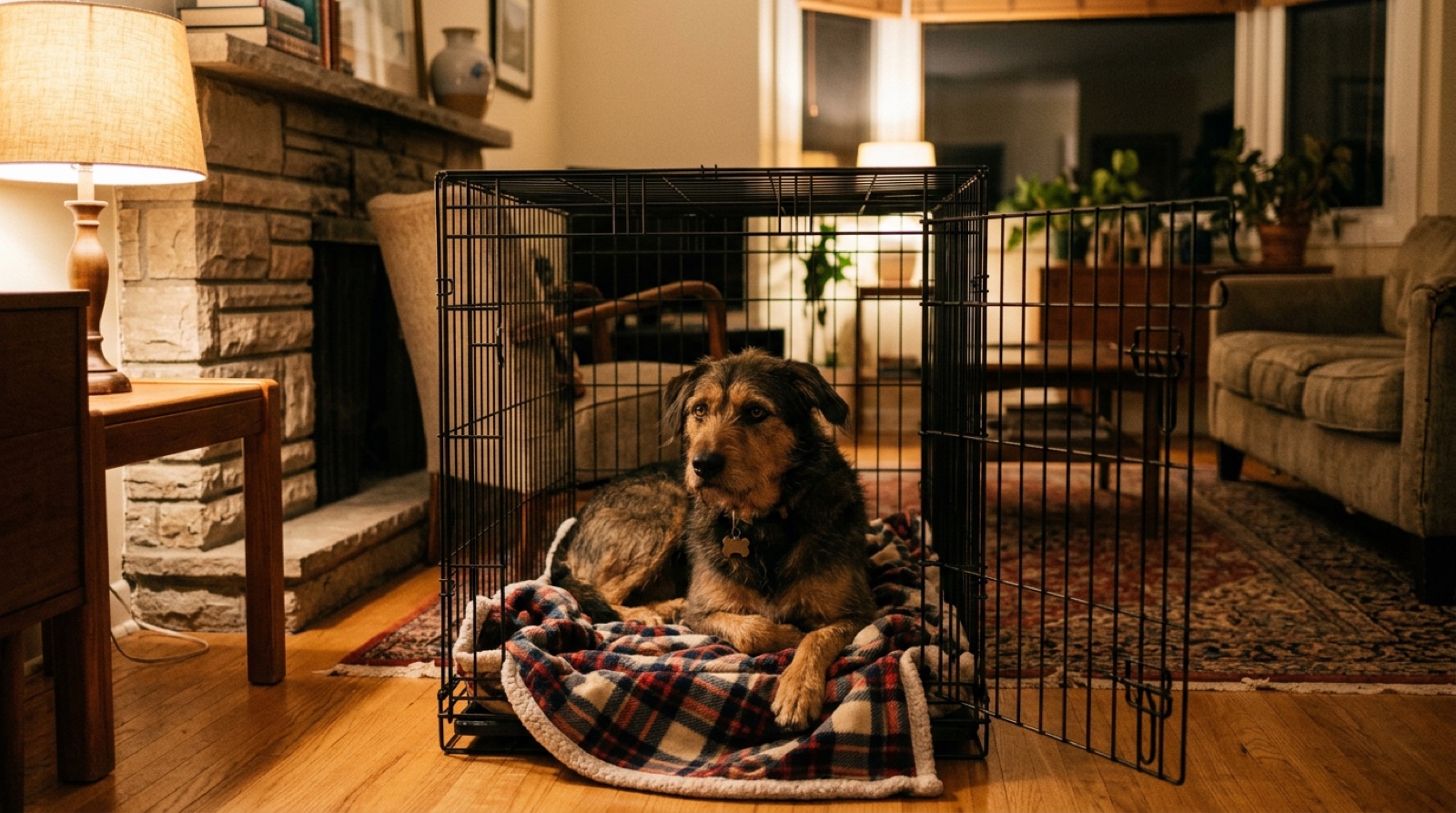
Do less than you want to. No visitors, no dog park, no long adventures. Give your dog a crate or quiet corner, a fixed routine, short leashed walks on your own street, and time. Expect skipped meals and a lot of sleeping. Meanwhile, handle three practical things: register the microchip in your name, get a City of London licence if the dog is over six months, and book a vet visit to establish the relationship. The real dog shows up around week three.
The most common mistake London adopters make is treating day one as a celebration. It is understandable. You waited, you applied, the dog is finally here, and everyone wants to meet them.
From the dog's side, though, the day looks different. They have just lost every familiar smell, sound, person, and routine, again, having likely already lost one home to get to the shelter. They do not know that this move is the good one.
So week one is not about bonding. It is about proving the new place is safe and predictable. Everything else follows from that, and it follows faster when you resist the urge to speed it up. If you are still choosing a dog, the London rescue comparison covers where to start.
The 3-3-3 Rule
| Window | What is happening | What you should do |
|---|---|---|
| First 3 days | Overwhelmed. May not eat, may sleep constantly, may hide. | Quiet house, fixed routine, no visitors, no expectations. |
| First 3 weeks | Learning your routine. Real personality starts surfacing, along with hidden behaviours. | Start gentle training, set house rules, build alone time slowly. |
| First 3 months | Genuinely settled. Trust established, bond forming. | Formal classes, wider social exposure, longer adventures. |
A guide rather than a schedule. Some dogs move faster, and dogs with harder histories often need considerably longer.
Day by Day Through Week One
Day one. Come home during a quiet stretch of the day. Toilet break in the designated spot first, then walk in on leash and let them explore at their own speed. Show them the crate or bed. Offer water and the food the rescue was using. No guests. If they refuse dinner, that is normal.
Days two and three. Establish the rhythm you actually intend to keep, not a holiday version of it. Same wake time, same meal times, same toilet schedule, same bedtime. Short leashed walks on your own street. Expect a dog that sleeps a great deal, and let them.
Days four and five. Begin very short absences. Leave for five minutes, come back without ceremony, extend gradually. Start hand-feeding part of a meal to build the association between you and good things. First vet visit if you have booked it.
Days six and seven. Slightly longer walks somewhere quiet, ideally at an off-peak hour. Handle the microchip registration and the City licence. Notice what is emerging: is the dog beginning to test furniture, counters, or the bin? Set those rules now, calmly and consistently, while the habits are still forming.
The London To-Do List
Register the microchip in your name. Your dog was chipped by the rescue, but the chip is only useful if the database points at you. Rescues do not always complete the transfer. Find the chip number on your adoption paperwork and register it directly with the manufacturer. This is the single most valuable fifteen minutes of week one.
Buy a City of London dog licence. Required for dogs over six months. A spayed or neutered and microchipped dog pays $33 for a first-time licence registered between January and July, and $23 if registered after July 1. Adopted from the London Animal Care Centre? A two-year licence came with your $365 fee. Details in our London licensing guide.
Book a vet appointment. Within a week or two, purely to establish the relationship. Bring the adoption paperwork. Ask about parasite prevention, because Southwestern Ontario has a real tick season and you want that sorted before the first long walk along the Thames.
Know where the emergency clinic is. Find your nearest after-hours veterinary hospital and save the number in your phone now, while nothing is wrong. Looking it up at 2 a.m. with a sick dog is not when you want to be learning your options. The City of London animal services page is also worth bookmarking for lost-dog procedures.
Crate and House Training
A crate is a den, not a punishment. Set it up somewhere the family is, feed meals in it with the door open, and put good chews inside so the dog chooses to go in. Never use it to discipline. Some dogs arrive with a bad crate history and will genuinely panic, which is worth respecting rather than pushing through. A foster-based rescue can usually warn you.
House training runs on schedule rather than signals. Outside first thing, after every meal, after every nap, after play, and last thing at night. Same spot each time, wait quietly, then reward the instant they finish. Praise the success far more than you react to the failure.
Accidents get cleaned with an enzymatic cleaner and zero reaction. Scolding does not teach a dog to hold it. It teaches them to toilet where you cannot see, which is a considerably harder problem to fix. Most adult rescue dogs are reliable within a couple of weeks of consistent routine.
Escape risk is highest in week one
A frightened new dog with no bond to you yet is a flight risk, and most rescue dogs that go missing do so in the first days. Use a well-fitted harness rather than a collar alone, double-check the leash clip every time, and hold the leash through the door rather than at the door. Check your fence for gaps at ground level. Keep an identification tag on the dog from day one even before the licence arrives. Separately, know the signs of bloat in a deep-chested dog: a swollen or hard abdomen, unproductive retching, and obvious distress. That is a life-threatening emergency measured in hours, so go straight to an emergency veterinary hospital rather than waiting for morning.
Browse adoptable London dogs
Still deciding? Filter by size, age, and compatibility to find a dog whose week one you can realistically give. Refreshed regularly.
See Available London Dogs →Frequently Asked Questions
What is the 3-3-3 rule for rescue dogs?
What should I do the first day with a rescue dog in London?
Why is my new rescue dog not eating?
Should I crate train my new rescue dog?
How do I house train a rescue dog?
When should I take a new rescue dog to the vet in London?
What London paperwork do I need after adopting a dog?
Where should I walk a new rescue dog in London?
How long until my rescue dog shows their real personality?
What if my new dog is not getting along with my other pets?
Can I leave a new rescue dog alone during the day?
Should I start training right away or wait?
Related London Guides
Start With the Right Dog
Week one goes better when the match was right in the first place. Browse London dogs and find yours.
Browse Available London Dogs →New dog? Start with these care guides
Everything a new adopter needs to set up a safe, happy home.