The short answer
London runs a subsidized spay and neuter program at $130 for a dog, including rabies vaccine, flea treatment, microchip, pain medication, and a nail trim. Eligibility covers households on Ontario Works, ODSP, ACSD, or in subsidized housing, plus those under a city income threshold. Email animalservices@london.ca to confirm. Adopted a London rescue dog? It is already done. Recovery runs roughly ten to fourteen days of restricted activity, and that part is harder than the surgery.
Most London adopters never have to arrange this surgery. Every one of the city's main rescue routes spays or neuters before the dog goes home, and the cost sits inside the adoption fee you already paid.
The people who do need this guide fall into three groups: someone whose puppy came home too young for the surgery, someone who acquired a dog privately, and someone who has had an intact dog for years and is now weighing it up. All three questions get answered below.
The financial case is worth stating early. Beyond the surgery itself, a fixed and microchipped London dog pays $33 for its annual City licence instead of $63. That gap repeats every single year.
London Spay and Neuter Options
| Route | Dog cost | Who it is for | Included |
|---|---|---|---|
| Already done at adoption | $0 extra | Anyone adopting from a London rescue | Bundled in the adoption fee |
| City subsidized program | $130 | OW, ODSP, ACSD, subsidized housing, or under the income threshold | Rabies, flea treatment, microchip, pain medication, nail trim |
| Standard London clinic | Varies by weight, sex, and clinic | Households that do not qualify for the subsidy | Ask each clinic for a written quote |
Subsidized program pricing and eligibility per the City of London as of July 2026. Confirm current details at animalservices@london.ca before booking. Pre-anaesthetic bloodwork is usually quoted separately, about $60 to $120, and is recommended for older dogs. Ask for an itemized estimate before booking.
The City Subsidy, in Detail
The City of London pet resources page lists a subsidized spay and neuter program priced at $130 for a dog and $80 for a cat. That price includes the rabies vaccine, flea treatment, microchip, pain medication, and a nail trim, which is a genuinely full package rather than surgery alone.
Eligibility covers residents receiving Ontario Works, ODSP, or the Assistance for Children with Severe Disabilities program, residents in subsidized housing, and households with family income below a city threshold. Contact animalservices@london.ca or call City Animal Services at 519-661-2489 to confirm your situation and start the process.
The animal has to qualify as well, not just the household. The City requires the pet to be healthy, over three months and under six years of age, over 2 lbs and under 80 lbs, and licensed within the City of London. That last one catches people out, though the fix is simple: if your dog is not currently licensed, a licence can be purchased at the appointment. The 80 lb ceiling is worth noting if you have a large breed, because it puts some adult dogs outside the program.
The City also runs a separate Trap Neuter Return program for feral cats out of London Animal Shelter Services at 3-1021 Wonderland Road South, with a refundable $80 humane trap deposit. That one is cat-specific, but it is worth knowing about if you are feeding a colony in your neighbourhood.
For broader veterinary costs, the City points residents toward East Village Animal Hospital and PAWS Canada as subsidized care providers. Each sets its own eligibility rules, so check with them directly. Our London low-cost vet guide goes through both, plus the Farley Foundation and payment-plan options, in more detail.
What Recovery Actually Looks Like
Days one to three. Grogginess from the anaesthetic, reduced appetite, and the most discomfort of the whole period. Keep the house quiet. Give the pain medication exactly as prescribed rather than waiting to see if your dog seems to need it, because staying ahead of pain works better than chasing it.
Days four to seven. Your dog starts feeling better, which is when the real work begins. Leashed bathroom breaks only. No running, no jumping on furniture, no stairs where avoidable, no baths or swimming. The incision looks fine long before it is structurally healed.
Days eight to fourteen. Your dog now feels completely normal and has no idea why it cannot chase a squirrel across Gibbons Park. Hold the line. Most complications happen in this window, caused by an owner who relaxed the restrictions early.
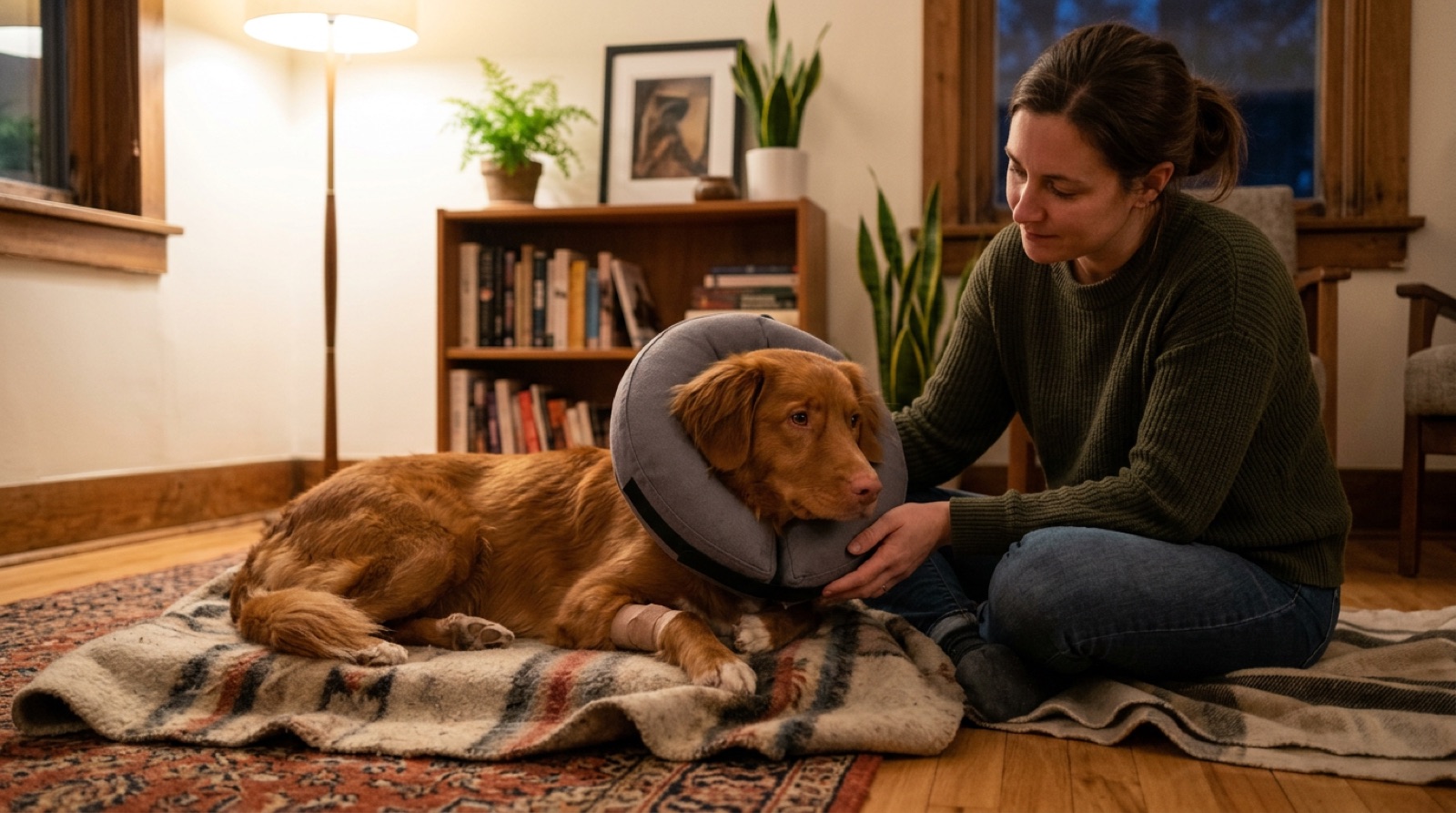
Throughout. The cone stays on. Every clinic in London has treated an infected incision caused by an owner who took it off for just one evening. Substitute mental work for physical exercise: snuffle mats, scattered kibble in a towel, short training sessions, frozen stuffed chews. Twenty minutes of nose work tires a dog out more than most people expect.
When to call the vet rather than wait
Call your clinic if you see swelling, discharge, bleeding, or the incision starting to open, if your dog refuses food for more than about a day, if vomiting continues, if pain persists despite medication, or if lethargy runs past the first couple of days. Separately, and this applies to every deep-chested dog whether or not surgery is involved: a swollen or hard abdomen with unproductive retching and obvious distress is a suspected bloat or gastric torsion, which is a life-threatening emergency measured in hours. Go straight to an emergency veterinary hospital. Do not wait for morning, and never give any human medication to a dog.
Browse adoptable London dogs
Every dog listed here comes already spayed or neutered, vaccinated, and microchipped, with the surgery covered by the adoption fee. Refreshed regularly.
See Available London Dogs →Frequently Asked Questions
How much does it cost to spay or neuter a dog in London, Ontario?
Who qualifies for the City of London spay and neuter subsidy?
Does my rescue dog need to be spayed or neutered?
What age should a dog be spayed or neutered?
Does spaying or neutering lower my London dog licence fee?
What happens during the surgery?
How long is recovery after a spay or neuter?
How do I keep my dog calm during recovery in London?
What should I watch for after surgery?
Are there other low-cost vet options in London, Ontario?
Can I spay a dog that is in heat or pregnant?
Does neutering fix behaviour problems?
Related London Guides
Adopt a Dog That Is Already Done
Every London rescue dog arrives fixed, vaccinated, and chipped. One less thing to arrange.
Browse Available London Dogs →Spay & Neuter Cost Across Canada
What the surgery costs by province, what subsidised clinics charge, and how to find one near you.
New dog? Start with these care guides
Everything a new adopter needs to set up a safe, happy home.