The short answer
Siberian Huskies flood rescue because they are bought on looks and surrendered on reality. London-area rescues including Salt Rescue and Animalert list Huskies and Husky mixes, and the Humane Society London & Middlesex takes surrenders. Fees run $400 to $700. A Husky is a working sled dog: relentless energy, an escape-artist streak, a prey drive with almost no reliable recall, twice-a-year coat blow, and a lot of vocal noise. That means a minimum six-foot secure fence and a never off-leash rule in any unfenced space. London winters suit the double coat; summer heat needs care. This is not a first-dog breed. Plan two to four months from application to the right dog in your home.
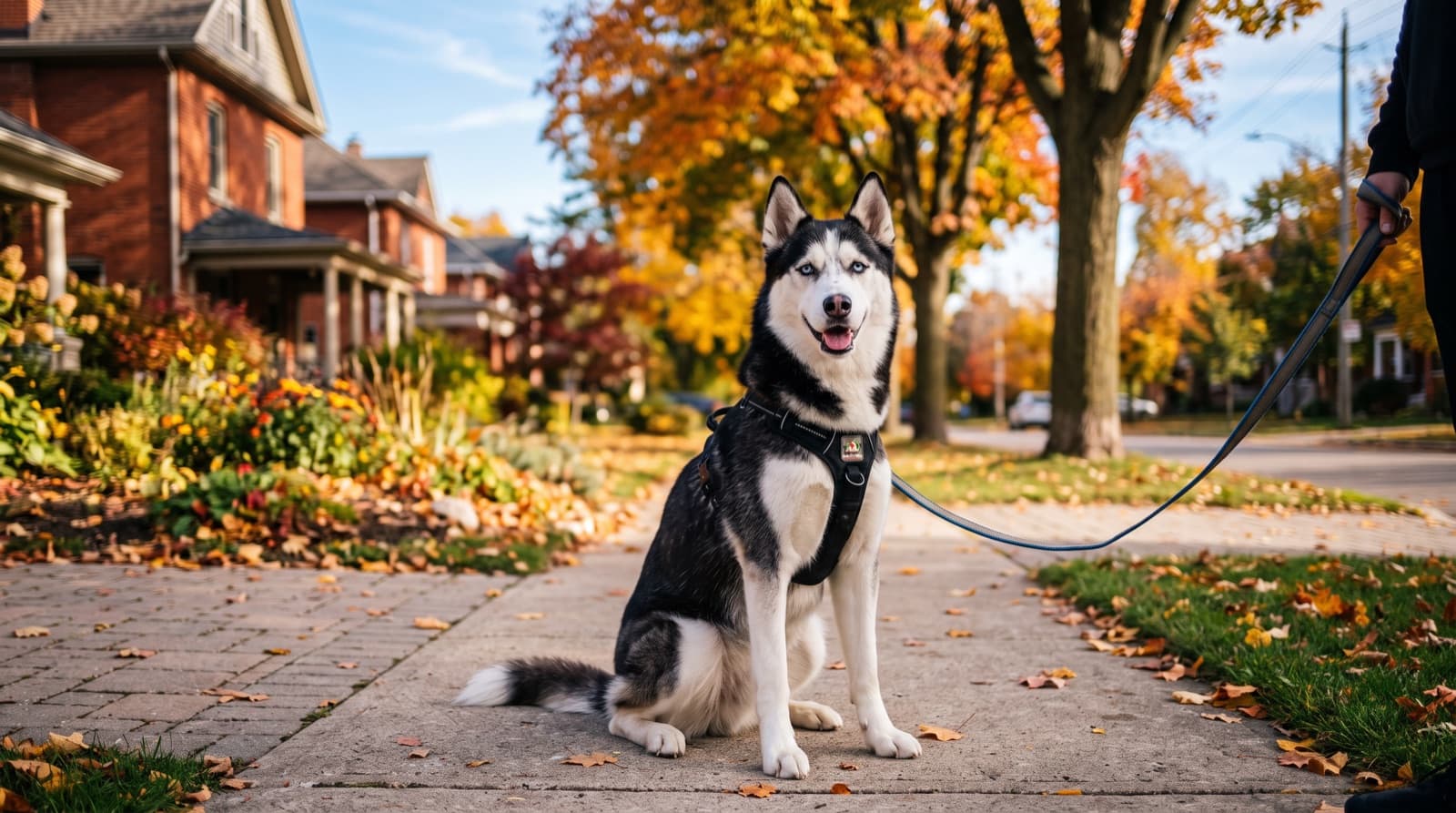
Why Huskies flood London rescue
The Siberian Husky sits near the top of the most-surrendered-breed lists across Ontario, and the reasons are consistent. Huskies are bought on looks and pop culture, and then given up when the working-dog reality arrives. Understanding the patterns helps you read foster write-ups honestly and decide whether the breed genuinely fits your household.
- Impulse buys on looks and hype. The striking wolf-like appearance and the breed's constant presence in film, television, and social media drive a lot of purchases from people who picture the dog without understanding the temperament. A Husky bought as an accessory becomes a surrender within a year or two.
- Escape artistry. Huskies dig under fences, climb over them, slip collars, and bolt through open doors. A household without airtight containment ends up chasing a loose dog through the neighbourhood repeatedly, and eventually gives up. Escapes near roads or wildlife are also genuinely dangerous.
- Relentless energy. This is a dog bred to run for hours pulling a sled. An adult Husky that gets a couple of short walks and then sits in a yard all day channels the unspent energy into digging, chewing, and howling. Under-exercise is the root cause of most Husky behaviour complaints.
- Vocal noise. Huskies howl, whine, and “talk,” often loudly and often at inconvenient hours. In a condo, an apartment, or a close-set neighbourhood, the noise generates complaints and becomes a surrender reason on its own.
- Heavy shedding. The double coat sheds year-round and blows out completely twice a year. Owners who did not expect the volume of fur, or a household member who cannot tolerate it, become a rehoming case.
- Destruction when bored. An under-stimulated Husky is inventive and destructive. Ruined furniture, dug-up yards, and chewed drywall are common in homes that could not meet the exercise and mental-work needs.
Almost none of these are the dog failing. They are a predictable mismatch between a working breed and an owner who was not prepared. The upside for adopters: rescue Huskies are often young adults with honest foster assessments, which means you can pick a dog whose real temperament and needs are already documented rather than gambling on a puppy.
London rescues that list Huskies
Several London-area organisations take Huskies and Husky mixes. Set up listing alerts on every rescue you would consider, because a single well-matched Husky can list and place within days. The London dog listing pages on this site aggregate current adoptable dogs across the region, so start there and cross-reference with each rescue directly.
- Salt Rescue: a London rescue that operates out of Snowdon Crescent and rehomes both cats and dogs. It is a smaller operation than the Humane Society London & Middlesex, and lists Huskies and Husky-type dogs regularly. Ask directly about energy level, prey drive, and compatibility with cats or small pets, which matters a lot for a demanding breed like this.
- Animalert: a long-running southern Ontario rescue that carries Huskies and Husky crosses through its foster network. Worth following with alerts and applying to directly when a suitable dog lists.
- Humane Society London & Middlesex: the main open-intake shelter for the London area. Huskies come through as owner surrenders and transfers, and the shelter setting lets you meet the dog in person before applying. Check their adoptable list frequently, since Huskies move quickly.
- London Animal Care Centre: handles strays and impounded dogs in the city, and this is also where you license your dog once adopted. Adoptable dogs in the municipal system show up here, and staff can point you toward the right process.
One caution on breed-specific “Husky rescue” groups: verify any organisation before sending money or a deposit. A legitimate rescue has a Canada Revenue Agency charitable registration or a verifiable non-profit status, a real address, an adoption contract, and a current list of actual adoptable dogs. The Ontario SPCA is a good reference point for what a reputable adoption process looks like. If a “free to a good home” or deposit-first listing pressures you to pay before you have seen the dog and the paperwork, walk away.
The escape-artist and energy reality
Two traits define daily life with a Husky more than anything else: the drive to escape and the need to move. Both trace back to the same origin. This is a dog bred to run long distances and make independent decisions far from its handler. Those are wonderful qualities in a sled team and a genuine challenge in a suburban backyard.
Start with containment. A Husky needs a minimum six-foot fence, and even that is not automatically enough. Huskies dig, so an anti-dig barrier buried along the fence line or a concrete footer matters. They also climb, so a fence with horizontal rails a Husky can use as footholds is a problem. Gates must latch and lock, and the household has to be disciplined about doors, because a Husky will exploit a moment of inattention to bolt. Many London rescues will not approve a Husky adoption without confirming secure fencing, and that requirement exists for the dog's safety.
Then there is exercise. A healthy adult Husky needs at least one to two hours of real physical activity a day, plus mental work to occupy the independent mind. Two brisk leashed walks are the floor. In London, the City of London maintains the Thames Valley Parkway trail network and off-leash areas, and the trails around Fanshawe give a Husky room to move on a long-line. A well-exercised Husky is calm and easy at home. An under-exercised one digs, howls, destroys, and plots escapes. The behaviour problems that fill rescue are almost always symptoms of unmet exercise needs, not a broken dog.
If your schedule cannot reliably deliver that daily exercise, or your yard is not securely fenced, the honest conclusion is that the timing or the breed is wrong. A Husky in the right home is a joy. A Husky in the wrong one is the surrender story repeating.
Never off-leash: the firm safety rule
Treat a Husky as a never-off-leash breed in any unfenced space. This is a firm safety position, not a training-optimism question. Huskies were bred to run and to work independently at a distance, which is the opposite of the tight recall you get from herding and retrieving breeds. Layer a strong prey drive on top of that independence, and an off-leash Husky that spots a squirrel, a rabbit, or a cat will be gone before you finish saying its name.
The general off-leash caution for any high-prey-drive, low-recall dog applies with extra force here: keep the dog leashed everywhere except a fully fenced area, and use a long-line for controlled speed in open parks. Even Huskies with reliable obedience in the yard cannot be trusted to recall off a live chase, because the instinct overrides the training in the moment that matters. Rescues take this seriously, and a good adoption conversation will include how you plan to exercise the dog safely without ever relying on off-leash recall in the open.
The practical version: a sturdy, well-fitted harness (Huskies slip flat collars), a long-line for room to run in appropriate spaces, and a lifelong habit of assuming the dog will bolt given the chance. Adopters who accept this from day one avoid the heartbreak that ends too many Husky stories.
Coat, climate, and the twice-a-year blow
London winters are the easy part of Husky ownership. The double coat was built for cold, and most Huskies genuinely thrive in snow, wanting to be outside in weather that sends other breeds indoors. The season that needs attention is summer. A Husky carries a heavy coat into July and August humidity, so heat management matters: walk in the early morning or evening, provide constant shade and fresh water, watch closely for signs of overheating, and never leave a Husky in a hot car or a hot yard.
A common mistake is shaving the double coat to cool the dog down. Do not do it. The coat insulates against heat as well as cold, and shaving damages the way it regrows and removes the dog's natural protection. The right approach is regular brushing to keep the undercoat from matting and trapping heat.
On shedding, set expectations honestly. Huskies shed moderately year-round and then blow their entire undercoat twice a year, usually spring and fall, in a multi-week event that produces a startling amount of loose fur. An undercoat rake and a slicker brush are essential, and a coat-blow period means daily brushing. Huskies are not low-shedding or hypoallergenic, and no routine changes that. The trade-off is that the coat is largely odour-free and Huskies are naturally clean dogs that rarely need baths. The Siberian Husky Club of Canada, the breed's national club, publishes breed information that reinforces just how central coat care and exercise are to keeping the breed happy.
Husky health, briefly
Compared with many popular breeds, Siberian Huskies are relatively hardy, and a well-managed dog often lives 12 to 15 years. A few issues do run in the breed and are worth planning around:
- Eye conditions. The notable cluster. Cataracts, progressive retinal atrophy (PRA), and corneal dystrophy all appear at elevated rates. A baseline eye exam is worth doing early, and any changes in vision warrant a vet visit.
- Hip dysplasia. Present in the breed, though less common than in some larger dogs. Reputable breeding screens hips through the Orthopedic Foundation for Animals. For a rescue dog, ask about any mobility history and watch for stiffness as the dog ages.
- Zinc-responsive dermatosis. A Husky-associated skin condition where the dog cannot absorb enough zinc, producing crusty skin lesions that respond to supplementation under veterinary guidance.
Ask the rescue for the dog's known medical history, and book a first-month visit with a London vet (East Village Animal Hospital is one of several London-area clinics) to establish a baseline and set up ongoing care. Pet insurance is easier and cheaper to enrol before any condition appears in the dog's records.
Browse adoptable London Huskies and Husky mixes
Current London-area listings from Salt Rescue, Animalert, the Humane Society London & Middlesex, and more in one place. Huskies place fast; alerts and same-day applications win.
See London Adoptable Dogs →The first 30 days with a London rescue Husky
The 3-3-3 decompression principle (three days to start settling, three weeks to learn the routine, three months to fully bond) applies to Huskies. Because the breed is independent, the bond can take longer to feel solid than with a needy breed, so give it time. Ten priorities for week one through month one:
- Audit your containment before the dog arrives. Walk the fence line. Minimum six feet, no footholds, anti-dig barrier at the base, gates that latch and lock. Fix any gap before day one. Assume the dog will test every weakness.
- Set the never off-leash rule from the start. Leash and a well-fitted harness for every outing in unfenced spaces. Use a long-line for controlled running. Make it a household-wide habit that nobody breaks.
- Establish a daily exercise routine. One to two hours of real activity for an adult, split into two or more sessions, plus mental work. The Thames Valley Parkway and the Fanshawe trails are good leashed or long-line routes.
- Door discipline. Teach everyone in the home to check for the dog before opening exterior doors. Most Husky escapes are bolts, not digs. Baby gates near entryways help in the first weeks.
- Book a baseline vet visit in the first two weeks. Establish records with a London vet, get a baseline eye exam given the breed's eye risks, and discuss any history from the rescue.
- Enrol pet insurance in week one. Before any condition appears in the vet records. Cheaper and easier to get early.
- License the dog with the city. Required through London Animal Care Centre. Confirm the microchip is registered to your contact information.
- Start the grooming routine. A weekly brush year-round, daily during a coat blow. Buy an undercoat rake and a slicker brush now. Do not plan to shave the coat.
- Introduce other pets slowly and never assume cat-safety. Follow the foster's notes on prey drive. Supervise all early interactions with cats, small dogs, and small animals.
- Keep the routine predictable for two weeks. Same walks, same schedule. Save dog parks, new friends, and travel for after week three. A tired, securely contained, well-fed Husky is a calm one.
By week three the routine is established and you will see the real dog. By month three the bond is solid and the household has adapted to the breed's exercise and containment needs. Use the first 90 days as a non-decision window. Most early friction with a Husky resolves with more exercise, tighter containment, and time.
Frequently asked questions
Where can I adopt a Husky near me in London?
Siberian Huskies and Husky crosses reach London-area rescue at steady volume, because the breed is one of the most surrendered dogs in Ontario. Salt Rescue and Animalert both list Huskies and Husky mixes, and the Humane Society London & Middlesex takes Husky surrenders through its intake. London Animal Care Centre handles strays and can point you to adoptable dogs in the city system. Set up listing alerts on every London rescue you would consider, because a single Husky that fits your household can list and place within days. Most rescue Huskies in the region are young adults surrendered in the one-to-three-year window when the breed hits full energy. Apply the same day a suitable dog lists.
Why are Huskies one of the most surrendered breeds?
Huskies are bought on looks and pop culture, then surrendered on reality. The breed became hugely popular through television, film, and social media, and a lot of buyers picture the striking wolf-like dog without understanding what they signed up for. A Husky is a working sled dog bred to run for hours and think independently. That means relentless energy, an escape-artist streak, a strong prey drive with almost no reliable recall, heavy seasonal shedding, and a lot of vocal noise. When an under-exercised Husky starts digging out of the yard, howling at all hours, and destroying furniture, the impulse buy becomes a surrender. None of that is the dog failing. It is a predictable mismatch between the breed and an owner who was not prepared.
Are Huskies really escape artists?
Yes, and it is not exaggerated. Huskies dig under fences, climb over them, slip collars, and bolt through open doors, and once loose the prey drive takes over and recall stops working. A secure containment plan is not optional for this breed. That means a minimum six-foot fence, ideally with an anti-dig barrier buried along the base or a concrete footer, and gates that latch and lock. Many London rescues will not approve a Husky adoption without confirming a secure fenced yard, because a Husky that gets out near roads or wildlife is in real danger. Indoors, a Husky needs supervision around doors and a household that knows not to let a bolt happen. If you cannot commit to airtight containment, this is the wrong breed.
Can a Husky ever be off-leash?
Treat a Husky as a never-off-leash breed in any unfenced space. Huskies were bred to run and to make independent decisions at a distance from their handler, which is the opposite of the biddable recall you get from a herding or retrieving breed. Combine that with a high prey drive, and an off-leash Husky that spots a squirrel, a rabbit, or a cat will be gone before you finish calling its name. For exercise that lets a Husky move at speed, use a long-line in a park or a fully fenced off-leash area, and keep the dog leashed everywhere else. This is a firm safety position, not a training-optimism question. Even Huskies with strong obedience in the yard cannot be trusted to recall off a live chase.
How much does it cost to adopt a Husky in London?
London-area rescue adoption fees for Siberian Huskies typically run $400 to $700. Senior Huskies and long-stay dogs sometimes have reduced fees to prioritise placement. The fee covers spay or neuter, core vaccinations, microchip, deworming, and a basic vet workup, and often a good chunk more for a dog that has been in foster care for a while. Compare that to a Husky puppy from a breeder at $1,200 to $2,500 with no medical work done and the same demanding temperament ahead of you. Budget for setup costs on top of the fee: a secure containment upgrade if your fence is not already six feet and dig-proof, a sturdy harness and long-line, and a first-month vet visit to establish records. See the London dog adoption costs guide for a full budget breakdown.
Do Huskies do well in London, Ontario winters?
Winters are the easy part for a Husky. The double coat was built for cold, and most Huskies are happiest in snow and genuinely thrive through a London winter. They will want to be outside in weather that keeps other breeds indoors. The harder season is summer. A Husky carries a heavy coat into July and August humidity, so heat management matters: walk in the early morning or evening, provide constant shade and water, watch for overheating, and never leave a Husky in a hot car or a hot yard. Do not shave the double coat to cool the dog down; the coat insulates against heat as well as cold and shaving damages its regrowth. Regular brushing, especially during the twice-a-year coat blow, is the right approach.
How much shedding should I expect from a Husky?
A lot, and in waves. Huskies shed year-round at a moderate level and then blow their entire undercoat twice a year, usually spring and fall, in a period that lasts a few weeks and produces staggering amounts of loose fur. During a coat blow you will brush daily and still find fur on everything. A good undercoat rake and a slicker brush are essential, and regular brushing the rest of the year keeps it manageable. Huskies are not a low-shedding or hypoallergenic breed, and no grooming routine changes that. If someone in the household cannot tolerate significant fur and dander, the breed is not a fit. On the upside, the coat is largely odour-free and Huskies are naturally clean dogs that need infrequent baths.
Are Huskies good with kids and other pets?
Huskies are usually friendly and social with people, including children, and the breed is rarely a guard dog because it tends to like everyone. That said, a high-energy Husky can be too much dog for a home with very young kids simply through size and exuberance, so supervision matters. The bigger caution is other pets. The Husky prey drive means many are not safe with cats, rabbits, or small animals, and some are not reliable with small dogs. Rescues assess each dog in foster care and will tell you whether a specific Husky has lived with cats or small pets and how it did. Never assume a Husky is cat-safe based on the breed alone, and always follow the foster home assessment and a careful introduction.
How much exercise does a Husky need every day?
A lot more than most owners expect. Plan for at least one to two hours of real physical exercise a day for a healthy adult Husky, plus mental work to keep the independent mind busy. Two brisk walks are a floor, not a ceiling, and many Huskies need more than that to stay balanced. In London, the leashed trails along the Thames Valley Parkway and the trails around Fanshawe are good routes, and a long-line lets a Husky move at speed in appropriate spaces. Under-exercise is the direct cause of most Husky behaviour problems: the digging, the howling, the destruction, and the escape attempts almost always trace back to a dog with unspent energy. A Husky that gets enough exercise is a different dog from one that does not.
What health problems do Huskies have?
Huskies are relatively hardy compared with many popular breeds, but a few issues run in the breed. Eye conditions are the notable cluster: cataracts, progressive retinal atrophy (PRA), and corneal dystrophy all appear at elevated rates, so a baseline eye exam is worth doing. Hip dysplasia occurs, though less commonly than in some larger breeds, and reputable breeding screens for it through the Orthopedic Foundation for Animals. Zinc-responsive dermatosis is a Husky-associated skin condition where the dog cannot absorb enough zinc, producing crusty skin lesions that respond to supplementation. Overall a well-managed Husky often lives 12 to 15 years. Ask the rescue for the dog's known medical history and plan a first-month vet visit to establish a baseline.
Is a Husky a good first dog?
For most first-time owners, no. The Husky combines high exercise needs, an independent streak that makes training slow, an escape-artist instinct that demands airtight containment, a prey drive that rules out off-leash freedom, and heavy shedding. That is a demanding package for someone learning dog ownership for the first time. Huskies do best with experienced, active owners who have secure fencing, time for daily exercise, tolerance for fur and noise, and realistic expectations. If you are set on the breed as a first dog, adopt an adult through a rescue rather than a puppy, so you get a known temperament and honest foster notes, and lean on a good positive-reinforcement trainer from week one. An adult Husky with the right home is a wonderful dog. It is just not a beginner's dog.
Related London adoption guides
London Adoptable Dogs
Current London-area Siberian Husky, Husky-mix, and northern-breed listings from Salt Rescue, Animalert, the Humane Society London & Middlesex, and more.
Best Dog Rescues in London
Where to adopt in the London area, how each rescue's foster and shelter process works, and how to set up alerts so a fast-moving breed like the Husky does not slip past you.
Dog Adoption Costs in London
What the $400 to $700 fee covers, plus the real first-year budget for a Husky including secure-fencing upgrades, harness and long-line, grooming tools, and vet care.
First Week With a Rescue Dog
The 3-3-3 decompression plan, door discipline, and settling routines that matter double for a high-energy escape-artist breed in its first days at home.
Find your London rescue Husky
Browse current London-area Siberian Husky and Husky-mix listings. Huskies place fast, so set alerts and apply the same day a dog that fits your household lists. Before you commit, be honest about the secure fence, the daily exercise, and the never off-leash rule.
Browse All London Dogs →New dog? Start with these care guides
Everything a new adopter needs to set up a safe, happy home.