The short answer
Shelties bark because they’re bred to, it’s intrinsic herding-dog wiring, so you manage rather than eliminate it: reduce triggers (block window lookout spots), meet the dog’s exercise and mental-stimulation needs (a bored sheltie barks more), and use positive training (a “quiet” cue, rewarding calm), never harsh corrections or shock/citronella collars (counterproductive and harmful for a sensitive breed). Shelties are brilliantly trainable with gentle, reward-based methods and excel at dog sports, but they wilt under harsh handling. Their sensitivity makes thorough socialisation essential to prevent shyness and anxiety. The realistic goal is a much quieter, confident, well-engaged sheltie, not a silent one.
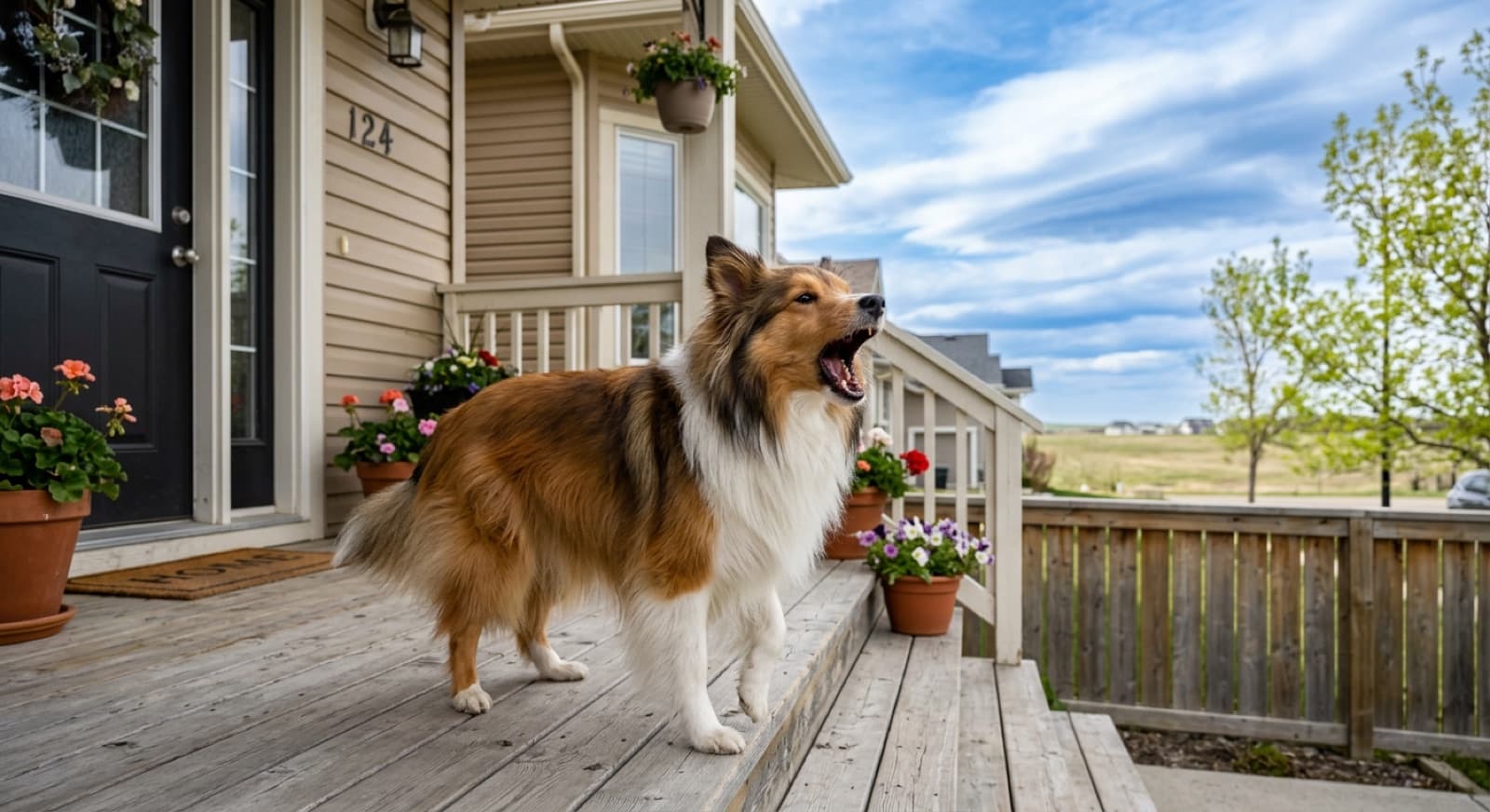
Two traits define life with a Shetland Sheepdog: the voice and the sensitivity. Shelties are famously vocal, and famously attuned, brilliant, and soft-hearted, and the whole art of living happily with one is managing the barking while training with the gentleness a sensitive dog needs. Get both right, and a sheltie is one of the most rewarding companions there is.
Never use harsh corrections on a sensitive breed
Shelties are sensitive dogs, and harsh corrections, yelling, or anti-bark shock or citronella collars are counterproductive and harmful for the breed, they increase anxiety and often worsen barking. Use gentle, positive, reward-based methods throughout. A force-free trainer experienced with vocal herding breeds is a genuine asset if barking or anxiety is a real problem.
Managing the barking, and the sensitive mind
Manage barking on three fronts: reduce triggers (block window lookout spots, manage the environment), meet the dog’s needs (exercise plus mental stimulation, a bored sheltie barks far more), and train positively (teach a “quiet” cue by rewarding silence, mark calm behaviour, and avoid rewarding demand barking with attention). The realistic goal is a much quieter, well-managed sheltie, not a silent one.
On training, shelties are exceptionally trainable with gentle, positive methods and excel at agility, obedience, and rally, but their sensitivity means kindness is essential. Prioritise barking management, confidence-building and thorough socialisation (to counter the breed’s tendency toward shyness and noise sensitivity), and channeling the intelligent herding brain into real outlets. Provide daily exercise plus daily mental work, and use mental enrichment on the coldest or hottest Ottawa days. See our sheltie adoption guide, and the Canadian Kennel Club for sport and breed background.
Ready for a brilliant, vocal companion?
If you can manage the barking and engage the sharp sheltie mind, the breed is a devoted delight. Browse available Shelties and sheltie mixes from Ottawa and Ontario rescues, refreshed regularly.
See Available Shelties →Frequently Asked Questions
Why do Shelties bark so much?
Shelties bark a lot because they were bred to, herding dogs use their voice to move and control livestock and to alert their people, and that vocal, alert wiring is deeply ingrained in the Shetland Sheepdog, so barking is intrinsic to the breed rather than a training failure. A sheltie will bark at movement, sounds, strangers, other animals, activity outside the window, excitement, and things you cannot even perceive, and their sensitivity and quick reactivity mean they often bark more readily than many breeds. This does not mean a sheltie’s barking cannot be managed, it can, and should, but it does mean an owner should expect a vocal dog and plan to manage rather than eliminate the behaviour. Understanding the triggers is the first step: much sheltie barking is alert barking (at things they see or hear), some is excitement or demand barking, and some is boredom or anxiety barking, and the management approach differs for each. In a rural or detached-home setting the barking is more manageable; in a close-neighbour Ottawa apartment or townhouse it requires active, consistent management to keep the peace with neighbours, and it is one of the most common reasons shelties are surrendered. If you love the breed but need a quiet dog, go in clear-eyed: with training and engagement you can significantly reduce and control sheltie barking, but you will not turn a sheltie into a silent dog.
How do I stop or reduce my Sheltie’s excessive barking?
You manage sheltie barking through a combination of reducing triggers, meeting the dog’s needs, and positive training, and consistency is everything. Start by reducing exposure to triggers: limit the dog’s ability to watch and react to movement outside (window film or blocking access to lookout spots helps a lot with alert barking), and manage the environment so the dog is not constantly set off. Meet the dog’s needs: a sheltie that gets enough exercise and, crucially, mental stimulation barks far less than a bored one, so daily activity plus training, puzzles, and enrichment is foundational. For the training itself, use positive-reinforcement methods: teach a solid “quiet” cue by calmly rewarding silence, reward and mark calm behaviour around triggers, and avoid inadvertently reinforcing barking (giving attention, even scolding, can reward a demand-barker, so calm, consistent responses matter). Never use harsh corrections or anti-bark shock/citronella devices, which are counterproductive and especially harmful for a sensitive breed, they increase anxiety and often worsen barking. A force-free trainer experienced with vocal herding breeds is a genuine asset if barking is a real problem. Because shelties are sensitive, some barking is anxiety-driven, so addressing the underlying stress (through socialisation, routine, and, in some cases, professional help) reduces it. The realistic goal is a significantly quieter, well-managed sheltie, not a silent one, and consistent, positive management gets you there.
Are Shelties easy to train?
Yes, shelties are among the most trainable of all breeds, they are exceptionally intelligent, eager to please, and highly responsive to positive, reward-based training, which is why they excel at obedience, agility, rally, and other dog sports and are a genuine joy to teach. They learn quickly, retain well, and love the interaction of training, so an owner who invests time gets a wonderfully responsive dog. The key nuance is that shelties are sensitive, so the training approach matters enormously: they respond beautifully to gentle, positive, reward-based methods and praise, and they wilt under harsh corrections, yelling, or heavy-handed techniques, which damage the trust and confidence of a sensitive dog and can create anxiety or shut-down behaviour. So the recipe is patient, kind, positive training, keeping sessions upbeat and rewarding. Beyond obedience, the most valuable training priorities for a sheltie are barking management (see above), confidence-building and socialisation (to counter the breed’s tendency toward shyness or noise sensitivity), and channeling the intelligent, energetic herding brain into appropriate outlets. Their herding instinct may also show as chasing or nipping at moving things (children, bikes), which positive training can redirect. In short: shelties are easy and delightful to train for anyone who uses gentle, positive methods and appreciates a sensitive, brilliant dog, and a poor fit only for someone expecting to use force.
Why does socialisation matter so much for a sensitive Sheltie?
Socialisation matters enormously for shelties because the breed’s natural sensitivity, left unshaped, can tip into shyness, timidity, fearfulness, noise sensitivity, or reactivity, and early, thorough, positive socialisation is the single best thing you can do to raise a confident, well-adjusted sheltie. Shelties are attuned, reactive dogs that notice everything, and without positive exposure to a variety of people, dogs, environments, sounds, and experiences, that sensitivity can become anxiety, a shy or fearful sheltie may bark defensively, hide, or struggle with new situations, and noise phobias (to thunderstorms, fireworks, and the like) are relatively common in the breed. For a puppy, the critical socialisation window in early life is when positive exposure pays the biggest dividends, but socialisation continues throughout life. For an adopted adult sheltie, especially a shy one whose early history you cannot know, the work is gentle, patient confidence-building: introduce new things gradually and positively, never force or flood a nervous dog, respect its comfort level, use rewards to build good associations, and get professional help for significant fear or reactivity. A well-socialised sheltie is a confident, adaptable, delightful companion; an under-socialised one with the same genetics can be anxious and difficult. Because the breed is so sensitive, thoughtful socialisation and confidence-building are not optional extras, they are central to raising a happy sheltie, and they also reduce the anxiety-driven component of barking.
How much exercise and mental stimulation does a Sheltie need in Ottawa?
Shelties are intelligent, moderately energetic herding dogs that need both daily physical exercise and, just as importantly, real mental stimulation, and meeting both is key to a content, well-behaved sheltie (and to reducing barking). On exercise, a sheltie generally needs a good daily walk or two plus some active play or running, they are not as relentlessly high-energy as a Border Collie, but they are an active breed that enjoys movement, and Ottawa’s trails, parks, and off-leash areas are great for this. On mental stimulation, this is where shelties really need engagement: their sharp, work-oriented minds crave a job, so training sessions (they love to learn), puzzle feeders, scent games, trick training, and above all dog sports (shelties are stars at agility, obedience, and rally) keep them happy and settled, while a bored, under-stimulated sheltie often becomes vocal, anxious, or neurotic. The winning formula is daily exercise plus daily mental engagement plus positive training, and an owner who enjoys doing things with their dog will find the sheltie wonderfully rewarding. On the Ottawa climate, shelties handle winters well (a hardy coated breed that enjoys cold and snow, so winter exercise is easy), while summer heat calls for sensible timing and care for a double-coated dog. Crucially, mental work can substitute for physical exercise on the coldest or hottest days, a training session or puzzle tires a sheltie’s brain when outdoor time is limited. Meet the body-and-brain needs, and a sheltie is a calm, happy, delightful companion.
Related Guides
New dog? Start with these care guides
Everything a new adopter needs to set up a safe, happy home.