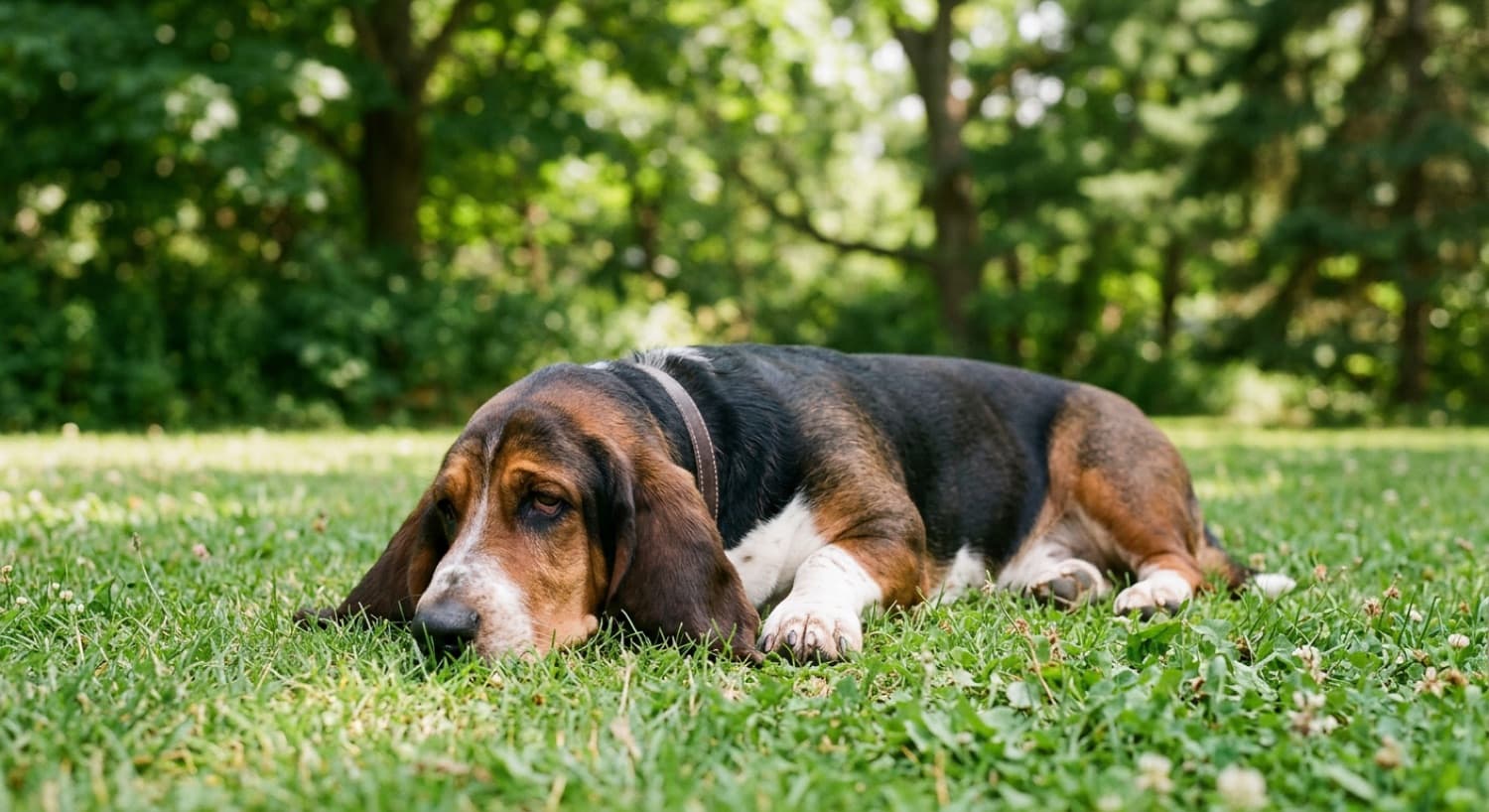
The short answer
A Basset Hound's shape drives its health: the long back means spinal and disc problems (IVDD), the heavy low ears mean frequent ear infections, and the droopy eyes mean eyelid conditions and a real glaucoma risk. Weight gain worsens all of it, and the deep chest carries a bloat risk. Lifespan is about ten to twelve years. Keep the dog lean, clean the ears routinely, watch the eyes closely (acute glaucoma is an emergency), and protect the back. This is general information, not veterinary advice; your vet knows your individual dog.
The back: the long-body risk
The Basset's famous silhouette, a long body on short legs, is a form of dwarfism, and it comes with a spinal cost. The breed is prone to intervertebral disc disease (IVDD), where a disc bulges or ruptures and presses on the spinal cord, causing pain, weakness, or worse. Warning signs include reluctance to jump or use stairs, a wobbly or weak back end, yelping when lifted, or scuffing the back feet, and any of these deserves a prompt vet visit, because early spinal problems are far more treatable than advanced ones. Two habits protect a Basset's back more than anything else: keep the dog lean, and discourage jumping on and off furniture, using ramps or lifting the dog instead. The AKC Canine Health Foundation funds ongoing research into canine spinal and orthopedic disease.
The ears: routine care, not optional
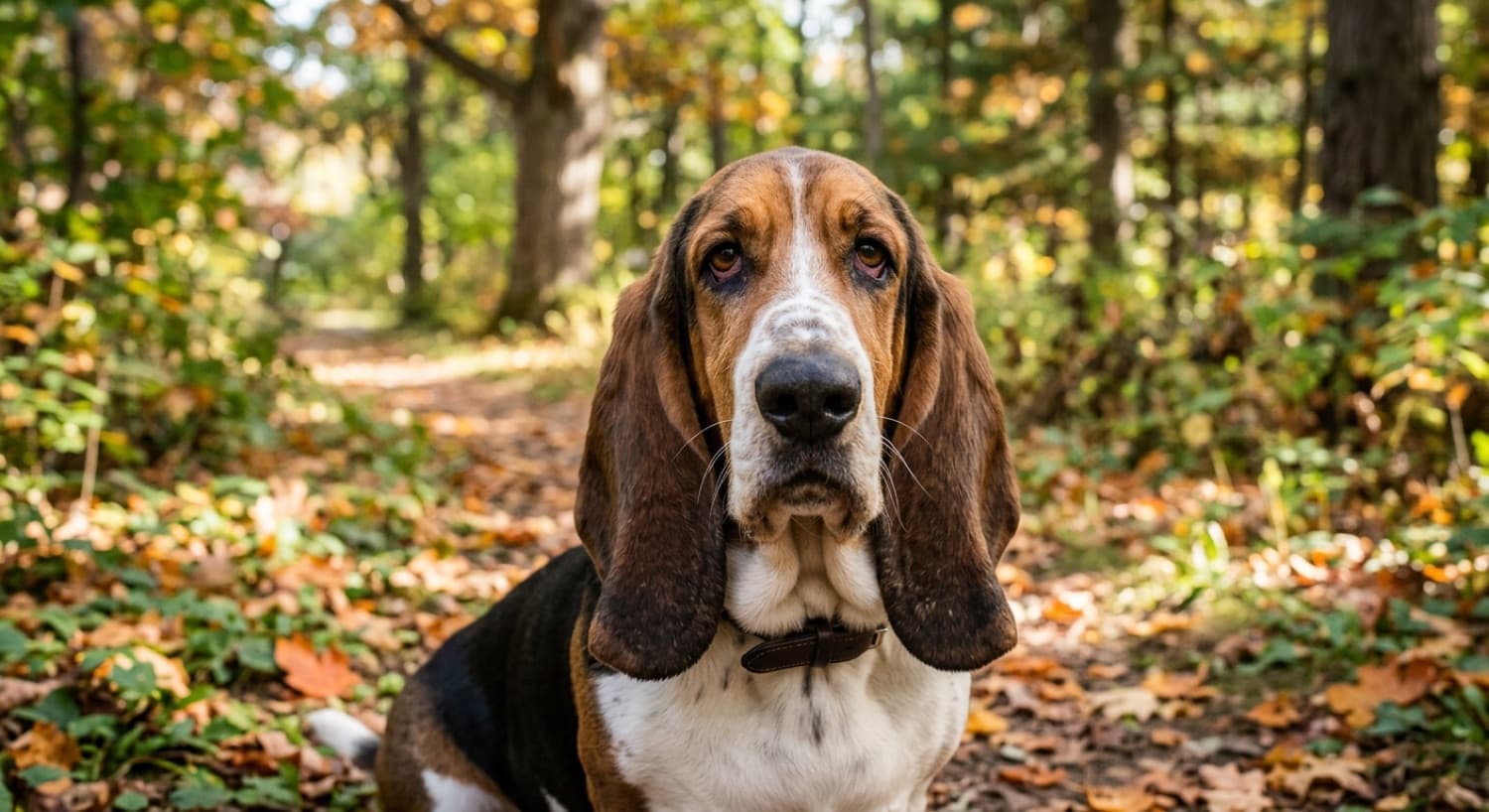
Ear infections are one of the most common issues in the breed, and the cause is built into the design. A Basset's long, heavy ears hang over the ear canal and trap warmth and moisture, the ideal conditions for bacteria and yeast, so without regular care, infections recur. The fix is consistency: gentle, routine ear cleaning as your vet recommends, keeping the ears dry (especially after baths or wet walks), and acting immediately at the first sign of head-shaking, a bad smell, redness, or discomfort. For a Basset, ear care is a core, ongoing part of ownership rather than an occasional chore, and staying on top of it keeps a manageable maintenance task from turning into a chronic, costly cycle of infections.
The eyes: watch for glaucoma
The Basset's soulful droopy eyes and loose facial skin bring their own concerns, and one is genuinely urgent. Bassets are predisposed to glaucoma, a painful build-up of pressure inside the eye, and acute glaucoma is an emergency: sudden redness, a cloudy or bulging eye, obvious pain, squinting, or a dog pawing at its face needs same-day veterinary care, because vision can be lost fast. The breed is also prone to cherry eye (a prolapsed tear gland) and to entropion or ectropion (eyelids rolling inward or outward). Most eye conditions are very treatable when caught early, so treat any change in your Basset's eyes, redness, cloudiness, discharge, or squinting, as a reason to see the vet promptly rather than waiting to see if it clears.
Weight and bloat: the two you control
Two more issues round out the profile, and the first is the most important thing an owner controls: weight. Bassets are intensely food-motivated and not very active, so they gain weight easily, and extra pounds are genuinely harmful for a long-backed, heavy-boned dog, worsening the spine and joints and shortening life. Measured meals, disciplined treats, and regular sniffy walks keep a Basset lean, and it is worth being a little strict, because a slim Basset is a healthier and more comfortable one. The second is bloat: as a deep-chested breed, the Basset is at risk of gastric dilatation-volvulus, a life-threatening emergency. The Merck Veterinary Manual lists deep-chested conformation as a risk factor. Learn the signs, unproductive retching, a swollen hard belly, drooling, restlessness, and get to an emergency vet immediately if you see them.
Everyday care in Toronto
For all its specific needs, a Basset is not an unhealthy breed, it simply asks for attentive, consistent care in a few key areas. Keep it lean, clean the ears routinely, watch the eyes, protect the back from jumping, and stay alert to any mobility change, and most Bassets do very well. Build the small routines, ear checks, weight monitoring, gentle daily walks, into ordinary life and they stop feeling like work. Our Toronto low-cost vet guide can help with the ongoing care, and the Canadian Kennel Club breed profile is a useful reference on the breed overall.
Browse adoptable Basset Hounds in Toronto
A rescue Basset comes with a vet check already done and foster notes on any health issues identified. Meet the adoptable Basset Hounds and Basset mixes near you.
See Available Basset Hounds →Frequently Asked Questions
What is the lifespan of a Basset Hound?
Basset Hounds typically live around ten to twelve years. As with most breeds, how good those years are depends heavily on management, and for a Basset that means weight above all. A lean Basset puts far less strain on its vulnerable back and joints, and stays clear of the cascade of problems that obesity brings in this breed. Routine ear and eye care, prompt attention to any back or mobility change, and keeping the dog trim are the biggest levers an owner has over a Basset's length and quality of life.
What health problems are Basset Hounds prone to?
The main ones follow directly from the breed's shape. The long back and short legs make Bassets prone to spinal problems including intervertebral disc disease (IVDD). The long, heavy ears trap moisture and cause frequent ear infections. The droopy eyes are prone to conditions including glaucoma, cherry eye, and eyelid problems. On top of those, Bassets gain weight extremely easily, which worsens everything, and as a deep-chested breed they carry a bloat risk. They can also have elbow and joint issues related to their build. It is a specific list, and most of it is manageable with good routine care.
Do Basset Hounds have back problems?
They are prone to them, yes, because of their build. The Basset's long back and short legs (a form of dwarfism that gives the breed its shape) put extra stress on the spine, and the breed is susceptible to intervertebral disc disease (IVDD), where a disc bulges or ruptures against the spinal cord. Watch for reluctance to jump or climb stairs, a wobbly or weak back end, yelping when picked up, or dragging the back feet, and treat any of these as a prompt reason to see the vet, since early spinal problems are far more manageable. Two habits protect a Basset's back: keep the dog lean, and discourage jumping on and off furniture (ramps and lifting are kinder than leaps).
Why do Basset Hounds get so many ear infections?
It is the ears themselves. A Basset's long, heavy, low-hanging ears cover the ear canal and trap warmth and moisture, creating exactly the environment bacteria and yeast love, so ear infections are one of the most common health issues in the breed. The good news is that consistent routine care prevents most of them: gentle regular ear cleaning as your vet advises, keeping the ears dry, and acting at the first sign of head-shaking, odour, redness, or discomfort rather than letting an infection settle in. For a Basset, ear care is not optional maintenance, it is a core part of ownership, and it keeps a chronic nuisance from becoming a recurring vet bill.
Are Basset Hounds prone to eye problems?
Yes, and one deserves special attention. Those characteristic droopy eyes and loose facial skin make Bassets prone to eyelid conditions and to glaucoma, a painful increase in pressure inside the eye that the breed is predisposed to. Acute glaucoma is an emergency: sudden redness, cloudiness, a visibly enlarged or painful eye, squinting, or a dog pawing at its face needs same-day veterinary care, because vision can be lost quickly. Bassets can also get cherry eye (a prolapsed tear gland) and entropion or ectropion (eyelids rolling in or out). Most eye issues are very treatable when caught early, so any change in the eyes is worth a prompt vet visit rather than a wait.
How do I keep a Basset Hound at a healthy weight?
Deliberately, because the breed makes it hard. Bassets are intensely food-motivated and low-to-moderate in activity, a combination that leads to weight gain if you let it, and excess weight is genuinely damaging for a long-backed, heavy-boned dog, worsening the spine, the joints, and general health. Keeping a Basset lean means measured meals rather than free-feeding, careful control of treats (including all the ones a Basset will beg for), and regular sniffy walks for gentle activity. Your vet can help you set a target body condition and adjust from there. Of everything in this guide, weight is the single most protective thing an owner controls.
Should I get pet insurance for a Basset Hound?
It is worth serious consideration. Bassets combine several potentially expensive risks, spinal problems, chronic ear infections, eye conditions and glaucoma, and bloat, and a single back or eye issue can run well into the thousands. Enrolling while the dog is young and healthy, before anything becomes a pre-existing exclusion, gives you the most usable coverage, and given that many adopted Bassets are already adults, it is worth arranging soon after adoption. Compare providers on how they handle chronic and hereditary conditions rather than price alone, and keep an emergency fund alongside for deductibles and exclusions.
Basset Hound Adoption in Toronto
Where to adopt, the temperament, and the costs.
Basset Training & Recall
Working with a stubborn scent hound, and managing recall.
New dog? Start with these care guides
Everything a new adopter needs to set up a safe, happy home.