The short answer
Bassets are stubborn because they were bred to track independently, not because they are unintelligent, and their recall is unreliable because the nose overrides everything once a scent hits. Train with what motivates them: calm, consistent, food-based positive methods, short sessions, and lots of scent enrichment to satisfy the instinct. Manage safety with leashes, secure fences, and microchips, never off-leash recall in open areas. Expect slow house-training and some baying. Meet the nose's needs and a Basset is a happy, much easier dog.
Why Bassets are “stubborn”
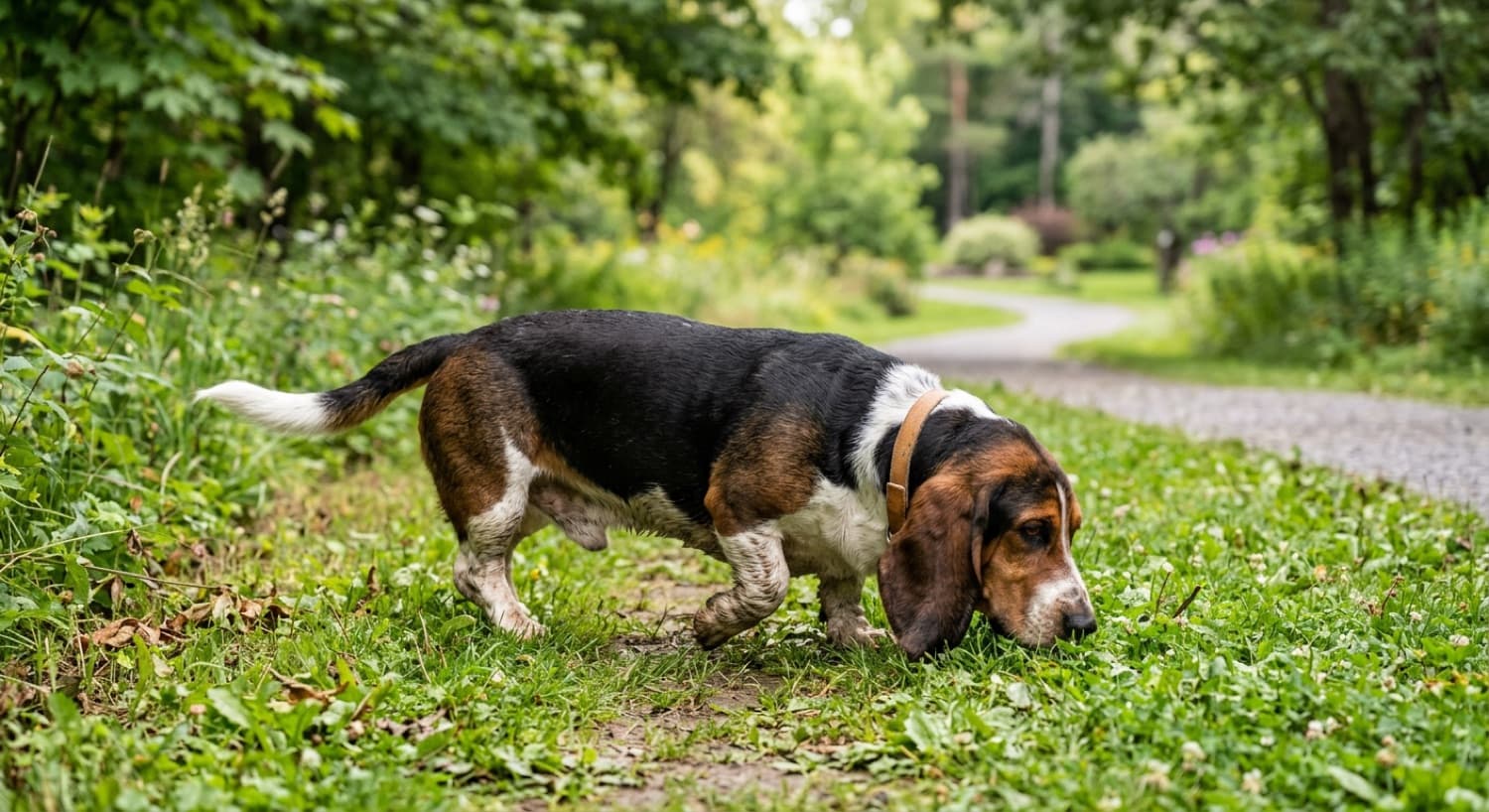
The stubbornness reputation is earned, but it is worth understanding what is actually going on. Bassets were bred as scent hounds to follow a trail independently, for hours, without checking in with a handler, so unlike herding or working breeds that were selected to take direction, the Basset was selected to make its own decisions and ignore distractions, including you. That is a feature, not a flaw, of the working dog, and it is why a Basset can seem to hear a cue perfectly and simply decline to act on it. The Canadian Kennel Club breed profile notes the breed's mild but devoted, independent character. Once you accept that you are working with an independent thinker whose nose usually has the final say, training stops being a battle of wills and becomes a matter of good motivation and patience.
Recall: train it, but never rely on it
Here is the single most important safety point for the breed. A Basset has one of the most powerful noses in dogdom, and when it catches an interesting scent, that trail becomes the entire world, your calls simply do not register in that moment. This makes recall fundamentally unreliable in an open area, not because the dog is disobedient but because instinct outranks training when the nose is engaged. So the rule is firm: a Basset stays leashed or inside a securely fenced space, always, and is never let loose where it could follow a scent into danger. You should still teach a solid everyday recall, it is useful for structure and for the moments the nose is quiet, but you plan your whole management around the assumption that a scent will win. Leashes and fences, not a trained recall, are what keep a Basset safe.
What actually works: food, patience, and scent
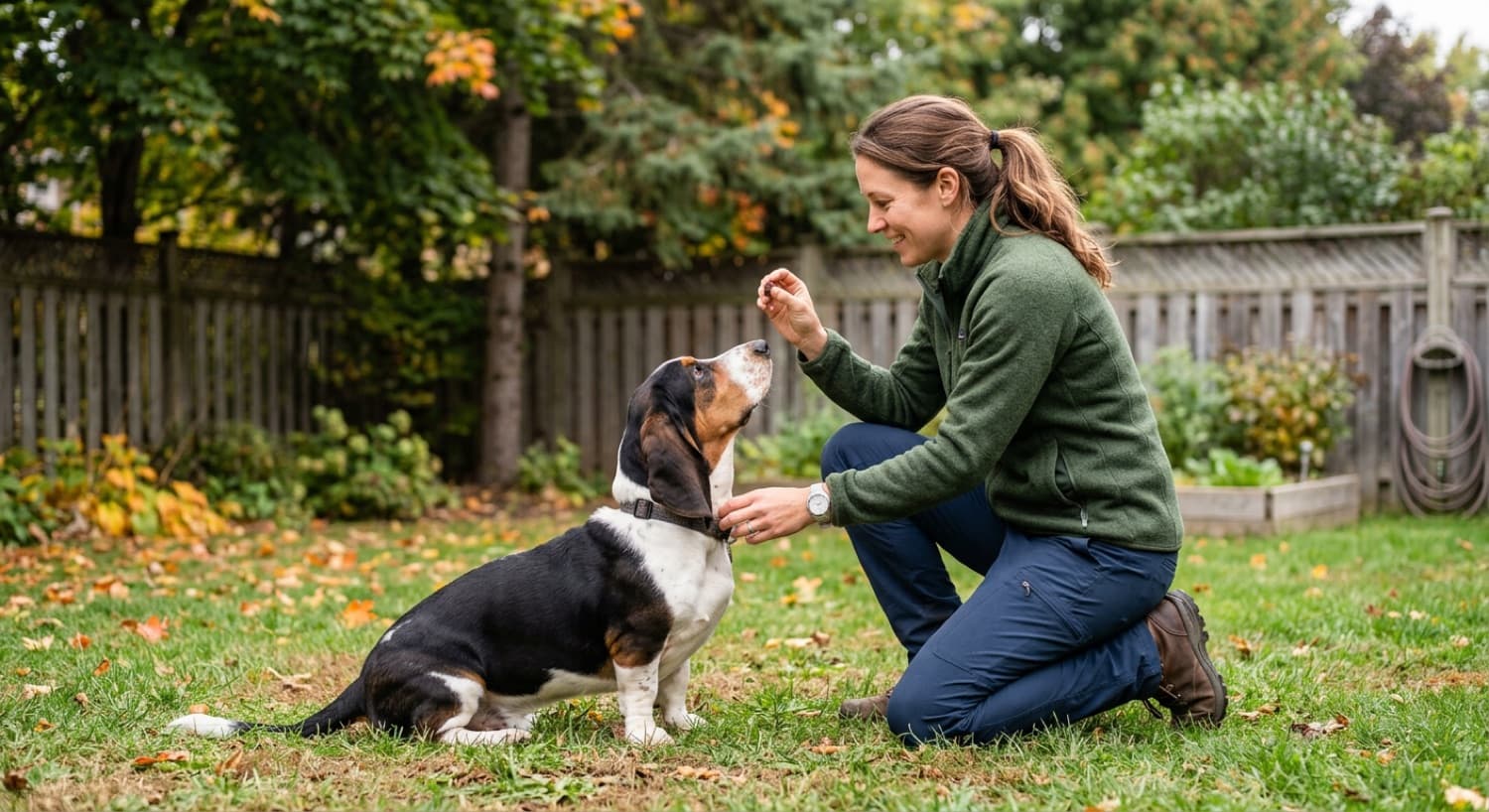
Training a Basset is less about control and more about motivation. The breed is intensely food-driven, which is your biggest asset: reward-based, positive methods, generous with treats and praise, get results that force never will, since pressure just makes a stubborn dog dig in. Keep sessions short and upbeat, be consistent and patient, repeat often, and reward the small wins. Just as important, give the nose a job. Scent games and sniffy enrichment satisfy the tracking instinct that otherwise fuels stubbornness, wandering, and baying, so a Basset that gets to use its nose in approved ways is far more cooperative in general. The Fear Free approach to low-stress, positive training fits the sensitive, food-loving Basset well. Work with the nose and the stomach, and the “stubborn” dog becomes surprisingly willing.
Escapes, house-training, and baying
Three practical management points round out life with a Basset. On escapes: a scent-tracking Basset is a determined escape artist despite its short legs, digging under fences and squeezing through gaps, so secure, gap-free fencing, supervision in the yard, and a microchip plus ID are essential, and a Basset should never be left loose in an unfenced space. On house-training: the independent streak makes it a slower project than with many breeds, so plan for patience, a predictable potty routine, generous reward for going in the right spot, and calm consistency rather than frustration. On baying: the deep howl is built into the breed and most often driven by boredom or loneliness, so the answer is enrichment and company, not punishment. A well-walked, mentally-satisfied Basset that is not left alone too long is a much quieter one.
Exercise the nose, protect the back
The final piece ties training and health together. A Basset needs nose-first exercise more than physical exertion: daily sniffy walks where it can stop and investigate, plus scent enrichment at home like snuffle mats, scatter-fed kibble, and hide-the-treat games, satisfy the instinct that drives most of the breed's challenging behaviour. And because Bassets have vulnerable long backs and gain weight easily, keep the physical side gentle, no repetitive jumping on and off furniture, and lean on mental, scent-based work instead. A Basset whose nose has a job is calmer, more cooperative, and easier to live with, and you protect its back at the same time. For the medical side, see our Basset health guide, and for the full picture, our adoption guide.
Browse adoptable Basset Hounds in Toronto
Knowing how a scent hound thinks is the best preparation for training and living with one. Meet the adoptable Basset Hounds and Basset mixes near you.
See Available Basset Hounds →Frequently Asked Questions
Are Basset Hounds hard to train?
Yes, and it helps to expect it going in. Bassets are scent hounds bred to work independently, following a trail for hours without waiting for a human, so they simply were not designed to take direction the way an eager-to-please breed is. That reads as stubbornness, but it is not stupidity, a Basset is clever, it just has its own agenda, usually written by its nose. The upside is that Bassets are intensely food-motivated, which gives you a powerful training tool. With patient, consistent, reward-based training and realistic expectations, a Basset absolutely learns; it just does it on Basset time, not Border Collie time.
Can Basset Hounds be trusted off-leash?
No, not in an unfenced space. A Basset's nose is one of the strongest in the dog world, and once it locks onto a scent, it will follow that trail and tune you out completely, recall becomes unreliable in that moment no matter how well trained the dog is. That is instinct, not disobedience. So the rule is simple: a Basset stays on a leash or inside a securely fenced area, always, and never runs loose where it could wander into a road or out of sight. You can and should train a solid everyday recall for structure and safety, but you cannot rely on it against a good smell, so you manage with leashes and fences instead.
How do you train a stubborn Basset Hound?
Work with the nose and the stomach, not against the will. The most effective approach is calm, consistent, food-motivated positive training: a Basset will do a great deal for a treat, so reward-based methods far outperform any attempt to force compliance, which just makes a stubborn dog dig in. Keep training sessions short and upbeat, be patient and repetitive, and celebrate small wins. Crucially, give the nose a job, scent games and sniffy enrichment satisfy the instinct that otherwise drives the dog to ignore you. The Fear Free approach to low-stress, positive training suits the sensitive, food-loving Basset well. Consistency and patience, not pressure, are what get results.
How do I stop my Basset Hound from escaping?
Take it seriously, because a Basset on a scent is a determined escape artist despite the short legs. They will dig under fences, squeeze through gaps, and follow their nose out of any opening, so secure, well-maintained fencing with no gaps at the bottom is essential, and a Basset should never be left unattended in an unfenced or loosely fenced yard. Make sure the dog is microchipped and wears ID, since a scent-tracking Basset can travel surprisingly far before it looks up. Supervise in the yard, check the fence line regularly, and treat gates and doors as escape points. Good containment, not trained recall, is what keeps a Basset safe.
Are Basset Hounds easy to house-train?
Often not, and patience is the key. The same independent streak that makes Bassets slow to train can make house-training a longer project than with many breeds, so plan for it to take time and consistency rather than expecting quick results. What works is a predictable routine (frequent, scheduled potty trips, especially after meals, naps, and play), generous reward the moment the dog goes in the right place, close supervision or safe confinement indoors when you cannot watch, and calm consistency rather than frustration. Accidents are part of the process with this breed; steady routine and rewards, not punishment, are what get a Basset there.
How do I stop my Basset Hound from howling and baying?
Manage the causes rather than expecting silence, because vocalising is deeply built into the breed. Bassets bay and howl by nature, and the most common triggers are boredom, loneliness, and unspent energy, so the fixes are enrichment and companionship: daily sniffy walks, scent games and puzzle feeders that tire the mind, and not leaving the dog alone for too long (Bassets are social and prone to protest when isolated). A well-exercised, mentally satisfied Basset with company is a much quieter one. You will not train the voice out of a Basset entirely, it is part of the package, but you can reduce nuisance baying a great deal by meeting the needs behind it.
What kind of exercise and enrichment does a Basset Hound need?
Nose-first exercise, more than physical exertion. A Basset is low-to-moderate energy and does not need long runs, but it does need to use its nose, which is where its real drive lives. Daily sniffy walks where the dog is allowed to stop and investigate are ideal, and scent enrichment at home, snuffle mats, scatter-feeding kibble in the grass, hide-and-seek with treats, and simple nosework games, satisfies the tracking instinct that otherwise fuels stubbornness, escaping, and baying. Because Bassets gain weight easily and have vulnerable backs, keep physical activity gentle (no repetitive jumping) and lean on mental, scent-based enrichment instead. A Basset with a job for its nose is a happy, calmer dog.
Basset Hound Adoption in Toronto
Where to adopt, the temperament, and the costs.
Basset Hound Health Issues
Back, ears, eyes, weight, and what to plan for.
New dog? Start with these care guides
Everything a new adopter needs to set up a safe, happy home.