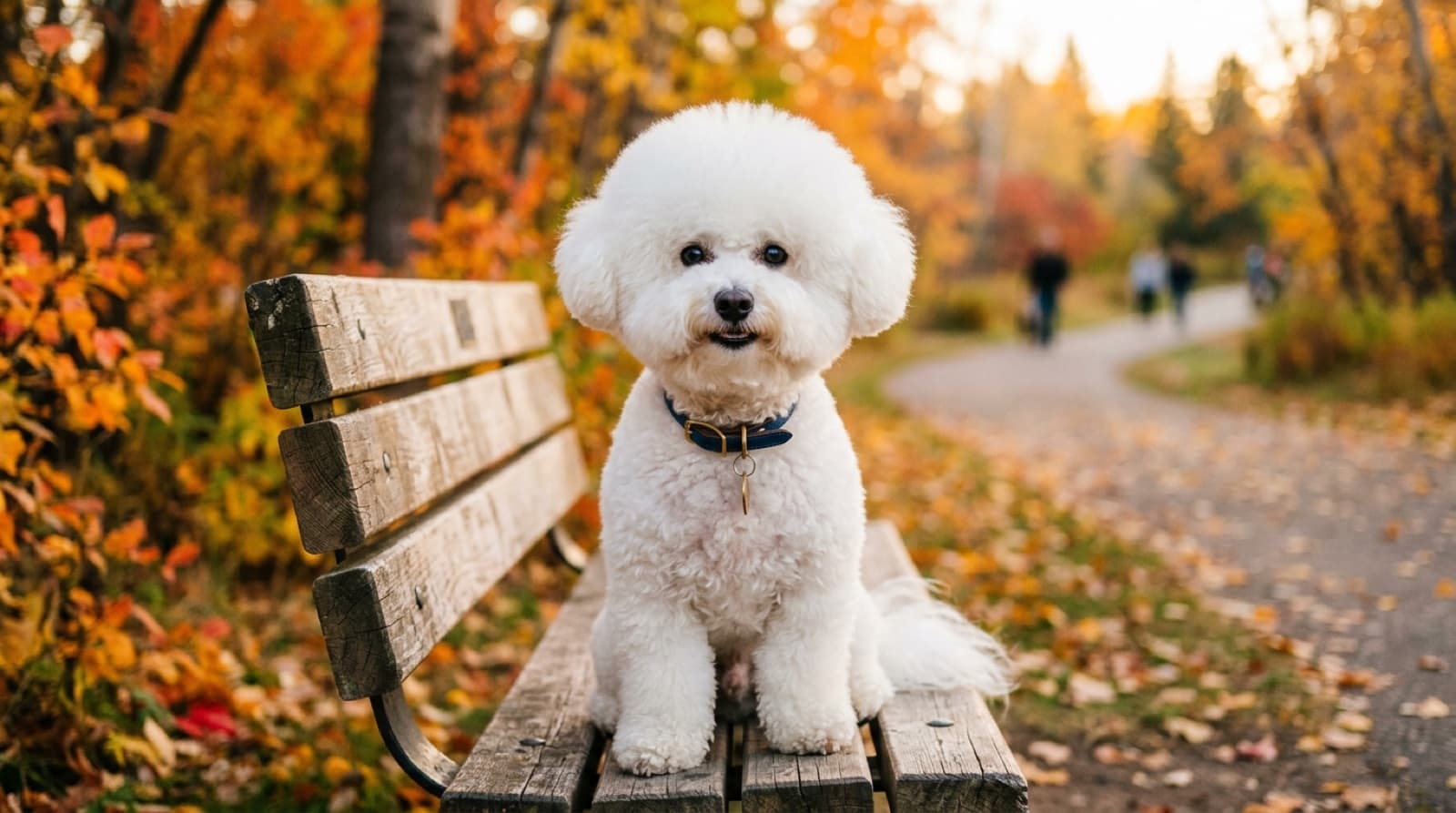
The short answer
Bichons come through Toronto rescue via the municipal shelter, the Humane Society, and small-dog and foster-based rescues, with fees $150 to $700 (versus $1,500 to $3,500-plus from a breeder). They are ideal apartment and family companions, cheerful, affectionate, great with kids and pets, though they dislike being left alone for long. The real commitment is grooming: the curly coat mats easily and needs frequent brushing plus professional grooming every four to six weeks. They can also be prone to skin allergies, which good grooming and diet help manage. Being open to a Bichon mix widens your options. Browse adoptable Toronto dogs.
The merry cotton-ball companion
The Bichon Frise was bred purely as a companion, and it shows: they are cheerful, affectionate, playful, and adaptable, famously merry little dogs that love being with their people. For Toronto apartment and family life they are close to ideal, small, trainable, gentle with children and other pets, and happy anywhere their humans are. They are bright and eager to please, which makes training a pleasure, though housetraining a small dog takes patience and consistency. The two things to plan for are their dislike of being left alone for long (they can develop separation anxiety) and their consistent grooming needs, both manageable with the right routine. The Canadian Kennel Club describes the breed's gentle, cheerful character well.
The grooming commitment
The main thing to understand before adopting a Bichon is the coat. That soft, dense, curly double coat grows continuously, sheds very little (a plus for allergy-conscious homes), and mats readily, so it needs frequent brushing plus professional grooming every four to six weeks to keep the signature fluffy look and prevent matting. Most owners keep a rounded puppy cut or the classic powder-puff trim, both needing regular upkeep. Either way, grooming is a genuine, recurring commitment of time and money, and “low shedding” is not “low grooming”, the Bichon coat is high-maintenance. Our Bichon grooming guide walks through the full routine, and a good rescue will be honest about a dog's coat, skin, and health.
Costs and getting started
Bichons are legal everywhere in Ontario with no restrictions, and their small size and modest needs make them a natural condo dog, the real considerations are grooming, skin care, and companionship, not paperwork. Adoption fees run $150 to $700 (spay or neuter and shots included), well below a breeder's $1,500 to $3,500-plus, but budget for the recurring grooming ($50 to $85-plus every four to six weeks), dental care, and the modest small-breed vet costs like luxating patellas, allergies, and bladder stones (our cost guide helps). Being open to a common Bichon mix widens your options. See the breed page for adoptable Bichons near Toronto.
Browse adoptable Bichon Frises in Toronto
Bichons and Bichon mixes from Toronto shelters and rescues, with foster notes on temperament, coat, and health.
See Available Bichon Frises →Frequently Asked Questions
Where can I adopt a Bichon Frise in Toronto?
Bichons and Bichon mixes turn up in Toronto rescue through the usual channels, surrendered for a life change, an allergy in the family despite the low shedding, or an elderly owner passing. Check the City of Toronto Animal Services, the Toronto Humane Society, and foster-based rescues like Save Our Scruff, TEAM Dog Rescue, Fetch + Releash, and small-dog-focused rescues, and breed-specific Bichon or small-companion rescues sometimes have them. LocalPetFinder aggregates adoptable Toronto dogs in one place. Because purebred Bichons are popular and adopted quickly, being open to a Bichon mix (Bichon-Poodle, Bichon-Shih Tzu and similar are common and lovely), an older dog, or a related breed like the Havanese, plus setting up a rescue alert, will widen your options considerably.
Are Bichon Frises good apartment and family dogs?
Yes, on both counts, the Bichon Frise is one of the classic small companion breeds for city and family life. They are cheerful, affectionate, playful, and adaptable, famously merry little dogs, and their small size and modest exercise needs make them ideal for Toronto apartments and condos. They are typically great with children and other pets, gentle and sociable rather than snappy, though as with any small dog, play with very young kids should be supervised for the dog’s safety. The main caveats are that they bond closely and do not like being left alone for long (they can develop separation anxiety), and they need consistent grooming. For an affectionate, trainable, upbeat family companion that fits a condo, the Bichon is an excellent choice.
How much grooming does a Bichon Frise need?
Grooming is the biggest ongoing commitment with a Bichon, and prospective owners must understand it. They have a soft, dense, curly double coat that grows continuously and sheds very little (a plus for allergy-conscious homes) but mats easily and readily, so it needs frequent brushing (ideally most days) plus professional grooming every four to six weeks to keep the signature fluffy look and prevent matting. Most owners keep the Bichon in a rounded "puppy cut" or the classic powder-puff trim, both of which need regular upkeep. Either way there is real, recurring grooming work and cost, in Toronto typically $50 to $85-plus per professional visit, plus at-home brushing and tear-stain care around the eyes. The low shedding is appealing, but "low shedding" is not "low grooming," and the Bichon coat is genuinely high-maintenance. Our Bichon grooming guide covers the routine.
Why do Bichon Frises end up in rescue?
Several reasons feed the flow. Grooming is a big one: owners charmed by a fluffy Bichon puppy sometimes underestimate the frequent brushing and regular professional grooming, and give up when the coat mats. Their popularity has also fueled puppy-mill and backyard breeding, producing poorly bred, sometimes unhealthy or poorly socialized Bichons more likely to be surrendered. Add their dislike of being left alone (which can lead to barking and anxiety complaints), the occasional impulse purchase of a cute small dog, and ordinary life changes (moves, allergies, an elderly owner passing), and Bichons land in rescue regularly. A rescue Bichon is usually a cheerful, loving little dog whose situation changed, and a prepared home that can meet the grooming and companionship needs is exactly what it is looking for.
How much does it cost to adopt a Bichon Frise in Toronto?
Adoption fees run the usual Toronto ranges: roughly $150 to $350 at municipal animal services and $200 to $700 or more at rescues, with spay or neuter, vaccines, and a vet check included, well below the $1,500 to $3,500-plus a breeder Bichon commands. Beyond the fee, budget for the Bichon-specific ongoing costs: professional grooming every four to six weeks ($50 to $85-plus per visit) plus grooming tools, dental care (small breeds are dental-prone), and the modest but real vet costs of a small breed (luxating patellas, allergies and skin issues, bladder stones, and some eye conditions among them). Pet insurance is worth considering, ideally taken out while the dog is young. Our Toronto cost guide has the full picture, and our grooming guide details the recurring grooming spend that is easy to overlook.
Do Bichon Frises have skin and allergy problems?
They can, and it is worth knowing before you adopt. Bichons are somewhat prone to skin allergies and sensitivities (both environmental and food-related), which can cause itching, ear infections, and skin irritation, and their dense coat can hide skin problems if grooming lapses. Regular grooming actually helps here, because brushing and bathing keep the skin healthy and let you spot issues early, and a good diet and prompt vet attention to itching or recurrent ear infections keep most cases manageable. This is not a reason to avoid the breed, many Bichons have perfectly healthy skin, but it is a reason to keep up the grooming, choose a quality diet, and work with your vet if your dog shows signs of allergies. A rescue that has had the dog vet-checked can flag any known skin or ear issues.
Bichon Frise Health Issues: Stones, Knees, Teeth
Bichon Frise health issues to plan for: bladder stones, slipping kneecaps, dental disease, itchy skin and allergies, and what to ask your vet after adoption.
How to Groom a Bichon Frise
A Bichon Frise grooming guide: why the coat mats so fast, the pre-bath rule that prevents disasters, the powder-puff trim, tear stains, and the honest cost.
New dog? Start with these care guides
Everything a new adopter needs to set up a safe, happy home.