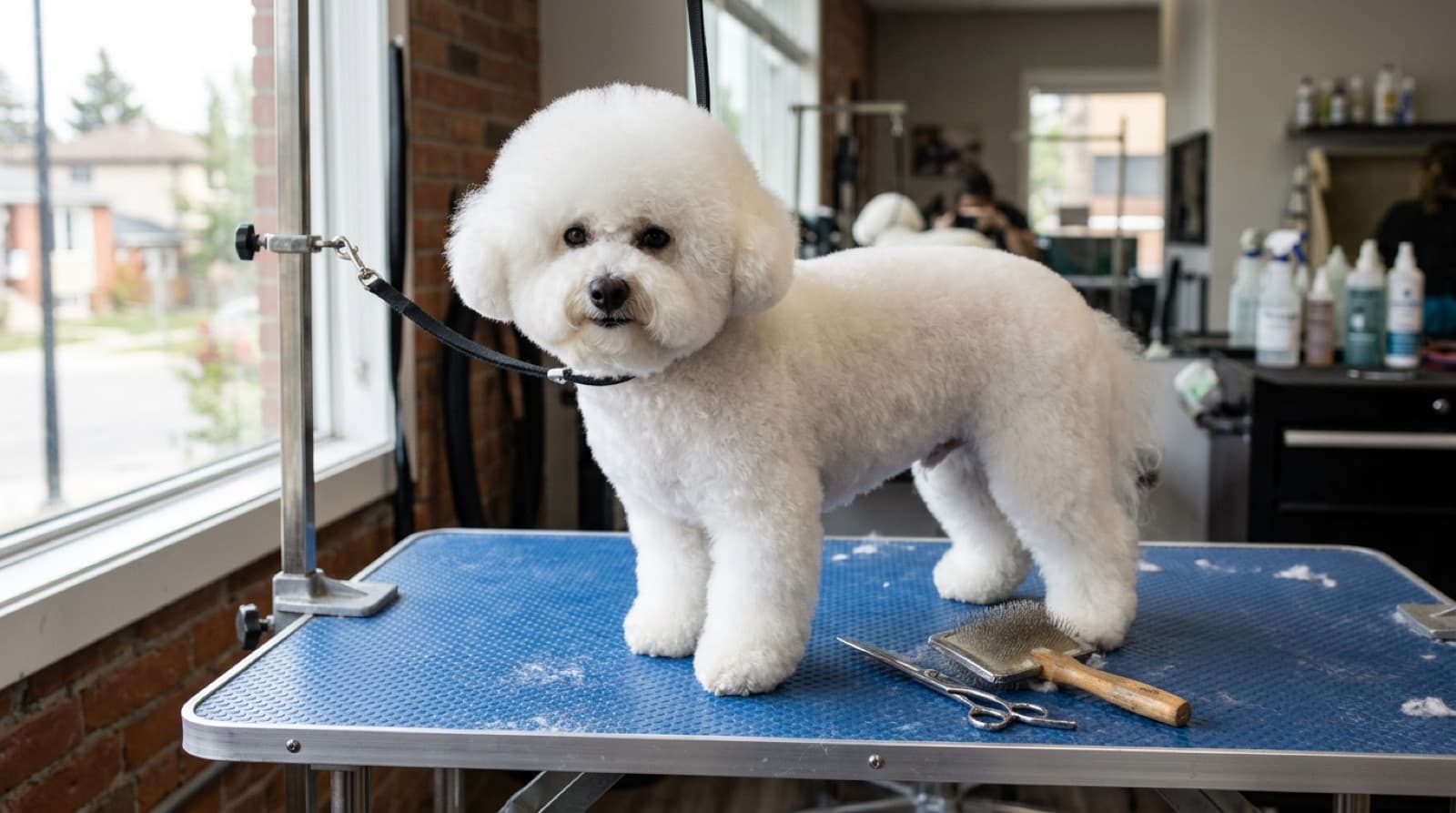
The short answer
The Bichon's curly double coat sheds little but mats faster than almost any small breed, so grooming is a serious, recurring commitment, “low shedding” is not “low grooming.” A fuller coat needs near-daily line brushing to the skin; most owners choose a shorter puppy cut over the classic powder-puff trim, with professional grooming every four to six weeks ($50 to $85-plus per visit in Toronto). Watch the mat-prone spots, never bathe a matted dog, and manage tear stains with daily eye-area cleaning. Adjust the trim to the season. Budget for it: grooming is a leading reason Bichons land in rescue. Browse adoptable Toronto dogs.
Brushing and the trim
The core decision is how you keep the coat. The classic powder-puff trim, the coat scissored into a soft rounded teddy-bear shape, is gorgeous but demands frequent brushing and skilled grooming. For most pet owners a shorter puppy cut is the practical choice: much less brushing, far less matting, cleaner, and cooler in summer. Whichever look you choose, the Bichon needs professional grooming every four to six weeks plus regular at-home brushing, and the brushing must reach the skin (line brushing in sections), because the curl hides mats forming underneath. Even a shorter coat mats behind the ears, in the armpits, on the belly, and around the collar, so those spots always need attention. Our Bichon health guide covers the skin allergies that make good coat care doubly important.
Matting and tear stains
Matting prevention is the central challenge, this coat mats faster than most, so brush frequently to the skin in the friction spots, and follow one firm rule: never bathe a matted dog, because water felts the mats into hard clumps that must be shaved out. Work small mats out gently with fingers, comb, and a detangling spray, or leave them to the groomer, never scissors near the skin. Tear staining (the reddish-brown discolouration under the eyes on the white coat) is managed with daily gentle eye-area cleaning, keeping the hair around the eyes trimmed short, and fresh water and clean bowls, and heavy or sudden staining warrants a vet visit to rule out a blocked tear duct. The Canadian Kennel Club has breed-coat background.
Costs and seasonal care in Toronto
Professional grooming runs about $50 to $85-plus per visit in Toronto, every four to six weeks, roughly $500 to $1,100-plus a year, a recurring cost easy to underestimate and worth budgeting for (our cost guide helps). Seasonally, salt and slush cling to the belly and leg hair in a Toronto winter and irritate the paws, and the white coat shows dirt, so wipe the legs and belly and rinse off road salt after winter walks. Many owners keep the coat longer for winter warmth and shorter for summer comfort. If the dog gets wet, dry the curly coat thoroughly, since a damp double coat mats fast and can irritate this allergy-prone breed's skin. See the breed page for adoptable Bichons.
Ready for the grooming commitment?
If you are ready for the brushing and regular grooming, a Bichon is a merry, devoted companion. Browse adoptable Bichons and mixes near Toronto.
See Available Bichon Frises →Frequently Asked Questions
How often should I brush a Bichon Frise?
Frequently, this is a high-maintenance coat. A Bichon in a fuller coat needs brushing most days, ideally daily, because that soft, dense, curly double coat tangles and mats extremely readily, and the curl hides mats forming close to the skin. Even a Bichon kept in a shorter trim needs brushing several times a week. Some regular brushing is genuinely non-negotiable for this breed, more so than for many small dogs, since a neglected Bichon coat mats close to the skin fast and may then need shaving. Use a good slicker brush and a metal comb, and crucially, brush right down to the skin in sections (line brushing), not just over the surface, where mats hide underneath. Make it a calm, positive routine from puppyhood; a Bichon who learns to enjoy grooming young is far easier to maintain for life.
What is the classic Bichon trim, and should I use a puppy cut?
The classic show trim is the rounded "powder-puff" style, where the coat is scissored into a soft, fluffy, rounded shape that gives the Bichon its signature teddy-bear look. It is beautiful but demands frequent brushing and skilled grooming to maintain. For most pet owners, a shorter "puppy cut" (the coat clipped shorter all over) is the practical choice: dramatically easier to maintain, much less prone to matting, easier to keep clean, and cooler in a Toronto summer, with no downside for a companion dog. Many owners choose something in between, a rounded but shorter teddy-bear trim. Whichever look you prefer, the Bichon needs professional grooming every four to six weeks plus regular at-home brushing, so choose the length that matches how much daily coat care you realistically want to do. Your groomer can help pick a practical style.
How do I prevent matting in a Bichon Frise coat?
Matting prevention is the central grooming challenge with a Bichon, because the curly double coat mats faster than almost any other small breed. The key is frequent, thorough brushing that reaches the skin (line brushing in sections), especially in the trouble spots: behind and under the ears, the armpits and groin, the belly, and around the collar or harness. Brush a dry or lightly misted coat, never a soaking-wet one, and one firm rule: never bathe a matted dog, because water tightens the mats into hard felt that then must be shaved out. If you find a small mat, work it out gently with fingers, a comb, and a detangling spray, or leave it to the groomer, never scissors near the skin. Keeping the coat in a shorter trim is the single most effective matting-prevention strategy for a busy household.
How do I deal with tear stains on a Bichon Frise?
Tear staining, the reddish-brown discolouration under the eyes, is a common cosmetic issue on the Bichon’s white coat, caused by tears (often from blocked or overflowing tear ducts) wetting the face hair, where yeast and bacteria discolour it. To manage it: gently wipe the eye area daily with a damp cloth or a vet-approved eye wipe to keep it clean and dry (moisture left in place makes staining worse), keep the hair around the eyes trimmed short so it does not wick tears onto the face, and ensure fresh water and clean food bowls. If staining is heavy or sudden, see your vet, it can signal a blocked tear duct, eye irritation, or infection that needs treatment rather than just cleaning. Avoid unproven "tear-stain remover" supplements without vet advice. Consistent daily eye-area cleaning is the most effective and safest approach for most Bichons.
How much does professional Bichon grooming cost in Toronto?
In Toronto, a professional Bichon groom typically runs about $50 to $85-plus per visit, depending on the salon, the style, and the condition of the coat (a matted coat costs more because de-matting takes time, another reason to keep up with brushing). Most Bichons need grooming every four to six weeks. A groom usually includes a bath, blow-dry and fluff, haircut and scissoring, nail trim, ear cleaning, and often anal-gland expression and a sanitary trim. That works out to roughly $500 to $1,100-plus a year, a recurring cost prospective owners should budget for, since it is easy to underestimate given the breed’s low shedding. Owners who want to save can learn to do more at home, brushing, bathing, face and sanitary trims, but the signature Bichon scissoring takes skill, so many leave the full trim to a professional. Either way, factor grooming into the true cost of owning a Bichon.
Does Toronto’s climate affect Bichon grooming and coat care?
Somewhat, and it is easy to manage. In winter, salt and slush on Toronto sidewalks cling to the belly and leg hair and irritate the paws, so wipe the legs, belly, and paws after winter walks and rinse off road salt, and a short-coated Bichon may appreciate a coat in deep cold. The white coat also shows dirt and slush, so winter walks mean more frequent tidying. Many owners keep the coat a touch longer in winter for warmth and shorter in summer for comfort. In summer, a shorter trim keeps the dog cooler, and if your Bichon gets wet, dry the curly coat thoroughly, since a damp double coat mats fast and traps moisture that can irritate the skin (and this breed is already prone to skin issues). Year-round, the theme is the same as the grooming itself: brush regularly to the skin, keep the coat and face clean and dry, and adjust the trim length to the season.
Bichon Frise Adoption in Toronto
Where to adopt, costs, and the honest Bichon reality.
Bichon Frise Health Issues
Allergies, patellas, bladder stones, and eyes.
New dog? Start with these care guides
Everything a new adopter needs to set up a safe, happy home.