
The short answer
The Cavalier King Charles Spaniel has two defining health issues: mitral valve disease (MVD), a common, progressive heart condition that is the breed's leading cause of death, and syringomyelia (SM), a painful neurological condition linked to skull shape. It is also prone to dry eye, cataracts, ear infections, and slipping kneecaps. Lifespan is about nine to fourteen years. Keep the dog lean, monitor the heart routinely, watch for phantom scratching, and strongly consider pet insurance enrolled early. This is general information, not veterinary advice; your vet knows your individual dog.
The heart: mitral valve disease
The most important thing to understand about Cavalier health is the heart. The breed is strongly predisposed to mitral valve disease (MVD), a degenerative condition of one of the heart's valves that tends to appear years earlier in Cavaliers than in other dogs and is the leading cause of death in the breed. It usually begins as a heart murmur a vet detects on a routine exam, often before the dog shows any symptoms, which is exactly why regular heart checks matter so much. Responsible breeders screen breeding dogs through cardiac programs like the OFA cardiac database. Because MVD is so central to the breed, and because good management genuinely extends and improves a Cavalier's life, we cover it in depth in a dedicated guide rather than compress it here. Please read our Cavalier heart-health and MVD guide, the single most important read for any Cavalier owner.
Syringomyelia: the neurological concern
The breed's other defining issue is syringomyelia (SM), a neurological condition in which fluid-filled cavities develop in the spinal cord. It is linked to a Chiari-like malformation, where the skull is too small for the brain and crowds it, disrupting the normal flow of spinal fluid. The classic sign is scratching at the neck or shoulder, often in the air without actually touching the skin (sometimes called phantom or air scratching), especially when the dog is excited or wearing a collar, along with sensitivity around the head and neck, yelping, and, in more serious cases, neurological problems. Severity varies enormously, many affected dogs live comfortably with management, while others need more intensive care. If you notice persistent phantom scratching or head-and-neck sensitivity, see your vet; SM is confirmed with imaging and managed medically. The AKC Canine Health Foundation funds ongoing research into both MVD and syringomyelia in the breed.
Eyes and ears
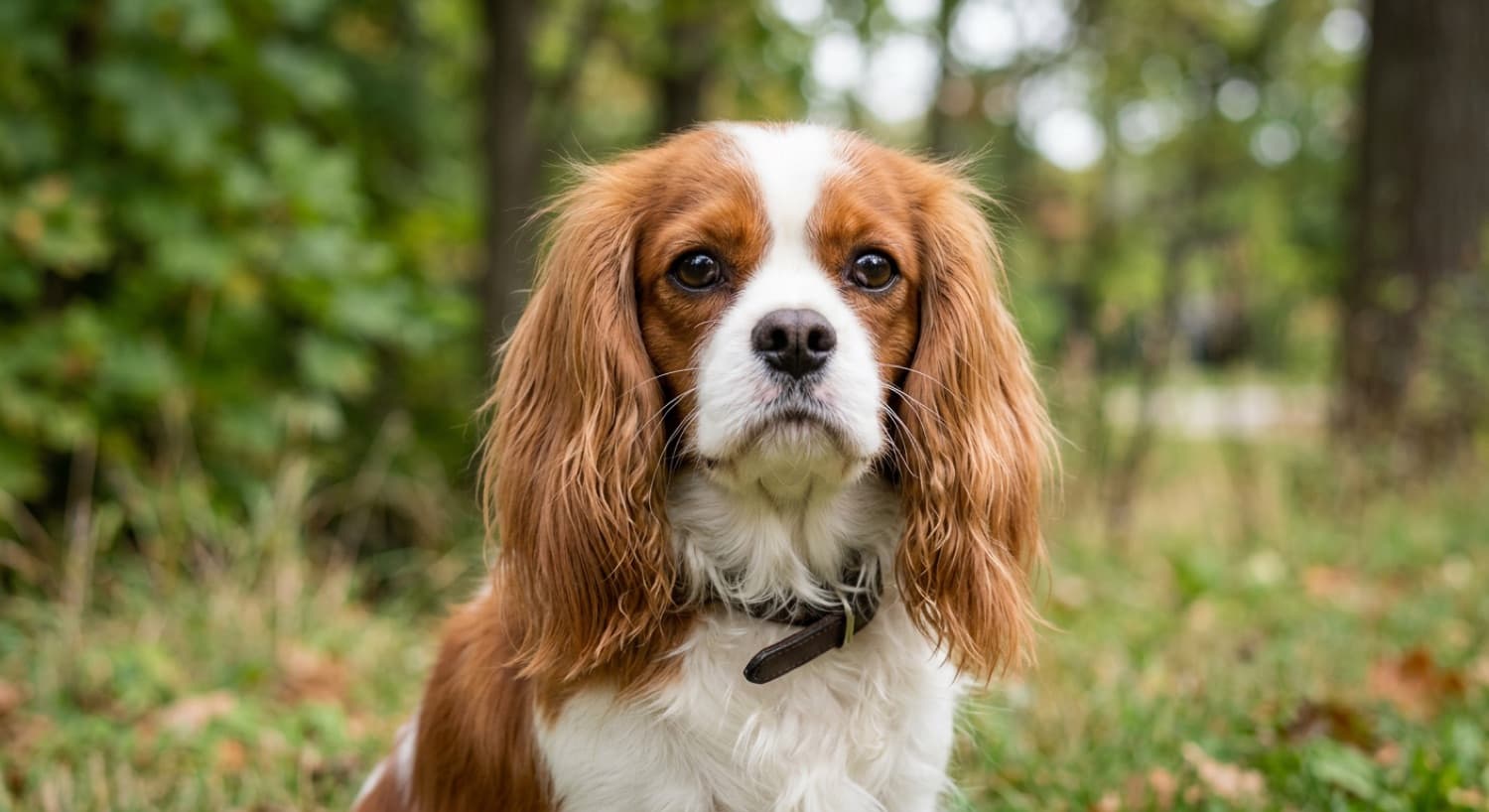
A Cavalier's expressive face comes with some upkeep. Those long, low-set ears trap warmth and moisture, so ear infections are common and routine ear cleaning is part of ownership, worth doing gently and regularly, and worth a vet visit at the first sign of head-shaking, odour, or discomfort. On the eyes, Cavaliers are prone to dry eye (keratoconjunctivitis sicca), where the eye produces too few tears and becomes irritated, as well as cataracts and other conditions, so treat any squinting, redness, cloudiness, or discharge as a reason to see the vet. None of this is dramatic, but all of it is easier and cheaper caught early, so building simple ear and eye checks into your routine keeps a Cavalier comfortable and heads off chronic problems.
Kneecaps, weight, and the rest of the profile
Like many small breeds, Cavaliers can develop patellar luxation, where a kneecap slips out of its groove and causes an intermittent skip or hop in the step; mild cases are often managed conservatively, while more severe ones may need surgery, so mention any hopping gait to your vet. The single biggest thing an owner controls, though, is weight. Extra pounds strain a heart already prone to disease and load small joints, so keeping a Cavalier lean is one of the most protective habits there is, genuinely a heart-health measure as much as a waistline one. Good dental care matters too, as it does for all small dogs. A rescue Cavalier will have had a general vet check, but knowing the profile helps you and your vet watch the right things.
The Toronto picture: routine care and insurance
For a Toronto owner, the practical takeaway is that a Cavalier rewards proactive care. Routine heart checks, keeping the dog lean, staying ahead of ears and eyes, and acting promptly on any phantom scratching or breathing change are what keep this breed well. Because the big risks, heart disease especially, are chronic and progressive, pet insurance enrolled while the dog is young is one of the smartest things you can do, since it turns an unpredictable lifelong cost into a manageable one. The Canadian Kennel Club breed profile is a useful reference on the breed overall. Our Toronto low-cost vet guide can help you keep up with the ongoing care this breed needs.
Browse adoptable Cavaliers in Toronto
A rescue Cavalier comes with a vet check already done and foster notes on any heart or health issues identified. Meet the adoptable Cavaliers and Cavalier mixes near you.
See Available Cavaliers →Frequently Asked Questions
What is the lifespan of a Cavalier King Charles Spaniel?
Cavaliers typically live around nine to fourteen years, but the range is wide and heavily shaped by heart health. Mitral valve disease is common in the breed and is its leading cause of death, so a Cavalier whose heart is monitored and treated appropriately often does far better than one whose disease goes unmanaged. Keeping the dog lean, staying on top of dental care, and having the heart checked regularly are the biggest levers an owner has over how long and how well a Cavalier lives.
What health problems are Cavaliers prone to?
The two that define the breed are mitral valve disease (MVD), a degenerative heart condition, and syringomyelia (SM), a painful neurological condition linked to skull shape. Beyond those, Cavaliers are prone to eye conditions such as dry eye and cataracts, ear infections from their long pendulous ears, patellar luxation (slipping kneecaps), hip issues, and weight gain. It is a meaningful list, which is why a Cavalier is a bigger medical commitment than its easygoing nature suggests, and why a close vet relationship and pet insurance are so valuable.
Do all Cavaliers get heart disease?
Not all, but the breed is strongly predisposed and the rates are high, especially with age. Mitral valve disease is the single most important health issue in Cavaliers, it appears years earlier than in most breeds and is the leading cause of death, so every Cavalier owner should treat heart monitoring as routine rather than optional. The encouraging part is that MVD is manageable: with regular veterinary checks and, when the time comes, cardiac medication, many Cavaliers live good years with the condition. Because it is so central, we cover it fully in a dedicated guide, please read our Cavalier heart-health and MVD guide.
What is syringomyelia in Cavaliers?
Syringomyelia (SM) is a neurological condition in which fluid-filled cavities form in the spinal cord, linked to a Chiari-like malformation where the skull is too small for the brain and crowds it. Signs range from mild to severe and can include scratching at the neck or shoulder area (often in the air, without making contact, especially when excited or on a leash), sensitivity to touch around the head and neck, yelping or discomfort, and in more serious cases neurological problems. If you notice persistent phantom scratching or head and neck sensitivity, see your vet, since SM is diagnosed by imaging and managed with veterinary care. Severity varies widely, and many affected dogs are managed comfortably.
Why do Cavaliers get ear and eye problems?
Both come partly from their anatomy. The long, low-hanging ears that give a Cavalier its lovely look also trap warmth and moisture, so ear infections are common and routine ear care matters. On the eyes, Cavaliers are prone to dry eye (keratoconjunctivitis sicca, where the eye does not make enough tears), cataracts, and other conditions, so any squinting, redness, cloudiness, or discharge deserves a vet visit. Most of this is very manageable with routine care and prompt attention, and catching eye and ear problems early keeps them small and comfortable rather than letting them become chronic.
What does it cost to care for a Cavalier in Toronto?
Routine care for a small dog is manageable, but the breed's heart and neurological risks can add significant lifelong cost. Heart monitoring, cardiac medication over years, and any imaging or treatment for syringomyelia can each add up. Pet insurance for a Cavalier often lands around $50 to $110 a month depending on age and coverage, and it is genuinely worth it for a breed this prone to a chronic, progressive heart condition. The key is to enrol while the dog is young and healthy, before heart disease or anything else becomes a pre-existing exclusion. Keep an emergency fund alongside it.
Should I get pet insurance for a Cavalier?
For most Cavalier owners, strongly yes. Mitral valve disease is common, progressive, and lifelong once it appears, which is exactly the kind of chronic condition insurance is built for, and syringomyelia can bring its own imaging and treatment costs. The catch is timing: insurers exclude pre-existing conditions, and heart disease in this breed can appear relatively young, so enrolling early, while the dog is healthy, is what makes coverage useful. Compare providers on how they handle chronic and hereditary conditions rather than on monthly price alone, and pair the policy with an emergency fund for deductibles and exclusions.
Cavalier Heart Health & MVD
The breed's defining condition, monitoring, and treatment.
Cavalier Adoption in Toronto
Where to adopt, the temperament, and the costs.
New dog? Start with these care guides
Everything a new adopter needs to set up a safe, happy home.