The short answer
Weight limits are never the obstacle for this breed. Check the declaration for an outright pet ban or a numbers cap instead. Budget $25 a year for the licence if your dog is spayed or neutered, which a rescue dog already will be. Barking is the real condo risk, and winter house training takes longer than the books say.
Read the declaration, not the weight clause
In Ontario, pet restrictions sit in a condo corporation's declaration or in its rules rather than in city bylaws, so they vary building by building. The Condominium Authority of Ontario lists the usual forms these take: a total ban on pets, a limit on species, a cap on how many animals you may keep, or a weight limit, with dogs under 40 pounds given as the standard example.
For a Chihuahua the weight clause is irrelevant. The clauses that matter are the outright ban and the numbers cap, and neither is visible from a listing photo. Ask the corporation for the declaration and the current rules in writing before you adopt, not the agent's summary of them. Note also that service animals are not pets under Ontario's Human Rights Code and are handled separately, which is a different conversation from this one.
The licence, and why adopting puts you in the cheap tier
Every dog in Toronto needs a licence, renewed annually. A spayed or neutered dog costs $25 a year. An unsterilized dog costs $60. Owners aged 65 and over pay half, and households under $50,000 in income can have the fee subsidized or waived entirely, which is worth knowing because Chihuahuas are a common choice for older owners on fixed incomes.
Skipping it is a false economy: the ticket for failing to license is $240, against a maximum fine of $5,000. Adoption quietly settles this for you, since rescue dogs are spayed or neutered before they go home, so you start in the $25 tier without doing anything. It is a small thing, but it is one of several places where the adoption route is simply cheaper than the alternative, as our Toronto Chihuahua adoption guide sets out in more detail.
Barking is the real condo risk
Nobody complains to a board about a four-pound dog taking up space. They complain about noise. Chihuahuas are watchful by nature, a condo corridor delivers a steady stream of things to be watchful about, and a tower carries sound better than a house does. Under the Condo Act nobody may carry on a nuisance, and persistent barking is the single most likely reason a dog owner ends up in front of the board.
Most of the fix is environmental. Reduce what the dog can hear and see at the door, do not let it hold station there, and give it something to do during the hours you are out. Treat the first few weeks as training rather than a settling-in phase the dog will grow out of, because it will not. If the barking has fear underneath it rather than habit, that is a different problem and a different approach.
The elevator, and house training against a Toronto winter
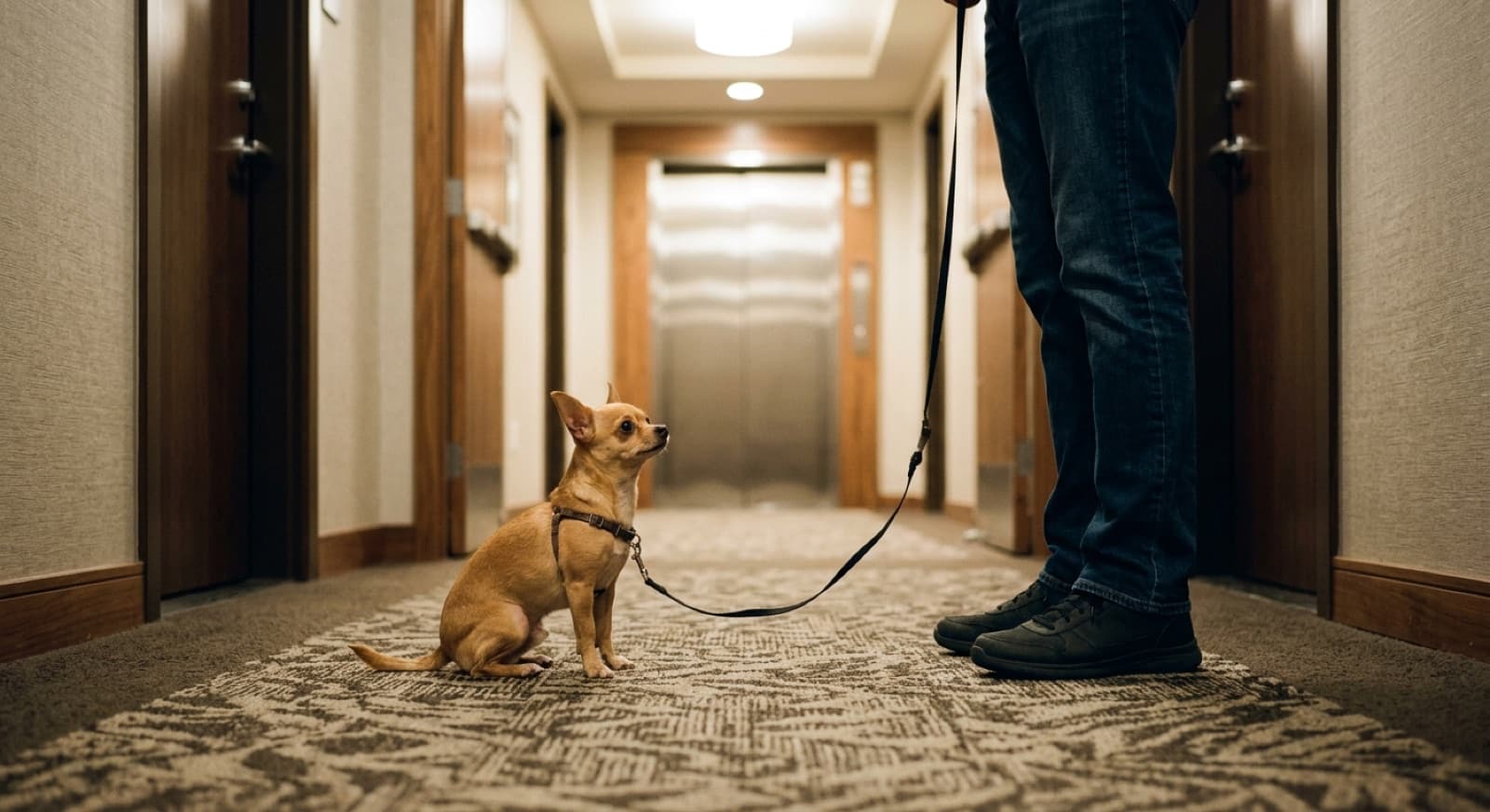
Standard house training advice assumes a back door. In a tower, every trip is a corridor, a lift and a lobby, which is a long way for a bladder that holds very little and gives almost no warning. Work to a clock rather than waiting for a signal, and reward outdoors immediately rather than praising back upstairs.
Then allow for January. A short-coated dog facing salt, slush and wind will hold on rather than go, and then have an accident inside, which reads as a training failure but is really a weather one. Plenty of Toronto owners run an indoor pad option through the worst weeks and drop it in spring. Sidewalk salt is its own problem for bare paws and is worth rinsing off rather than ignoring.
Off leash, and the $615 number
Dogs may be off leash only in designated off-leash areas. Outside one, the City can issue a fine of up to $615, made up of a $500 charge, a $110 victim surcharge and a $5 administration fee.
There is a second judgement on top of the legal one. A dog this small can be badly hurt in a busy off-leash area by a large dog with no bad intent whatsoever, and one rough encounter can set a nervous Chihuahua back for months. Designated areas at quiet hours are the version of off-leash that suits the breed. Build a proper recall on a long line first so the option is actually available to you.
Browse adoptable Chihuahuas in Toronto
Foster homes can tell you how a dog handles lifts, lobbies and being left, which is exactly what a tower resident needs to know.
See Available Chihuahuas →Questions Toronto adopters ask
Can I keep a Chihuahua in a Toronto condo?▼
Almost certainly, yes. Pet restrictions in an Ontario condo live in the declaration or the rules, and the common ones are weight or size limits, which the Condominium Authority of Ontario gives as something like dogs under 40 pounds. A Chihuahua clears every weight limit ever written by a wide margin. The restrictions that would actually stop you are an outright no-pets declaration or a cap on the number of animals. Read the declaration and the rules before you commit, not the listing description, and get them in writing from the corporation rather than from a real estate agent.
What does a dog licence cost in Toronto?▼
A licence for a spayed or neutered dog is $25 a year. For an unsterilized dog it is $60. Owners aged 65 and over get 50 per cent off, and households with income under $50,000 can have the fee subsidized or waived. Licensing is mandatory for every dog in the city and it renews annually. Failing to license can bring a $240 ticket, with a maximum fine of $5,000. Adopting works in your favour here, since rescue dogs come already spayed or neutered, which puts you in the $25 tier automatically.
Are there weight limits for dogs in Toronto condos?▼
Some buildings have them and some do not, because it is set per corporation rather than by the city. Where a limit exists it is usually somewhere between 20 and 40 pounds, which no Chihuahua will ever approach. This is the practical reason small dogs dominate downtown buildings. The thing worth checking is not the weight clause but whether the declaration bans pets outright, limits how many you can have, or restricts which lift you may use with an animal.
What is the fine for having a dog off leash in Toronto?▼
Up to $615. The City sets the charge at $500, plus a $110 victim surcharge and a $5 administration fee. Dogs may be off leash only in designated off-leash areas, of which Toronto has a good number spread across the city. For a Chihuahua there is a separate judgement to make on top of the legal one, since a very small dog in a busy off-leash area shared with large dogs can be hurt through nobody's fault. Quiet hours in a designated area are the sensible version of off-leash for this breed.
How do I house train a Chihuahua in a high-rise?▼
Work to a fixed schedule rather than waiting for the dog to ask, because a small bladder gives you very little warning and a tower adds a corridor, a lift and a lobby to every trip. Reward outside immediately rather than once you are back in the unit. Expect January and February to slow things down, since a short-coated dog will hold on rather than face salt and slush and then have an accident indoors. Many Toronto owners keep an indoor pad option for the worst weeks, which is a reasonable accommodation for a four-pound dog in this climate rather than a failure of training.
Will a Chihuahua bark too much for condo living?▼
It can, and this is the genuine risk rather than the size. Chihuahuas are watchful, corridors carry sound, and a dog that announces every neighbour going past will generate complaints. Under the Condo Act nobody may carry on a nuisance, so persistent barking is the thing most likely to put you in front of the board. Manage it by reducing what the dog can hear and see from the door, giving it something to do, and treating early practice as training rather than a phase. If the barking is fear rather than habit, that is a different problem with a different fix.
Does a Chihuahua get enough exercise living downtown?▼
Easily. The breed needs far less distance than its energy suggests, and a couple of short daily walks plus indoor play covers it. Downtown is arguably better suited to the breed than a large suburban garden, since Chihuahuas want company rather than acreage and tend to do nothing at all with a big yard except watch the door. The thing they genuinely need is mental work and contact, not kilometres.
Is a rescue Chihuahua a good fit for a first-time condo owner?▼
Often better than a puppy. An adult from a foster home comes with a known temperament, is usually already house trained, and somebody can tell you whether it settles alone and how it handles lifts and lobbies, which is exactly the information a tower resident needs. A puppy in a high-rise means months of hourly trips down and up. Ask the rescue directly about noise, alone time and stairs, since foster homes track this.
Chihuahua Adoption in Toronto →
Which rescues have them, real costs, and what to ask a foster.
Adoptable Chihuahuas in Toronto →
Current listings from Toronto-area rescues, refreshed regularly.
Small Dogs in Toronto →
Every small adoptable dog in the city, not just Chihuahuas.
Toronto Adoption Guides →
Costs, bylaws, breeds and settling a rescue dog in the city.
New dog? Start with these care guides
Everything a new adopter needs to set up a safe, happy home.