The short answer
The Chow's distinctive build drives its health profile: entropion (an inward-rolling eyelid, one of the breed's most common issues, often needing surgery), other eye conditions (glaucoma, cataracts), hip and elbow dysplasia, patellar luxation, thyroid disease, skin problems, and real heat sensitivity from the thick coat. Lifespan is 11 to 13 years. The highest-impact things you control: watch the eyes closely, keep the dog lean, manage summer heat carefully, and keep up with vet checkups (the heavy coat and deep-set eyes hide problems). Insure while young and healthy. Adopting an adult lets you see how the dog moves and its eye health. Browse adoptable Toronto dogs.
Entropion and the eyes
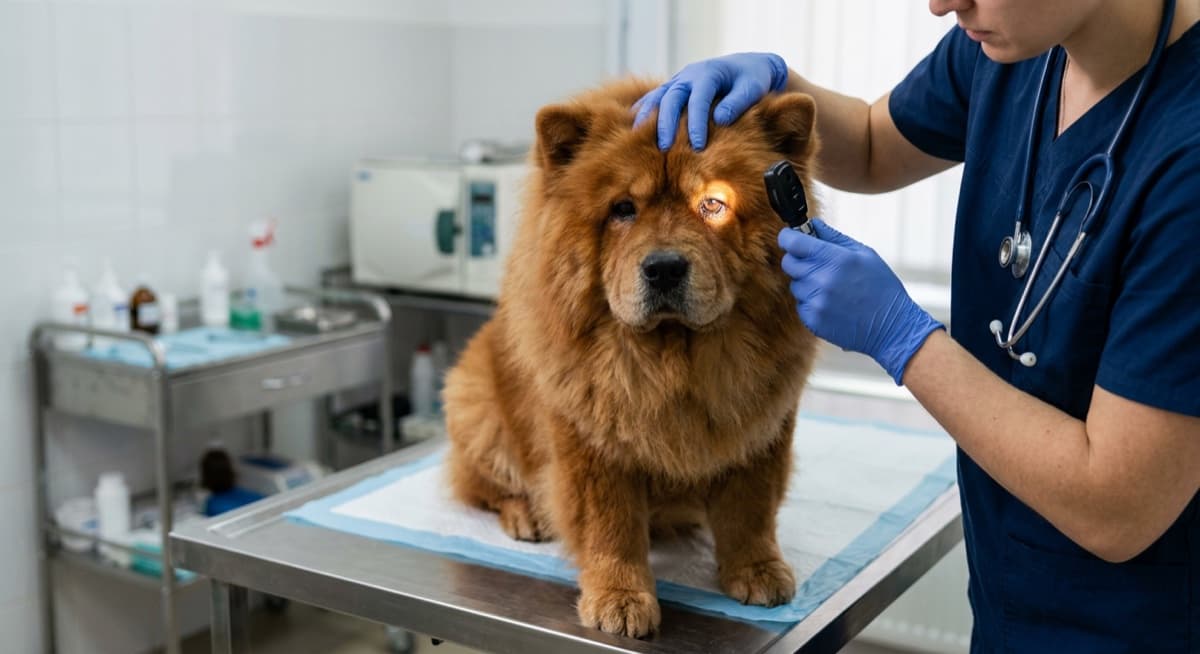
The Chow's most distinctive health concern is entropion, an inward-rolling of the eyelid caused by the breed's deep-set eyes and heavy facial folds, which makes the eyelashes and hair rub painfully against the cornea. It causes tearing, squinting, discharge, and, untreated, corneal damage and vision problems, but it is very treatable with a generally successful surgery to reposition the eyelid. Because it is so common in the breed, every Chow owner should know the signs, squinting, excessive tearing, redness, pawing at the eyes, discharge, and see the vet promptly, since early treatment protects the eye. Chows are also prone to glaucoma and cataracts, so regular eye checks matter. The VCA guide to entropion is worth reading, and our temperament-and-training guide covers daily handling.
Joints, skin, and heat
Beyond the eyes, the Chow carries the rest of its profile. Hip and elbow dysplasia are common, and the breed's characteristic very straight rear legs and stilted gait place unusual stress on the joints, so keep the dog lean (the single biggest thing you can do) and monitor movement. Patellar luxation occurs too. The deep coat and skin folds can trap moisture and lead to skin problems and allergies, another reason regular grooming and skin inspection matter. Hypothyroidism is seen in the breed. And heat sensitivity is a genuine concern: that thick double coat makes overheating easy, so Toronto summers need cool space, shade, water, and cool-hour-only exercise, never shave the coat, which insulates against heat too. Adopting through a rescue that has vet-checked the dog gives you a clearer starting point on eyes, joints, and skin.
Keeping a Chow healthy, and insurance
The care that matters most is consistent: watch the eyes closely for entropion and other issues, keep the dog lean to protect the joints, groom regularly to keep the skin healthy and catch problems, manage summer heat carefully, and keep up with routine vet checkups, especially important because the heavy coat and deep-set eyes can hide developing problems. On the money side, pet insurance is worth considering, because entropion surgery, hip or elbow surgery, glaucoma or cataract treatment, or thyroid and skin management can run into the thousands, and the key is to insure while the dog is young and healthy, before anything is diagnosed and excluded (important given the eye and joint conditions common in the breed). Our cost guide has the full Toronto picture. With attentive care, especially of the eyes and in summer, most Chows are robust, dignified companions well into their teens.
Browse adoptable Chow Chows in Toronto
Chows and Chow mixes from Toronto-area shelters and rescues, with foster notes on temperament and health.
See Available Chow Chows →Frequently Asked Questions
What health problems are Chow Chows prone to?
Chow Chows carry several notable predispositions every owner should know. The main ones: hip and elbow dysplasia (common in the breed); entropion, an inward-rolling of the eyelid that is one of the most common and important Chow eye issues; other eye conditions including glaucoma and cataracts; patellar luxation; hypothyroidism; skin problems and allergies (the deep coat and skin folds can trap moisture); and heat sensitivity from the thick double coat. Chows are also prone to certain cancers, and their unique build (very straight rear legs) affects their gait and joints. Because their deep-set eyes and heavy coat make some problems easy to miss, regular vet care matters. None of this means a Chow will be unhealthy, many are robust and live 11 to 13 years, but choosing a dog from health-conscious lines or a rescue that has done a vet check, and staying alert to the eyes and joints in particular, all help.
What is entropion in a Chow Chow?
Entropion is one of the most important and common health issues in Chow Chows, and it directly relates to the breed’s heavy, wrinkled facial structure. It is a condition where the eyelid rolls inward, causing the eyelashes and hair to rub against the surface of the eye (the cornea), which is painful and can cause tearing, squinting, eye discharge, corneal damage, ulcers, and, if untreated, vision problems. Chows are particularly prone to it because of their deep-set eyes and the heavy folds of skin around the face. The good news is that entropion is treatable: it is usually corrected with surgery to reposition the eyelid, which is generally very successful and relieves the discomfort. For an owner, the practical steps are to watch for signs, squinting, excessive tearing, redness, pawing at the eyes, or discharge, and see the vet promptly, since early treatment protects the eye. Because entropion is so common in the breed, it is one of the first things a Chow owner should be aware of, and a reason to have the eyes checked regularly. Adopting from a rescue that has vet-checked the dog can flag it.
Do Chow Chows have hip and joint problems?
They can, and their unusual structure plays a role. Chow Chows are prone to hip and elbow dysplasia (malformed joints that can lead to pain and arthritis), like many medium-to-large breeds, and they also have a distinctive very straight-legged rear (the breed’s characteristic stilted gait) that places unusual stress on the joints and can contribute to problems. Patellar luxation (slipping kneecaps) also occurs. The most important things an owner can do are to keep the dog lean (excess weight dramatically worsens joint stress, the single biggest modifiable factor), provide sensible moderate exercise while avoiding overexercising a growing puppy, feed an appropriate diet, and provide traction on slippery floors and good bedding for an adult. Reputable breeders screen breeding dogs for hip and elbow health. Your vet will monitor the joints, and joint-support supplements or, in significant cases, medication or surgery can help. Adopting an adult from a rescue lets you see how the dog already moves, which is genuinely useful for a breed with joint predispositions.
Are Chow Chows sensitive to heat?
Yes, quite sensitive, and it is a real management concern in a Toronto summer. Chows have a thick, dense double coat designed to insulate them in cold climates, and that same coat makes it hard for them to shed heat, so they can overheat and suffer heatstroke more easily than many breeds in hot, humid weather. This means Toronto summers call for real care: keep the dog in air conditioning or a cool space on hot days, provide constant shade and fresh water, and exercise only in the cool of early morning or evening, never strenuous activity in the heat. Learn the signs of heat distress (excessive panting, drooling, weakness, distress) and treat overheating as an emergency. Do not shave the double coat to cool the dog, it actually insulates against heat as well as cold and protects the skin; instead manage heat through environment and timing. The flip side is that Chows handle Toronto winters well, so the seasonal care is mainly about protecting them from summer heat.
How long do Chow Chows live and how do I keep mine healthy?
Chow Chows typically live 11 to 13 years, and attentive care helps them thrive. The highest-impact things: keep the dog lean (protects the joints and overall health); watch the eyes closely for entropion and other issues, seeing the vet promptly for any eye problem; keep up regular grooming to keep the skin under that heavy coat healthy and let you spot problems; manage summer heat carefully given the coat; keep up with joint monitoring given the dysplasia risk; and keep up with routine vet checkups so eye, joint, thyroid, and skin issues are caught early. Because the breed’s deep-set eyes and heavy coat can hide developing problems, regular vet visits and grooming inspections are especially valuable. Consider pet insurance while the dog is young. Adopting an adult from a rescue that has done a vet check gives you a clearer picture of the individual dog’s health, and being aware of the eye, joint, and heat predispositions sets you up to give a Chow a healthy life.
Should I get pet insurance for a Chow Chow?
Pet insurance is worth serious consideration for a Chow Chow. They are prone to conditions that can be costly, entropion surgery (often needed, sometimes on both eyes), hip or elbow surgery, glaucoma or cataract treatment, thyroid management, and skin-condition care among them, and a single major issue can run into the thousands. As with any breed, the key is to insure while the dog is young and healthy, before any condition is diagnosed and excluded as pre-existing, which is especially relevant for the eye and joint conditions that are common in the breed and easily excluded once diagnosed. Compare Canadian providers on their coverage of hereditary and eye conditions specifically, read the exclusions carefully, and weigh insurance against a dedicated savings fund. Given the Chow’s predisposition to entropion and joint issues, both of which often need surgery, having a financial plan is a sensible part of Chow ownership.
Chow Chow Adoption in Toronto
Where to adopt, costs, and the honest Chow reality.
Chow Chow Temperament & Training
Socialization, guarding instincts, and handling.
New dog? Start with these care guides
Everything a new adopter needs to set up a safe, happy home.