The short answer
A Dalmatian needs 1.5 to 2-plus hours of vigorous daily exercise plus real mental work, it is a coach dog bred to run for miles, and under-exercise is the top reason the breed lands in rescue. Adult Dalmatians make excellent running partners (don't force hard running on a growing puppy). A well-exercised Dalmatian is calm at home; a bored one is destructive. They are smart but can be stubborn, so use positive, consistent training (hand signals for deaf dogs). Toronto's off-leash parks suit the breed well. Browse adoptable Toronto dogs.
The coach dog needs to run
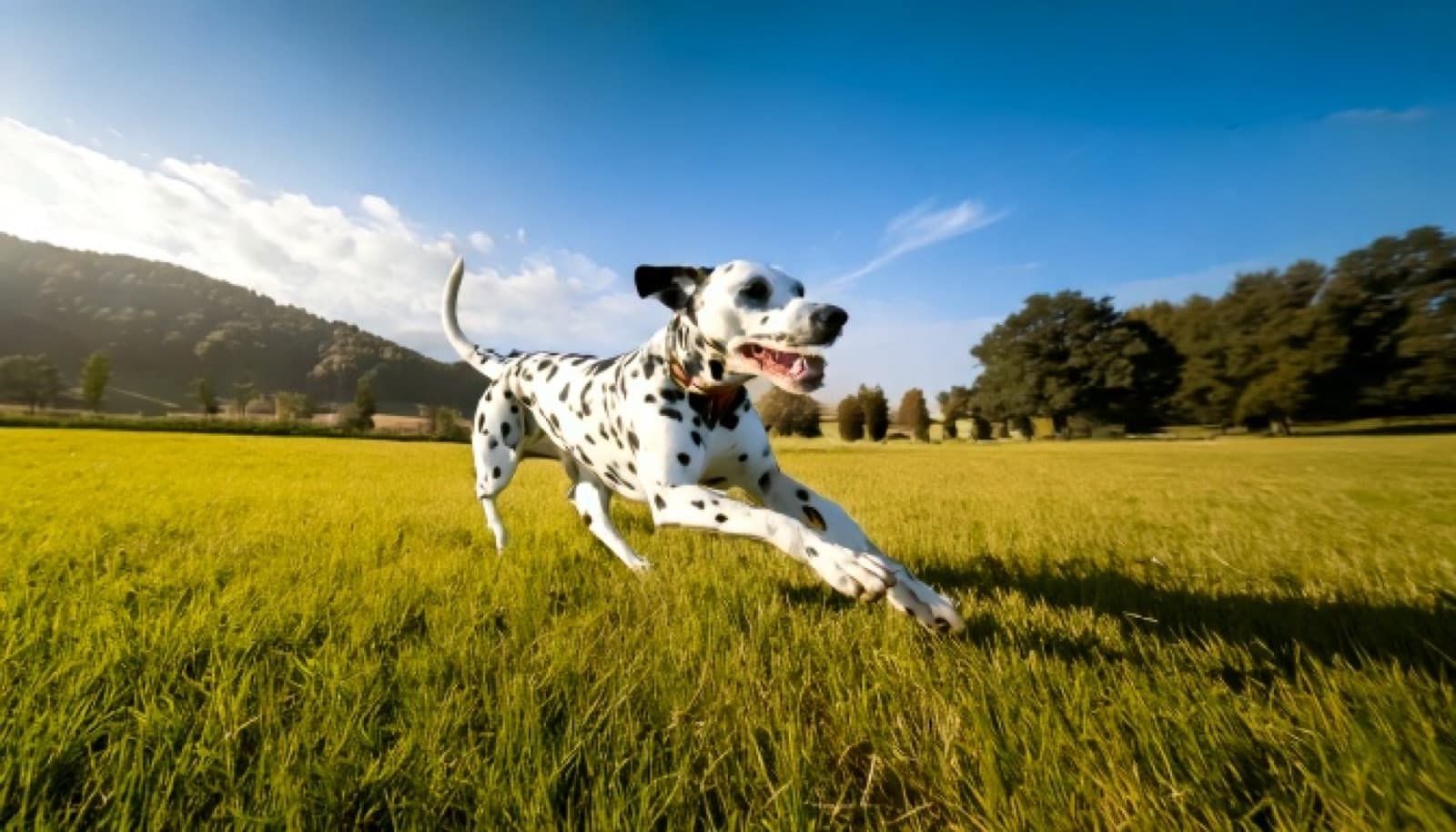
If there is one thing that determines whether Dalmatian ownership works, it is exercise. Bred over centuries to run alongside carriages for miles, the Dalmatian carries that endurance and drive into the pet home, and meeting the energy need is the foundation of a well-behaved dog. Plan on one and a half to two-plus hours of vigorous daily activity, running, off-leash play, fetch, and know that a bored, under-exercised Dalmatian channels its energy into destructiveness, not because it is badly behaved but because the need is unmet. A well-exercised Dalmatian is usually a calm, contented housemate. Adult Dalmatians make superb running partners; with a growing puppy, build up gradually to protect developing joints.
Mind as well as body
Physical exercise alone often is not enough, because Dalmatians are intelligent and need mental work too. Pair the running with training, puzzle feeders, scent games, and ideally a dog sport, agility, obedience, or rally, which gives the mind a job and produces a calmer dog. On training itself, Dalmatians are smart but can be stubborn, so use positive, reward-based methods and thorough socialisation, and prioritise impulse control and recall. Deaf Dalmatians train beautifully with hand signals. Mental work is also invaluable on the coldest Toronto days, when a training session or puzzle can tire the brain even when a long outdoor run is off the table. A force-free trainer or dog-sport club helps a lot.
Where to run a Dalmatian in Toronto
Toronto is genuinely well-suited to an active Dalmatian. Use the city’s off-leash areas, High Park, Cherry Beach, Trinity Bellwoods, and neighbourhood dog parks, to let the dog run safely, and add long walks and runs along the waterfront and ravine trails. In winter, the short, single-coated Dalmatian needs a warm coat and some exercise shifts to shorter outings plus indoor mental work, but three-season exercise is easy here. Our off-leash parks guide maps the best spots, and the Canadian Kennel Club has more on the breed’s working heritage.
Ready for a tireless athlete?
If you're active and can meet the exercise, a Dalmatian is a dazzling companion. Browse adoptable Dalmatians and mixes from Toronto shelters and rescues.
See Available Dalmatians →Frequently Asked Questions
How much exercise does a Dalmatian need?
A great deal. Dalmatians are among the higher-energy breeds and need one and a half to two-plus hours of vigorous daily exercise, running, off-leash play, fetch, plus real mental work, not just a walk. This is a direct legacy of the breed’s history as a coach or carriage dog bred to run for miles alongside horses, so Dalmatians have exceptional stamina. An under-exercised Dalmatian becomes restless and destructive, and much of what lands the breed in rescue traces back to unmet energy needs. Adult Dalmatians make excellent running partners once fully grown (do not force hard, sustained running on a growing puppy, whose joints are still developing, build up on your vet’s guidance).
Why do Dalmatians need so much exercise?
Because of what they were bred to do. The Dalmatian is a coach dog, historically developed to run alongside horse-drawn carriages over long distances, and that working history hard-wired the breed for endurance and a genuine drive to move, wiring that does not switch off in a pet home. This is the source of most Dalmatian behaviour problems: a Dalmatian that does not get enough vigorous exercise has nowhere to put its energy, and it comes out as destructiveness, hyperactivity, and difficulty settling. It is not misbehaviour, it is an unmet need. The corollary is that a well-exercised Dalmatian is usually a calm, contented, well-mannered dog at home, the exercise is what makes the rest of ownership work.
Do Dalmatians need mental stimulation as well?
Yes, and owners who provide only physical exercise often still end up with a restless dog, because Dalmatians are intelligent and need to work their minds as well as their bodies. Good mental work includes training sessions (they are smart, though they can be stubborn), puzzle feeders, scent games, and, ideally, a dog sport, Dalmatians can excel at agility, obedience, and rally, and a dog with a job is happier and more settled. Mental stimulation is also invaluable on the coldest or wettest Toronto days, when a training session or puzzle can tire the brain even when a long run is off the table. The winning formula is substantial daily physical exercise plus daily mental engagement plus consistent, positive training.
Are Dalmatians hard to train?
They are intelligent and capable of learning a lot, but they can be independent and stubborn, so they are moderately challenging, more so than an eager-to-please breed. The keys are positive, reward-based methods (they are sensitive to harsh handling), consistency, patience, early and thorough socialisation (Dalmatians can become shy or reactive without it), and enough exercise that the dog can focus. A note for deaf Dalmatians (the breed has a relatively high deafness rate): they train beautifully with hand signals and visual cues, so deafness changes the method, not the outcome. A force-free Toronto trainer or a dog-sport club is a great asset, both for channelling energy and building skills.
Where can I exercise a Dalmatian in Toronto?
Toronto has excellent options for a high-energy dog. The city’s off-leash areas are ideal for letting a Dalmatian run: High Park, Cherry Beach, Trinity Bellwoods, and many neighbourhood dog parks give the breed room to burn energy safely. Add long runs and walks along the waterfront and ravine trails, plus the mental work of training and dog sports, and a committed Toronto owner can fully meet the breed’s needs. In winter, the Dalmatian’s short, single coat offers little insulation, so a coat for walks helps and some exercise shifts to shorter outings supplemented by indoor mental work, but three-season exercise is easy here. Our off-leash parks guide maps the best spots.
Is a Dalmatian a good fit for an active Toronto owner?
For a genuinely active owner, yes, and the city offers a lot for the breed. The core question is simply whether you can commit to one and a half to two-plus hours of vigorous daily exercise plus mental engagement, if yes, and especially if you are a runner or hiker, a Dalmatian can thrive here and be a dazzling, devoted companion; if your household is sedentary, the breed is the wrong choice. Toronto’s off-leash parks, waterfront, and ravines provide the outlets, and success comes down to whether you show up with the time and energy the breed requires. The heavy shedding is worth noting for any home. Met well, a Dalmatian is a joyful, athletic partner.
Dalmatian Adoption in Toronto
Where to adopt, costs, and the coach-dog reality.
Dalmatian Health Issues
Deafness, urate stones, hips, and skin.
New dog? Start with these care guides
Everything a new adopter needs to set up a safe, happy home.