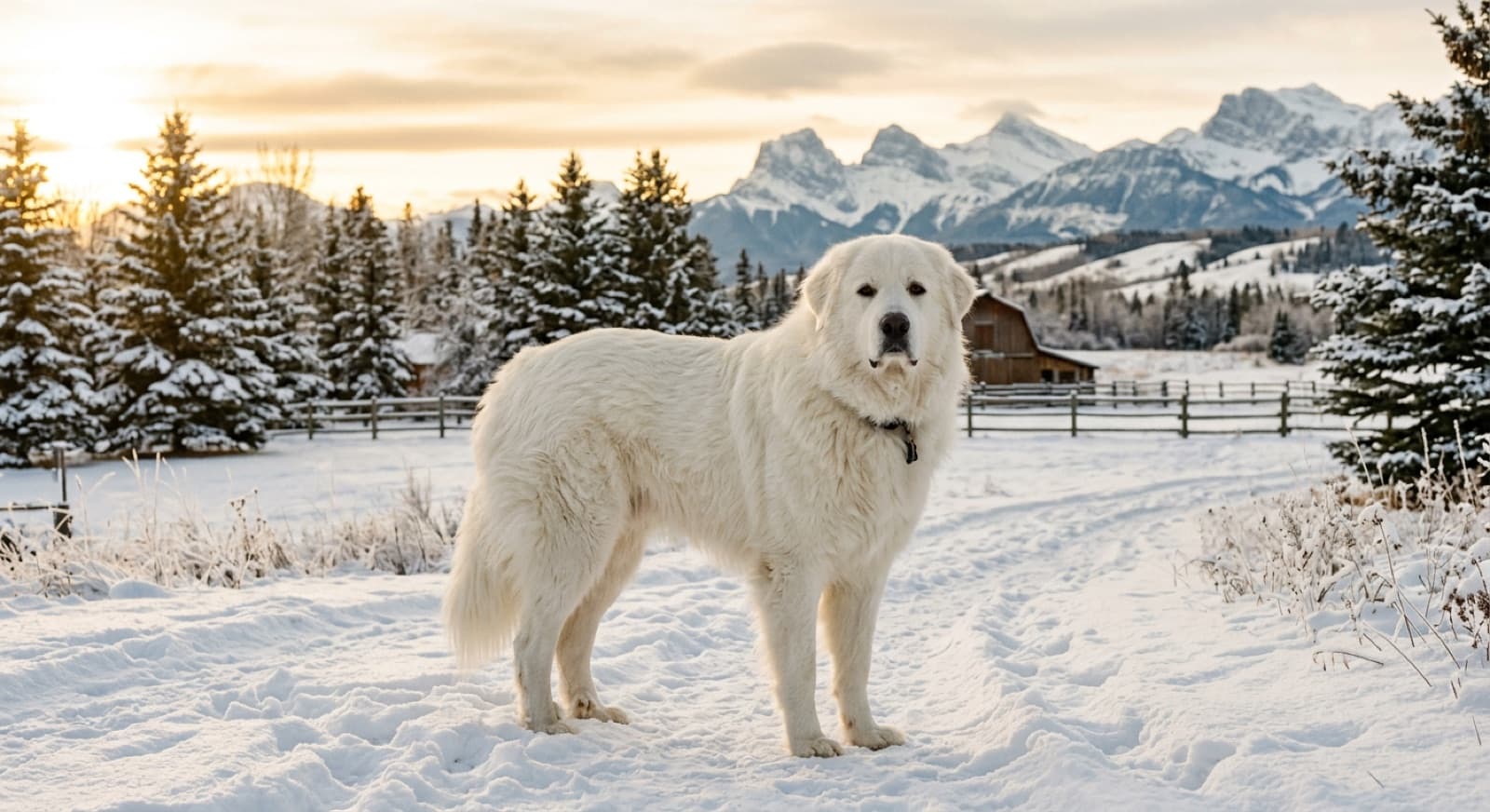
The short answer
Great Pyrenees come through Toronto-area rescue regularly (often via large-breed or breed-specific rescues), with fees $150 to $700-plus. They are magnificent, gentle family dogs for the right home, calm and devoted, great with kids, but they are a giant, independent livestock-guardian breed with heavy shedding, a loud nocturnal bark, a strong roaming instinct (never off-leash unfenced), and a stubborn streak. They suit experienced owners with space and ideally a fenced yard, not casual first-timers or most condos. Adopt through a knowledgeable rescue that understands the guardian temperament. Browse adoptable Toronto dogs.
A gentle giant with a job in its blood
The Great Pyrenees was bred for centuries to guard livestock in the mountains, working independently, making its own decisions, and protecting the flock day and night. That heritage defines the dog: indoors they are famously calm, gentle, patient, and affectionate, wonderful with children and dignified in their mellowness, but underneath is an independent, watchful guardian that barks to warn, patrols its territory, and thinks for itself rather than deferring to commands. This is what makes a Pyr magnificent and challenging in equal measure. They are best suited to experienced owners who understand and want the guardian temperament, not those expecting an obedient, biddable pet. The Canadian Kennel Club describes the breed's calm, patient, and protective nature well.
The realities: size, shedding, barking
Three realities land Pyrs in rescue when owners are unprepared. First, size: this is a 85-to-120-plus-pound dog with the food, vet, and space needs to match. Second, the coat: a thick double coat that sheds heavily year-round and blows seasonally, producing enormous amounts of white hair, a genuine lifestyle factor. Third, and most underestimated, the barking: Pyrs are bred to bark as a guardian behaviour, loudly and often, especially at night, which is very hard to reconcile with condo or close-neighbour living. Add a strong roaming instinct (they must never be off-leash in unfenced areas) and an independent, stubborn streak, and you have a demanding breed. Our guardian-instincts guide covers the barking, roaming, and training in depth, and a good rescue will be honest about a dog's temperament.
Costs and getting started
Great Pyrenees are legal everywhere in Ontario with no breed restrictions, but they need space, secure fencing, and a prepared owner far more than they need paperwork. Adoption fees run $150 to $700-plus (spay or neuter and shots included), but the real cost is the giant-breed lifetime expense: food, pricier medications and vet procedures, grooming the double coat, and the risk of costly conditions like bloat and joint problems (our health guide and cost guide help). Adopt through a knowledgeable rescue that will match you with a Pyr suited to home life, and go in prepared. See the breed page for adoptable Pyrs near Toronto.
Browse adoptable Great Pyrenees in Toronto
Great Pyrenees and Pyr mixes from Toronto-area shelters and rescues, with foster notes on temperament, guardian instincts, and history.
See Available Great Pyrenees →Frequently Asked Questions
Where can I adopt a Great Pyrenees in Toronto?
Great Pyrenees and Pyr mixes turn up in Toronto-area rescue fairly regularly, often surrendered when owners underestimate the size, shedding, barking, or independent guardian temperament. Check the City of Toronto Animal Services, the Toronto Humane Society, foster-based and large-breed rescues, and breed-specific livestock-guardian or Great Pyrenees rescues (which are often the best source, since they understand the breed and place carefully). Many Pyrs come from rural or farm situations. LocalPetFinder aggregates adoptable Toronto-area dogs in one place. Because this is a demanding breed, adopting through a rescue that evaluates temperament and is honest about a dog’s guardian instincts, barking, and history is a real advantage, they will help match you with a Pyr suited to a home rather than a farm.
Are Great Pyrenees good family dogs?
Yes, for the right family, the Great Pyrenees is a wonderful, devoted family dog, famously gentle, patient, and affectionate, and deeply protective of "their" people. They are typically excellent and calm with children and often good with other pets they are raised with, and their mellow, dignified nature indoors is a big part of their appeal. But "the right family" matters: this is a giant, independent-minded livestock guardian breed with serious size, heavy shedding, a strong instinct to bark (especially at night) and roam, and a stubborn streak that makes training a patient, long-term project. They are best suited to experienced owners with space, tolerance for hair and barking, and an understanding of the guardian temperament. For a prepared home, a Pyr is a magnificent, loving companion, but it is not a casual first dog.
Can a Great Pyrenees live in a Toronto apartment?
It is genuinely challenging, and usually not ideal. While Great Pyrenees are calm and mellow indoors and have only moderate exercise needs (surprising for their size), several breed traits make apartment life hard: their sheer size, their heavy year-round shedding, and above all their strong instinct to bark, loudly and often, especially at night, which is very difficult to reconcile with shared-wall condo living. They also do best with secure outdoor space, since they have a strong roaming instinct and must never be off-leash in an unfenced area. A dedicated owner in a large apartment might make it work with a lot of management, but realistically a Pyr thrives most in a house with a securely fenced yard. If you have a condo, this is a breed to think hard about, our guardian-instincts guide covers the barking reality in depth.
Why do Great Pyrenees end up in rescue?
Almost always because owners underestimated the breed. The big-fluffy-puppy appeal draws people who are not prepared for a 100-plus-pound adult with heavy shedding, a loud nocturnal bark, an independent stubborn temperament that resists obedience training, and a strong roaming instinct. When the reality of the size, the hair, the barking, and the guardian independence sets in, some owners surrender. Others come from farm or working situations that ended, or from well-meaning homes that could not provide the space or secure fencing. Backyard breeding of a popular "gentle giant" adds poorly bred dogs to the mix. A rescue Pyr is usually a wonderful dog that simply needs an owner who understands and wants the guardian temperament, and adopting one from a knowledgeable rescue is a great way to give a magnificent dog the right home.
How much does it cost to adopt and keep a Great Pyrenees in Toronto?
Adoption fees run the usual Toronto ranges: roughly $150 to $400 at municipal animal services and $300 to $700 or more at rescues (large-breed and breed-specific rescues sometimes a bit higher), with spay or neuter, vaccines, and a vet check included, well below a breeder’s price. But the real cost of a Pyr is the ongoing giant-breed expense: they eat a lot, giant-breed medications and vet procedures cost more, grooming that thick double coat takes time (and professional grooming, if used, is pricier for the size), and giant breeds are prone to costly conditions like bloat and joint problems. Budget generously for food, vet care, and a large-dog cushion, and consider pet insurance taken out while the dog is young. Our Toronto cost guide has the full picture; a Pyr is a significant financial commitment.
Do Great Pyrenees shed a lot?
Yes, a great deal, and it is one of the most underestimated realities of the breed. Great Pyrenees have a thick, weather-resistant double coat that sheds heavily year-round and "blows" (sheds even more dramatically) seasonally, typically in spring, producing enormous amounts of white hair that ends up on floors, furniture, and clothing. Managing it means regular brushing (several times a week, more during a coat blow) to remove loose undercoat, control matting, and reduce (though never eliminate) the hair around your home. The coat should not be shaved, it insulates against both cold and heat and protects the skin. Prospective owners must be genuinely prepared for the volume of hair, it is a lifestyle factor, not an occasional chore. Our guardian-instincts and care guide covers grooming and the double coat in more detail.
Great Pyrenees Health Issues: Joints, Bloat
Great Pyrenees health issues to plan for: hip dysplasia and slipping kneecaps, bloat, bone cancer and giant-breed growth, plus what to ask your vet after adoption.
Great Pyrenees Guardian Instincts at Home
A calm flock guardian at home: barking, fencing, socialisation and training a giant dog.
New dog? Start with these care guides
Everything a new adopter needs to set up a safe, happy home.