The short answer
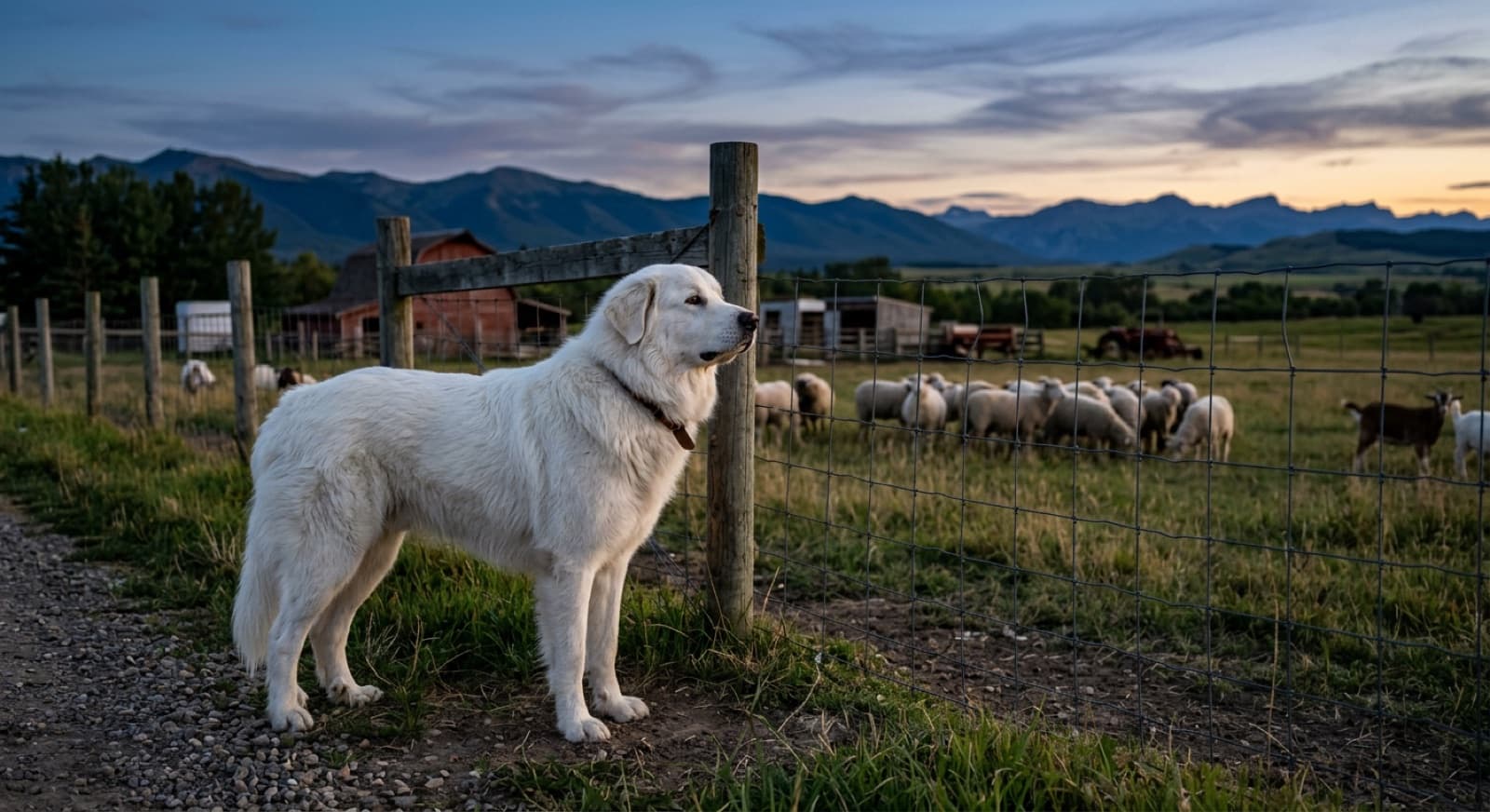
The Pyr's guardian heritage defines daily life with one. They bark loudly and often, especially at night (a hardwired guardian behaviour you can manage but not eliminate). They have a strong roaming instinct, so never off-leash unfenced and a tall secure fence at home. They are intelligent but independent and stubborn, so training is a patient project focused on essentials and heavy socialization, not precise obedience. Exercise needs are only moderate, but the double coat sheds heavily and needs regular brushing (never shave it). Their calm protectiveness is a real responsibility in the city. Browse adoptable Toronto dogs.
The barking and the roaming
Two guardian instincts shape everything about living with a Pyr. The first is barking: bred to warn off predators, especially at night, a Pyr barks loudly and often, and the nocturnal barking in particular is deeply ingrained. You can reduce it with a clear indoor space, not leaving the dog out alone at night, addressing boredom, and consistent training that acknowledges the alert and redirects, but you cannot remove it, which is why the breed is so hard in condos or close-neighbour settings. The second is roaming: Pyrs patrolled large territories, so they wander and their recall is unreliable, meaning never off-leash in unfenced areas and a tall, secure fence at home. Respecting both instincts with containment and honest expectations is the foundation of Pyr ownership. Our adoption guide covers why this makes a house with a yard so important.
Training the independent guardian
Pyrs are intelligent but independent and self-directed, so training is a patient, long-term project, not a quick obedience course. Bred to make their own decisions, they will consider a command and decide whether to comply, which reads as stubbornness. Focus on the essentials, leash manners, basic obedience, and above all thorough early socialization so the protective instincts stay well-balanced, rather than expecting precise off-leash obedience, which this breed will never reliably offer. Use patience, consistency, positive reinforcement, and humour; harsh methods backfire badly with this sensitive breed. Extensive socialization matters especially for a guardian dog in the busy urban environment, so it learns to distinguish normal city life from genuine concerns. The Canadian Kennel Club describes the calm, independent Pyr temperament, and our health guide covers the giant-breed care that pairs with it.
The coat, the exercise, and the protectiveness
Three more realities round out life with a Pyr. The double coat sheds heavily year-round and blows seasonally, so brush several times a week (more in spring) to manage hair and prevent matting, and never shave it, since it insulates against heat and cold and protects the skin. Exercise needs are only moderate (a couple of walks plus a fenced yard to patrol), which surprises people, but always on-leash or in secure fencing, and keep summer activity to the cool hours given the coat. And the protectiveness: a well-socialized Pyr is calm and discerning rather than reactive, but its size and guardian presence make thorough socialization and responsible management essential in the city. Handled well, all of this adds up to a magnificent, gentle companion, handled carelessly, it is a real responsibility, which is why the breed suits experienced, committed owners. Adopt through a knowledgeable rescue that understands the temperament.
Browse adoptable Great Pyrenees in Toronto
If you understand and want the guardian temperament, a Pyr is a magnificent, devoted companion. Browse adoptable Great Pyrenees and mixes near Toronto.
See Available Great Pyrenees →Frequently Asked Questions
Why do Great Pyrenees bark so much?
Barking is not a flaw in the Great Pyrenees, it is the job they were bred to do, and understanding this is essential before adopting one. For centuries, Pyrs guarded flocks by patrolling and barking to warn off predators, especially at night, and that instinct is deeply hardwired. A Pyr will bark, often loudly and frequently, at sounds, movement, strangers, other animals, and anything it deems worth announcing, and the nighttime barking is particularly ingrained (they were bred to be vigilant while the flock slept). You can reduce and manage it, giving the dog a clear indoor space, not leaving it outside alone at night, addressing boredom, and consistent training that acknowledges the alert but redirects, but you cannot train it out entirely; it is core to the breed. This is why Pyrs are very difficult in condos or close-neighbour settings, and why prospective owners must be honest about whether they can live with, and whether their neighbours can tolerate, a guardian breed’s bark.
Can a Great Pyrenees be trusted off-leash?
No, a Great Pyrenees should not be trusted off-leash in any unfenced area, and this is one of the firmest rules of the breed. Pyrs have a strong, independent roaming instinct rooted in their guardian heritage (they patrolled large territories), and combined with their independent, self-directed temperament, this means a Pyr will wander, sometimes for miles, and recall is unreliable even in a well-trained dog because the breed is wired to make its own decisions rather than defer to a handler. On a walk, always use a leash; at home, a securely fenced yard with a tall, solid fence is essential (they can be surprisingly determined escape artists). This is not a dog for off-leash trails or dog parks in the usual sense. Respecting the roaming instinct with secure containment and leashes is fundamental to keeping a Pyr safe, and is a core reason the breed needs a house with a good fence rather than an apartment.
Are Great Pyrenees hard to train?
Great Pyrenees are intelligent but independent and stubborn, which makes training a patient, long-term project rather than a quick obedience course, and prospective owners should have realistic expectations. Bred to work alone and make their own decisions, Pyrs do not have the eager-to-please biddability of a retriever; they will often consider a command and decide whether to comply, which reads as stubbornness. This does not mean they cannot be trained, it means training requires patience, consistency, positive reinforcement, and a sense of humour, with an emphasis on the essentials (leash manners, basic obedience, and thorough socialization) rather than expecting precise off-leash obedience. Early, extensive socialization is especially important for a guardian breed to ensure the protective instincts are well-balanced. Harsh methods backfire badly with this sensitive, independent breed. Work with the temperament rather than against it, and a Pyr becomes a well-mannered companion, just never a competitive obedience dog.
Do Great Pyrenees need a lot of exercise?
Surprisingly, no, Great Pyrenees have only moderate exercise needs despite their size, which is one of the few things that makes them manageable for some non-farm homes. A couple of good walks a day plus access to a securely fenced yard where they can patrol at their own pace is usually enough; they are not high-energy dogs that need to run for hours, and indoors they are famously calm and mellow. That said, they do need the mental engagement of having a territory to watch and a job (even a symbolic one), and they should always be exercised on-leash or in secure fencing given the roaming instinct. Avoid overexercising a growing puppy, whose joints are still developing. In a Toronto summer, keep exercise to the cool hours given their heavy coat. So while the physical exercise demand is moderate, the containment, coat, and temperament needs are what make the breed demanding, not the exercise itself.
How do I care for a Great Pyrenees’ coat?
The Great Pyrenees has a thick, weather-resistant double coat that requires regular grooming and produces a lot of hair. Brush it several times a week (more during the seasonal "coat blow" in spring, when they shed dramatically) to remove loose undercoat, prevent matting, and manage the heavy year-round shedding, though you will never eliminate the hair; it is a lifestyle reality of the breed. Pay attention to areas that mat, behind the ears, the britches, and the tail. Importantly, do not shave the double coat: it insulates against both cold and heat and protects the skin, so shaving can actually harm the dog’s ability to regulate temperature. Baths are occasional (the coat is somewhat self-cleaning and dirt-shedding). Also keep up the nails (large dogs need regular trims), ears, and dental care. Regular brushing is non-negotiable, but the coat is otherwise fairly low-fuss beyond managing the sheer volume of hair.
Are Great Pyrenees protective, and is that a liability in the city?
Yes, Great Pyrenees are naturally protective, that is the essence of a livestock guardian, and while their protectiveness is typically calm and measured rather than aggressive, it does need to be understood and managed, especially in an urban setting. A well-bred, well-socialized Pyr is discerning: gentle and welcoming with the family and accepted guests, watchful and deterring toward genuine threats, rather than indiscriminately reactive. But their size, bark, and guardian presence mean thorough, early, ongoing socialization is essential so the dog learns to distinguish normal comings and goings (mail carriers, neighbours, visitors) from real concerns, and so it is comfortable and well-mannered in the busier social environment of the city. Owners must also manage the dog responsibly around strangers and other dogs. Handled well, a Pyr’s protectiveness is a calm, reassuring trait; handled carelessly, the combination of size and guardian instinct is a real responsibility, which is why the breed suits experienced, committed owners.
Great Pyrenees Adoption in Toronto
Where to adopt, costs, and the honest Pyr reality.
Great Pyrenees Health Issues
Hips, bloat, joints, and giant-breed care.
New dog? Start with these care guides
Everything a new adopter needs to set up a safe, happy home.