The short answer
Labs love water and most are strong, safe swimmers. A big lake adds risks a backyard pool does not. Lake Ontario is cold, even in summer, and a happy retrieving Lab will not notice until it is too cold, so you set the limit. Watch the waves and currents at open beaches like Cherry Beach and Woodbine. Avoid blue-green algae in warm, still water in late summer and check posted advisories. Keep fetch sessions short to prevent water intoxication from swallowing too much water. Get the leptospirosis vaccine and keep your Lab out of stagnant ponds. Check the Toronto Public Health beach postings before a city swim, and watch for zebra-mussel cuts on paws at rocky shores. Dry and clean the ears after every swim. A life jacket is worth it for open lake, boat, cold, and cottage water. New swimmers should start in calm, warm, shallow water before the open lake.
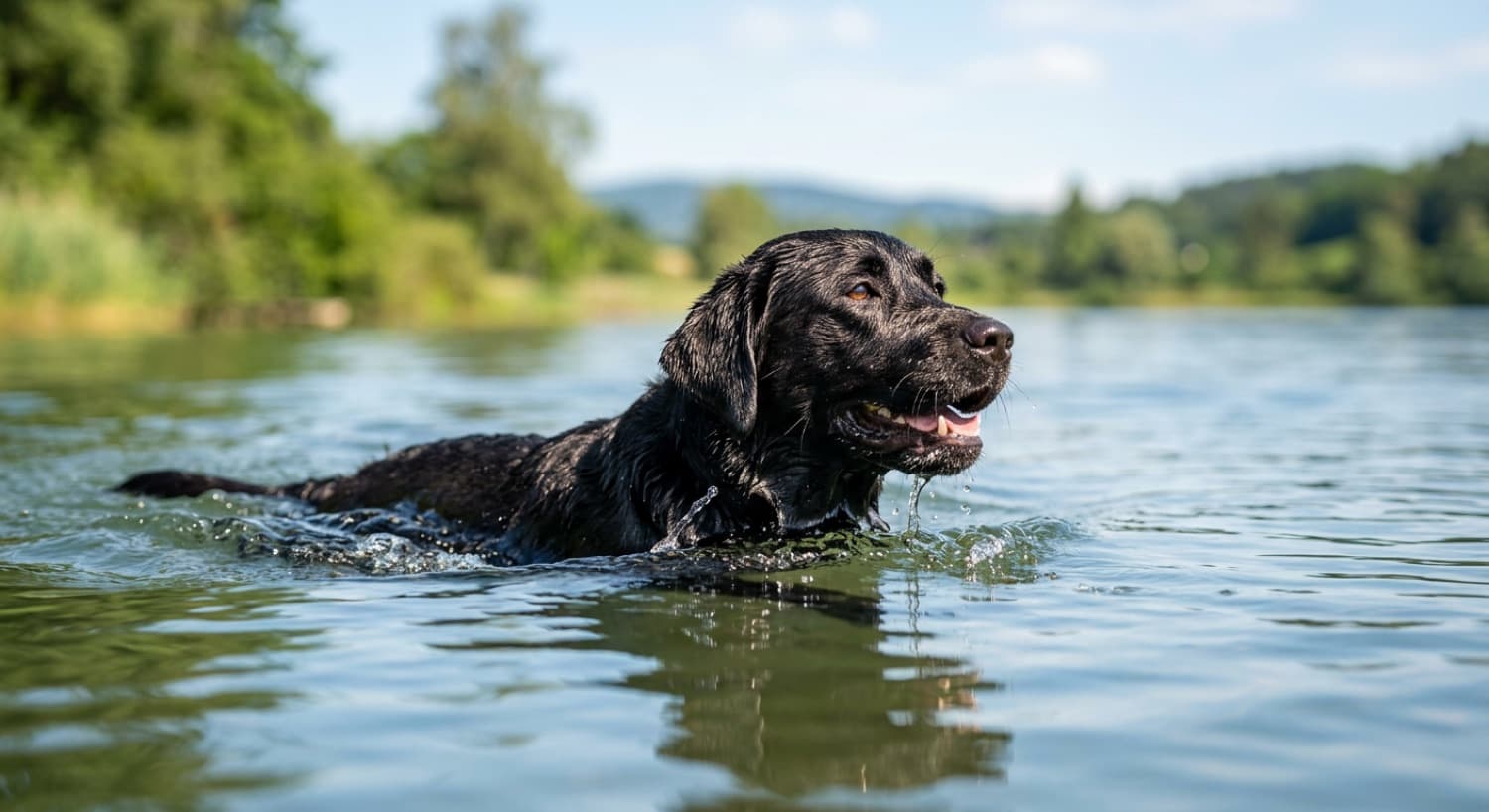
The cold does not feel cold to your Lab until it is dangerous
A Lab in retrieving mode is too happy and too driven to register that it is getting cold. It will keep swimming past the point its body can stay warm, and Lake Ontario is a big, deep, cold body of water. You are the off switch. Keep cold-water sessions short, watch for shivering and stiffness, and pull your dog out before it tells you to. Cold-water trouble on the lake is preventable, but only if the human is paying attention.
If you have a Labrador in Toronto, you have a dog that was bred to swim, paired with a city that sits on one of the biggest freshwater lakes in the world, plus rivers, ravines, and a short drive to cottage country. That is a wonderful combination and also one that asks more of you than a pool in the backyard. Toronto swimming has a few specific hazards. None of them are reasons to keep your Lab out of the water. They are reasons to plan the swim.
Labs are retrievers. The drive that makes them launch off a dock into the lake is the same drive that makes them ignore their own limits. So the job of a Toronto Lab owner is mostly about reading the water and the dog, and setting boundaries the dog would never set for itself. Thinking about a water-loving breed? Start with the Toronto Labrador adoption guide.
The cold lake is the first thing to plan around
Lake Ontario is deep and cold. The near-shore water warms up in mid summer, but the lake stays chilly the rest of the year and a wind shift can drop the temperature suddenly. Labs handle cold water well. The problem is they do not self-regulate.
A Lab on a retrieving roll will keep going until it is exhausted or genuinely chilled, and it will not slow down to tell you. That is why so many cold-water scares happen with strong swimmers, not weak ones. The strong swimmer is the one that goes out too far for too long.
How to manage it:
- Keep first and cold-water swims short, five to ten minutes
- In spring and fall the lake is dangerously cold, so keep it very short or skip the swim
- Build duration slowly across the warm season, not all at once
- Bring a towel and somewhere to warm up afterward
Signs your Lab is getting too cold: shivering, slowing down, swimming low in the water, stiffness, reluctance to climb out, weakness or wobbliness after exiting, pale gums. If your dog seems cold and disoriented and does not recover quickly once dried and warmed, contact an emergency vet.
Currents and waves on Lake Ontario
A Great Lake is big enough to behave like an ocean. Wind builds real waves, and rip currents form near piers and breakwalls. A strong swimmer can be pulled out faster than it can paddle back.
Cherry Beach, Woodbine, and the Beaches all sit on open water that can go from glassy to choppy with a change in wind. A Lab focused on a thrown toy will follow it straight out without any sense of the current or the drop-off past the sandbar. The fix is simple: read the conditions before you let the dog in.
Open-water habits worth building:
- Check the forecast and skip the swim on windy, wavy days
- Throw toys parallel to shore, not straight out toward deep water
- Keep your Lab well clear of piers, breakwalls, and channel edges where currents run and boat traffic passes
- If the water is choppy or a current is visibly running, make it a beach-walk day, not a swim day
Open lake is where a life jacket genuinely earns its place. A calm, shallow paddle rarely needs one. Wind and current change that math.
Blue-green algae: the late-summer freshwater killer
Blue-green algae (cyanobacteria) blooms in warm, still Ontario freshwater through late summer. The toxins can be fatal to a dog within hours. This is the most serious swimming hazard in this guide.
A dog can be poisoned by drinking bloom water, licking it off their fur, or swallowing it while swimming. Warm ponds, slow inlets, and cottage-country lakes are the risk, more than the open, moving water of Lake Ontario.
What a bloom looks like:
- Spilled-paint green, blue-green, or turquoise colour on the surface
- A pea-soup or thick scummy appearance, often near shore
- An oily film on the water
- A musty or earthy odour
Symptoms after exposure can appear within thirty minutes to a few hours: vomiting, diarrhea, drooling, weakness, breathing trouble, blue-tinged gums, seizures, collapse. This is a true emergency. If you suspect exposure, go to an emergency vet immediately and do not wait for symptoms to worsen.
Prevention: check posted advisories from the local health unit or the province before any late-summer lake swim. The Government of Ontario publishes guidance on recognising and avoiding blue-green algae blooms. Never let your Lab drink lake or pond water in bloom season, avoid any water that looks scummy or smells off, and rinse your dog thoroughly after a lake swim. When in doubt, choose open, moving water or stay out entirely.
Water intoxication from gulping and endless fetch
A Lab that swallows water with every retrieve during a long, repetitive game of fetch can take in enough water to dilute the sodium in its blood. It is called water intoxication, or hyponatremia, and it is a real freshwater danger most owners have never heard of.
The classic setup is the tireless Lab, a floating toy, and an owner happy to keep throwing. Each grab in open-mouthed pursuit takes in a little more water, and it adds up fast. It is uncommon, but it can turn serious quickly, so it is worth knowing the signs.
Warning signs of water intoxication: staggering or loss of coordination, bloating, glazed eyes, drooling, vomiting, lethargy, and in severe cases seizures or collapse. If you see these after a heavy swim or fetch session, treat it as an emergency and get to a vet.
How to prevent it:
- Keep fetch-in-water sessions short and take frequent breaks
- Use a flatter toy the dog does not have to open wide to grab
- Discourage biting and snapping at waves and at the water itself
- Watch a driven, never-quit Lab especially closely, since these dogs are the most at risk
Standing water, leptospirosis, and beach postings
Not all water is safe to swim in, and the water that looks the calmest is sometimes the worst. Standing water can carry leptospirosis, and the city posts water-quality warnings on its swimming beaches. Two quick habits keep your Lab clear of both.
Leptospirosis is a bacterial infection dogs can pick up from standing or stagnant water contaminated by wildlife urine, and it can damage the kidneys and liver. Ponds, puddles, marshy edges, and slow warm water carry more risk than fast-moving or open water. There is a vaccine, and it is a sensible core recommendation for a dog that swims. Talk to your vet about whether the lepto vaccine is right for your Lab, keep your dog out of stagnant puddles and marshy shallows, and bring fresh drinking water so your dog is not tempted to drink from a pond.
Beach postings. Toronto monitors bacteria levels at its swimming beaches and posts whether each beach is safe for the day. Check the Toronto beach water-quality postings before you head out. High E. coli readings after heavy rain are common, and a beach that was clear yesterday can be posted unsafe today. When a beach is flagged, choose somewhere else.
Zebra mussels, sharp shells, and cut paws
Zebra mussels have colonised Lake Ontario, and their sharp shells build up on rocks, piers, and breakwalls and wash up along the shoreline. They slice paw pads and the webbing between toes. The cuts bleed a lot and can get infected.
This is one of the most common minor injuries on Great Lakes shores, and a Lab charging in and out of the water rarely feels it happen. At urban beaches, add broken glass and sharp debris to the list. The risk is highest where you cross exposed rock or a shell-covered stretch to reach the water.
How to avoid and handle cuts:
- Use sandy entry points rather than rock, riprap, or shell-covered shore
- Keep your Lab off piers and breakwalls where mussel shells cluster
- Inspect all four paws, including between the toes, after every swim
- Rinse any cut with clean water and watch it over the next day
See a vet if a cut is deep, will not stop bleeding, or looks infected (swollen, red, oozing) over the following day. A limping Lab after a beach trip almost always has a pad cut, so check there first.
Ear care for a frequent swimmer
Labs have heavy floppy ears that trap water, so frequent swimmers get more ear infections. A two-minute routine after every swim prevents most of them.
Toronto's humid summers make this matter more than it would in a dry climate. A water-mad Lab needs this care built into the swimming habit.
The post-swim ear routine:
- Dry the ears thoroughly with a towel, focusing on the flap and the opening
- Use a vet-recommended drying ear cleaner to flush moisture from the canal, then let your dog shake
- Never push a cotton swab down into the ear canal
- Do it after every swim, lake or pool
Signs of an ear infection: head shaking, scratching at the ears, redness, dark or waxy discharge, a yeasty smell, or sensitivity when you touch the ear. These need a vet. For the wider picture of breed-specific health, see the Labrador health guide for Toronto.
Should my Lab wear a life jacket?
For a calm, shallow paddle, most healthy adult Labs do not need one. On the open lake, or on a boat, where wind and current are in play, it is a sensible buy.
When a life jacket is worth it:
- Open-lake swimming, where wind, waves, and currents add real risk
- Any boat, canoe, kayak, or paddleboard trip
- Open water far from shore
- Cold water that could sap a dog faster than expected
- Puppies still building swimming confidence
- Senior Labs with arthritis or joint disease
What to look for: a snug fit that the dog cannot slip out of, a top handle so you can lift your Lab out of the water or a boat, and a bright colour (orange or yellow) for visibility against grey lake water. The handle and the visibility are exactly the features that matter most on open water.
Where to swim: matching the spot to the swimmer
| Toronto-area spot | Type | Best for |
|---|---|---|
| Cottage-country lakes (Muskoka, Kawarthas) | Warm shallow lake | Best for new and nervous swimmers on a calm day. Gentle entry, warmer water. Check algae advisories |
| Woodbine Beach (the Beaches) | Lake Ontario, sandy | Sandy shallows let a cautious Lab wade on a still day. On-leash. Check the beach water-quality postings |
| Cherry Beach off-leash | Lake Ontario, off-leash dog beach | Confident swimmers. Open water with waves and current, tide-free but wind-driven. Watch conditions and postings |
| Kew / Balmy Beach | Lake Ontario, sandy | Sandy entry along the Beaches boardwalk. Mind wind and waves. Confident swimmers, posting-aware owners |
| Quiet inland pond or shallow edge | Still shallow water | A first step for a truly nervous beginner. Watch for algae and stagnant-water risk, keep it brief |
The rule of thumb: warm, calm, shallow water for a new or nervous Lab, and only graduate to the open lake once your dog is a confident, fit swimmer. Cherry Beach and the open Beaches are unfenced and wind-driven, so they reward a Lab that already knows how to swim and an owner who reads the water. For a full rundown of off-leash areas across the city, see the Toronto off-leash parks guide, and for the dog beach specifically, the Cherry Beach off-leash guide.
Browse adoptable Labradors in Toronto
A water-loving Lab is one of the great joys of life on the lake. Rescue Labs and Lab crosses come through Toronto shelters regularly, and the foster can tell you how each dog feels about water.
See Available Labradors →Frequently Asked Questions
Is Lake Ontario safe for my Lab to swim in around Toronto?
It can be, with planning. The lake is colder than it looks and big enough to build waves and currents, and a happy Lab will not notice until it is a problem, so you set the limits. Favour calm days at supervised beaches like Woodbine, or the off-leash dog beach at Cherry Beach. Check the Toronto Public Health beach postings before you go, keep first sessions short, throw toys parallel to shore, rinse the lake water off afterward, and do not let your dog gulp water.
How cold is too cold for a Lab to swim in Lake Ontario?
The lake is deep and cold. It warms near shore in mid summer but a wind shift can drop the temperature suddenly, and in spring and fall it is dangerously cold. Labs handle cold water, but a retrieving Lab keeps going past its limit and will not signal it. When the water is cold, keep sessions very short or skip the swim. Watch for shivering, slowing, stiffness, or trouble climbing out, and warm your dog quickly afterward.
What is blue-green algae and why is it dangerous?
Blue-green algae blooms in warm, still Ontario freshwater through late summer and its toxins can be fatal within hours. A dog is exposed by drinking the water, licking it off their coat, or swallowing it while swimming. Blooms look like spilled green paint, pea soup, or a scummy film and may smell musty. Warm ponds and cottage lakes are the main risk. Check posted advisories before late-summer lake swims, and keep your Lab out of any water that looks or smells wrong.
Can my Lab get sick from swallowing too much water?
Yes. Water intoxication, or hyponatremia, happens when a Lab gulps so much water during repetitive fetch that it dilutes the sodium in its blood. Signs include staggering, bloating, glazed eyes, vomiting, lethargy, and in severe cases seizures. It is uncommon but serious. Keep fetch sessions short, take breaks, use a flatter toy, and discourage biting at waves. If you see these signs after a heavy swim, treat it as an emergency and get to a vet.
Should my Lab wear a life jacket?
Most adult Labs do not need one for a calm, shallow paddle. A jacket earns its place for open-lake swimming with wind and current, boat and canoe trips, open water, cold water, puppies, and arthritic seniors. On a big lake, a bright jacket with a top handle also makes your dog far easier to spot and grab, so for lake and boat use it is a sensible buy.
Where can I take a new or nervous swimmer?
Start in calm, warm, shallow freshwater. A still-day edge of a warm cottage-country lake in the Kawarthas or Muskoka, with a gentle entry, suits a beginner, just check for algae advisories first. Closer to home, the sandy shallows at Woodbine Beach on a wave-free day let a cautious Lab wade and build confidence. Skip the open lake at Cherry Beach until your dog is a confident swimmer, and always check the Toronto Public Health beach postings first.
More Labrador guides
Labrador Adoption Toronto →
Where to find rescue Labs in Toronto, real adoption costs, common surrender reasons, and free-pet scam warnings.
Labrador Health Issues Toronto →
Hip and elbow dysplasia, ear infections, the obesity risk, and pet insurance ROI for a Lab in Toronto.
Labrador Weight Management Toronto →
Why Labs gain weight so easily, the genetic appetite, portion control, and using swimming as joint-friendly exercise.
Winter Dog Care Toronto →
Keeping a water-loving Lab safe once the lake freezes: cold, salt, ice, and off-season exercise.
New dog? Start with these care guides
Everything a new adopter needs to set up a safe, happy home.