The short answer
PWDs need at least an hour-plus of daily exercise plus real mental stimulation, they are working water dogs, not couch dogs. They are built for swimming and love it (a Toronto summer joy and superb low-impact exercise), and they excel at agility, dock diving, and obedience. They are highly intelligent and eager to please, so training is rewarding, but their clever minds need work or they get destructive and mouthy. Meet the exercise and enrichment needs and a PWD is calm and delightful; miss them and behaviour problems follow. An active, committed first-timer can succeed, a sedentary home cannot. Browse adoptable Toronto dogs.
Exercise and swimming
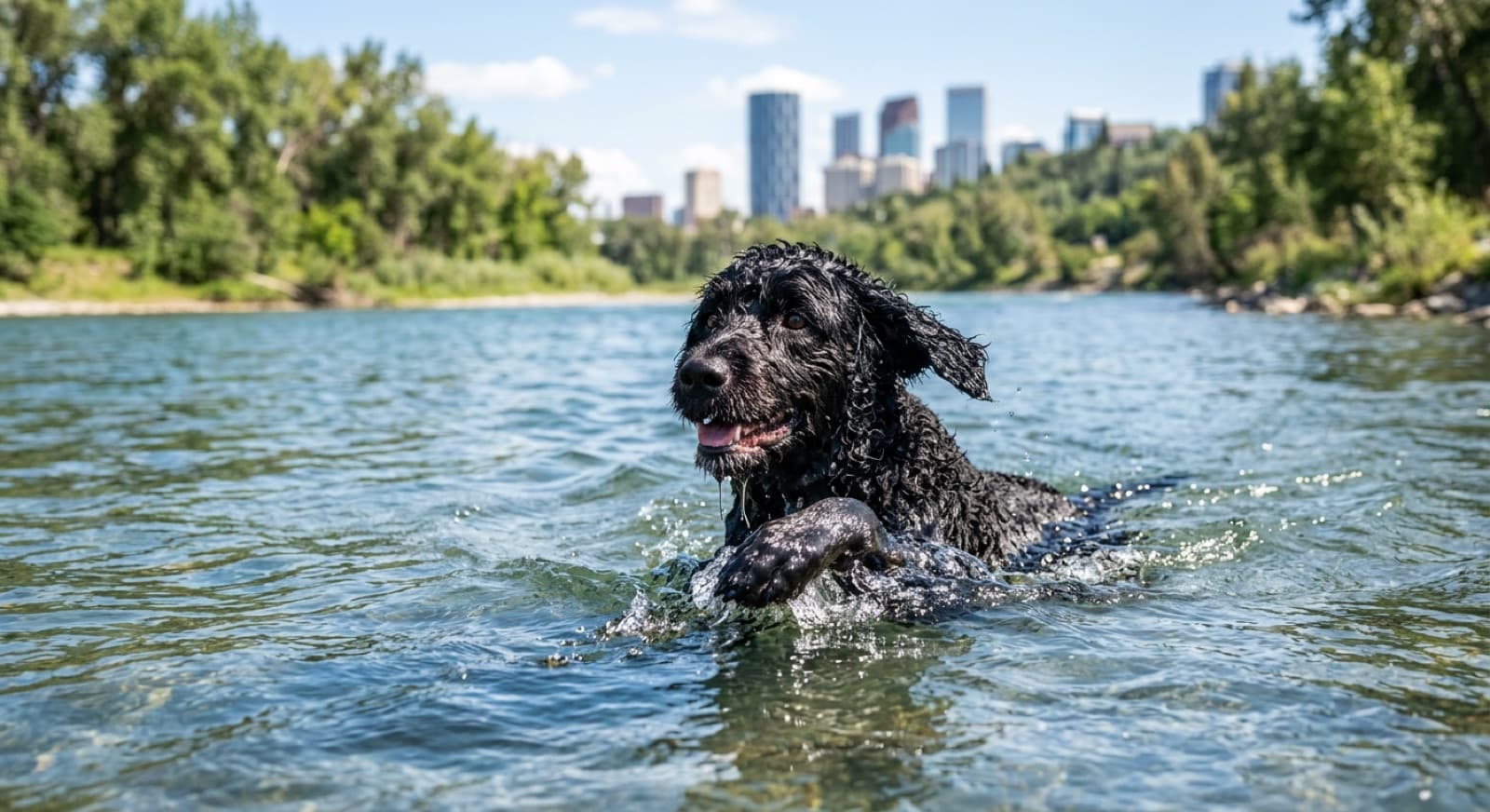
A PWD needs at least an hour-plus of real physical exercise daily, running, hiking, fetch, and especially swimming, plus mental work on top, because a stroll around the block does not touch a working breed's needs. Swimming is the standout: bred to work in the water with webbed feet and a water-resistant coat, PWDs adore it, and it is superb low-impact exercise that satisfies their working drive. In a Toronto summer, access to safe swimming (a dog-friendly beach, a lake, a cottage, or dock diving) is a wonderful outlet that plays to the breed's instincts, though land-based exercise can fully meet their needs if water is not available. The payoff is real: a well-exercised PWD is calm and happy at home, while an under-exercised one becomes destructive and mouthy, the root of many behaviour problems that land the breed in rescue, as our adoption guide covers.
Training and mental stimulation
PWDs are highly intelligent, eager to please, and cooperative, which makes them one of the more trainable breeds and a genuine pleasure to work with. They thrive on positive-reinforcement training and love the mental engagement, so they pick up obedience, tricks, and dog sports readily, and they excel at agility, obedience, rally, dock diving, and water work. Because they are so bright, mental stimulation matters as much as physical, lean on dog sports, training sessions, scent games, puzzle toys, and giving the dog a “job,” which tire a PWD wonderfully. Keep methods gentle (the breed is sensitive), and channel their mouthiness and love of carrying things positively. The Canadian Kennel Club describes the breed's intelligent, biddable nature, and our health guide covers the care that pairs with an active life.
Meeting the needs, and first-time owners
The whole equation comes down to meeting both the physical and mental needs: a PWD that gets adequate exercise and enrichment is a calm, delightful, well-behaved companion, while one that gets neither becomes bored, destructive, and difficult, and those problems are almost always unmet needs rather than a “bad” dog. For a Toronto owner, that means combining daily physical exercise (ideally including swimming in summer) with training, sports, or puzzle work. An active, committed first-time owner who genuinely wants a high-energy, high-engagement dog can absolutely succeed with a PWD, thanks to the breed's trainability and sweet temperament, but a sedentary home or someone wanting a low-effort pet will struggle. Adopting a temperament-evaluated adult from a rescue, where you can see the actual energy level, is a smart way to find the right match.
Browse adoptable Portuguese Water Dogs in Toronto
Active, brilliant, and water-loving. Browse adoptable PWDs and PWD mixes from Toronto-area shelters and rescues.
See Available Portuguese Water Dogs →Frequently Asked Questions
How much exercise does a Portuguese Water Dog really need?
Plan on at least an hour, often more, of real physical exercise a day, plus mental stimulation on top. PWDs are an athletic working breed developed to work all day alongside fishermen, so a stroll around the block is nowhere near enough. Good exercise for a PWD includes brisk walks, running, hiking, fetch, and above all swimming, which they are built for and adore, plus the mental work of training and games. The amount varies by individual, but this is a genuinely high-energy dog that needs a job or an outlet, and a well-exercised PWD is calm and delightful at home while an under-exercised one becomes destructive, mouthy, and difficult. For an active Toronto owner who enjoys getting out, ideally near water, the PWD’s energy and enthusiasm are a joy; for a sedentary household, they are a poor match. Meeting both the physical and mental needs is essential, not optional, for this breed.
Do Portuguese Water Dogs need to swim?
They do not strictly "need" to swim, but they are built for it, love it, and it is one of the best forms of exercise you can give them. Bred to work in the water, PWDs have webbed feet, a water-resistant coat, and a genuine passion for swimming, and most take to water eagerly. Swimming is fantastic exercise for the breed: it is low-impact (easy on the joints), tiring in a way that satisfies their working drive, and something they find deeply rewarding. In a Toronto summer, access to safe swimming, a dog-friendly beach, a lake, a cottage, or even a canine pool, is a wonderful outlet, and dock diving is a sport many PWDs excel at and adore. That said, you do not need water access to keep a PWD happy, land-based exercise (running, hiking, fetch, sports) plus mental work can fully meet their needs. But if you can offer swimming, especially in summer, a PWD will thrive on it, and it plays beautifully to the breed’s natural instincts.
Are Portuguese Water Dogs easy to train?
Yes, PWDs are highly intelligent, eager to please, and cooperative (they were bred to work closely with fishermen), which makes them one of the more trainable breeds and a genuine pleasure to work with. They respond very well to positive-reinforcement training (treats, praise, play) and thrive on the mental engagement of learning, so they pick up obedience, tricks, and dog sports readily, and they excel at agility, obedience, rally, dock diving, and water work. Two things to keep in mind: their high intelligence and energy mean they need their minds worked, not just their bodies, a bored PWD gets into mischief, and their strong bond and sensitivity mean gentle, consistent methods work best. They can also be mouthy and enjoy carrying things (a working-retriever trait), which training can channel positively. Start early, keep training fun and varied, and channel that clever, eager nature, and a PWD becomes a wonderfully responsive, well-mannered companion. Training also doubles as valuable mental exercise.
What mental stimulation and activities suit a Portuguese Water Dog?
Because PWDs are so intelligent, mental stimulation is as important as physical exercise, and the breed excels at and enjoys a wide range of activities. Great options include dog sports, agility, obedience, rally, dock diving, and water work all suit the breed beautifully, plus training and trick sessions, puzzle toys and food-dispensing toys, scent games, and fetch or retrieving games that tap their working heritage. Many PWDs also enjoy having a "job," carrying items, learning named tasks, or helping with simple activities. Even simple enrichment like food puzzles and rotating toys helps on days when physical exercise is limited. The goal is to work the dog’s clever mind as well as its athletic body, a PWD that gets both is calm and content, while one that gets neither becomes bored and problematic. For a Toronto owner, combining daily physical exercise (ideally including swimming in summer) with training, sports, or puzzle work keeps a PWD genuinely fulfilled and makes the most of the breed’s remarkable trainability.
What happens if a Portuguese Water Dog doesn’t get enough exercise?
An under-exercised PWD is an unhappy, difficult dog, and it is the root of many behaviour problems that can land the breed in rescue. Without enough physical exercise and mental stimulation, a PWD’s working-breed energy and clever mind have nowhere to go, and it typically comes out as destructiveness (chewing, digging), mouthiness, hyperactivity, restlessness, excessive barking, and difficulty settling. A bored PWD is also harder to train, because it cannot focus. The frustrating part for owners is that these problems are usually not the dog "being bad", they are a symptom of unmet needs, and they typically resolve or greatly improve once the dog gets adequate exercise and enrichment. This is exactly why matching the breed to an active lifestyle is so important: a PWD with its needs met is a calm, delightful, well-behaved companion, while the same dog under-stimulated can seem like a completely different, difficult animal. Meeting the exercise and mental needs is not optional for this breed, it is the single biggest factor in a happy PWD.
Are Portuguese Water Dogs good for first-time owners?
They can be, with the right commitment, but they are not the easiest first breed, so it depends on the owner. On the plus side, PWDs are highly trainable, eager to please, affectionate, and not aggressive or difficult in temperament, which works in a dedicated first-timer’s favour. The challenge is the energy and exercise commitment: this is a genuine working breed that needs an hour-plus of daily activity plus mental stimulation, and a first-time owner who underestimates that, or who has a sedentary lifestyle, will struggle with a bored, mischievous dog. The grooming commitment (regular professional clipping of the non-shedding coat) is another factor to be ready for. So a PWD suits an active, committed first-time owner who genuinely understands and wants a high-energy, high-engagement dog and will meet the exercise, training, and grooming needs, and it is a poor fit for someone wanting a low-effort pet. Adopting a temperament-evaluated adult from a rescue, where you can see the actual energy level, is a smart way for a first-timer to find a good match.
Portuguese Water Dog Adoption in Toronto
Where to adopt, costs, and the honest PWD reality.
Portuguese Water Dog Health Issues
Hips, eyes, GM1, JDCM, and hereditary conditions.
New dog? Start with these care guides
Everything a new adopter needs to set up a safe, happy home.