The short answer
The PWD is generally healthy (11 to 14 years) but carries hereditary conditions, most now genetically testable, so well-bred dogs are far less likely to be affected: hip dysplasia, GM1 gangliosidosis and juvenile dilated cardiomyopathy (JDCM) (two serious, testable, puppy-onset conditions), PRA (eyes), and Addison's disease (a manageable hormonal condition the breed is prone to). The highest-impact things you control: keep the dog lean, provide real exercise, watch for Addison's signs, and keep up with vet checkups. Insure while young and healthy. Adopting a vet-checked adult means the dog has already passed the puppy-onset heart risk window. Browse adoptable Toronto dogs.
The testable genetic conditions
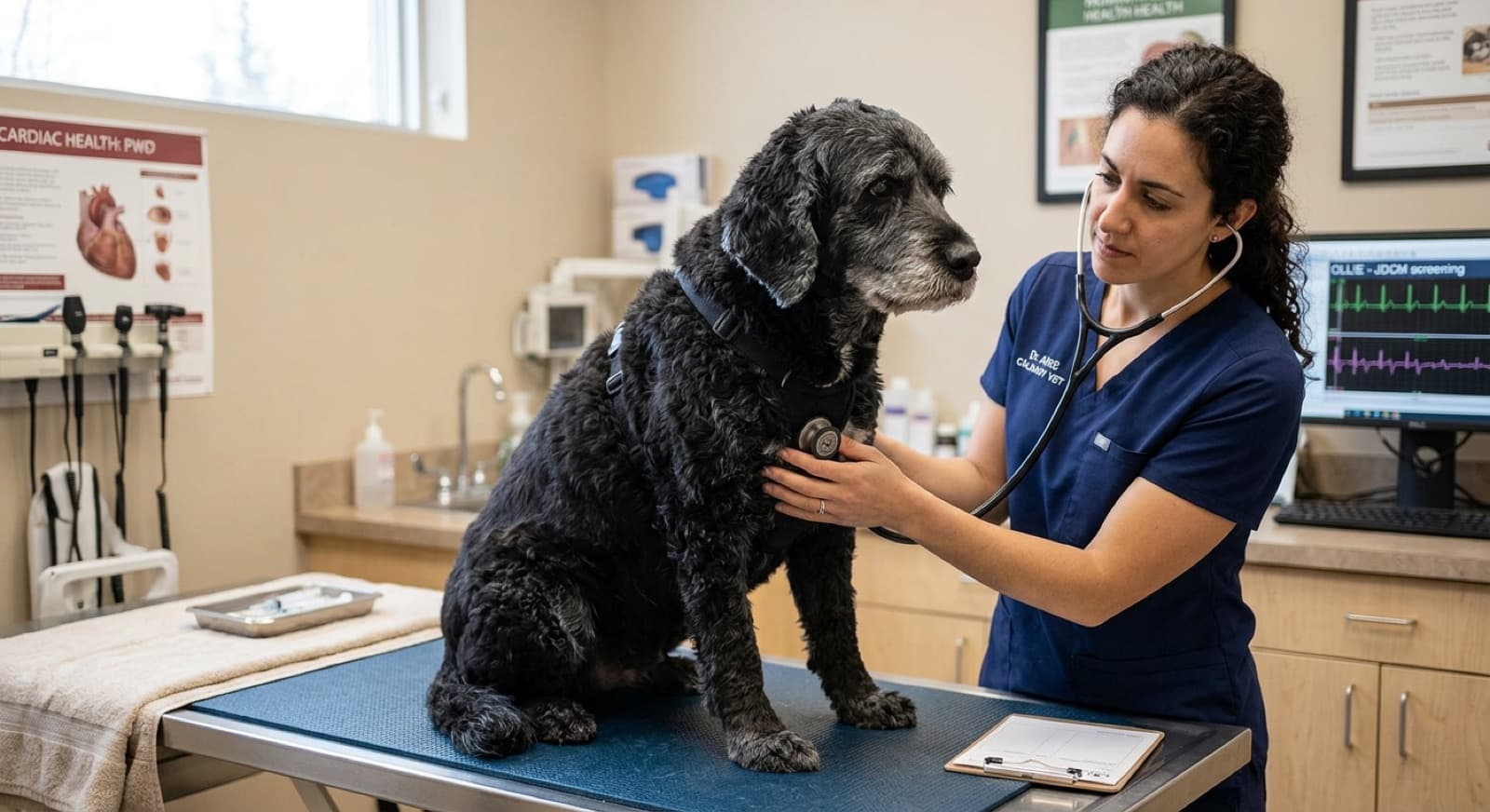
The most distinctive thing about PWD health is that its two most serious conditions are hereditary, recessive, and now genetically testable, which is why the breed's health depends so heavily on responsible breeding. GM1 gangliosidosis is a fatal storage disease that causes progressive neurological decline in affected puppies; a genetic test for carriers has made it rare in well-bred lines. JDCM (juvenile dilated cardiomyopathy) is a heart-muscle disease that strikes puppies under a year, causing sudden heart failure; it too is testable, and screening breeding dogs prevents affected litters. Both need two copies of the gene to affect a dog. For an adopter, this is reassuring: a vet-checked adult PWD has already passed the puppy-onset JDCM window, and if you ever consider a puppy, proof of parental genetic testing is essential. The VCA guide to dilated cardiomyopathy is worth reading, and our exercise guide covers daily care.
Addison's, hips, and eyes
Beyond the testable puppy conditions, three others shape PWD care. Addison's disease (a hormonal condition where the adrenal glands underproduce) is one the breed is notably prone to, and it is tricky because its signs are vague, recurrent lethargy, poor appetite, digestive upset, weakness, so mention the breed risk to your vet if those appear; once diagnosed, it is very manageable with lifelong medication. Hip dysplasia occurs, so keep the dog lean and avoid overexercising a growing puppy. And PRA (a genetic path to blindness) is testable, so well-bred dogs are lower-risk, but regular eye checks are still worthwhile. None of these should scare you off, the breed is generally robust, but awareness of Addison's in particular is valuable, since catching it early makes a big difference. Adopting through a rescue that has vet-checked the dog gives you a clearer starting point.
Keeping a PWD healthy, and insurance
The care that matters most is consistent: keep the dog lean, provide the real exercise this working breed needs, be alert to Addison's signs, keep up joint and eye monitoring, groom regularly to keep the skin healthy, and keep up with routine vet checkups so hip, eye, heart, and hormonal issues are caught early. On the money side, pet insurance is worth considering, because hip surgery, lifelong Addison's management, eye treatment, or cardiac care can add up, and the key is to insure while the dog is young and healthy, before anything is diagnosed and excluded (important given the Addison's and hereditary risks). Our cost guide has the full Toronto picture. With attentive care, most PWDs are robust, spirited companions for well over a decade.
Browse adoptable Portuguese Water Dogs in Toronto
PWDs and PWD mixes from Toronto-area shelters and rescues, with foster notes on temperament and health.
See Available Portuguese Water Dogs →Frequently Asked Questions
What health problems are Portuguese Water Dogs prone to?
Portuguese Water Dogs are generally a healthy, robust breed, but they carry several notable hereditary conditions, and importantly, genetic testing exists for most of them, so responsible breeders screen breeding dogs. The main ones: hip dysplasia (common in medium breeds); GM1 gangliosidosis (a fatal inherited storage disease specific to the breed, but now largely preventable through genetic testing of breeding dogs); juvenile dilated cardiomyopathy (JDCM, a serious heart condition that affects puppies, also testable); progressive retinal atrophy (PRA, a genetic degeneration of the retina leading to blindness, testable); Addison’s disease (hypoadrenocorticism, a hormonal condition the breed is prone to); and, less commonly, follicular dysplasia (a coat/skin condition). Because so many of these are genetically testable, a PWD from health-tested lines is far less likely to be affected, and many PWDs are healthy and live 11 to 14 years. Adopting an adult from a rescue that has done a vet check lets you assess the actual dog.
What are GM1 and JDCM in Portuguese Water Dogs?
These are two serious breed-specific hereditary conditions, and the good news is that both are now largely preventable through genetic testing, which is why responsible breeders screen for them. GM1 gangliosidosis is a fatal inherited storage disease where a missing enzyme causes toxic buildup in nerve cells; affected puppies develop progressive neurological decline and do not survive long. Because a genetic test identifies carriers, careful breeding has made GM1 rare in well-bred lines. JDCM (juvenile dilated cardiomyopathy) is a heart-muscle disease that strikes PWD puppies (typically under a year), causing sudden heart failure and death; it too is testable, and screening breeding dogs prevents affected litters. Both are recessive, so a puppy needs two copies of the gene to be affected. For an adopter, the practical point is that these conditions are why the breed’s health depends so much on genetic testing of parents, and why adopting from a rescue that has vet-checked an adult dog (which has already passed the puppy-onset risk window for JDCM) is reassuring. If you ever consider a puppy, insist on proof of parental genetic testing.
Are Portuguese Water Dogs prone to Addison’s disease?
Yes, Portuguese Water Dogs are among the breeds predisposed to Addison’s disease (hypoadrenocorticism), a hormonal condition where the adrenal glands do not produce enough of certain hormones, so it is worth being aware of. Addison’s can be tricky to diagnose because its signs are vague and intermittent, lethargy, poor appetite, vomiting, diarrhea, weakness, and weight loss, and it is sometimes called "the great pretender" for mimicking other illnesses. In some cases it presents as a sudden, life-threatening "Addisonian crisis" (collapse). The reassuring news is that once diagnosed, Addison’s is very manageable with lifelong medication, and affected dogs can live full, normal lives. For an owner, the practical takeaways are to be aware of the breed’s predisposition, watch for the vague chronic signs (especially recurrent digestive upset or unexplained lethargy), and mention the breed risk to your vet so Addison’s is considered and tested for if those signs appear. Early diagnosis and treatment make a big difference, and a rescue that has vet-checked the dog may already have relevant history.
Do Portuguese Water Dogs have hip or eye problems?
They can have both, so both are worth monitoring, though genetic and screening tools help. On hips, PWDs are prone to hip dysplasia (malformed joints that can lead to pain and arthritis), common in many medium breeds, and reputable breeders screen breeding dogs’ hips. Keeping the dog lean is the single biggest thing you can do to protect the joints, along with sensible exercise and an appropriate diet, and avoiding overexercising a growing puppy. On eyes, PWDs are prone to progressive retinal atrophy (PRA, a genetic degeneration of the retina that gradually leads to blindness), for which a genetic test exists, so well-bred dogs are far less likely to be affected. For an owner, regular vet checks that include the eyes, watching for signs like cloudiness or difficulty seeing in dim light, and keeping the dog lean for joint health are the practical steps. Adopting an adult from a rescue that has done a vet check lets you see how the dog moves and flags any known eye or joint issues, which is genuinely useful.
How long do Portuguese Water Dogs live and how do I keep mine healthy?
Portuguese Water Dogs typically live 11 to 14 years, a good lifespan for the breed, and attentive care helps them thrive. The highest-impact things: keep the dog lean (protects the joints and overall health); provide the substantial exercise and mental stimulation this active working breed needs; be aware of the breed’s Addison’s predisposition and mention it to your vet if vague chronic signs appear; keep up with joint and eye monitoring; keep up regular grooming to keep the skin under that curly coat healthy; and keep up with routine vet checkups so hip, eye, heart, and hormonal issues are caught early. Because so many of the breed’s serious conditions are genetically testable, an adult PWD from health-tested lines (or a vet-checked rescue) starts you off well. Consider pet insurance while the dog is young. Adopting an adult from a rescue that has done a vet check gives you a clearer picture of the individual dog’s health and, for the puppy-onset heart condition, means the dog has already passed that risk window.
Should I get pet insurance for a Portuguese Water Dog?
Pet insurance is worth serious consideration for a Portuguese Water Dog. While generally a healthy, well-screened breed, they are prone to conditions that can be costly, hip surgery, lifelong Addison’s disease management, eye treatment, and cardiac care among them, and a single major issue (especially chronic Addison’s, which requires ongoing medication and monitoring) can add up substantially over time. As with any breed, the key is to insure while the dog is young and healthy, before any condition is diagnosed and excluded as pre-existing, which is especially relevant for Addison’s and the hereditary conditions that can be diagnosed and then excluded. Compare Canadian providers on their coverage of hereditary and chronic conditions specifically, read the exclusions carefully, and weigh insurance against a dedicated savings fund. Given the breed’s Addison’s predisposition and the range of hereditary conditions, having a financial plan for ongoing or major vet care is a sensible part of PWD ownership.
Portuguese Water Dog Adoption in Toronto
Where to adopt, costs, and the honest PWD reality.
PWD Exercise & Training
Exercise, swimming, training, and enrichment.
New dog? Start with these care guides
Everything a new adopter needs to set up a safe, happy home.