The short answer
A well-bred, well-socialised, well-trained Rottweiler is devoted, calm, confident, and often gentle with its own family, including children, with supervision for size. The breed is naturally watchful and a little aloof with strangers, which is normal; unstable aggression is not. That guardian nature is exactly why early and ongoing socialisation plus consistent, force-free training are non-negotiable. Temperament depends far more on genetics, socialisation, and training than on the breed label. One Toronto-specific step: Rottweilers are fully legal in Ontario, but some landlords, condo boards, and insurers restrict the breed privately, so confirm your housing and insurance before you commit. This is a committed owner's dog, and it rewards that commitment enormously.
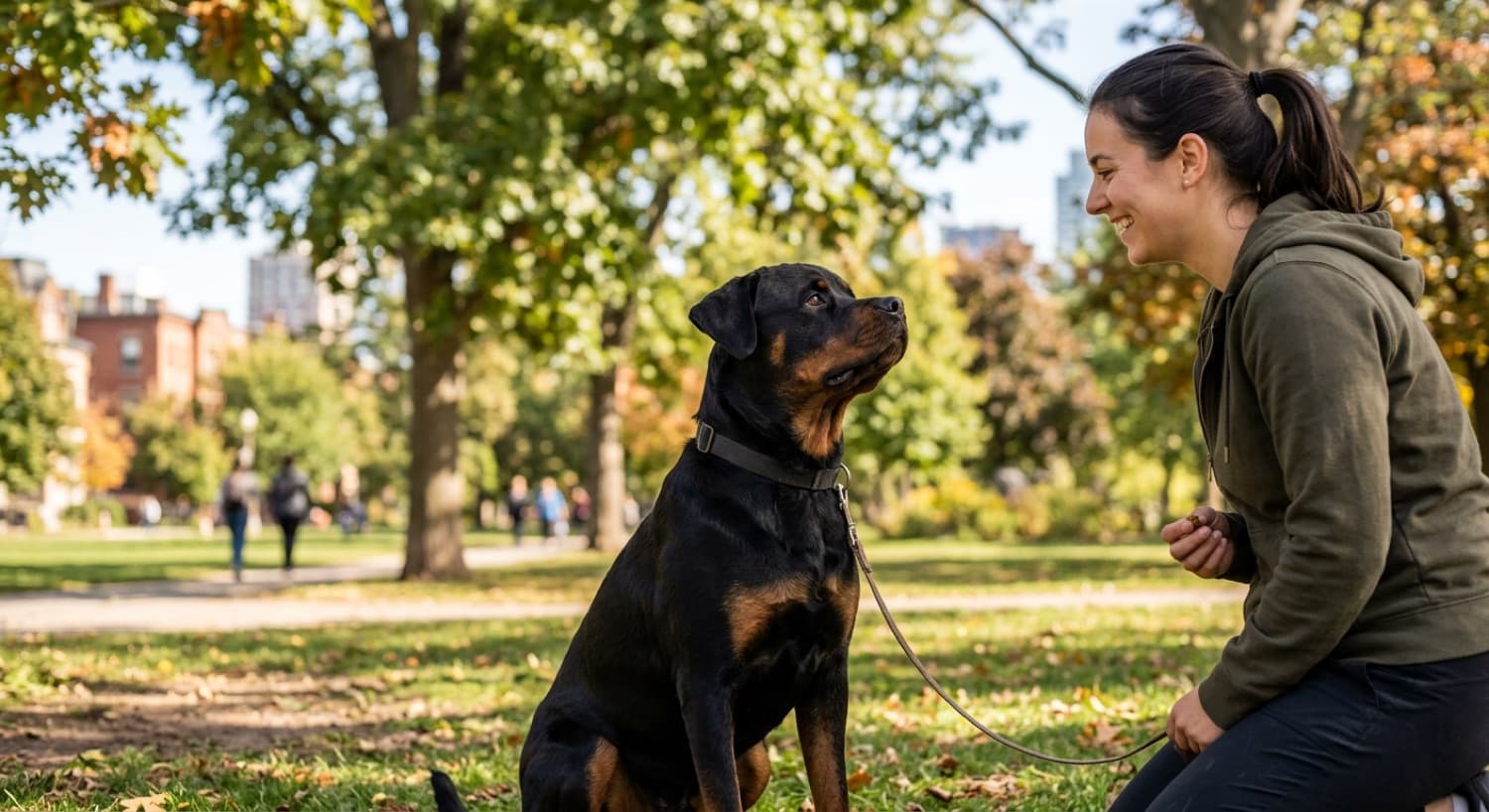
The real Rottweiler temperament
The breed standard describes a confident, calm, courageous dog, devoted to its family and naturally somewhat aloof or reserved with strangers, not fearful, not needlessly aggressive, but watchful. A good Rottweiler is stable and steady, and often surprisingly goofy and affectionate at home.
That guardian nature is why how a Rottweiler is raised matters so much. A confident, well-socialised Rottweiler is discerning and settled; an under-socialised or poorly bred one can become fearful or reactive, which is where problems begin. It helps to draw a clear line: aloofness with strangers is normal breed behaviour, while unstable, reactive aggression is not, and it usually traces back to fear, poor breeding, or missing socialisation rather than to the breed itself. The Canadian Kennel Club breed profile describes exactly this steady, self-assured guardian temperament. The temperament you end up with depends heavily on genetics, socialisation, and training, far more than on the breed name, which means a committed owner has enormous influence over how their Rottweiler turns out.
Socialisation is non-negotiable
For a large guardian breed, a stable temperament is largely built, not just born. Early and ongoing positive socialisation, meaning exposure to many people, dogs, places, sounds, and situations, teaches a Rottweiler that the world is normal, producing a discerning, settled adult rather than a fearful or reactive one.
Crucially, socialisation does not end at puppyhood; keep up positive experiences throughout the dog's life. A busy city like Toronto is full of useful exposure, sidewalks, streetcars, elevators, other dogs, and crowds, but only if you introduce it gradually and pair it with good things, never by flooding a nervous dog. For an adopted adult Rottweiler of unknown history, work at the dog's pace, build positive associations gradually, and get professional help early if you see fear or reactivity rather than hoping it fades. Good socialisation, alongside training, is the single biggest factor in whether a Rottweiler lives up to its best reputation or its worst. If your Rottweiler is newly adopted, our first-week guide covers the decompression period.
Training a powerful breed, force-free
A powerful, intelligent guardian breed with no training is a genuinely poor combination, so training is not optional. The good news: Rottweilers are smart and eager to work with their people, and they respond far better to positive, reward-based training than to harsh or heavy-handed methods, which can damage trust and, in a large protective dog, backfire.
Skip the old “dominance” and aversive-tool advice. Modern behaviour science favours force-free, reward-based methods, and organisations like the Fear Free movement have shifted professional training toward building trust rather than suppressing behaviour through fear. That matters doubly with a strong guardian breed, where a dog trained through intimidation can learn to distrust the very people it should feel safe with.
Focus on solid foundations: a reliable recall, loose-leash walking (genuinely important for a strong dog on a busy Toronto street), impulse control, and a calm, mannerly response to visitors. Keep sessions engaging and consistent across the whole household, and build the manners early, while the dog is young and easier to manage, so they are rock-solid by the time it reaches full size and strength. A trained, well-mannered Rottweiler is a joy and an ambassador for the breed. A Toronto force-free trainer experienced with guardian breeds is a worthwhile investment, especially for a first-time large-breed owner.
Family life, kids, and other pets
With children. Well-raised Rottweilers are often gentle and protective with their own family's kids, but their size and strength mean you always supervise interactions with small children and teach kids to respect the dog, exactly as with any large breed. A calm adult Rottweiler with a known temperament is often a better fit for a home with very young children than a boisterous adolescent.
With other pets. It varies by individual dog and socialisation. Many Rottweilers live happily with other dogs and cats, especially when raised together, though some show same-sex tension with other dogs, and a strong dog's play can overwhelm a small one. Gradual, positive introductions matter, and so does managing shared off-leash time carefully while a new dog settles (our off-leash parks guide covers Toronto's options). This is a great question to ask a foster-based rescue, which has seen a specific Rottweiler around kids and animals, so tell them about your household and resident pets and let them help you match.
Legal in Ontario, but confirm your housing and insurance
Rottweilers are fully legal to own and adopt in Toronto and across Ontario. The province's Dog Owners' Liability Act restricts pit-bull-type dogs, not Rottweilers. The catch is private, not legal: some Toronto condo boards, landlords, and insurers restrict the breed on their own, so this is the one step to handle before you adopt.
In practice, three things can trip up a Toronto Rottweiler adopter. Some condo corporations and landlords name large or guardian breeds in their pet rules or leases. Some home and tenant insurance policies exclude or surcharge Rottweilers, which commonly appear on insurer restricted-breed lists. And in a rented or condo home, a lease violation over a dog can put both your housing and your adoption at risk. None of this is a bylaw or a ban; it is fine print, and it varies building by building and insurer by insurer.
So confirm it first. Read your lease or your condo's pet rules, ask your property manager in writing if you are unsure, and check with your insurer whether the breed is covered or surcharged before you fall in love with a specific dog. Beyond breed rules, Toronto has standard municipal requirements every dog owner meets (licensing, leash rules, and the like), which our Toronto dog bylaws guide walks through. A responsible rescue will usually ask about your housing situation as part of matching, precisely because they want a placement that lasts. If you rent or live in a condo, our apartment adoption guide covers making a large breed work in shared housing.
Exercise, and is a Rottweiler right for you?
Rottweilers need a moderate but real amount of exercise, around an hour or more a day, plus training and mental engagement. They are a working breed that needs a job for the mind, but they are not a frantic, tireless breed like some herding dogs, so the demand is manageable for an active household. Walks, structured play, training, and activities like obedience or scent work suit them well. Mind the heat in Toronto's humid summers, and keep your Rottweiler lean and fit, which is healthier as well as calmer.
Be honest about the match. A Rottweiler suits a committed, confident owner or family who will invest in socialisation and positive training, can physically and financially manage a large guardian breed, has confirmed their housing and insurance allow the breed, and ideally has dog experience or will work closely with a trainer. It is a poor fit for someone wanting a hands-off pet. First-time owners can absolutely succeed if they go in fully committed and get guidance, and an adult Rottweiler from a rescue, whose temperament is a known quantity, is a much safer starting point than a puppy. Meet the commitment, and few breeds are more devoted. If you are still weighing the decision, our Toronto adoption guide walks through the whole process.
Ready to meet a Rottweiler?
Browse adoptable Rottweilers and Rottie mixes from Toronto rescues. A foster-based rescue can tell you a specific dog's temperament, training, and how it does with kids and other pets, which is exactly what makes a great match for this breed. Refreshed regularly.
See Available Rottweilers →Frequently Asked Questions
Are Rottweilers good family dogs?
Yes, for the right family. A well-bred, well-socialised, well-trained Rottweiler is typically devoted, calm, confident, and deeply bonded to its people, and many are gentle and patient with the children in their own home. The breed's reputation is far harsher than the reality of a properly raised Rottweiler. The honest caveats are commitment and size: this is a large, powerful, protective breed that needs an owner who will invest in socialisation and positive training, and its sheer size means supervision around small children (as with any big dog). Match the breed to a committed, active household and a Rottweiler is an outstanding family companion. It is not a low-effort dog, and that is the whole point to understand before adopting.
What is a Rottweiler's temperament really like?
The breed standard describes a confident, calm, courageous dog that is devoted to its family and naturally somewhat aloof or reserved with strangers, not fearful and not needlessly aggressive, but watchful. Aloofness with strangers is normal for the breed; unstable, reactive aggression is not, and it usually points to poor breeding, missing socialisation, or fear. A good Rottweiler is stable and steady, and often surprisingly goofy and affectionate with its own people. That guardian nature is exactly why socialisation matters so much: a confident, well-socialised Rottweiler is discerning and settled, while an under-socialised one can become fearful or reactive, which is where problems start. The temperament you get depends heavily on genetics, socialisation, and training, which is why how a Rottweiler is raised matters more than the breed label.
Why is socialisation so important for a Rottweiler?
Because it is a large guardian breed, and a confident, stable temperament is largely built, not just born. Early and ongoing positive socialisation, meaning good exposure to many people, dogs, places, sounds, and situations, teaches a Rottweiler that the world is normal and not a threat, which is what produces a discerning, settled adult rather than a fearful or reactive one. This does not stop at puppyhood: keep up positive experiences throughout the dog's life. For an adopted adult Rottweiler of unknown history, work at the dog's pace, build positive associations, and get professional help early if you see fear or reactivity. Good socialisation is the single biggest factor, alongside training, in whether a Rottweiler lives up to its best reputation or its worst.
How should I train a Rottweiler?
With positive, reward-based methods, consistency, and an early start, because a powerful, intelligent guardian breed with no training is a genuinely poor combination. Rottweilers are smart and eager to work with their people, and they respond far better to force-free, reward-based training than to harsh, aversive, or heavy-handed "dominance" approaches, which can damage trust and, in a large protective dog, backfire badly. Focus on solid foundations: reliable recall, loose-leash walking (important for a strong dog on busy Toronto sidewalks), impulse control, and a calm response to visitors. Keep sessions engaging, stay consistent across the household, and build the manners early while the dog is small enough to easily manage. A trained, well-mannered Rottweiler is a joy and an ambassador for the breed. A Toronto force-free trainer experienced with guardian breeds is a worthwhile investment.
Are Rottweilers good with children and other pets?
With their own family's children, well-raised Rottweilers are often gentle and protective, but their size and strength mean you always supervise interactions with small kids and teach children to respect the dog, as with any large breed. With other pets it varies by individual dog and socialisation: many Rottweilers live happily with other dogs and cats, particularly when raised together, though some show same-sex tension with other dogs, and a strong dog's play can overwhelm a small one. This is exactly what to ask a foster-based rescue about a specific Rottweiler, since they have seen the dog around kids and animals. Tell the rescue about your household and resident pets, and let them help you match.
Are Rottweilers dangerous?
A Rottweiler's behaviour comes down to genetics, socialisation, training, and responsible ownership far more than the breed label. The breed is powerful and protective, so a poorly bred, under-socialised, or badly managed Rottweiler can be a serious problem, which is precisely why the breed demands a committed, knowledgeable owner. But a well-raised Rottweiler is a stable, discerning, deeply loyal companion, and the breed's fearsome reputation does not match the reality of most properly raised dogs. Responsible ownership, early socialisation, consistent positive training, secure management, and honest matching is the answer. If you want a guardian breed and will put in that work, a Rottweiler rewards it enormously. Note that Rottweilers are fully legal in Ontario; only pit-bull-type dogs are restricted under the Dog Owners' Liability Act.
Do I need to check with my landlord, condo board, or insurer before adopting a Rottweiler?
Yes, do this before you commit. Rottweilers are completely legal to own in Toronto and across Ontario, but the private restrictions are where the surprises come from. Some Ontario landlords and Toronto condo corporations restrict large or guardian breeds in their leases or rules, and some home and tenant insurance policies exclude or surcharge certain breeds, and Rottweilers commonly appear on those restricted-breed lists. None of this is a law, but it can determine where you can live and what you pay, so confirm your building's pet policy and your insurance coverage first. A responsible rescue will usually ask about your housing situation as part of matching, precisely because they want the placement to stick.
How much exercise and mental work does a Rottweiler need?
A moderate but real amount: plan for around an hour or more of daily exercise, plus training and mental engagement. Rottweilers are a working breed and need enough physical activity and, just as importantly, a job for their minds to stay balanced and out of trouble, but they are not a frantic, tireless breed like some herding dogs, so the demand is manageable for an active household. Walks, structured play, training sessions, and activities like obedience or scent work suit them. A bored, under-exercised Rottweiler can become destructive or difficult, so consistent daily activity and training matter. Mind the heat in Toronto's humid summers, and remember a fit, lean Rottweiler is also a healthier one.
Is a Rottweiler the right dog for me?
Be honest with yourself, because this is a breed where the match really matters. A Rottweiler suits a committed, confident owner or family who will invest in socialisation and positive training, can physically and financially manage a large guardian breed, has confirmed their housing and insurance allow the breed, and ideally has some dog experience or is willing to work closely with a good trainer. It is a poor fit for someone wanting a low-effort, hands-off pet, or who cannot commit to the training and socialisation the breed needs. First-time owners can succeed with a Rottweiler if they go in fully committed and get professional guidance, and an adult Rottweiler from a rescue, whose temperament is a known quantity, is a much safer starting point than a puppy. Meet the commitment and few breeds are more devoted.
The full Rottweiler cluster
Rottweiler Adoption in Toronto
Where to adopt, real costs, the guardian-breed reality, and where to find a rescue Rottie.
Rottweiler Health Issues
Joints, the bone cancer risk, heart disease, bloat, and why insuring early matters for the breed.
Adoptable Rottweilers in Toronto
All currently available Rottweilers and Rottie mixes. Updates regularly.
First Week With a Rescue Dog
The decompression routine that helps a newly adopted Rottweiler settle and build trust.
New dog? Start with these care guides
Everything a new adopter needs to set up a safe, happy home.