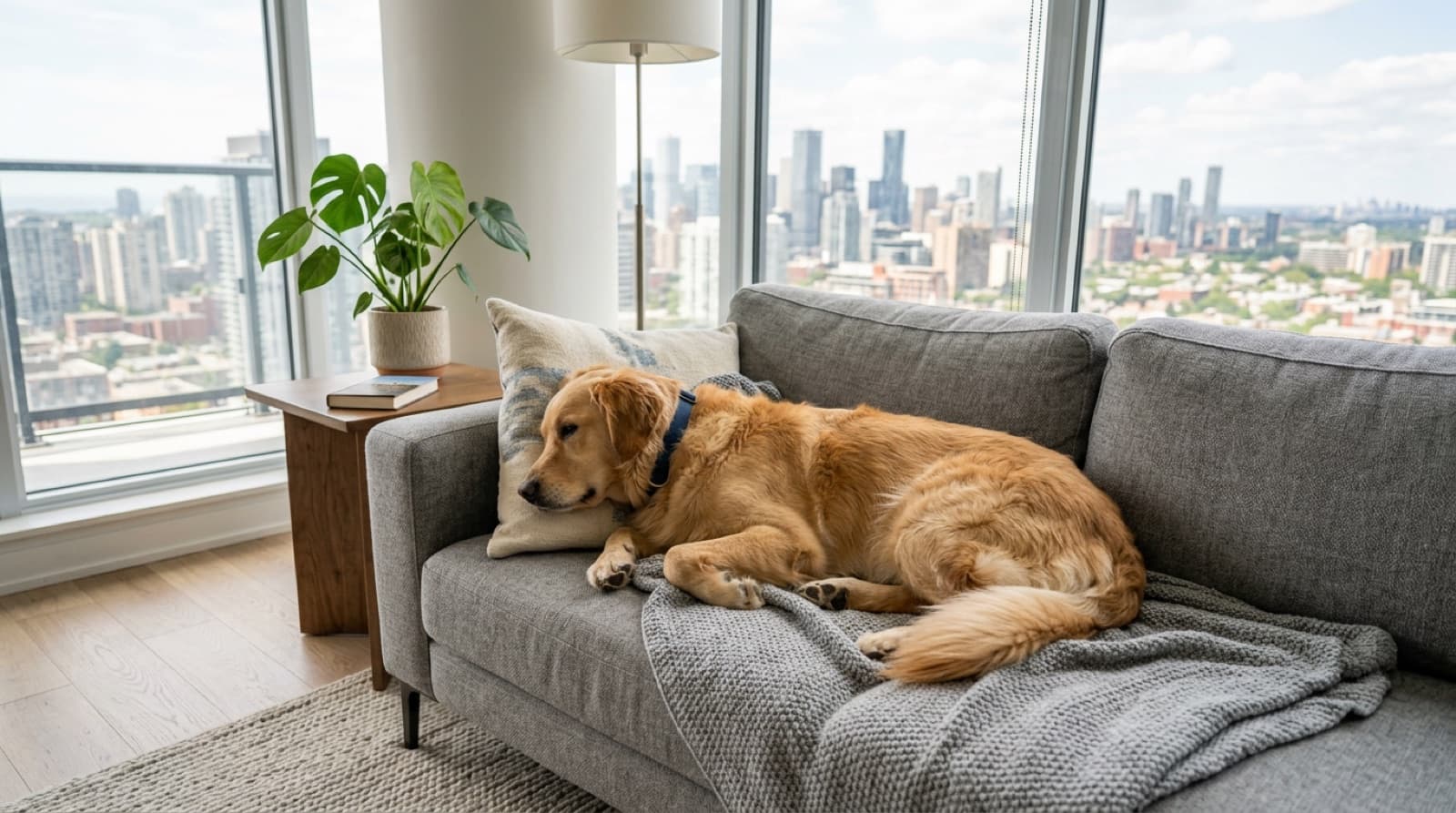
The short answer
For a Toronto condo, prioritise a calm, moderate-to-low energy, house-trained adult that settles well alone, over any particular size or breed. Check your building's pet rules first (some cap weight around 25 lbs). Then commit to real daily exercise, since an apartment dog has no yard. Browse small Toronto dogs or low-energy dogs to start.
What actually matters (it is not size)
The instinct is to filter for “small,” but the dogs that struggle most in Toronto condos are often small, high-strung, and vocal. The dogs that thrive are the ones that sleep through your work day and greet the hallway with indifference. Three traits predict condo success far better than size:
- Energy level. A moderate-to-low energy dog settles into the small space instead of pacing it. This is why a retired racing Greyhound, at 65 lbs, is a famously good apartment dog.
- Alone-time tolerance. Separation anxiety is the fast track to noise complaints. A dog that has been calm alone in its foster home is gold.
- House-training. An unhouse-trained dog cannot make it down 20 floors and across a lobby in time. Adopting a house-trained adult removes the hardest part of high-rise living.
Check your Toronto condo's pet rules first
Before you apply for a specific dog, read your lease or condo declaration. Many Toronto buildings allow dogs but impose a weight cap (often around 25 lbs), limit the number of pets, or restrict certain areas. A rescue will usually ask you to confirm your building permits the dog, and adopting a dog your building won't allow is heartbreaking for everyone. If you rent, your lease must permit the dog too.
Exercise is the whole game
A dog with no yard depends entirely on you for exercise and enrichment, and a well-exercised dog is a quiet, settled dog. Two solid walks a day plus mental enrichment (a snuffle mat, a puzzle feeder, short training games) keeps an apartment dog balanced. Toronto makes the exercise part easy: our off-leash parks guide covers the best spots to burn energy, from High Park to Cherry Beach.
Find your condo-friendly Toronto dog
Filter adoptable Toronto dogs by size and energy, and read the foster notes for “settles well alone” and “house-trained.”
Browse Apartment-Friendly Dogs →Frequently Asked Questions
What is the best dog for a Toronto apartment or condo?
The best apartment dog is a calm, moderate-to-low energy dog that settles well when left alone, regardless of size. A mellow adult Greyhound (famously a "45-mph couch potato") does better in a condo than a bouncy small terrier. Look for adult dogs that a rescue describes as calm, quiet, and settled, and that are already house-trained. In a rescue listing, the energy level and the foster's notes tell you far more than the breed name.
Does size matter for apartment dogs in Toronto?
Less than most people think. Energy and noise matter far more than square footage. A large, low-energy dog that sleeps most of the day is easier in a condo than a small, vocal, high-strung dog that barks at every hallway sound. That said, some Toronto condo corporations impose weight limits (often around 25 lbs), so check your building's pet rules before you fall for a big dog.
Can I adopt a dog if I live in a Toronto condo?
Yes. Toronto rescues place dogs into condos every week. You will need your lease or condo rules to permit dogs, and some rescues ask about weight limits or your floor (higher floors mean more elevator time for potty trips). Match the dog to the setup: a house-trained adult with moderate energy is the safest condo choice, especially for a first-time owner.
What dog breeds do well in apartments?
Breeds often suited to apartment life include Greyhounds and Italian Greyhounds, French Bulldogs (with a caution about brachycephalic heat sensitivity), Cavalier King Charles Spaniels, Bichon Frises, many small poodle mixes, Basset Hounds (low energy despite the size), and plenty of calm mixed-breed dogs. But adopt the individual, not the breed: a rescue's energy rating and foster notes are more reliable than any breed generalisation, since mixed-breed rescues vary widely.
How do I house-train a dog in a high-rise condo?
The challenge is the distance to grass: a puppy or unhouse-trained dog cannot hold it through an elevator ride and a lobby. That is a strong reason to adopt an already-house-trained adult for high-rise living. If you do take on a dog still learning, a balcony pee-pad setup or a dog-relief area in the building bridges the gap while you build the outdoor routine. Consistency and frequent trips are everything in the first weeks.
Do apartment dogs need more exercise to compensate for no yard?
Yes, and this is the key to condo-dog success. A dog without a yard relies entirely on you for exercise and enrichment. Two solid walks a day plus mental enrichment (a snuffle mat, a puzzle feeder, training games) keeps an apartment dog balanced. Toronto has excellent off-leash options for the exercise piece: our Toronto off-leash parks guide covers the best ones. A tired dog is a quiet, settled dog, which is exactly what condo living needs.
Will my dog bark and annoy the neighbours?
Barking is the number-one condo-dog complaint, and it is usually boredom, separation anxiety, or reactivity to hallway noise, not the dog being "bad." Adopting a settled adult with low reactivity avoids most of it. Build alone-time tolerance gradually, provide enrichment before you leave, and address separation anxiety early with a force-free trainer if it appears. A rescue can tell you whether a dog has been calm alone in its foster home.
Where can I find apartment-friendly dogs to adopt in Toronto?
Browse adoptable Toronto dogs on LocalPetFinder and filter for small dogs or lower energy, then read the foster notes for "settles well alone" and "house-trained." Foster-based rescues like Save Our Scruff, TEAM Dog Rescue, and Fetch + Releash know their dogs' apartment-readiness first-hand and will tell you honestly whether a dog suits condo life.
How to Adopt a Dog in Toronto
The full step-by-step adoption process.
Toronto Off-Leash Parks
Where to burn your apartment dog's energy.
New dog? Start with these care guides
Everything a new adopter needs to set up a safe, happy home.