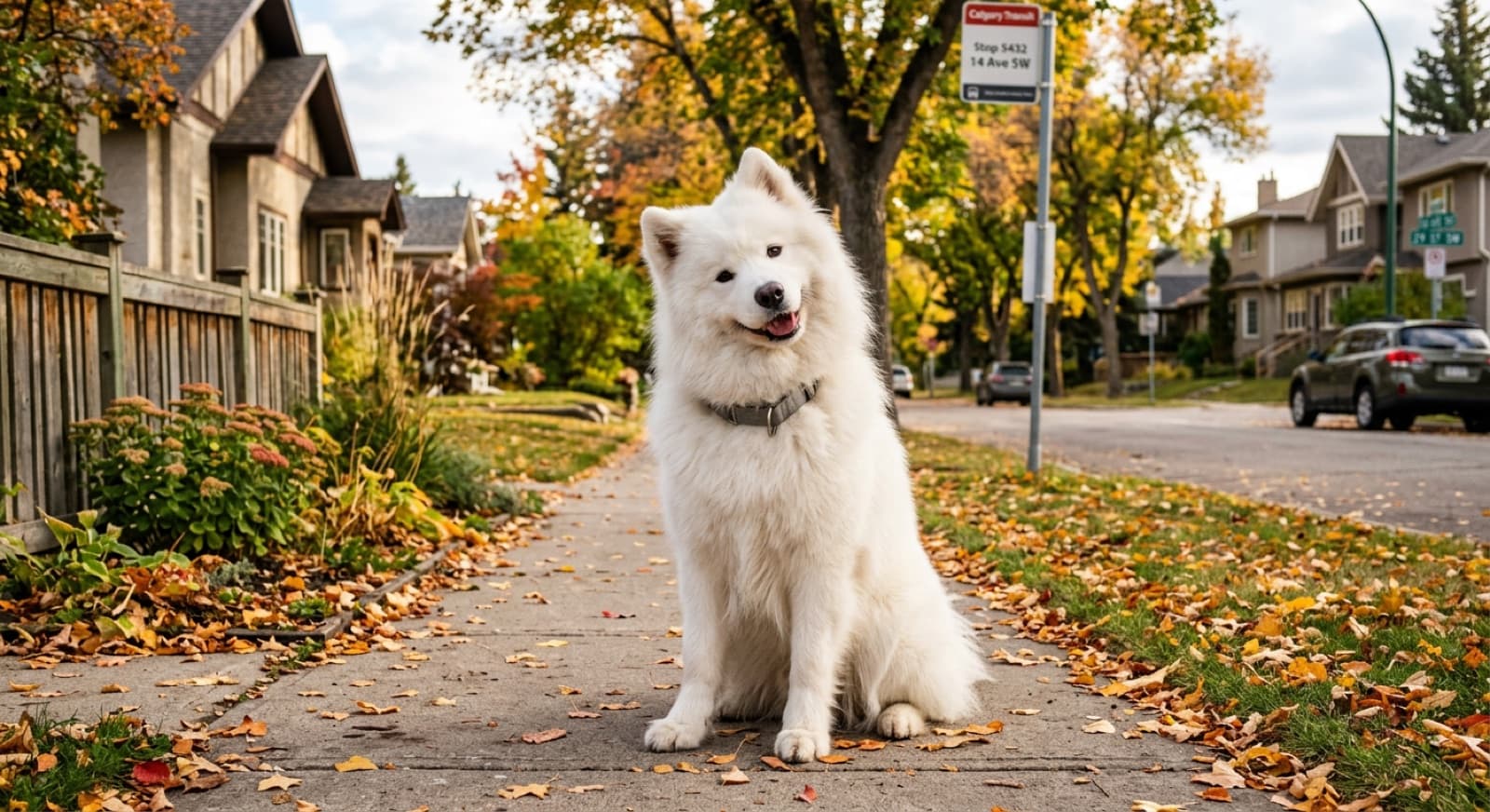
The short answer
Samoyeds are uncommon in rescue but do appear (breed-specific spitz rescues are the best source), with fees $150 to $700-plus. They are affectionate, smiling, wonderfully people-oriented family dogs, great with kids, but the beauty hides real demands: enormous year-round shedding, a serious grooming routine, high exercise needs, a vocal “talky” nature, and a prey drive with a love of digging and escaping. They dislike being left alone. They love Toronto winters and need cool-hour exercise in summer. Adopt through a breed-savvy rescue, and go in ready for the fur. Browse adoptable Toronto dogs.
The smiling companion from the Arctic
The Samoyed was bred by the Samoyede people of Siberia to herd reindeer, haul sleds, and, crucially, live closely with the family for warmth and companionship, which is why they are so unusually affectionate and people-oriented. That heritage shows in the famous “Sammy smile” and a genuinely cheerful, gentle, friendly temperament that makes them wonderful with children and sociable with other dogs. But the same working heritage means they are active, intelligent, vocal, and independent-minded, with a strong prey drive and a love of digging and escaping. The beauty draws people in; the demands are what they must be ready for. For an active, prepared home, a Samoyed is a joyful, devoted companion. The Canadian Kennel Club describes the breed's gentle, friendly nature, and a good rescue will be honest about a dog's energy and quirks.
The realities: fur, energy, and voice
Three realities land Samoyeds in rescue. First, and biggest, the shedding: that profuse double coat sheds heavily year-round and blows dramatically seasonally, producing staggering amounts of white fluff, a genuine lifestyle factor requiring frequent brushing. Second, exercise: this is an active working breed needing an hour-plus of real daily activity plus mental stimulation, or it becomes destructive and vocal. Third, the voice: Samoyeds are talkers and can bark a lot, which matters in close-neighbour settings. Add a prey drive, digging, and escape-artistry (always exercise on-leash or in secure fencing), and you have a demanding, rewarding breed. Our grooming-and-shedding guide covers the coat in depth, and our health guide covers the medical side.
Costs and getting started
Samoyeds are legal everywhere in Ontario with no restrictions, but they need an active, prepared owner far more than paperwork. Adoption fees run $150 to $700-plus (spay or neuter and shots included) versus a breeder's $2,000 to $4,000-plus, but budget for the ongoing costs: grooming (tools and time, or a professional groomer at $80 to $130-plus per visit for this heavy coat), the food and vet costs of a medium-large active dog, and a cushion for hereditary health risks (our cost guide helps). Make sure your lifestyle matches the exercise and grooming needs before adopting. See the breed page for adoptable Samoyeds near Toronto.
Browse adoptable Samoyeds in Toronto
Samoyeds and Sammy mixes from Toronto-area shelters and rescues, with foster notes on energy, vocalness, and temperament.
See Available Samoyeds →Frequently Asked Questions
Where can I adopt a Samoyed in Toronto?
Samoyeds are a relatively uncommon breed, so they turn up in Toronto rescue less often than popular breeds, but they do appear, usually surrendered when owners underestimate the shedding, grooming, exercise, or vocal nature. Check the City of Toronto Animal Services, the Toronto Humane Society, foster-based rescues, and, most usefully, breed-specific Samoyed or northern/spitz-breed rescues, which are often the best source and understand the breed well. LocalPetFinder aggregates adoptable Toronto-area dogs in one place. Because purebred Samoyeds are uncommon and adopted quickly, patience, flexibility on age or a Sammy mix, and a rescue alert are the keys. The foster notes on energy, vocalness, and any escape history are worth reading, since this is an active, clever, sometimes mischievous northern breed.
Are Samoyeds good family dogs?
Yes, Samoyeds are wonderful, affectionate family dogs, in fact they were bred to live closely with people (the Samoyede people of Siberia kept them in their tents for warmth and companionship), so they are unusually people-oriented, friendly, and gentle. They are typically excellent with children and sociable with other dogs, and their famous "Sammy smile" reflects a genuinely cheerful, loving temperament. The important caveats are practical rather than temperamental: they shed enormously, need substantial daily exercise, can be quite vocal, have a strong prey drive and love to dig and sometimes escape, and being so people-bonded, they do not tolerate being left alone for long. For an active family that can meet the exercise, grooming, and companionship needs, a Samoyed is a joyful, devoted companion, but it is not a low-effort breed.
Do Samoyeds shed a lot?
Enormously, this is the single most important thing to understand before adopting a Samoyed. They have a thick, profuse double coat that sheds heavily year-round and "blows" (sheds dramatically) once or twice a year, producing staggering amounts of white fluff that ends up on floors, furniture, and clothing throughout your home. Managing it requires frequent brushing (several times a week at minimum, daily during a coat blow) to remove loose undercoat, prevent matting, and reduce (never eliminate) the hair around your home. Ironically, the Samoyed’s hair is prized by spinners and can be spun into yarn, that is how much of it there is. Prospective owners must be genuinely, realistically prepared for the volume of shedding; it is a lifestyle factor, not an occasional chore, and underestimating it is a leading reason Samoyeds end up in rescue. Our grooming-and-shedding guide covers managing the coat in detail.
Why do Samoyeds end up in rescue?
Almost always because owners underestimated the breed. The stunningly beautiful, smiling puppy draws people who are not prepared for the reality: relentless heavy shedding, a demanding grooming routine, high exercise needs, a tendency to be vocal (they "talk" and can bark a lot), a strong prey drive and love of digging and escaping, and a people-oriented nature that dislikes being left alone. When the fluff, energy, and noise set in, some owners surrender. The breed’s beauty and popularity have also fueled backyard and puppy-mill breeding, producing dogs with health or temperament issues more likely to end up in rescue. A rescue Samoyed is usually a wonderful, smiling dog whose owners were simply not ready for the commitment, and an active, prepared home that wants the whole package, fur and all, is exactly what it needs.
How much does it cost to adopt and keep a Samoyed in Toronto?
Adoption fees run the usual Toronto ranges: roughly $150 to $400 at municipal animal services and $300 to $700 or more at rescues (breed-specific rescues sometimes a bit higher), with spay or neuter, vaccines, and a vet check included, well below the $2,000 to $4,000-plus a breeder Samoyed commands. Beyond the fee, budget for the Sammy-specific ongoing costs: grooming (whether you do it yourself with the right tools or use a professional groomer, who charges more for this heavy coat, typically $80 to $130-plus per visit in Toronto), the food and vet costs of a medium-large active dog, and a cushion for the breed’s hereditary health risks (hip dysplasia, eye and heart conditions, and a Samoyed-specific hereditary kidney disease). Pet insurance is worth considering. Our Toronto cost guide has the full picture.
How much exercise does a Samoyed need?
A good amount, Samoyeds are an active working breed (bred to herd reindeer and haul sleds in the Arctic) and need substantial daily exercise, not just a stroll around the block. Plan on at least an hour or more of real activity a day: brisk walks, running, hiking, and play, plus mental stimulation, since they are intelligent and get bored easily. A bored, under-exercised Samoyed often becomes destructive, vocal, and prone to digging or escaping, so meeting the exercise and enrichment needs is essential. Two Toronto-specific notes: their heavy coat means summer exercise should happen in the cool hours to avoid overheating, while they absolutely thrive in winter and love the cold and snow. Also, given their prey drive and escape tendencies, exercise on-leash or in secure fencing. For an active owner who enjoys getting out in all seasons, the Samoyed is a fantastic, enthusiastic companion.
Samoyed Health Issues: Diabetes, Eyes, Kidneys
Samoyed health issues to plan for: a very high diabetes risk, eye disease and glaucoma, inherited kidney disease in young males, skin disease, sulfa sensitivity and hips.
How to Groom a Samoyed
A Samoyed grooming guide: why you should never shave the double coat, surviving the twice-yearly coat blow, line brushing, the white coat, and the honest cost.
New dog? Start with these care guides
Everything a new adopter needs to set up a safe, happy home.