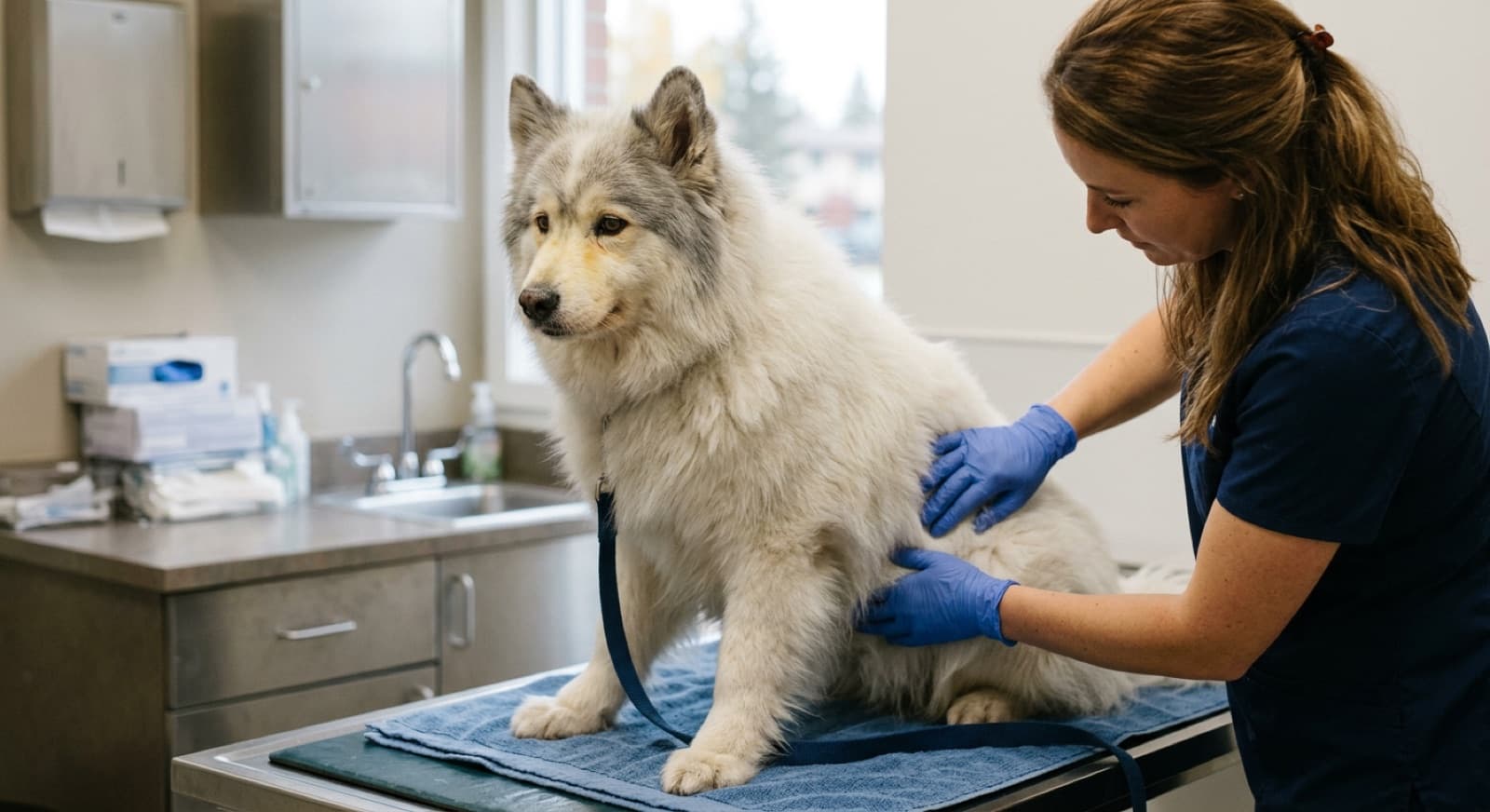
The short answer
Samoyeds are generally hardy (12 to 14 years) but carry hereditary predispositions: hip dysplasia, a Samoyed-specific hereditary kidney disease (glomerulopathy, worse in males), eye conditions (PRA, cataracts), heart defects (pulmonic/aortic stenosis), diabetes, and hypothyroidism. The highest-impact things you control: keep the dog lean, groom to protect the skin, provide real exercise, and keep up with vet checkups that can monitor kidney, eye, and heart. Insure while young and healthy, before the hereditary conditions are diagnosed and excluded. They love Toronto winters; protect them from summer heat. Browse adoptable Toronto dogs.
The breed-specific kidney disease
The most distinctive Samoyed health concern is hereditary glomerulopathy (Samoyed hereditary nephritis), an inherited kidney disease specific to the breed. It damages the kidney's filtering structures and is inherited in an X-linked pattern, so it typically hits male Samoyeds harder (they can develop progressive kidney failure young), while females are usually milder carriers. Watch for increased thirst and urination, weight loss, poor appetite, and lethargy. Genetic testing exists and responsible breeders screen for it, so for an adopter the practical steps are to ask the rescue about any known kidney history and keep up with vet care that can include monitoring kidney values, catching trouble early. The VCA guide to chronic kidney disease is worth reading, and our grooming guide covers day-to-day coat care.
Hips, eyes, heart, and diabetes
Beyond the kidneys, the Samoyed carries the rest of its hereditary profile. Hip dysplasia is common in the breed's size class, so keep the dog lean to protect the joints. Eye conditions, PRA, cataracts, glaucoma, run in the breed, making regular eye checks worthwhile. Heart defects like pulmonic and aortic stenosis occur and may show as a murmur, exercise intolerance, or fainting. And Samoyeds have an elevated diabetes risk, another reason to keep the dog lean and watch for increased thirst, urination, and weight change. None of these is a certainty, but together they make routine vet care that includes the eyes, heart, and metabolic screening genuinely valuable. Adopting through a rescue that has vet-checked the dog gives you a clearer starting point.
Keeping a Samoyed healthy, and insurance
The care that matters most is consistent: keep the dog lean (protecting joints and reducing diabetes risk), groom regularly to keep the skin under that heavy coat healthy, provide real exercise and enrichment, manage summer heat carefully while enjoying the winters, and keep up with routine vet checkups that can monitor kidney values, eyes, and heart. On the money side, pet insurance is well worth considering, because chronic kidney disease, diabetes, cardiac care, hip surgery, or eye treatment can add up substantially, and the key is to insure while the dog is young and healthy, before the hereditary conditions are diagnosed and excluded. Our cost guide has the full Toronto picture. With attentive care, most Samoyeds are robust, smiling companions for well over a decade.
Browse adoptable Samoyeds in Toronto
Samoyeds and Sammy mixes from Toronto-area shelters and rescues, with foster notes on temperament and health.
See Available Samoyeds →Frequently Asked Questions
What health problems are Samoyeds prone to?
Samoyeds are generally a hardy breed, but they carry a few notable hereditary predispositions every owner should know. The main ones: hip dysplasia (common in medium-large breeds); hereditary glomerulopathy, a Samoyed-specific inherited kidney disease (also called Samoyed hereditary nephritis); eye conditions including progressive retinal atrophy (PRA), cataracts, and glaucoma; heart conditions such as pulmonic stenosis and aortic stenosis; diabetes mellitus (Samoyeds have an elevated risk); and hypothyroidism. They can also get some autoimmune and skin conditions. None of this means a Samoyed will be unhealthy, many are robust and live 12 to 14 years, but the breed-specific kidney disease in particular makes it worth choosing a dog from health-tested lines or a rescue that has done a vet check, and keeping up with routine vet care so any issues are caught early.
What is Samoyed hereditary glomerulopathy (kidney disease)?
Hereditary glomerulopathy, sometimes called Samoyed hereditary nephritis, is an inherited kidney disease specific to the breed and one of the more important Samoyed-specific health concerns to be aware of. It is caused by a genetic defect affecting the kidney’s filtering structures (the glomeruli), and it is inherited in an X-linked pattern, which means it typically affects male Samoyeds more severely (they can develop progressive kidney failure at a young age), while females are usually more mildly affected carriers. Signs of kidney trouble can include increased thirst and urination, weight loss, poor appetite, and lethargy. Responsible breeders test for the condition, and there is genetic testing available. For an adopter, the practical takeaways are to be aware of the condition, ask the rescue about any known kidney history, and keep up with routine vet care that can include monitoring kidney values, so any problem is caught and managed as early as possible.
Do Samoyeds have eye or heart problems?
They can have both, so both are worth monitoring. On eyes, Samoyeds are prone to several inherited conditions: progressive retinal atrophy (PRA, a genetic degeneration of the retina that gradually leads to blindness), cataracts, glaucoma, and retinal dysplasia. Regular vet eye checks help catch these, and reputable breeders eye-test their dogs. On the heart, Samoyeds have an elevated risk of certain congenital heart defects, notably pulmonic stenosis and subaortic stenosis (narrowings that make the heart work harder), which a vet may detect as a murmur and confirm with imaging. Watch for exercise intolerance, fainting, or breathing changes as possible cardiac signs. Neither issue is a certainty, many Samoyeds have healthy eyes and hearts, but both are part of the breed’s profile, and routine vet checkups that include the eyes and heart are the best way to catch problems early, which is where adopting from a rescue that vet-checks its dogs helps.
How long do Samoyeds live and how do I keep mine healthy?
Samoyeds typically live 12 to 14 years, a good lifespan for a medium-large breed, and attentive care helps them thrive. The highest-impact things: keep the dog lean (protects the joints and reduces the diabetes risk the breed is prone to); keep up regular grooming to protect the skin under that heavy coat and let you spot problems; provide the substantial exercise and mental stimulation this active breed needs; keep up with routine vet checkups, ideally including periodic kidney-value, eye, and heart monitoring given the breed’s predispositions; and be alert to early signs of kidney trouble (increased thirst and urination), diabetes, or thyroid issues. Because they love the cold, Toronto winters are easy, but manage summer heat carefully given the coat. Adopting from a rescue that has done a vet check, and being aware of the hereditary kidney disease in particular, sets you up to give a Samoyed a healthy life.
Should I get pet insurance for a Samoyed?
Pet insurance is worth serious consideration for a Samoyed, particularly because of the breed-specific hereditary conditions. A Samoyed can face costly issues, hip surgery, management of the hereditary kidney disease, eye treatment, cardiac care, and diabetes management among them, and a single major issue (especially chronic kidney disease or diabetes, which require ongoing care) can add up substantially over time. As with any breed, the key is to insure while the dog is young and healthy, before any condition is diagnosed and excluded as pre-existing, which is especially relevant here given the hereditary kidney, eye, and heart risks that can be diagnosed and then excluded. Compare Canadian providers on their coverage of hereditary and chronic conditions specifically, read the exclusions carefully, and weigh insurance against a dedicated savings fund. Given the range of breed-specific hereditary conditions, having a financial plan is one of the more responsible parts of Samoyed ownership.
How does Toronto’s climate affect a Samoyed’s health?
The Samoyed is superbly built for cold, so Toronto winters are the easy, joyful part, their thick double coat lets them love snow and frigid temperatures that would trouble most breeds, and many Samoyeds are at their happiest in winter. Heat is the real health concern: that dense coat means they can overheat dangerously in Toronto’s hot, humid summers, so provide air conditioning or a cool space, shade, and water, exercise them only in the cool of early morning or evening, and watch for signs of heat distress (excessive panting, drooling, weakness). Do not shave the double coat to cool them, it actually insulates against heat as well as cold and protects the skin from sunburn; instead manage heat through environment and timing. So the climate management is straightforward: let them enjoy the cold, and take real care to protect them from summer heat. Their love of winter is one of the breed’s genuine joys in a Canadian city.
Samoyed Adoption in Toronto
Where to adopt, costs, and the honest Sammy reality.
Samoyed Grooming & Shedding
Managing the double coat, coat blow, and brushing.
New dog? Start with these care guides
Everything a new adopter needs to set up a safe, happy home.