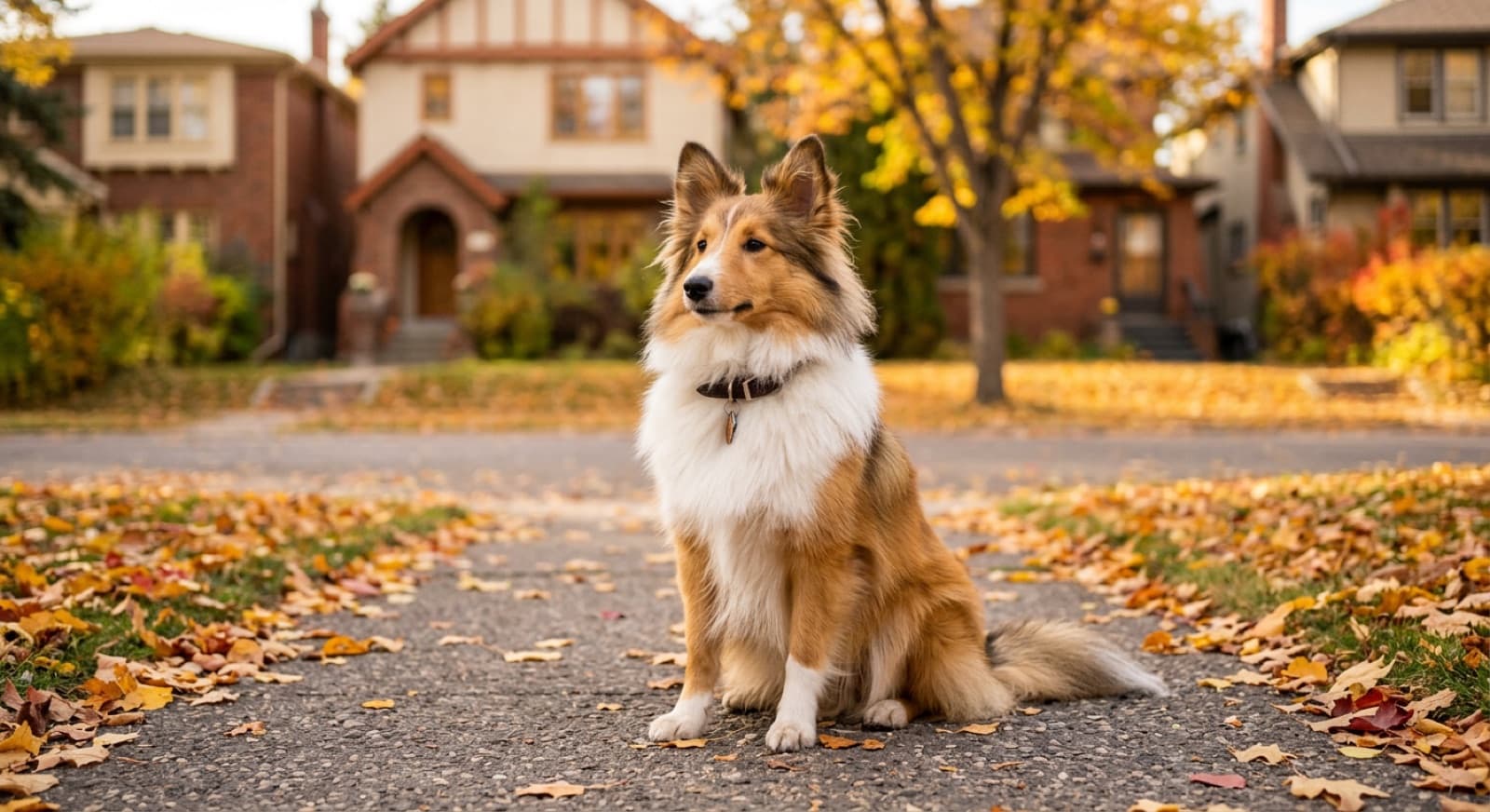
The short answer
Shelties come through Toronto-area rescue regularly (breed-specific rescues are a great source), with fees $150 to $700-plus (versus $1,500 to $3,000-plus from a breeder). They are brilliant, affectionate, devoted family dogs, one of the most trainable breeds, great with kids. But three realities catch owners off guard: they are vocal (herding-watchdog barking that needs managing, a real condo consideration), they have a full double coat needing regular brushing, and they are sensitive and moderately active, needing gentle handling, mental stimulation, and daily exercise. For a home that manages the barking and grooming, a Sheltie is a delightful companion. Adopting a temperament-evaluated adult helps with fit. Browse adoptable Toronto dogs.
The brilliant little herder
The Shetland Sheepdog was bred to herd on the rugged Shetland Islands, and that heritage shaped a dog that is intelligent, sensitive, biddable, and hard-working, one of the smartest and most trainable breeds there is, and also affectionate, loyal, and deeply devoted to its family. They are typically wonderful with children and good with other pets, and they excel at dog sports thanks to their brains and eagerness to please. (Note: a Sheltie is a distinct breed, not simply a miniature Collie, though they resemble one.) The same herding heritage brings the breed's main considerations: they are vocal, sensitive to harsh handling and chaos, moderately active, and reserved with strangers without socialization. For a home that appreciates a bright, sensitive, trainable companion and will meet those needs, a Sheltie is a joy. The Canadian Kennel Club describes the breed's intelligent, gentle nature, and a good rescue will be honest about a dog's temperament.
Barking, grooming, and sensitivity
Three realities define daily Sheltie care. First, barking: as a herding-watchdog breed, Shelties are vocal and alert-bark readily, a real consideration in a Toronto condo, but their intelligence means it responds well to early, positive training (a “quiet” cue, managing triggers, meeting exercise needs), even if it cannot be eliminated entirely. Second, grooming: that full double coat with its mane and feathering needs brushing several times a week to prevent matting, more during the heavy seasonal shed, though it should never be shaved. Third, sensitivity: Shelties do not thrive with harsh handling or chaos and can be reserved with strangers without socialization, so gentle, consistent methods and good early socialization matter. Our barking-and-training guide covers managing the vocalness and training, and our health guide covers the medical side.
Costs and getting started
Shelties are legal everywhere in Ontario with no restrictions, and their small-to-medium size suits many homes including apartments (with barking management), the real considerations are the barking, grooming, and mental-stimulation needs, not paperwork. Adoption fees run $150 to $700-plus (spay or neuter and shots included) versus a breeder's $1,500 to $3,000-plus, but budget for the ongoing costs: regular grooming (tools and time, or a groomer at $60 to $100-plus), the food and vet costs of a small-to-medium dog, and a cushion for hereditary health risks like eye conditions and MDR1 drug sensitivity (our cost guide helps). Adopting a temperament-evaluated adult is especially valuable for this sensitive breed. See the breed page for adoptable Shelties near Toronto.
Browse adoptable Shelties in Toronto
Shetland Sheepdogs and Sheltie mixes from Toronto-area shelters and rescues, with foster notes on barking, temperament, and coat.
See Available Shelties →Frequently Asked Questions
Where can I adopt a Sheltie in Toronto?
Shetland Sheepdogs (Shelties) and Sheltie mixes turn up in Toronto-area rescue regularly, often surrendered when owners underestimate the barking, the grooming, or the sensitive, active temperament. Check the City of Toronto Animal Services, the Toronto Humane Society, foster-based rescues, and, most usefully, breed-specific Sheltie or herding-breed rescues, which understand the breed and place carefully. LocalPetFinder aggregates adoptable Toronto-area dogs in one place. Because Shelties are popular and adopted quickly, being open to an adult, a Sheltie mix, or a similar smart herding breed, and setting up a rescue alert, widens your options. Shelties are sometimes confused with miniature Collies (they are a distinct breed, not just a small Collie), so read listings carefully. The foster notes on barking, energy, and temperament are worth reading, since this is a bright, sensitive, vocal herding dog.
Are Shelties good family dogs?
Yes, Shelties are wonderful family dogs for the right home, they are intelligent, affectionate, loyal, gentle, and deeply devoted to their families, and they are typically excellent with children and good with other pets. Bred to herd on the Shetland Islands, they are sensitive, biddable, and famously trainable, one of the smartest and most trainable breeds, which makes them a joy for families who enjoy training and activities. The main things to understand are that they are vocal (Shelties bark, a herding-and-watchdog trait that needs managing, especially in a condo), sensitive (they do not respond well to harsh handling or chaotic homes and can be reserved or shy with strangers without socialization), moderately energetic (they need real daily exercise and mental stimulation), and that they have a full double coat needing regular grooming. For a family that will exercise, train, socialize, groom, and gently manage the barking, a Sheltie is a devoted, delightful companion.
Do Shelties bark a lot?
Yes, Shelties are known for being vocal, and this is one of the most important things to understand before adopting one, especially in a Toronto apartment or condo. As a herding and watchdog breed, Shelties are alert and naturally inclined to bark at movement, sounds, visitors, other animals, and anything they find worth announcing, and some can become quite persistent barkers if the tendency is not managed. The good news is that Shelties are highly intelligent and trainable, so the barking can be significantly managed and reduced with early, consistent, positive training (teaching a "quiet" cue, managing triggers, meeting their exercise and mental-stimulation needs so boredom does not fuel it), but you cannot expect to eliminate it entirely, it is part of the breed. This makes them a real consideration for shared-wall living, where a persistent barker causes neighbour problems. For a home that can manage and train the barking, it is very workable; for one that cannot tolerate any barking, a Sheltie may not be the best fit. Our barking-and-training guide covers managing it in depth.
Why do Shelties end up in rescue?
Several reasons feed the flow. Barking is a big one: owners, especially in apartments, sometimes underestimate the breed’s vocal nature and surrender when a persistent barker causes problems. The grooming commitment of that full double coat, and the exercise and mental-stimulation needs of a smart, active herding dog, also catch some owners off guard, and a bored, under-stimulated Sheltie can develop behaviour problems. Their sensitivity means they can struggle in chaotic or harsh homes. The breed’s popularity has also fueled some backyard and puppy-mill breeding, producing dogs with health, temperament, or shyness issues more likely to end up in rescue. Add ordinary life changes, and Shelties land in rescue regularly. A rescue Sheltie is usually a wonderful, devoted, intelligent dog whose owners underestimated the barking, grooming, or exercise needs, and a prepared home ready for those is exactly what it needs.
How much does it cost to adopt and keep a Sheltie in Toronto?
Adoption fees run the usual Toronto ranges: roughly $150 to $400 at municipal animal services and $300 to $700 or more at rescues (breed-specific rescues sometimes a bit higher), with spay or neuter, vaccines, and a vet check included, well below the $1,500 to $3,000-plus a breeder Sheltie commands. Beyond the fee, budget for the Sheltie-specific ongoing costs: regular grooming (that full double coat needs frequent brushing, and professional grooming, if used, is moderate for the coat, typically $60 to $100-plus per visit in Toronto), the food and vet costs of a small-to-medium dog, and a cushion for the breed’s hereditary health considerations (eye conditions, MDR1 drug sensitivity, and hip issues among them). Pet insurance is worth considering. Our Toronto cost guide has the full picture, and adopting from a rescue that has temperament-evaluated the dog is especially valuable for a sensitive, vocal breed where fit matters.
How much exercise and grooming does a Sheltie need?
Moderate exercise, regular grooming. On exercise, Shelties are a moderately energetic herding breed that needs real daily activity, a good walk or two plus play, and, importantly, mental stimulation, since they are highly intelligent and bore easily. They excel at and love dog sports (agility, obedience, rally, herding), which are a great outlet, and a bored Sheltie can become vocal or develop behaviour problems, so meeting the mental needs matters as much as the physical. They are manageable for apartment living exercise-wise (their needs are less intense than a Border Collie), provided you meet the activity and the barking-management needs. On grooming, Shelties have a full, thick double coat with a mane and feathering that needs brushing several times a week to prevent matting (especially behind the ears, on the legs, and the "pants"), plus more frequent brushing during their seasonal shed, when they blow their undercoat heavily. They do not need clipping (the coat should not be shaved), but the regular brushing is a genuine, ongoing commitment. Overall, the real commitments are grooming, mental stimulation, and barking management, not intense exercise.
Sheltie Health Issues: MDR1, Eyes, Thyroid
Shetland Sheepdog health issues to plan for: MDR1 drug sensitivity, Collie eye anomaly, a bleeding disorder, epilepsy, a digestive condition and deafness in merles.
Sheltie Barking and Training
Why Shelties bark, teaching a quiet cue, reducing triggers and training a sensitive, eager dog.
New dog? Start with these care guides
Everything a new adopter needs to set up a safe, happy home.