The short answer
An Aussie needs well over an hour of vigorous daily exercise AND equally substantial mental stimulation, physical exercise alone won't satisfy this intelligent working breed (and can build a fitter, more tireless dog). Best outlets: dog sports (agility especially), training, puzzle toys, scent work, and jobs, activities that engage body and mind together are ideal. The strong herding instinct (herding and nipping people, children, pets, cyclists) is instinct, not aggression, and is manageable by meeting the dog's needs, providing appropriate outlets, training impulse control, and supervising. Montreal works year-round: the breed handles cold well (weather-resistant coat), so outdoor exercise continues, with indoor mental work when weather limits it.
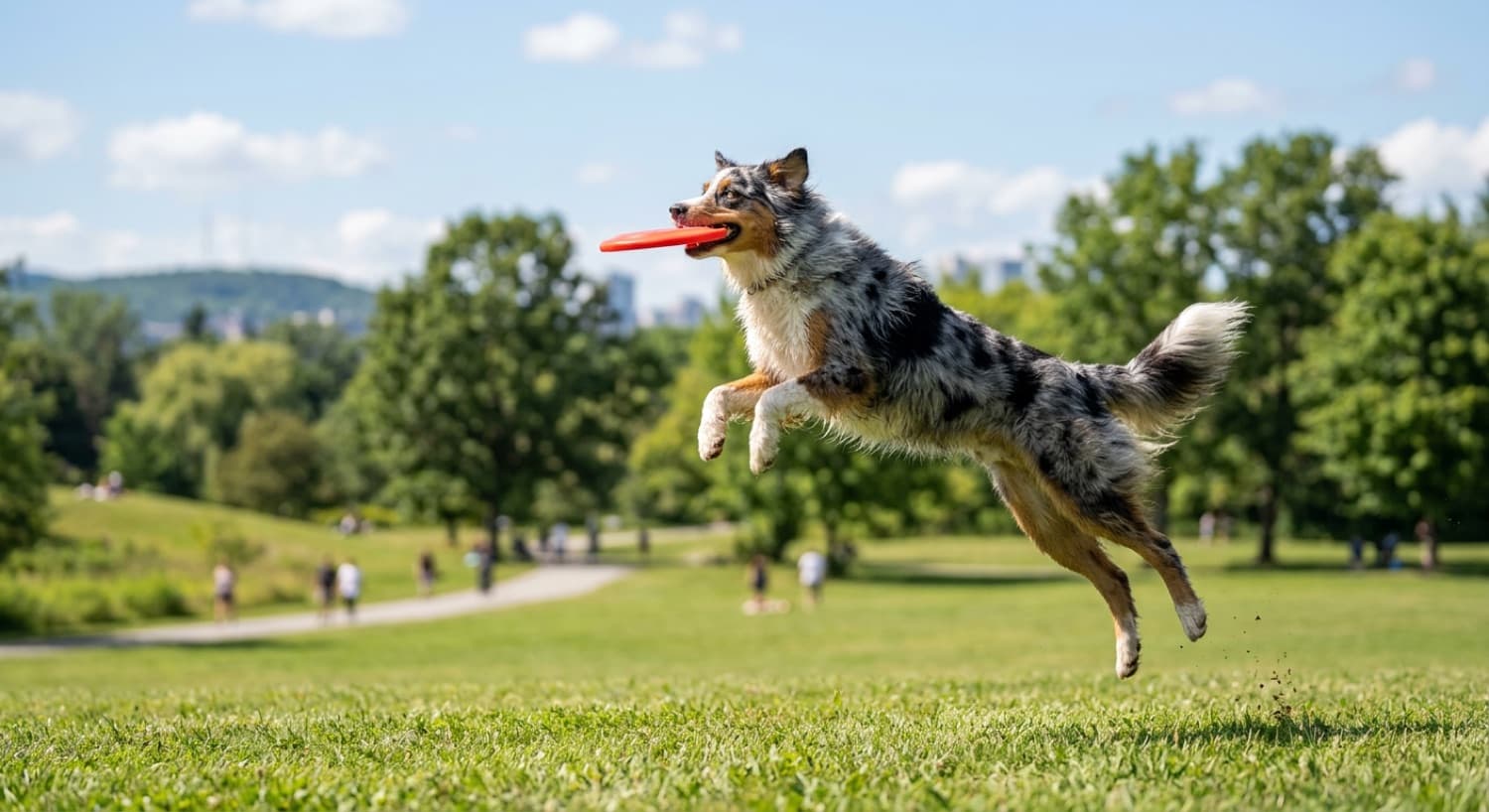
Three things determine whether life with an Australian Shepherd goes well: meeting its considerable physical exercise needs, meeting its equally considerable mental needs, and channelling its herding instinct constructively. Owners who nail all three have a calm, devoted, brilliant partner. Those who miss them get the frustrated, herding, destructive dog that fills rescues. Here is how to get it right in Montreal.
How much physical exercise
A great deal, well over an hour of vigorous daily activity and often more, a tireless, athletic breed bred to work all day. Real, sustained activity: running, hiking, fetch, active play. Ordinary walks don't come close for a healthy adult. But the crucial catch: physical exercise alone isn't enough, the breed needs equally substantial mental stimulation, and simply running an Aussie for hours can even build a fitter, more tireless dog.
The best approach combines vigorous physical exercise with mental work, and activities that do both (dog sports) are especially efficient. Needs vary with the individual, age, and line, and puppies shouldn't be over-exercised while their joints develop. For a healthy adult, it's a substantial daily commitment of vigorous physical exercise plus mental work, year-round. Montreal's parks, paths, and active dog-sports community provide good opportunities, and Aussies, with their weather-resistant coats, handle the local climate (including winter) well.
Why mental stimulation matters as much
Mental stimulation is just as important as physical exercise. Aussies are highly intelligent working dogs bred to think and problem-solve, and that mind needs engaging, not just the body tiring. An Aussie with plenty of physical exercise but no mental work often stays restless, frustrated, or destructive, one of the most common reasons the breed develops problems, and why “just exercise it more” often fails.
Make mental work a deliberate, daily part of the routine: training and new skills/tricks (they're eager, quick learners), dog sports, puzzle and food-dispensing toys, scent games and nosework, and giving the dog jobs and challenges. An Aussie thrives on learning, problem-solving, and having a purpose, so an owner who provides ongoing mental challenges (ideally engaging body and mind together) has a far calmer, happier, better-behaved dog. Mental stimulation isn't an optional extra, it's a core need.
Dog sports and activities
Sports meet the breed's physical and mental needs at once, channel the herding drive, and build the bond, which is why Aussies are top performers. Great options:
- •Agility, Aussies are stars, their speed, athleticism, and trainability suit it perfectly.
- •Obedience and rally, they excel with their eagerness to please.
- •Flyball and disc (frisbee), fast-paced and fun for an athletic, toy-driven Aussie.
- •Herding, the breed's original purpose, deeply satisfying, plus treibball (“urban herding”).
- •Training, tricks, scent work, and jobs, valuable mental outlets alongside running and hiking.
Sports burn energy, provide mental stimulation, channel the herding drive and work ethic constructively, build the bond, and reduce problem behaviours. Montreal and the surrounding area have an active dog-sports community with clubs and facilities offering agility, obedience, and more, many indoors year-round (valuable in a winter climate). For an adopted Aussie, taking up a sport gives the working brain and body a job, meets its needs, and builds your relationship, agility in particular is a natural, joyful fit.
Managing the herding instinct
The strong herding instinct can show up as trying to herd people, children, pets, cyclists, or moving things, by circling, chasing, eyeing, and sometimes nipping at heels. This is instinct, not aggression, but it needs managing and redirecting, especially the heel-nipping (a problem with running children) and chasing moving things (which can be dangerous, e.g. cyclists or cars).
How to manage it: meet the dog's exercise and mental needs (a satisfied Aussie herds inappropriately less), provide appropriate outlets (herding, herding-style games like treibball, fetch), train (impulse control, a reliable recall and “leave it,” redirecting the behaviour onto acceptable outlets, rewarding calm), and manage situations (supervise around running children and other triggers, interrupt and redirect before the behaviour becomes established). For herding of children, supervise, teach children not to run and shriek in triggering ways, and redirect the dog. With good management, training, and, above all, meeting the dog's needs, the herding instinct is very manageable, and channelling it into herding sports can be a great source of enrichment and bonding.
Meeting the needs in Montreal, winter included
Montreal works year-round, and the breed is well suited to the climate. Warmer months: parks, paths, and green spaces for running, hiking, and fetch, plus the active dog-sports community, combine physical outings with training and mental games. Winter is very manageable, Aussies handle cold well (their weather-resistant double coat suits Montreal winters) and many love snow, so outdoor exercise continues (protect the paws from salt and ice, watch for ice, adjust for extreme cold).
Winter is also when mental stimulation is especially valuable, lean on indoor training, puzzles, scent games, and indoor dog-sport facilities (many run year-round) when severe weather limits outdoor time. Indoor mental work genuinely takes the edge off on a day a long outdoor session isn't possible. Year-round, the key is combining daily physical exercise with substantial mental engagement, using Montreal's outdoor spaces and dog-sports community when weather allows and leaning on indoor enrichment when it doesn't. The breed's good cold tolerance makes Montreal a genuinely workable, even enjoyable, city for an active Aussie owner. See our adoption guide.
Browse adoptable dogs in Montreal
If you'll engage the mind as well as the body, an Aussie is a brilliant, devoted partner. Refreshed regularly across Montreal-area organizations.
See Available Dogs →Frequently Asked Questions
How much exercise do they need?
Well over an hour of vigorous daily activity, often more, a tireless working breed. But physical exercise alone isn't enough, combine it with mental work (activities that do both, like dog sports, are ideal). Needs vary with age and line; don't over-exercise puppies' developing joints. Montreal's parks and sports community suit them.
Why do they need mental stimulation too?
Aussies are intelligent working dogs bred to think and problem-solve, so the mind needs engaging, not just the body. An Aussie with exercise but no mental work stays restless and can become destructive. Make mental work daily, training, dog sports, puzzles, scent games, and jobs. It's a core need, not an optional extra.
What dog sports suit them?
Agility (they're stars), obedience, rally, flyball, disc, herding, and treibball, plus training, tricks, and scent work. Sports meet physical and mental needs at once, channel the herding drive, and build the bond. Montreal has an active dog-sports community with year-round indoor facilities.
How do I manage the herding instinct?
It shows up as herding and nipping people, children, pets, and moving things, instinct, not aggression, but it needs managing. Meet the dog's needs, provide appropriate outlets (herding, treibball, fetch), train impulse control and “leave it,” and supervise around running children and cyclists. Channelling it into herding sports is great enrichment.
How do I manage in Montreal winter?
Aussies handle cold well (weather-resistant coat) and many love snow, so outdoor exercise continues (protect paws from salt, watch for ice). Winter is when mental work matters even more, lean on indoor training, puzzles, scent games, and indoor dog-sport facilities when severe weather limits outdoor time. The breed's cold tolerance makes Montreal workable year-round.
Related Montreal guides
Australian Shepherd Adoption in Montreal
Where to adopt in Montreal, the smart high-energy temperament, real costs, grooming, and who it suits.
Australian Shepherd Health Issues
Hip and elbow dysplasia, eye conditions, epilepsy, the critical MDR1 gene, the double-merle risk, and the insurance case.
Adoptable Dogs in Montreal
All currently available dogs across Montreal-area organizations, including Australian Shepherds and herding mixes. Updates regularly.
Montreal Dog Adoption Resources
All our Montreal dog adoption guides in one place.
New dog? Start with these care guides
Everything a new adopter needs to set up a safe, happy home.