The short answer
The Australian Shepherd is generally hardy and long-lived (~12 to 15 years), but knows several inherited conditions. The most critical: the MDR1 gene, common in collie-type breeds, which makes affected dogs dangerously sensitive to certain common medications, tell every vet your dog is an Aussie (life-saving). Also: multiple eye conditions (Collie Eye Anomaly, cataracts, PRA, colobomas), hip and elbow dysplasia, and epilepsy. A breed-specific caution: the double-merle pattern (from breeding two merles) causes deafness/blindness, hence responsible breeders never do it. The levers you control: know the MDR1 gene, monitor the eyes, keep the dog lean and fit, and stay on routine vet care. Insurance is worth considering, insure while young.
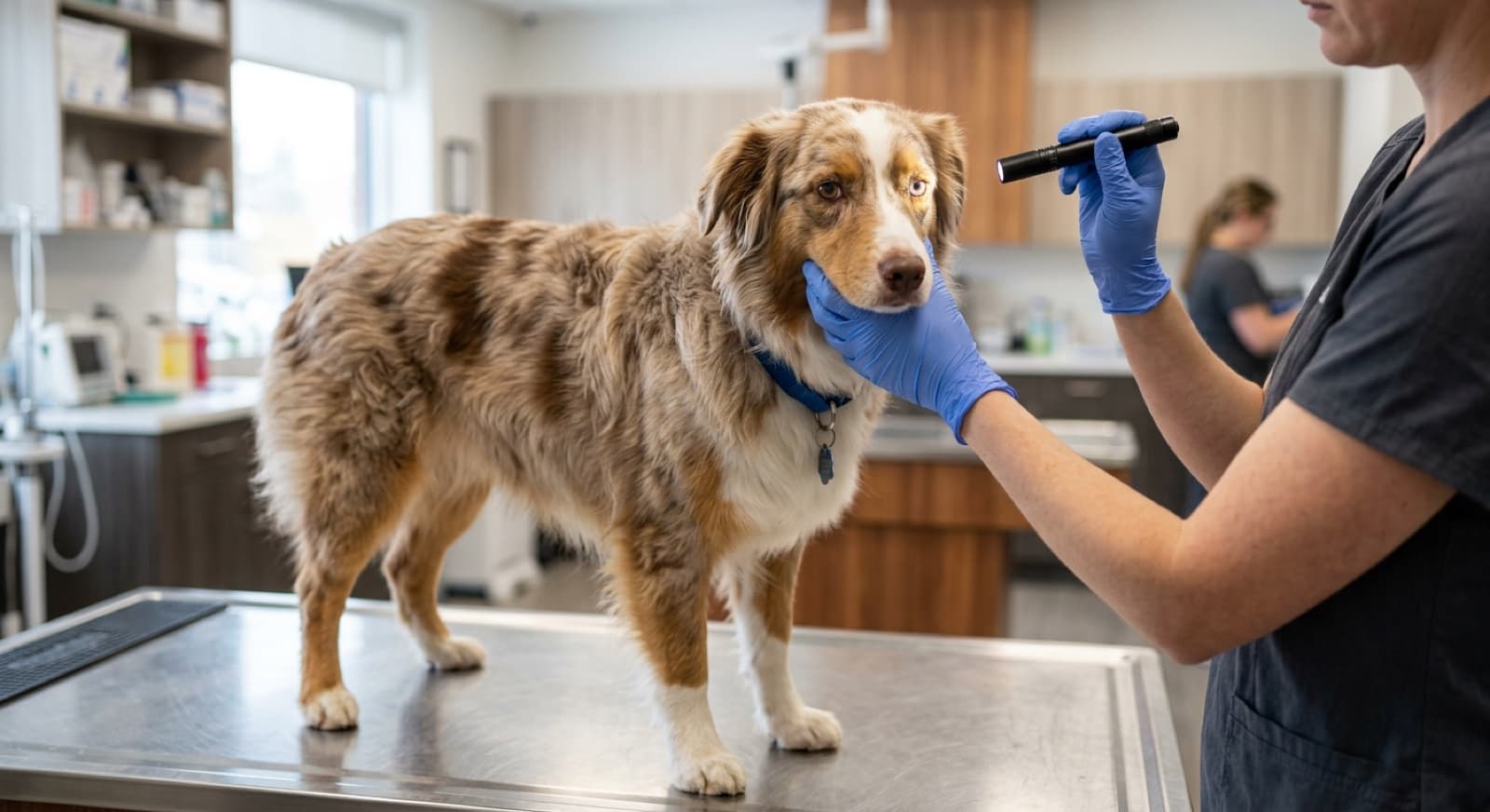
The Australian Shepherd is a fairly hardy, athletic, long-lived breed, its working heritage bred for soundness, but it comes with a handful of inherited conditions, several shared with other collie-type breeds. Two, the MDR1 gene and the double-merle issue, are especially important to understand. Here is the medical picture, condition by condition, starting with the one that matters most.
The MDR1 gene: the most important thing to know
The MDR1 (Multidrug Resistance 1) gene mutation, common in collie-type breeds including Australian Shepherds, makes affected dogs dangerously sensitive to certain common medications, some anti-parasite drugs (notably high-dose ivermectin), some anti-diarrheals (loperamide/Imodium), certain chemotherapy drugs, and some sedatives/anesthetics, which can build to toxic levels in the brain and cause severe reactions or death at doses safe for other dogs. This is one of the most important health facts about the breed.
The takeaways: a simple, inexpensive DNA test tells you whether your dog carries the mutation (well worth it, a significant proportion of Aussies carry it); whether or not you test, tell every vet your dog is an Australian Shepherd and ask them to treat it as potentially MDR1-affected (standard practice); and be careful with over-the-counter and livestock medications. Make sure any vet, especially an emergency vet who doesn't know your dog, knows it's an Aussie. This single piece of knowledge can prevent a tragedy. The Washington State University veterinary lab pioneered the MDR1 test.
Eye conditions
Aussies are prone to several inherited eye conditions, so eye health is a notable consideration: Collie Eye Anomaly (present from birth, largely non-progressive), cataracts (the breed is prone, sometimes surgically treatable), progressive retinal atrophy (PRA) (gradual vision loss), and colobomas and other eye defects (particularly associated with the merle colouring, and especially serious in double-merle dogs). Routine eye monitoring is worthwhile, watch for cloudiness, vision changes, or bumping into things.
Have any eye concerns assessed (ideally by a veterinary ophthalmologist for anything significant). Many eye conditions are manageable or treatable when caught early (some cataracts can be surgically corrected), and even a dog that loses some vision can often adapt and live well, given the breed's intelligence and other senses. Given the breed's multiple eye predispositions, eye care and monitoring are a real part of caring for an Aussie, and the possibility of conditions needing specialist treatment is part of the insurance argument.
The double-merle issue
Merle is a mottled coat pattern common and prized in Aussies; a dog with one copy of the merle gene has the merle coat and is generally healthy. The problem is breeding two merles together: some puppies inherit two copies (a “double merle”) and are at high risk of deafness and blindness or serious eye defects (often predominantly white). Responsible breeders never breed two merles together, so double-merle dogs are generally the result of careless breeding.
Why it matters for adopters: it's a reason to obtain dogs from responsible sources (rescues, or breeders who don't do merle-to-merle breeding). You may also encounter double-merle Aussies in rescue, deaf, blind, or both, and while these dogs face challenges, many deaf and/or blind dogs live happy, full lives with appropriate accommodations, and adopting a deaf or blind double-merle Aussie in need can be a wonderful, if more involved, thing to do (such dogs need adopters prepared for their special needs; a good rescue can advise). For most adopters, the main takeaway is awareness of why the condition exists and the importance of responsible sourcing.
Joints, epilepsy, lifespan, and insurance
Hip and elbow dysplasia occur, keeping the dog lean and fit is the biggest lever (easy given the breed's exercise needs), avoiding high-impact stress in growing puppies. Epilepsy (a seizure disorder) can occur, often well managed with medication, have any seizure evaluated. Also possible: hypothyroidism and some autoimmune conditions. Aussies are long-lived, typically ~12 to 15 years.
Keeping one healthy: know and manage the MDR1 gene (the single most important step), monitor the eyes, keep the dog lean and fit, be aware of epilepsy, provide the substantial exercise and mental stimulation the breed needs, maintain the coat, and stay on routine vet care. On insurance: worth considering, because although relatively hardy, the breed's potential conditions, eye conditions (specialist care/surgery), epilepsy (lifelong medication), and joint issues, can be costly, and Montreal specialist care isn't cheap. An MDR1 drug reaction can also need expensive emergency care, one more reason for a cushion. Take insurance out while the dog is young, before conditions are excluded. For an adopted adult, understand what a policy covers. See our adoption guide.
Browse adoptable dogs in Montreal
A good rescue shares a dog's known health history, and many can advise on MDR1 testing and any special needs. Refreshed regularly across Montreal-area organizations.
See Available Dogs →Frequently Asked Questions
What are the main health problems?
Generally hardy and long-lived, but with inherited conditions: the MDR1 drug-sensitivity gene (most important), multiple eye conditions (Collie Eye Anomaly, cataracts, PRA, colobomas), hip and elbow dysplasia, epilepsy, and the double-merle risk. Many individual Aussies are healthy and athletic.
What is the MDR1 gene?
A mutation common in collie-type breeds that makes affected dogs dangerously sensitive to certain common medications (ivermectin, loperamide, some chemo drugs and sedatives). A DNA test exists, but whether or not you test, tell every vet your dog is an Aussie, this can be life-saving. One of the most important facts about the breed.
What eye conditions affect them?
Several: Collie Eye Anomaly (present from birth, largely non-progressive), cataracts (sometimes surgically treatable), PRA (gradual vision loss), and colobomas (linked to merle colouring). Routine eye monitoring is worthwhile, watch for cloudiness and vision changes, and see a veterinary ophthalmologist for anything significant.
What is the double-merle problem?
Merle is a coat pattern; one copy is fine, but breeding two merles together produces some “double merle” puppies at high risk of deafness and blindness. Responsible breeders never do merle-to-merle breeding. You may meet deaf/blind double-merle Aussies in rescue, they can live happy lives with accommodations, and adopting one is a wonderful, if more involved, thing to do.
How long do they live?
A long-lived breed, typically 12 to 15 years. Know and manage the MDR1 gene, monitor the eyes, keep the dog lean and fit, be aware of epilepsy, provide the substantial exercise and mental work the breed needs, and stay on routine vet care. Many stay fit into their senior years.
Is pet insurance worth it?
Worth considering, eye conditions (specialist care/surgery), epilepsy (lifelong medication), and joint issues can be costly, and the long lifespan means more years for conditions to arise. An MDR1 drug reaction can need expensive emergency care too. Take insurance out while the dog is young. For an adopted adult, understand what a policy covers.
Related Montreal guides
Australian Shepherd Adoption in Montreal
Where to adopt in Montreal, the smart high-energy temperament, exercise and mental needs, real costs, and who it suits.
Australian Shepherd Exercise & Herding Drive
Meeting the breed's physical and mental needs, dog sports, and managing the herding instinct in Montreal.
Adoptable Dogs in Montreal
All currently available dogs across Montreal-area organizations, including Australian Shepherds and herding mixes. Updates regularly.
Montreal Dog Adoption Resources
All our Montreal dog adoption guides in one place.
New dog? Start with these care guides
Everything a new adopter needs to set up a safe, happy home.