The short answer
The Boston is fairly hardy and reasonably long-lived (~11 to 15 years), but its structure brings characteristic issues. The biggest: eye conditions (the large, prominent eyes are vulnerable to corneal ulcers, cherry eye, cataracts, dry eye, and, in trauma, the emergency of proptosis, so attentive eye care is key). Also brachycephalic breathing and heat sensitivity (flat-faced, though milder than bulldogs, keep cool in summer), luxating patellas (slipping kneecaps, keep the dog lean), allergies/skin issues, and an elevated incidence of congenital deafness (deaf dogs do fine with appropriate handling). Note the flip-side cold sensitivity too (short coat, a winter coat in Montreal). Levers you control: prioritize eye care, manage heat, keep the dog lean, and maintain routine care. Insurance is worth considering (eyes especially), insure while young.
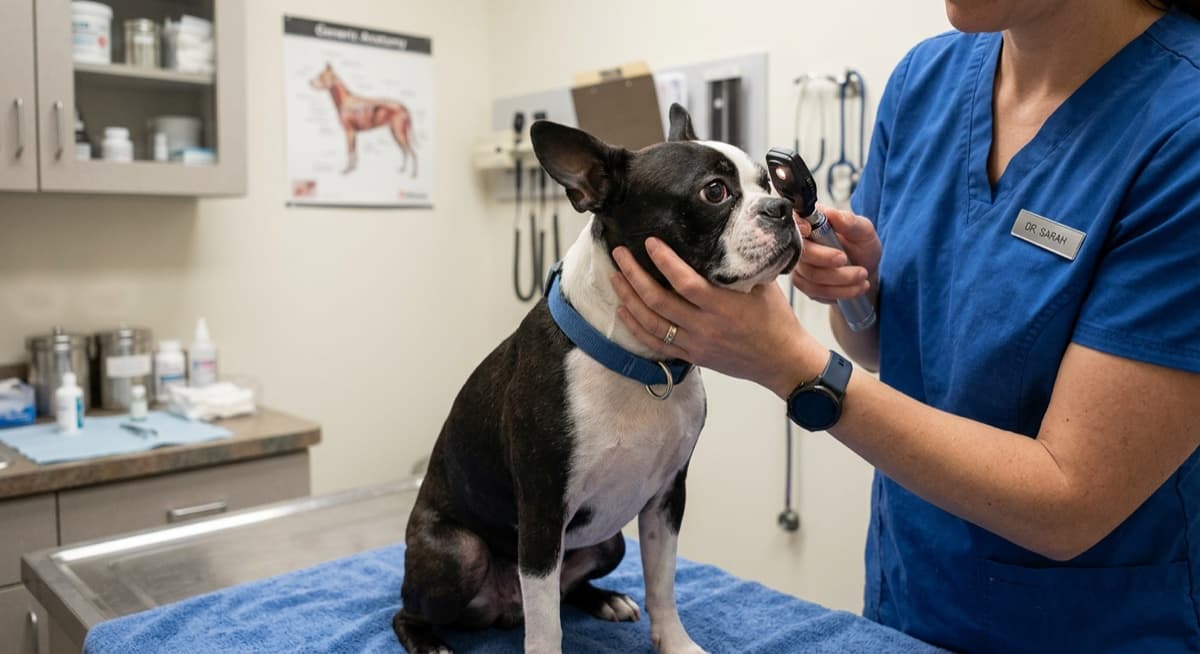
The Boston Terrier is a reasonably healthy, long-lived little dog, but its distinctive structure, the flat-ish face and those big, prominent eyes, drives most of its health considerations. The good news is that the biggest ones, eye care and heat management, are largely within your control. Here's the health picture, condition by condition, with the eyes front and centre.
Eyes: the most vulnerable feature
The Boston's large, round, prominent eyes, set in a flat face, are notably exposed and vulnerable, making eye care a key part of owning the breed. Conditions include corneal ulcers (the exposed eyes are prone to scratches and ulcers, painful and needing prompt treatment), cherry eye (third-eyelid gland prolapse, often needing surgery), cataracts (juvenile and later-life), dry eye, glaucoma, and, in trauma, the emergency of proptosis (the eyeball prolapsing from the socket).
So eye care and attentiveness are a real, ongoing part of caring for a Boston: watch closely for signs (redness, cloudiness, discharge, squinting, pawing/rubbing, a changed or enlarged eye, or a red mass), protect the eyes from injury where possible, include eye health in routine care, and seek prompt care for any eye concern (many, especially corneal ulcers, are painful and worsen quickly, and a suspected proptosis is an immediate emergency). Several conditions can be painful or vision-threatening and may need surgery, so the eyes are a big part of the insurance case. Reputable breeders have eyes examined; Montreal has veterinary ophthalmology services. Attentive eye care is one of the most important things a Boston owner does.
Breathing and heat sensitivity
As a brachycephalic (flat-faced) breed (though generally milder than the English or French Bulldog), the Boston can have some breathing considerations (snoring, snorting, usually not serious) and is heat-sensitive (the shortened muzzle makes cooling by panting less efficient, so it can overheat). Some Bostons have more significant airway issues occasionally warranting surgery, but many are relatively mild and manage well.
The practical implications, especially in Montreal's hot, humid summers: protect the dog from heat (keep it cool, air conditioning on very hot days), avoid exercise and exertion in heat (exercise in the cool hours), provide shade and water, never leave the dog in a hot car, watch for overheating (excessive panting, distress, weakness, bright red gums, collapse, an emergency), and keep the dog lean (excess weight worsens breathing). Because the Boston's brachycephalic issues are generally milder and its exercise needs moderate, this is quite manageable, but real in summer. Note the flip side: the short, thin coat also makes the Boston cold-sensitive, so Montreal winters need a warm coat (see the adoption guide), climate-sensitive at both ends.
Joints, skin, deafness, and other issues
Luxating patellas (slipping kneecaps, common in small breeds, mild to severe, keep the dog lean). Allergies and skin issues (environmental and sometimes food, causing itchy skin, infections, and ear problems, managed with vet help). Deafness: the breed has an elevated incidence of congenital deafness (one ear or both, a BAER test confirms), worth being aware of, though deaf dogs make wonderful pets with appropriate handling (hand signals, etc.). Also dental issues (crowded teeth in a short jaw) and some heart conditions.
Practically: keep the dog lean and watch for patella problems, watch for and manage allergies/skin issues, be aware deafness is possible (and that deaf dogs do fine with appropriate handling), and take dental care seriously while including heart and general health in routine care. Most individual Bostons won't develop most of these, and the breed is generally hardy. See our temperament & training guide (which covers training a deaf or hard-of-hearing dog too).
Lifespan and the insurance case
Bostons are reasonably long-lived, typically ~11 to 15 years. Keep one healthy by prioritizing eye health, managing heat (and the flip-side cold, a winter coat), keeping the dog lean, watching for allergies/skin issues, taking dental care seriously, and good routine care. On insurance: worth considering, the breed's characteristic conditions can be costly, eye conditions especially (corneal ulcers, cherry eye surgery, cataract surgery, relatively likely given the vulnerable eyes), plus brachycephalic airway issues, luxating patella surgery, and allergies.
Take out insurance while the dog is young and healthy, before any condition (especially eye issues or allergies) is excluded, and, for a brachycephalic breed, read policies for any breed-specific considerations (e.g. around airway conditions). If you self-insure, keep a solid vet fund with eye issues particularly in mind. For an adopted adult or senior, some conditions (especially eye issues or allergies) may already be present, so go in aware. Overall, the Boston's hardiness and reasonable longevity are appealing, and with good preventive care (especially eye care and heat management) and insurance or a fund, many enjoy long, healthy, happy lives.
Browse adoptable dogs in Montreal
A good rescue shares a dog's known health history, including any eye, breathing, or hearing issues. Refreshed regularly across Montreal-area organizations.
See Available Dogs →Frequently Asked Questions
What are the main health problems?
A fairly hardy, reasonably long-lived breed (11 to 15 years), but structure-driven issues stand out: eye conditions above all (the prominent eyes), plus brachycephalic breathing and heat sensitivity, luxating patellas, allergies/skin issues, and an elevated incidence of congenital deafness. Attentive eye care and heat management are the key protective steps. Note the flip-side cold sensitivity too (a winter coat in Montreal).
Why are eye problems such a concern?
The large, prominent eyes in a flat face are exposed and vulnerable to corneal ulcers, cherry eye, cataracts, dry eye, and, in trauma, the emergency of proptosis. Watch closely for signs (redness, cloudiness, discharge, squinting, a changed eye) and seek prompt care, ulcers especially are painful and worsen quickly. Several conditions may need surgery, so the eyes are a big part of the insurance case.
Do they have breathing and heat problems?
Yes, as a flat-faced (brachycephalic) breed, though generally milder than the English or French Bulldog. They can snore and are heat-sensitive (they cool less efficiently), so keep them cool in Montreal summers, exercise in the cool hours, and watch for overheating. Keep the dog lean too. Note they're also cold-sensitive (short coat), so a winter coat in Montreal, climate-sensitive at both ends.
What joint, skin, and other issues affect them?
Luxating patellas (slipping kneecaps, keep the dog lean), allergies and skin issues, and an elevated incidence of congenital deafness (one ear or both, a BAER test confirms; deaf dogs do fine with hand signals and appropriate handling). Also dental issues (crowded teeth) and some heart conditions. Watch for these, take dental care seriously, and include general health in routine care.
How long do they live, and is insurance worth it?
Reasonably long-lived, typically 11 to 15 years. Insurance is worth considering, eye conditions especially (corneal ulcers, cherry eye, cataract surgery, relatively likely given the vulnerable eyes), plus airway issues, luxating patella surgery, and allergies. Insure while young and healthy (before eye issues or allergies are excluded), read policies for any brachycephalic considerations, or keep a solid vet fund with eyes in mind.
Related Montreal guides
Boston Terrier Adoption in Montreal
Where to adopt, the friendly easygoing temperament, apartment and climate fit, real costs, and who the breed suits.
Boston Terrier Temperament & Training
Living with the “American Gentleman”: the easygoing companion temperament, positive training, house-training, managing separation, and apartment manners.
Adoptable Dogs in Montreal
All currently available dogs across Montreal-area organizations, including Bostons and Boston mixes. Updates regularly.
Montreal Dog Adoption Resources
All our Montreal dog adoption guides in one place.
New dog? Start with these care guides
Everything a new adopter needs to set up a safe, happy home.