The short answer
The Boston is the “American Gentleman”: amiable, friendly, affectionate, adaptable, and well-mannered, a companion breed that thrives on being with its people. It's intelligent and eager to please (with a mild stubborn streak), so it's quite trainable with positive, consistent methods, focus on good manners, socialization, and companion-dog skills (harsh methods backfire; use a harness, not a collar, on a small brachy dog). House-training is achievable with a consistent routine, though small breeds need patience, and Montreal's winter cold is a real complication for a cold-sensitive dog (a coat, a cleared potty area, or indoor backup). It's an excellent apartment dog (manage barking for neighbours) but a companion that can't be left alone too much (prone to separation distress). And it's great with children (sturdy for its size) and other pets.
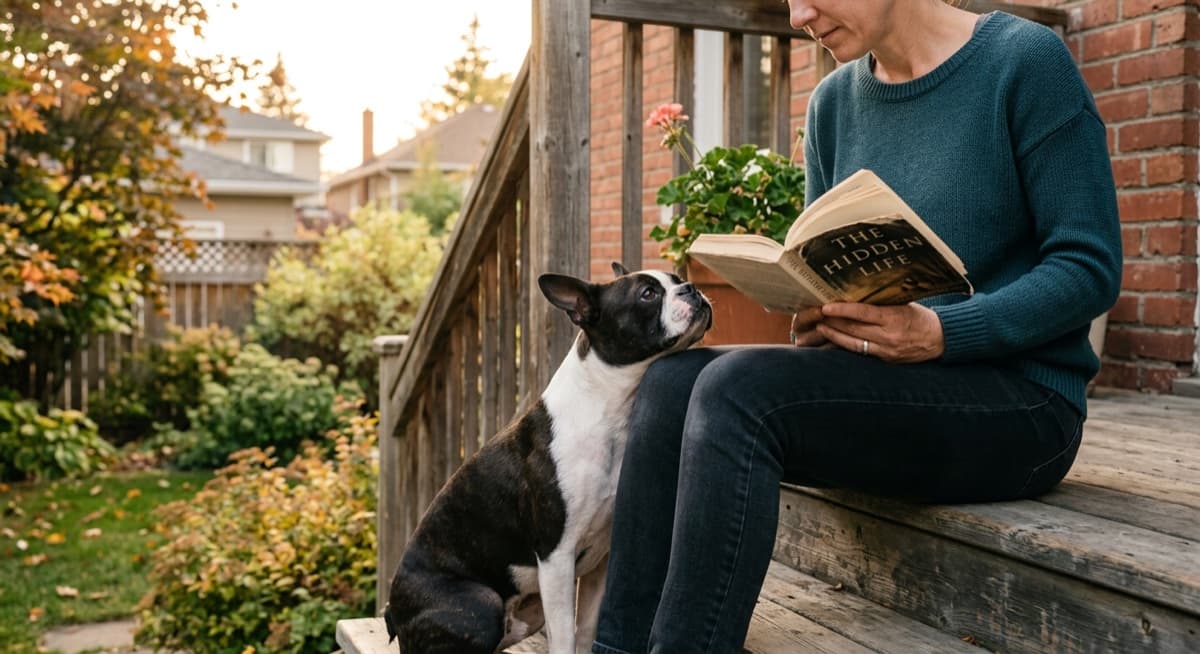
Of all the small breeds, the Boston Terrier is one of the easiest to live with and train, friendly, willing, and adaptable. Raising a well-mannered Boston is mostly about good socialization, positive training, and meeting its need for company, all quite achievable with this people-loving little breed. Here's how to understand and raise the “American Gentleman” in Montreal.
The “American Gentleman” temperament
The nickname fits: the Boston combines an amiable, pleasant, well-mannered disposition with its dapper “tuxedo” markings. Bostons are typically friendly, affectionate, lively, good-natured, and people-oriented, companion dogs through and through, bred to be pleasant, adaptable family and city companions. They love being with their people, are affectionate and often cuddly, and have a fun, sometimes clownish personality. They're usually good with children (friendly, sturdy, playful, patient) and sociable with other pets when socialized, though some can be a bit alert or mildly vocal (a terrier trace).
They're moderately active and playful but not high-energy, adapting their activity to the household (a big part of why they suit apartments), and intelligent and eager to please (with a mild stubborn streak), which makes them quite trainable. A key part of the temperament: the Boston is a companion breed that thrives on human company and can be prone to some separation distress if left alone too much (below). Raising a confident, well-mannered Boston is mostly about good socialization, positive training, and meeting its need for companionship, all achievable with this willing, people-loving breed.
Training a Boston
Training is generally quite achievable and enjoyable, the Boston is intelligent, people-oriented, and eager to please (with a mild stubborn/independent terrier streak), so a positive, reward-based, consistent approach works best (harsh methods are unnecessary and counterproductive with this sensitive companion breed). Keep sessions short, fun, and positive, start early (or from adoption) with socialization and basics, and focus on companion/apartment skills: house-training, manners (sit, stay, recall, polite greetings, no jumping), leash manners, and calm, quiet behaviour.
Early, ongoing socialization (varied people, dogs, places, situations) builds the confident, friendly dog the breed can be and heads off over-alertness or barkiness. Two breed notes: as a brachycephalic dog, avoid over-exerting the Boston in heat and use a harness, not a neck collar (gentler on a small brachy dog's airway and neck). And if the dog is deaf or hard of hearing (the breed has an elevated incidence of congenital deafness, see the health guide), it trains very successfully with hand signals and visual cues. Training a Boston is about raising a well-mannered, confident companion, not managing a difficult dog, which the breed's trainability makes achievable.
House-training, and the Montreal-winter complication
Bostons are reasonably trainable for house-training (intelligent and eager to please), though, like many small breeds, it can take a bit of patience and consistency. The keys are the standard positive principles: a consistent routine (frequent, scheduled trips outside, especially after waking, eating, and playing), close supervision and management (humane crate use or a dog-proofed area when you can't supervise), reward heavily and immediately for going in the right place, and never punish accidents (clean thoroughly with an enzymatic cleaner and prevent repeats).
A real Montreal complication: because the Boston is cold-sensitive (short, thin coat), it may resist going out to potty in deep snow or extreme cold, which can complicate winter house-training. Help with a warm coat for potty trips, a cleared potty area, and patience, and some owners use indoor potty options (pee pads or an indoor setup) as a backup for the coldest days, a practical aid for a small, cold-sensitive apartment dog in a Montreal winter.
For an adopted Boston, ask the rescue about house-training status (an adult may be reliably trained, or need a refresher in a new home, a consistent routine helps it settle). Overall, house-training a Boston is quite achievable with a consistent, positive approach, it may take a bit of patience, and Montreal's winter cold is a practical complication worth planning for.
Apartment life, separation, and family fit
The Boston is one of the best small breeds for apartment and city living, small, adaptable, low-grooming, friendly, content as an affectionate indoor companion with regular walks and play, a great fit for Montreal apartment dwellers. The main apartment-manners considerations: managing any barking (teach calm, quiet behaviour, especially with close neighbours) and providing enough exercise and enrichment to satisfy the dog indoors.
On separation: as a companion breed that thrives on company, the Boston does best where it's not left alone for very long stretches, and can be prone to separation-related distress (destructiveness, vocalizing, house-soiling) if it gets too little company or isn't taught to cope alone. Prevent/manage it by keeping the dog well-exercised and stimulated (a satisfied dog copes better), building up alone-time gradually and positively from the start (calm, low-key departures), providing enrichment when leaving, and arranging a dog walker/daycare or company for longer absences. Genuine separation anxiety is treatable with a vet and positive-reinforcement trainer/behaviourist.
On family fit: the Boston is a wonderful family dog, typically very good with children (friendly, playful, and sturdy for its size, more tolerant of family life than a fragile toy breed, though still a small dog needing gentle, respectful handling and supervision with young children), and generally good with other family pets when socialized. Its moderate, adaptable energy suits families well. For an adopted Boston, a rescue can tell you the individual dog's known behaviour with children and pets. See the adoption guide.
Browse adoptable dogs in Montreal
An adopted adult Boston's temperament is a known quantity, and a rescue can help match one to your home and family. Refreshed regularly across Montreal-area organizations.
See Available Dogs →Frequently Asked Questions
Why is it called the “American Gentleman”?
For its amiable, pleasant, well-mannered disposition plus the dapper “tuxedo” markings. Bostons are friendly, affectionate, lively, good-natured, people-oriented companions, generally good with children and other pets, moderately active but adaptable, and intelligent and eager to please. A key trait: they thrive on company and can have some separation distress if left alone too much. One of the most easygoing, adaptable small breeds.
How do I train one?
Generally quite achievable, they're intelligent and eager to please (with a mild stubborn streak), so use positive, reward-based, consistent methods (harsh methods backfire). Keep sessions short and fun, start early with socialization and basics, and focus on manners and companion/apartment skills. Use a harness not a collar (a small brachy dog), avoid over-exertion in heat, and train a deaf Boston with hand signals.
Are they hard to house-train?
Reasonably trainable, though like many small breeds it can take patience and consistency: a consistent routine, close supervision/management, heavy immediate rewards, and never punishing accidents. A Montreal complication: being cold-sensitive, a Boston may resist pot/tying in deep snow or extreme cold, so use a warm coat, a cleared potty area, patience, and possibly indoor pee pads as a cold-day backup.
Do they get separation anxiety, and are they good apartment dogs?
Excellent apartment dogs (small, adaptable, low-grooming, friendly), a great fit for Montreal, just manage any barking for close neighbours. But as a companion breed they thrive on company and can be prone to separation distress if left alone too much, so build up alone-time gradually, keep the dog well-exercised and enriched, and arrange company/daycare for longer absences. Genuine separation anxiety is treatable.
Are they good with children and families?
Yes, typically very good, friendly, playful, affectionate, and sturdy for their size (more tolerant of family life than a fragile toy breed, though still a small dog needing gentle handling and supervision with young children). They generally get along with other family pets when socialized, and their moderate, adaptable energy suits families well, one of the more family-friendly small breeds.
Related Montreal guides
Boston Terrier Adoption in Montreal
Where to adopt, the friendly easygoing temperament, apartment and climate fit, real costs, and who the breed suits.
Boston Terrier Health Issues
Eye conditions (the prominent eyes), brachycephalic breathing and heat, luxating patellas, allergies, deafness, and the pet-insurance case.
Adoptable Dogs in Montreal
All currently available dogs across Montreal-area organizations, including Bostons and Boston mixes. Updates regularly.
Montreal Dog Adoption Resources
All our Montreal dog adoption guides in one place.
New dog? Start with these care guides
Everything a new adopter needs to set up a safe, happy home.