The short answer
The fearful, snappy, yappy Chihuahua stereotype is “small-dog syndrome,” not a breed defect, it comes from not socializing and training a tiny dog like a real dog (and from carrying it everywhere and reinforcing fearful/bossy behaviour). The fix: socialize thoroughly and positively (let the dog walk and experience the world), train with positive, reward-based methods and consistent boundaries (the same you'd set for a big dog), manage barking (a quiet cue, meeting needs, not rewarding it) and snappiness (usually fear-based, so build confidence and handle gently, never punish), and be patient with house-training (indoor potty options are a practical option for Montreal winters). Treat and raise the Chihuahua as a real dog, and it's typically confident, friendly, and delightful.
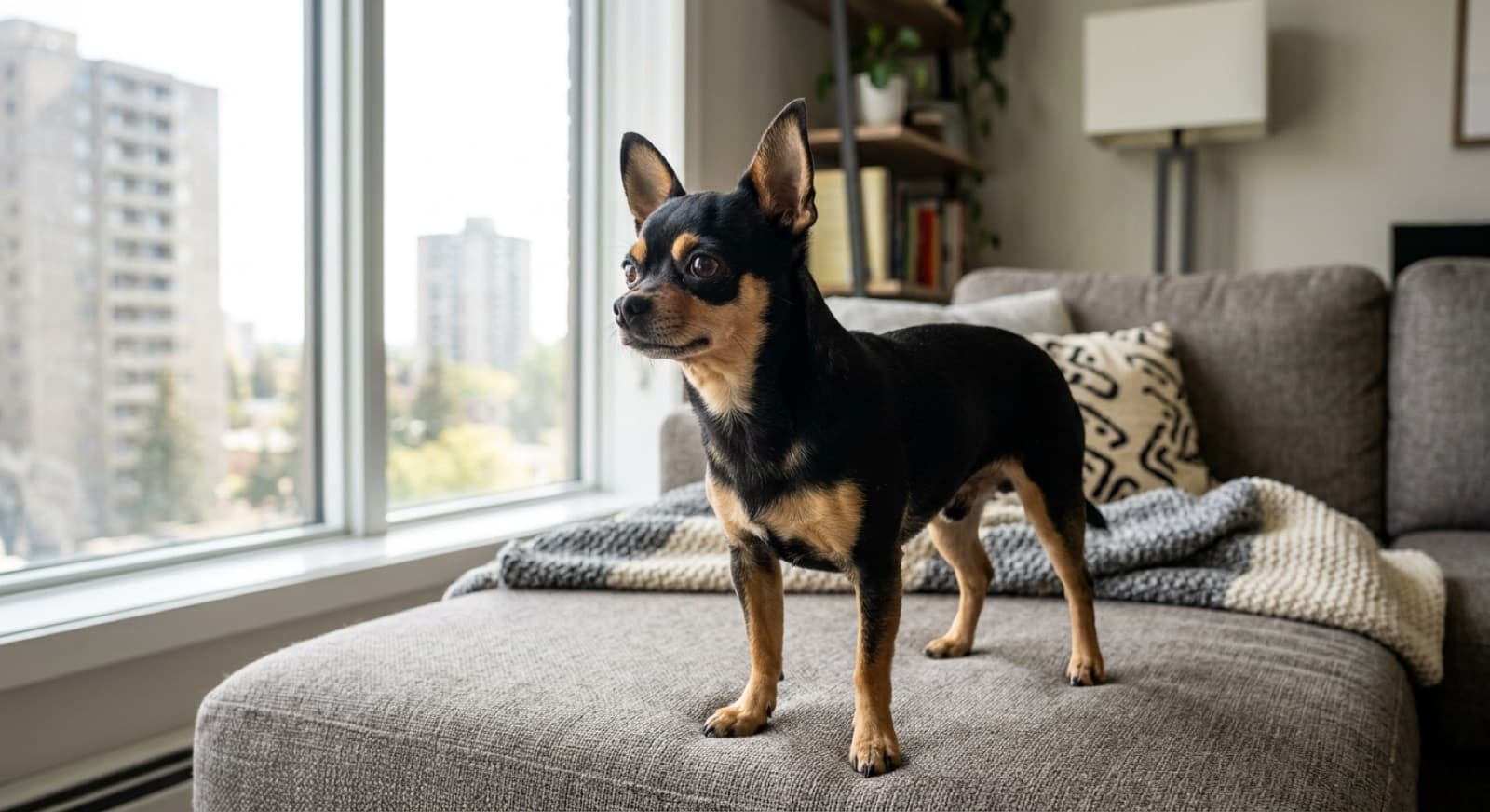
The yappy, snappy Chihuahua of stereotype exists, but it's made, not born. The single biggest thing that determines whether a Chihuahua is a confident delight or a fearful handful is how it's socialized and trained, and the most common mistake is treating a tiny dog as an accessory rather than a real dog that needs raising. Here is how to get it right in Montreal.
What “small-dog syndrome” really is
“Small-dog syndrome” is the cluster of problems, fearfulness, snappiness, excessive barking, over-protectiveness, bossiness, and reactivity, that small dogs commonly develop, and it's not a breed flaw but the result of how small dogs are often mis-raised: not socialized, not trained, carried everywhere rather than allowed to experience the world, inadvertently reinforced when fearful or bossy (e.g. picked up and soothed when acting fearful/aggressive), and allowed behaviours no one would tolerate in a big dog. The result is an under-socialized, untrained dog that's learned fearful or bossy behaviour works.
The crucial insight: this is preventable and largely a training-and-socialization issue, not a breed defect. A Chihuahua that's properly socialized and trained, and treated like a real dog rather than a fragile accessory, is typically a confident, friendly, well-behaved companion. So the key to a well-adjusted Chihuahua is to socialize thoroughly, train with positive methods, set consistent boundaries (the same you'd set for a large dog), and avoid reinforcing fearful or bossy behaviour. This is the most important thing you can do for the breed's behaviour.
Socializing properly
Socialization means exposing the dog, positively and gradually, to varied people, dogs, animals, places, sounds, and experiences, so it learns the world is safe. Start early with a puppy but continue lifelong (and for an adopted adult, ongoing socialization and confidence-building remain valuable). Keep experiences positive and below the fear threshold, pairing new things with rewards, never flooding or forcing a frightened dog.
A specific Chihuahua point: let the dog walk and experience the world on its own four feet rather than carrying it everywhere. Constantly carrying a tiny dog deprives it of the socialization and confidence that come from experiencing the world at ground level, and can contribute to fearfulness (carry only when genuinely needed for safety around larger dogs or hazards). Expose the Chihuahua positively to different people, well-matched friendly dogs (carefully, given the size difference, well-run puppy classes or supervised meetings with gentle, appropriately-sized dogs), different environments, and city life, and get it comfortable with gentle handling (for grooming and vet care). Thorough, positive socialization pays off in a confident, well-adjusted Chihuahua.
Training a Chihuahua like a real dog
The key is to actually train the dog, treating it as a real dog that needs training, not a tiny accessory that doesn't. Chihuahuas are intelligent (if a bit stubborn) and, being food-motivated, quite trainable with positive, reward-based methods and tasty rewards; harsh methods worsen fearfulness in a small, potentially fearful dog. Train the same basics as any dog (reliable obedience, manners), and set consistent boundaries, don't allow behaviours in a Chihuahua (jumping, growling, snapping) you wouldn't allow in a big dog.
Keep sessions short, upbeat, and fun, be consistent (everyone uses the same rules), and make training ongoing. Address breed-associated behaviours as needed (barking and snappiness, below), teach the dog to be calm and confident rather than reinforcing fearful or bossy behaviour, and work with a positive-methods trainer or behaviourist for significant fear-based snappiness or reactivity. Puppy and obedience classes are worthwhile (training plus socialization). For an adopted Chihuahua, invest in positive training. The biggest mistake owners make is failing to train the breed at all.
Managing barking and snappiness
Barking: alert, vocal dogs prone to excessive barking (alertness, excitement, fear, boredom, attention-seeking), a real issue in shared housing. Manage it by socializing well (a confident dog barks less fearfully), meeting the dog's needs (a bored Chihuahua barks more), training a “quiet” cue and rewarding calm, not rewarding barking with attention (even scolding is attention), and reducing triggers (e.g. window views of passersby). Snappiness: usually fear-based (a small, potentially fearful dog defending itself) or from rough handling, best addressed by preventing triggers and building confidence.
For snappiness: socialize well to reduce fearfulness, handle the dog gently and teach children to do the same (much snapping happens when a small dog is handled roughly or frightened), never punish a fearful dog (it increases fear and defensiveness), build confidence through positive socialization and training, and work with a positive-methods trainer or behaviourist if significant. Crucially, don't dismiss or reinforce these behaviours because the dog is small, take them as seriously as you would in a large dog. With that approach, the barking and snappiness the breed is stereotyped for are very manageable, and a well-raised Chihuahua is confident, friendly, and well-behaved.
House-training in a Montreal winter
Small dogs can be harder to house-train (small bladders, easy-to-miss accidents, and, in a cold city, reluctance to toilet in bitter weather). The keys are the same as any dog but need extra consistency: a routine (out frequently, especially after waking, eating, playing), immediate rewards for toileting in the right place, supervision and managed access (a crate or confined area when unsupervised), thorough enzymatic cleaning of accidents, and patience (never punish accidents).
For the Montreal-winter challenge: because a tiny Chihuahua feels the cold and may resist going out in bitter weather, keep winter toileting trips quick to a sheltered or cleared spot, dress the dog warmly, and, importantly, many owners in cold climates use indoor potty options (pee pads or an indoor dog toilet/litter system) for the coldest days or as a general approach, which suits a tiny indoor dog and sidesteps the winter difficulty. Some train a Chihuahua to use indoor pads as the primary method, a legitimate choice for a tiny dog in a cold climate. Overall, house-training takes patience and consistency, and indoor potty options are a practical, common approach for the breed in Montreal. See our adoption guide.
Browse adoptable dogs in Montreal
Socialize and train the dog, and a Chihuahua is a confident, devoted companion. Refreshed regularly across Montreal-area organizations.
See Available Dogs →Frequently Asked Questions
What is “small-dog syndrome”?
The cluster of problems (fearfulness, snappiness, excessive barking, bossiness) small dogs commonly develop, not a breed flaw, but the result of not socializing and training a tiny dog, carrying it everywhere, and reinforcing fearful/bossy behaviour. It's preventable: a properly raised Chihuahua, treated like a real dog, is confident and well-behaved.
How do I socialize one properly?
Expose the dog positively and gradually to varied people, dogs, places, and experiences, lifelong, always below the fear threshold. Crucially, let the dog walk and experience the world rather than carrying it everywhere (constant carrying contributes to fearfulness). Use puppy classes and supervised meetings with gentle, appropriately-sized dogs.
How do I train one?
Actually train it, treating it as a real dog. Chihuahuas are food-motivated and quite trainable with positive, reward-based methods; harsh methods worsen fearfulness. Train the same basics as any dog, set consistent boundaries (no jumping, growling, or snapping you wouldn't allow in a big dog), keep sessions short and fun, and use classes. Failing to train at all is the biggest mistake.
How do I manage barking and snappiness?
Barking: socialize well, meet the dog's needs, train a “quiet” cue, don't reward barking with attention, and reduce triggers. Snappiness: usually fear-based, so build confidence, handle gently, never punish a fearful dog, and get a trainer's help if significant. Don't dismiss these because the dog is small, address them as you would in a big dog.
How do I house-train one in a Montreal winter?
Small dogs can be harder (small bladders, cold reluctance). Use a routine, immediate rewards, supervision and a crate/confined area, enzymatic cleaning, and patience. For winter, keep outings quick and warm, and use indoor potty options (pee pads or a litter system) for the coldest days, a practical, common approach for a tiny dog in a cold climate.
Related Montreal guides
Chihuahua Adoption in Montreal
Where to adopt in Montreal, the bold devoted temperament, cold sensitivity, real costs, and who it suits.
Chihuahua Health Issues
Dental disease, patellar luxation, tracheal collapse, heart conditions, hypoglycemia, and the pet-insurance case.
Adoptable Dogs in Montreal
All currently available dogs across Montreal-area organizations, including Chihuahuas and Chihuahua mixes. Updates regularly.
Montreal Dog Adoption Resources
All our Montreal dog adoption guides in one place.
New dog? Start with these care guides
Everything a new adopter needs to set up a safe, happy home.