The short answer
Back care is the single most important part of owning a Dachshund, the long-backed breed is exceptionally prone to IVDD, and while you can't change the genetics, you can meaningfully reduce the risk. The core habits: keep the dog lean, prevent jumping on/off furniture and manage stairs (use ramps, steps, gates, and careful lifting), handle the dog correctly (support the chest AND hindquarters, keeping the back level), provide back-friendly exercise (harness walks, muscle-building, avoid jumping and twisting), and add traction on slippery floors. Above all, know the IVDD warning signs, and treat any sudden leg weakness or paralysis as a medical emergency.
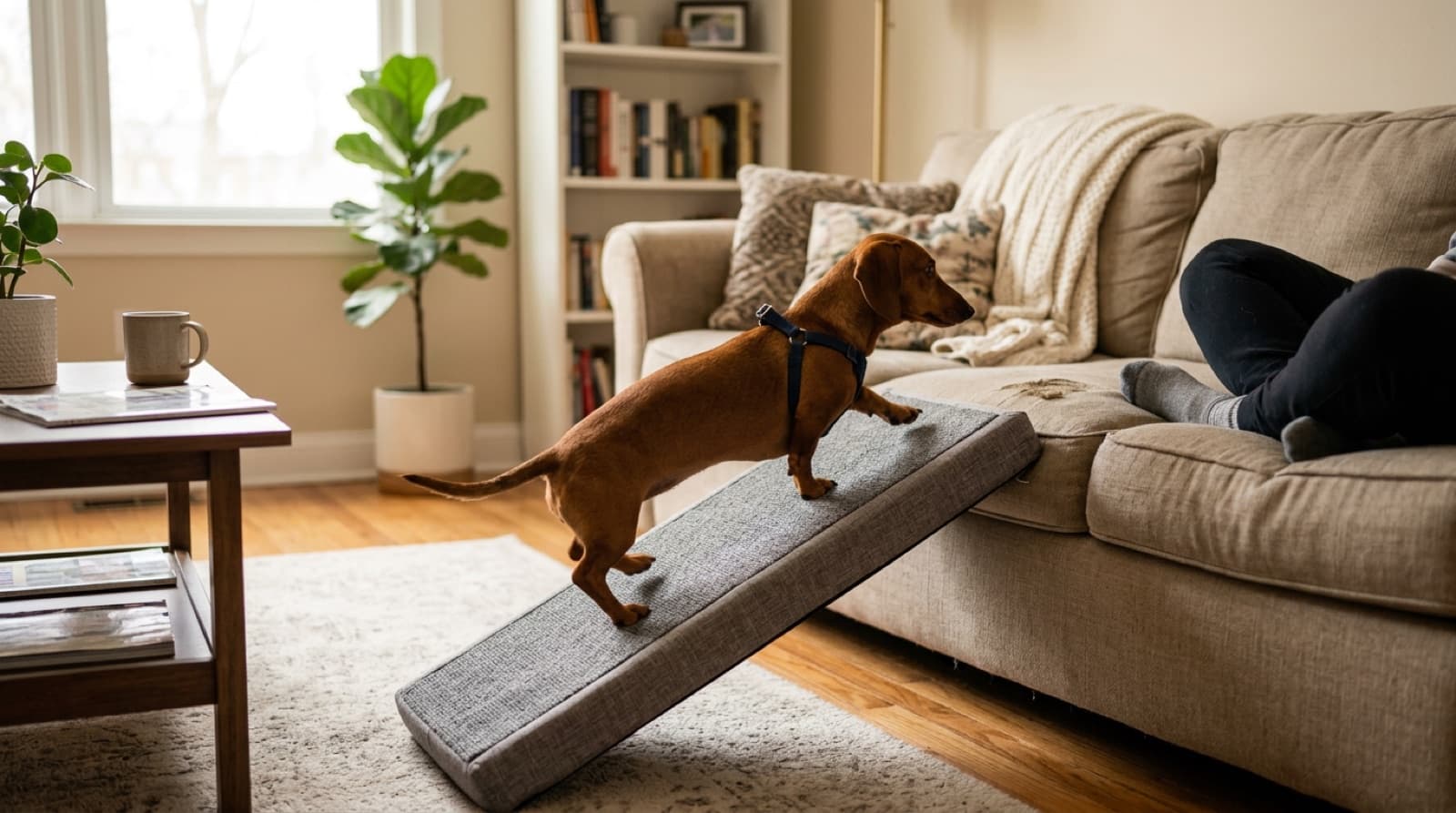
If you own a Dachshund, back care isn't optional, it's the central, everyday responsibility of the breed. The good news is that it comes down to a handful of simple habits that, once built into your routine, become second nature and genuinely protect your dog. Here is exactly what to do, and what to watch for.
Why back care is central
The breed is exceptionally prone to IVDD because of its long-backed build: the long spine bears far more mechanical stress than a normal dog's, and the breed is genetically predisposed to premature disc degeneration. A significant proportion of Dachshunds experience some IVDD in their lifetimes. The crucial point: while you can't eliminate the genetic predisposition, you can meaningfully reduce the risk of injury and improve outcomes through consistent back care.
That makes back care a central, everyday responsibility, not an optional nicety. The key elements: keep the dog lean, prevent jumping and manage stairs, handle carefully, provide back-friendly exercise, and use tools like ramps and a proper harness. Build these habits from day one, they're genuinely one of the most impactful things you do for the breed's health and quality of life. (See our health guide on IVDD itself.)
Managing jumping and stairs
Jumping on and off furniture and using stairs put significant stress on the spine and are common triggers for back injury. For furniture: prevent jumping on and off (a big culprit), provide pet ramps or steps and train the dog to use them, or keep the dog off furniture with a floor bed. For stairs: minimise use (especially steep stairs), carry the dog up and down when practical (supporting the back), use baby gates to prevent unsupervised access, and consider ramps for a few steps.
In Montreal, many homes have stairs (including the exterior staircases common on Montreal buildings), and winter brings slippery, icy steps, so stair management and careful handling on stairs are especially relevant. Also add traction on slippery floors (rugs or runners), since slipping strains the back, which matters on the hardwood and tile common in Montreal homes. The principle: design the dog's environment and routine to minimise jumping and jarring stair use, one of the most effective ways to protect the spine.
Holding and handling correctly
Improper handling, letting the back sag, hang, or twist, stresses the spine. The correct way: support both the chest/front and the hindquarters/rear at the same time, keeping the back level and horizontal (like a little table), never letting the middle sag or the back end dangle. A common mistake is lifting under the front legs only, letting the rear hang. Set the dog down gently, keeping the back supported, rather than letting it jump or drop from your arms.
Everyone who handles the dog, including children (with supervision and instruction), must know and use the correct technique, and young children may need close supervision or may be best not picking up the dog at all, since improper handling can injure the back. Teaching correct handling to the whole household is genuinely important. Careful, back-supporting handling every single time, combined with the other measures, significantly reduces injury risk, and once learned it becomes second nature.
Back-friendly exercise
Exercise is beneficial, not something to avoid: it keeps the dog lean and builds the core and back muscles that support the spine. Good options: regular walks on a harness (not a neck collar) for low-impact fitness, and controlled activity on level ground. For a dog recovering from or at risk of back problems, a vet or canine rehab/physiotherapy professional can guide targeted core-strengthening exercises and hydrotherapy/swimming (excellent low-impact muscle-building), where appropriate.
Avoid or minimise: jumping (on/off furniture or up), rough play and high-impact activity, twisting and sharp turns at speed, and prolonged or steep stairs. The principles: keep the dog lean, provide regular moderate low-impact exercise (especially harness walks), build supporting muscle, and avoid the jarring, jumping, twisting activities. In Montreal, walks are doable year-round (in winter watch for icy footing that could cause a fall, and a coat helps this low-to-the-ground, often short-coated breed in the cold). Well-chosen exercise is part of good back care, the key is choosing back-friendly activities.
Warning signs, and what to do
Know the signs. Back/neck pain: a hunched or arched posture, reluctance to move, jump, or climb, crying out (especially when moved or picked up), a tense abdomen, trembling. Nerve involvement: weakness or wobbliness in the legs (especially the hind legs), dragging the back legs or knuckling over, difficulty walking, and, in severe cases, inability to walk or move the back legs (paralysis) and sometimes loss of bladder/bowel control.
If you notice back pain, reduce activity and contact your vet promptly, mild cases are often managed with strict crate rest and medication, and it's important not to let the dog keep jumping and moving. Crucially, if you see nerve signs (sudden weakness, dragging legs, or inability to walk), treat it as a medical emergency and seek immediate veterinary attention (including an emergency clinic after hours), a serious disc rupture pressing on the cord needs prompt treatment (possibly emergency surgery) for the best outcome, and delay worsens the prognosis. Know where Montreal's nearest emergency vet is before you need it. Don't wait to “see if it gets better” when there's leg weakness or paralysis, time matters.
Browse adoptable dogs in Montreal
With good back care, a Dachshund is a devoted, characterful companion. Refreshed regularly across Montreal-area organizations.
See Available Dogs →Frequently Asked Questions
Why is back care so important?
The long-backed breed is exceptionally prone to IVDD, a serious back condition. You can't change the genetics, but you can meaningfully reduce the risk through consistent back care, keeping the dog lean, managing jumping and stairs, careful handling, and back-friendly exercise. It's a central, everyday responsibility of owning the breed.
How do I manage jumping and stairs?
Prevent jumping on/off furniture (a big culprit), use ramps or steps and train the dog to use them, or keep the dog off furniture. Minimise stairs, carry the dog when practical (supporting the back), and use gates. In Montreal, mind the icy exterior stairs in winter, and add rugs on slippery floors for traction.
How do I safely hold a Dachshund?
Support both the chest/front and the hindquarters/rear at once, keeping the back level and horizontal (like a table), never letting the middle sag or the back end hang. Don't lift under the front legs only. Set the dog down gently. Teach the whole household, and supervise or limit children handling the dog.
What exercise is safe for the back?
Exercise is beneficial, it keeps the dog lean and builds supporting muscle. Good: harness walks (not a neck collar), controlled level-ground activity, and vet-guided core work or hydrotherapy for at-risk dogs. Avoid jumping, rough play, twisting at speed, and steep stairs. Choose back-friendly activities rather than avoiding exercise.
What are the warning signs, and what do I do?
Back pain (hunched posture, reluctance to move, crying out, tense abdomen) and nerve signs (leg weakness, dragging legs, inability to walk). For back pain, reduce activity and call your vet (often crate rest and medication). For any nerve signs, treat it as a medical emergency, seek immediate care. Don't wait; time matters. Know your nearest Montreal emergency vet.
Related Montreal guides
Dachshund Adoption in Montreal
Where to adopt in Montreal, the bold clever temperament, coats and sizes, real costs, and who it suits.
Dachshund Health Issues
IVDD (back disease), obesity, dental and eye conditions, patellar luxation, and the pet-insurance case.
Adoptable Dogs in Montreal
All currently available dogs across Montreal-area organizations, including Dachshunds and Dachshund mixes. Updates regularly.
Montreal Dog Adoption Resources
All our Montreal dog adoption guides in one place.
New dog? Start with these care guides
Everything a new adopter needs to set up a safe, happy home.